“Blind Date for 72 Hours” (TTT)
Lee Heewon: “Have you ever imagined falling in love with someone while traveling alone?” That’s the question posed by “Blind Date for 72 Hours.” After all, who hasn’t allowed themselves just once that romantic reverie where, by a complete twist of fate, you meet that special someone on vacation? Amidst a flood of reality shows revolving around dating, this one stands out with its unique twist on TV travel. In each episode, two strangers take a three-day trip together to an unfamiliar country to get to know each other. There’s no voting by phone, no orchestrated dates, and no celebrity panel. This is one show that’s all about casual one-on-one conversations covering everything from where they’ll head the next day to what they’d like to eat. As the show points out, “you don’t know when or where you’ll meet” the person who could be the one. In the case of this series, they could wind up meeting up at a park, on a train, on a plane—and may not even recognize it then. The man and woman are hinted toward finding one another by being granted a glimpse of one another’s daily planners. Instead of listing occupation or age, the show instead leans into revealing interests, hobbies, thoughts, and even self-portraits. As they grow closer getting to know one another’s interests and hobbies, the pair decides on the third and final day whether to keep seeing each other. The outcome of that decision guides each down one of two straightforward paths: either heading to the agreed upon meetup spot, or heading straight back to the airport—a simple means of wrapping up a connection formed while abroad.
During the 72 hours they have together, the men and women don’t direct all their focus on an end goal of dating one another. Instead, they treat each other like fellow travelers as they gradually open up to reveal their authentic selves. They explore themselves and the experiences that have shaped them as they open up to this new person, like how Miso talks about how she “didn’t have any room before … not free time, but more emotional room,” or when Sejin confesses she may have suppressed her personality a bit when meeting people in the past. “Blind Date for 72 Hours” proves that love isn’t just about paying attention to your partner—it’s about blossoming as you look inward, too.
“Compressed Annoyance” (Peach Truck Hijackers)
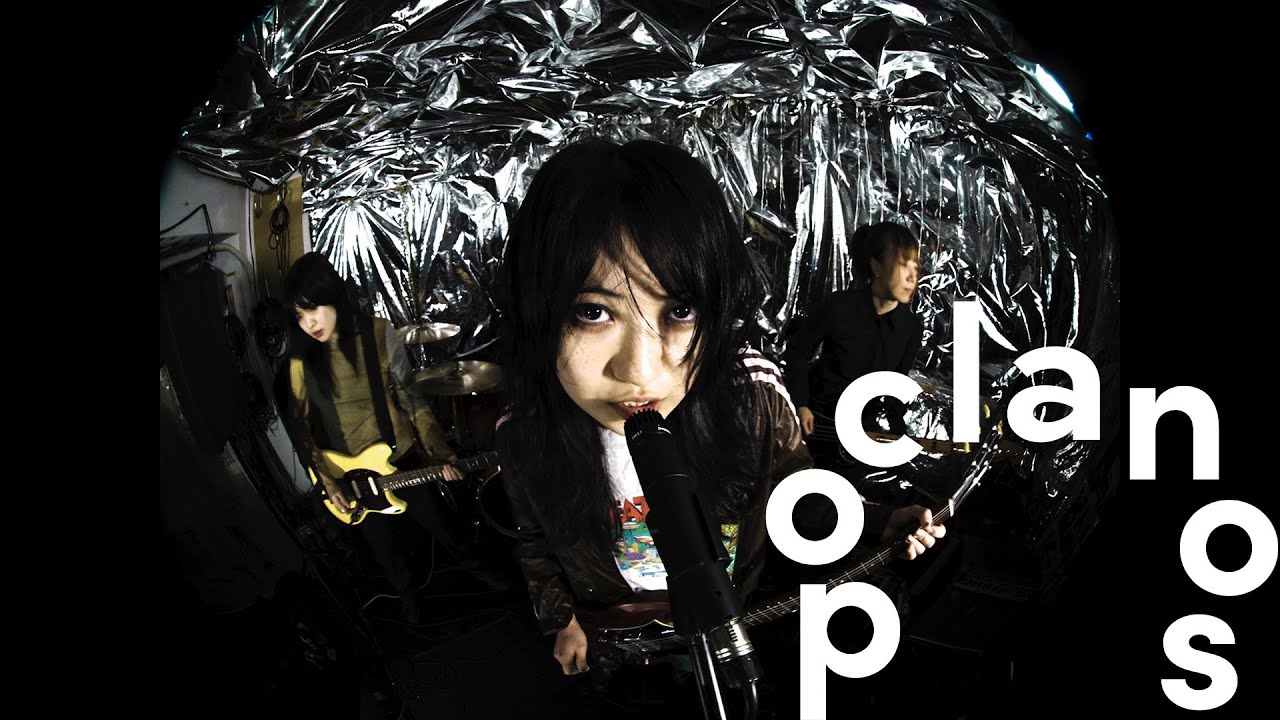
Kim Doheon (Music Critic): They were in design school when they first toyed around with the idea of being in a band—just a group of women having fun. Until, that is, they became serious about making an album. They knew nothing at the time—bands, staff, venues—so they started getting the word out with flyers, looking for, they said, new friends. Luckily, the friends they made along the way were happy to give their all to help these newcomers. They got a recording studio. They got a producer and a recording engineer. The band set up a crowdfunding page on Tumblbug to fund their album. Fans, faceless and nameless, opened their wallets to push the band to 174% of their goal. And that’s how Peach Truck Hijackers came to be.
It’s been over 50 years since the DIY, or do it yourself, spirit first bloomed. Nowadays, even in the indie world, you can’t do everything alone. Peach Truck Hijackers has a different mantra: Let’s be friends. Then, let’s help each other out. The recent wave of bands to emerge from the Korean underground—like Chip Post Gang, Socialclub Hyangwu, and Sailor Honeymoon—channel a DIY ethos not unlike that of the riot grrrl movements of the 1990s, helping themselves along as they prop up the scene and find ways to get by.
Yes, it’s about survival, not chasing money or fame—a sink-or-swim philosophy of thinking for, and making a promise to, yourself. That explains why there were so many indie artists singing about life and death this year. With its faithful take on ’90s alternative rock, garage, and post-punk, Peach Truck Hijackers’ music is raw and direct. They’re sorry-not-sorry about their swears, reclaiming the power of language as they lock eyes. The band’s sound is in good hands, with Kim Byungkyu from Say Sue Me and Kang Dong Soo from Soumbalgwang taking the group’s sound and smoothing those primal emotions into what they call polished rage.
There’s no destination in mind. The band admits they don’t quite know how to define themselves. But they’re clear about what they love, what they have to say, and what they want to do. That’s why they make music—because there’s no better way to get all that across. And isn’t that what makes the creative process so beautiful? When Peach Truck Hijackers keep the party going as loud and as sincere as they do, you can’t help but feel hopeful about the future of rock.
Observer (Robert Lanza, Nancy Kress)
Kim Boksung (Writer): Caro is a brilliant neurosurgeon with a great job—until her boss harasses her, she refuses to keep quiet, and outside pressure forces her to resign. If it weren’t for that cruel twist of fate, plus family depending on her, then she would’ve found her next job offer too suspicious to accept: a position at a secret research facility offered to her by a distant relative.
The relative is throwing all his money into a risky gamble to keep himself alive. It’s a medical procedure based on a theory called biocentrism—introduced by the lab’s physicist and the novel’s second lead character, George—that says we don’t merely observe the universe but control it. Caro is initially highly skeptical that the chips she’s meant to implant in test subjects’ brains actually send them through the multiverse and assumes it’s all hallucinations, but the story quickly takes some unexpected turns.
“Observer” is cowritten by Robert Lanza and Nancy Kress, the latter a seasoned sci-fi writer and the former a scientist. Biocentrism is Lanza’s real-life brainchild, portrayed in the book as a sort of complement to quantum mechanics where the universe exists because it is observed. Whether you enjoy the novel for the real-world theory or for the fictional thrill is up to you as a reader—the science never gets too heavy, but you can also dive into Lanza’s nonfiction work if the mood strikes.