In the history of K-pop, 2025 will be remembered as a major turning point. Even before “KPop Demon Hunters,” “APT.,” and KATSEYE earned nominations in major Grammy categories, K-pop had already proven it was no longer a niche interest but instead had become part of global pop culture. In the process, K-pop moved beyond being a finished product meant simply for consumption and emerged as a source of new creative energy. As capital, language, and race intersect in increasingly complex ways, the meaning of the “K-” in K-pop has grown more contested. Some begin to question whether that “K-” still exists at all, while others try to redefine it on their own terms.

JENNIE offered her own answer on the Melon Music Awards (MMA) stage. At the opening of her performance, which began with “Seoul City,” she unfurled a massive veil nearly 15 meters long. Printed across the white fabric were lines from Cheonggu Yeongeon, the oldest surviving collection of Korean songs. In 1728, Kim Cheon-taek, a renowned singer in Seoul, gathered songs that had previously been passed down only through oral tradition from across the country. The title Cheonggu Yeongeon means “Songs of Joseon.” He placed works by aristocrats and commoners’ side by side and organized them not by author, but by melody. Songs were meant to be sung, not read, and they were never confined by social rank.
The lineage of today’s K-pop artists and pop singers stretches back to the poets and singers of the Joseon era. The first piece in Cheonggu Yeongeon begins with the line, “May today be today, may every day be today.” The song wishes for each day to be as good as the present one, but it also reveals a longing to hold on to a perfect moment forever. The fate of modern pop stars, locked in a constant struggle with fleeting fame, resonates with this eighteenth-century verse. When the fashion brand LEJE wrote, “This language has never confined me. It has taken me further,” the message felt deliberate. And on the “like JENNIE” stage, her name JENNIE, written in Hangeul in a script echoing the veil, was spelled out across her jacket in two thousand shimmering sequins. “I am rewriting my name with this script.”
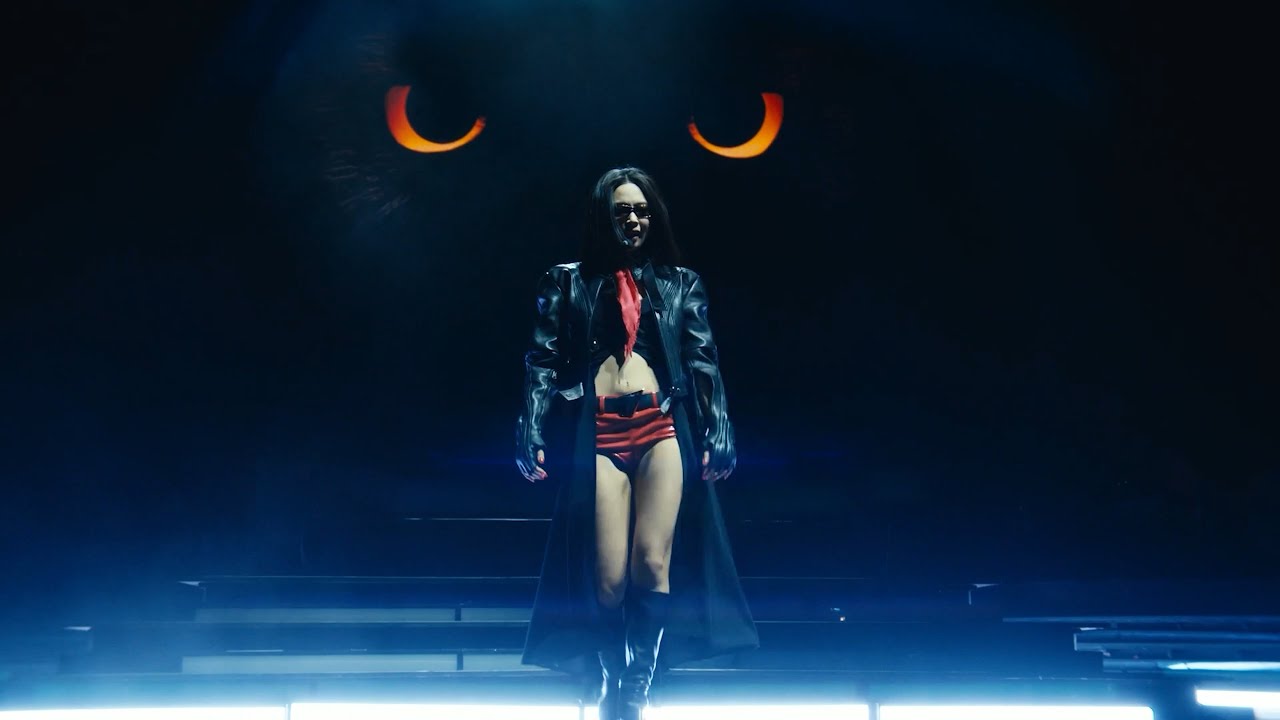
At first glance, the scale of the performance may feel excessive. But that is precisely why it matters that JENNIE was the one who did it. She is a member of BLACKPINK, a global pop star, a defining celebrity of her generation, a style icon, and a proven solo artist. That is why the MMA stage pairs naturally with her Coachella performance. The reach and impact demonstrated by “Jenchella” were so vast that the echoes of one of the world’s largest festival stages crossed the ocean and reverberated back in Korea. Coachella represents a pop-star ideal where music and fashion move as one. Her western-glam look, complete with an ornate hat, a crocodile-embossed jacket, and boots recalling cowboy chaps, came from the latest collections by Georges Hobeika and DIDU. Her bicultural background enables an ease of connection and exchange, allowing her to command the visual language of Western pop with confidence, individualism, and sexual appeal. On any home ground, she can hold her own.
In short, JENNIE’s global presence does not simply coexist with her self-awareness as a Korean artist. The two are not interchangeable, nor can they be separated depending on context. They exist as one. She avoids the trap of remaining an exotic novelty in the global market or, conversely, becoming an awkward or distant figure at home. Instead, she has become something new in between. JENNIE has already articulated this position through visual language. On Hangeul Day, she revealed the “ZEN SERIF” typeface. Described as a modern reinterpretation of medieval Blackletter, the typeface draws from calligraphic traditions that use broad pen nibs, known for strong stroke contrast and visual weight associated with Gothic authority. JENNIE combined this with Hangeul, a writing system created for an entirely different language, while stripping back ornamentation and introducing softer curves. The result is a contemporary typeface. Even those who do not read Korean can engage with the aesthetic potential of Hangeul through it. A typeface that began in medieval Europe, encountered Hangeul, and traveled back out into the world was ultimately added to Instagram’s short-form editing tools. It is the first Korean typeface made globally available on the platform.
Visual concepts spanning stage design, fashion, and typography cannot be sustained by fame alone. JENNIE’s solo debut album, “Ruby,” provides the musical foundation that gives all this weight. As noted in a Pitchfork review, JENNIE’s clarity as a solo artist rests on the fact that “Ruby” contains the defining elements of her musical identity. Quite simply, it is good music. The album brings together a high-profile roster of producers, including Diplo, El Guincho, and Mike Will Made It, alongside artists across genres such as Dua Lipa, Doechii, Childish Gambino, and Kali Uchis. JENNIE is both a star capable of assembling this lineup and, for the first time, the person fully responsible for the final decisions. As she explained in a Billboard interview, she is now on her own and responsible for making the right decisions. Sometimes, she admits, the feeling is overwhelming, to the point where she thinks, “I don’t want this much control.”
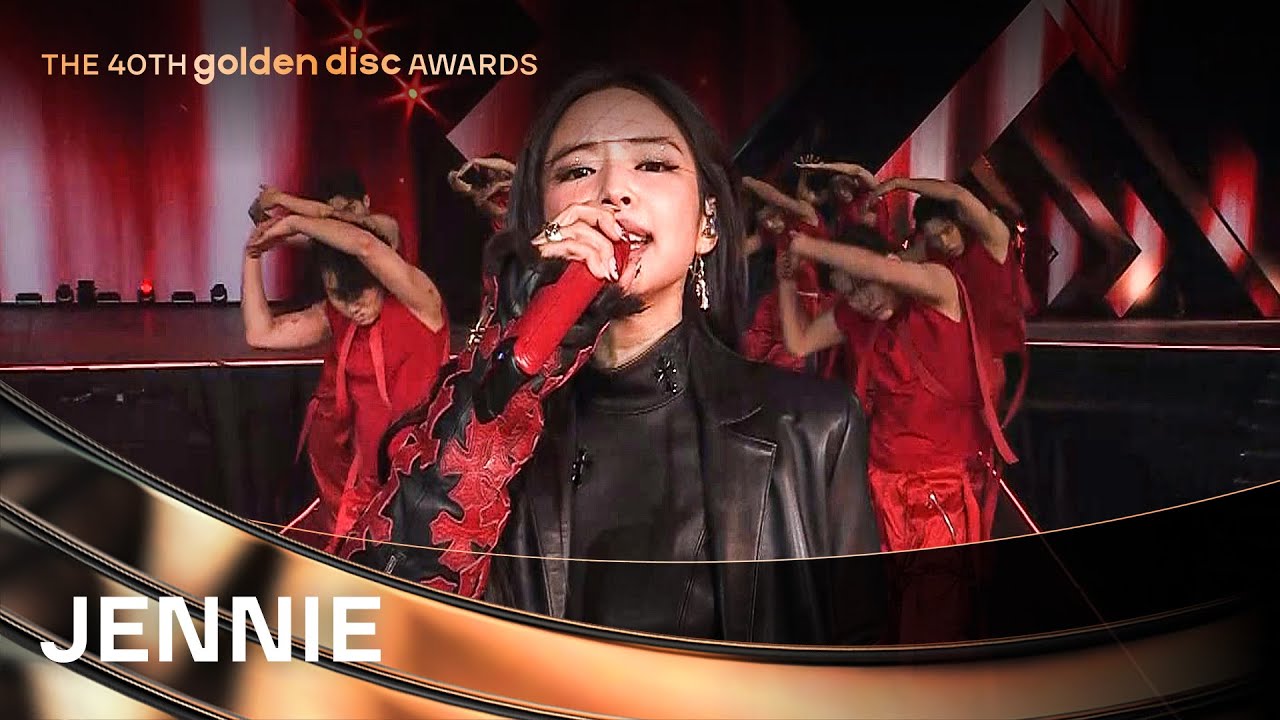
The album title “Ruby” appears to come from her other name, Jennie Ruby Jane. Over the past year, however, one thing has become clear. JENNIE is no longer presenting herself as the jewel. Instead, she has become the craftsperson shaping her own artistic form. (On the album cover, is Jennie gazing at the ruby?) The starting point is a strong album. “Ruby,” which JENNIE once described as a puzzle piece of her dream, firmly positioned her as a global pop star. The more secure that position becomes, the more meaningful her return to the language and script that first named her feels. The agency she exercised in making the album, and the strength of the result, align with her effort to reflect on her luminous cultural roots. To record that history, perhaps she needed a typeface of her own. Once again, what initially seems unnecessary may have been the only way forward. That is how this moment will be remembered. In K-pop, in 2025, there was JENNIE.