
Punghyanggo 2 (YouTube)
Oh Minji: The title “Punghyanggo 2” quite literally means “go where the wind blows.” True to its name, Jee Seok-jin, Lee Sung-min, Yoo Jae-suk, and Yang Se-chan set off with no fixed direction, letting the wind, their wandering steps, and sometimes even passing strangers decide their route. The rule is simple: no reservations, no plans, no searching. They are traveling through Austria and Hungary, but they know nothing about the places themselves. The only clue they have is a guidebook prepared by the production team, and the only way to figure out where they are and where they are headed is a paper map. No weather apps. No ride-hailing. The only way to know how cold it is is to step outside and feel it. If they want to reach their destination, they have to run after a taxi and catch it before it pulls away. It is the Christmas season, and every hotel is fully booked, leaving them without a place to stay. They line up early for schnitzel, only to be told “reservation only” at the door. They can be standing right in front of a beautiful building and still have no idea what it is. A menu sits in their hands, but they have no clue what they are about to order. Throughout the trip, they never quite know what they are supposed to do or what is even possible. Dropped into a place they know nothing about, they are left with the quiet tension of not being in control. In Punghyanggo 2, that kind of illogical travel inevitably comes with unease.
And that is exactly the point. A trip that moves wherever their feet carry them becomes something neither practical nor calculated, but unexpectedly romantic. Turned away from a restaurant without a reservation, they wander the surrounding streets and end up with a new recommendation from a local. By trailing after a stranger, they step into a cathedral just in time to hear the choir. A last-minute ride on the bumper cars, taken because they are not ready to leave the amusement park, turns out to be so fun that they go again. A train ticket pushed to a later hour because there are no seats left suddenly gives them time to visit the palace they had hoped to see. On the last day in Austria, the first snowfall they had been hoping for begins to fall outside the window. Watching it, Yoo Jae-suk says, “It really feels like Austria is giving us everything.” If, as the saying goes, romance comes from inefficiency, then the inefficiency of “Punghyanggo 2” inevitably carries romance with it. The luck they stumble into becomes the happiness of the day.
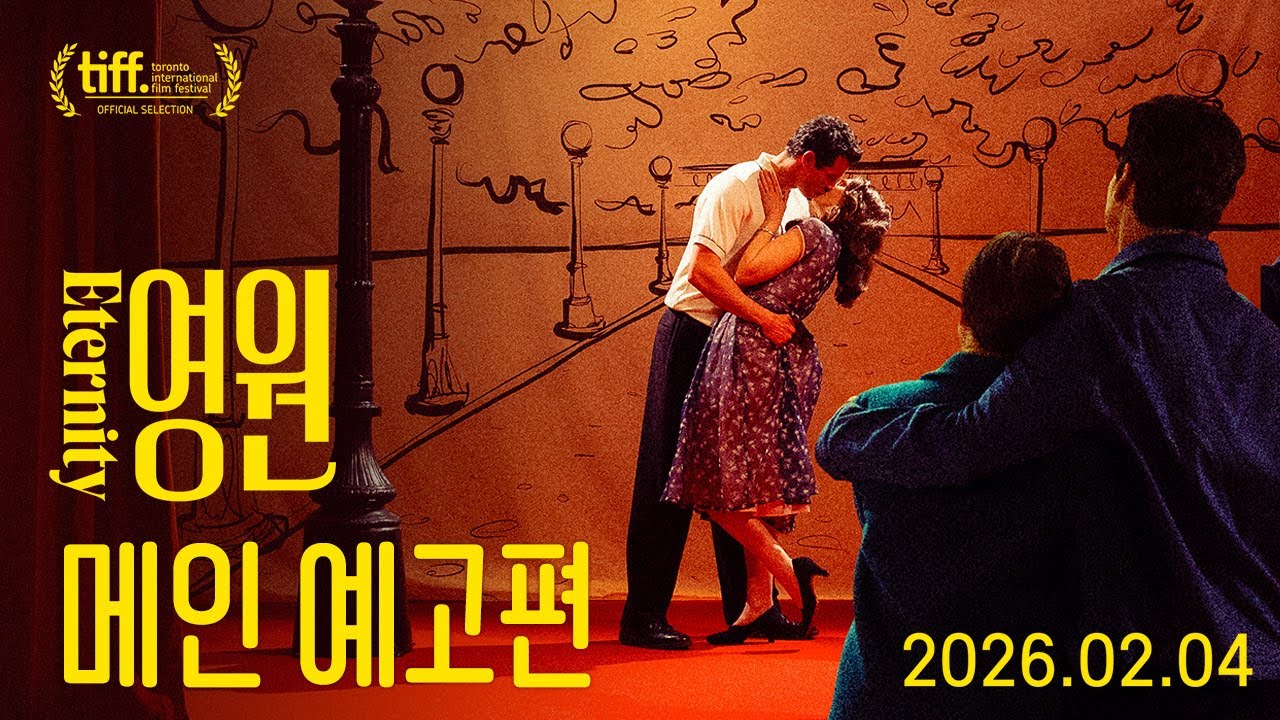
“Eternity”
Nam Sunwoo(CINE21 Reporter): Professor Youngmin Kim once said, “It is good to think of death in the morning.” Borrowing that thought a little generously, the start of a new year might be just as good a time to think about it. There are not many other moments when we can deliberately allow ourselves to be reflective. If we imagine a year as a single day, then right now, still early in the morning, feels like the right time to pause and consider how we want to spend what remains.
In that sense, “Eternity,” opening on February 4, gives us a chance to grow serious at an unhurried pace. The film unfolds in a transit lounge in the afterlife, where every character is already dead. Joan (Elizabeth Olsen) has just left the living world when she finds herself pursued by two men: her first husband, Luke (Callum Turner), whom she lost, and her second husband, Larry (Miles Teller), with whom she spent 65 years. The question is simple. Who will she choose to spend eternity with?
Yet the film is more invested in the endless range of possibilities ahead than in the choice between two men. A place where it is always spring. A world made up only of women. A place where you can practice medicine without a license. Heaven appears not as a single destination, but as a kind of expo, with options tailored to each person’s desires and values. The spectacle is oddly reminiscent of KidZania, the children’s theme park where kids try out different professions. And it makes you realize something simple. The places we imagine going after death look suspiciously like the lives we once wished to live. That idea proves far more compelling than any love triangle. After February 13, the film will also stream on Apple TV+ in Korea, where it is released under the title “Otherworldly Romance.”
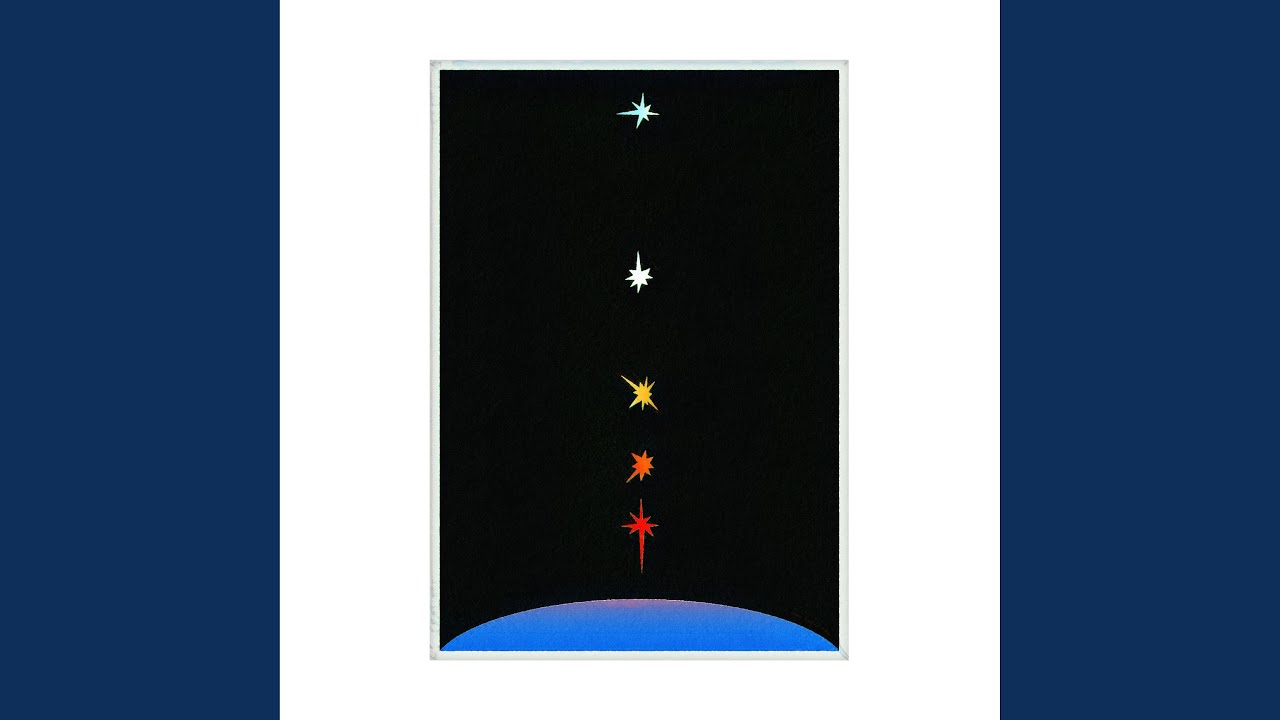
“Ding!”- JUNGWOO
Kim Doheon (Music Critic): “I will not get up even if the sun rises again.” From the gray world of “Cloud Cuckoo Land,” JUNGWOO, once tightly curled in on herself, finally stretches. After living what she calls a “life of iron,” hammering at her own shame-flushed face again and again until it hardened, she begins to catch a faint signal from far away.
Through “Ding!”, created with Cloud, her collaborator from “Cloud Cuckoo Land,” JUNGWOO redirects a life that had been orbiting alone in pitch-black space. The path she once traced in a universe of endless anguish now turns toward something newly blue.
Drawn to someone who has lived at a different pace, she wants to collide head-on and burn away the shell of silence that has wrapped around her. The crackling guitar and JUNGWOO’s clear voice meet with certainty, and in that moment, the sound rings out like a bell, bursting with joy as it breaks the silence. At the close of a year that never quite feels complete, and with a new one already pressing in before we have time to catch our breath, “Ding!” arrives like a small but steady signal. It offers quiet reassurance: even a little certainty can be enough. Enough to believe we are getting better, little by little. It turns out that was the comfort we needed most. With JUNGWOO’s song playing in the background, we make a promise for 2026: to shout louder, to be unafraid of noise, and to hold each other a little tighter.