The nominees for the 98th Academy Awards, to take place on March 15, have been announced. Most of the nominated films in the major categories have already opened in Korean theaters, with more coming soon. The most striking trend among this year’s films is how many of them demand to be seen on the big screen. That isn’t to say the selections skew toward blockbusters. From big-budget studio productions to small independent films bearing the unmistakable stamp of their directors’ personal visions, these are works that celebrate cinema as an art form—one meant to be experienced together in a room full of people sharing the same emotions. The six nominated films we’ll be covering represent the best that Hollywood has to offer right now—a direct answer, perhaps, to the age of streaming and AI.
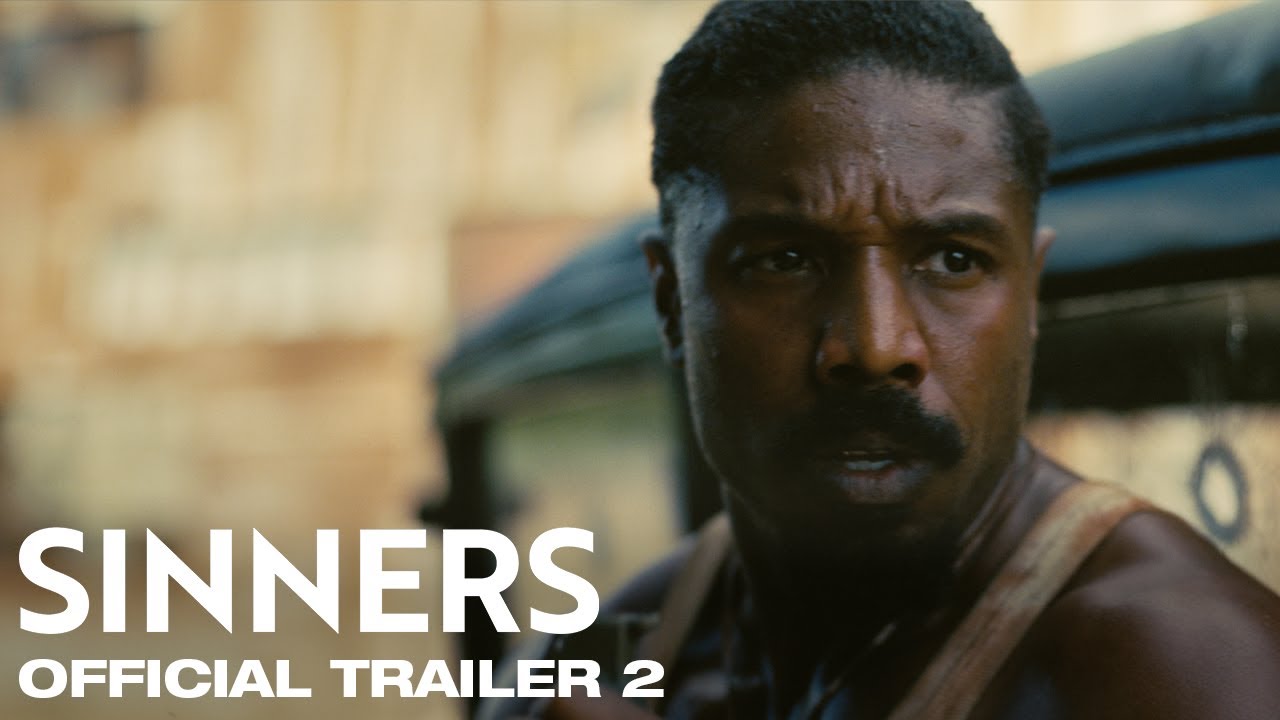
“Sinners,” nominated for 16 awards including Best Picture and Director (an all-time record)
“Sinners” is the most talked-about film of the awards season this year. It received 16 nominations—the most of any film in Oscars history. Director Ryan Coogler made his debut with “Fruitvale Station,” a low-budget film about the final day of a young Black man killed by negligent and cruel police. He followed it with back-to-back hits—“Creed,” a spin-off of the “Rocky” franchise, and “Black Panther,” the first film in the MCU to be nominated for Best Picture—cementing his reputation as a director serious about his craft. His latest film, “Sinners,” is set in 1930s Mississippi. The movie explores the lives of Black laborers living under oppressive conditions but does so within the framework of a vampire horror story. When twin brothers Smoke and Stack leave their Chicago gang life behind and return home to open a juke joint, a string of unsettling visitors sets a brutal chain of events in motion.
“Sinners” stays faithful to the conventions of the Gothic vampire horror genre, but it also doubles as a musical love letter to the history of blues and jazz, the ultimate roots of today’s pop music. Multiple eras of music converge in the surreal party scene that serves as the climax of the film, with blues, jazz, rock and roll, and hip hop all bleeding into one another. It’s a showstopper of a scene that shows how Black music carries a weight beyond religion for the characters, being inseparable from the immigrant experience. Living blues legend Buddy Guy even makes a cameo toward the end.
If Coogler wins Best Director, he’ll be the first Black director to do so in Oscar history. Cinematographer Autumn Durald Arkapaw is also the first woman of color to ever be nominated for Best Cinematography and is currently considered the frontrunner for the award.
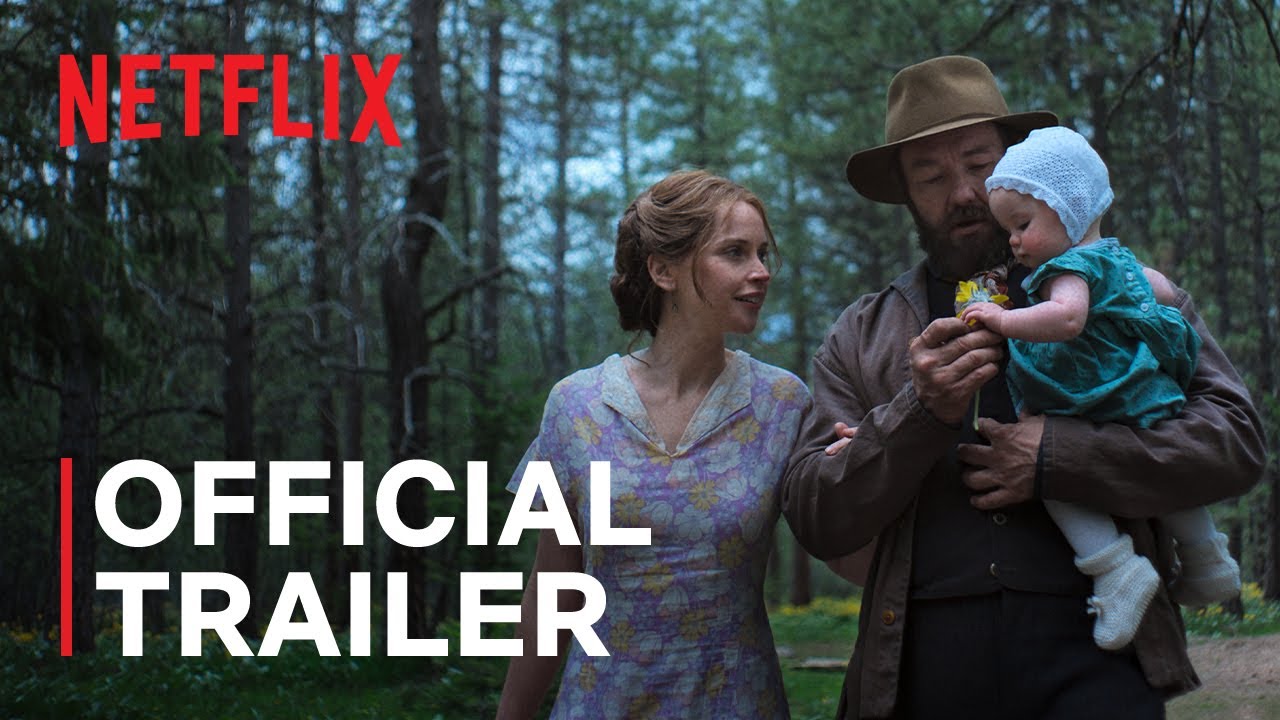
“Train Dreams,” nominated for Best Picture, Adapted Screenplay, Cinematography, and Original Song
“Train Dreams,” a Netflix film adapted from the novella of the same name written by two-time Pulitzer shortlister Denis Johnson, follows the life of Robert Grainier, a railroad laborer in early 20th-century America. In an era when railroads had yet to reach every corner of the country, Robert drifts from job to job as a logger, following the work wherever it takes him. The long-time loggers around him lament the shrinking time they have left as the years pile up, while the ancient forests they’ve worked in are slowly stripped bare as industrialization picks up speed. Nothing lasts forever, including family, the thing that brings Robert’s life more meaning than anything. He has to keep working under the weight of loss until his last breath, as though labor itself were a life sentence he never agreed to.
In a time when we’re saturated with the instant gratification of short-form videos all over social media, “Train Dreams” moves along with a certain rhythm and with a particular message that resonates deeply. One of the film’s most distinctive qualities is its unusual aspect ratio—not the standard widescreen format, but a nearly square 3:2 frame. It feels like you’re watching an old movie from another era. The sweeping nature of Idaho is rendered beautifully within the narrow confines of the frame, particularly the way the warm light filters through dense forest in a way you can almost reach out and touch. The felling of trees so silent and steadfast as the world races past them in the name of progress feels like an analogy for Robert himself. Nick Cave, frontman of Australian alternative rock band Nick Cave & the Bad Seeds, sings the film’s titular end credits song. After the director reached out to him, Cave watched the film and then wrote the lyrics in a single day. “There’s something life-affirming about this devastating story,” Cave observed. “And that’s the beautiful paradox of grief.”
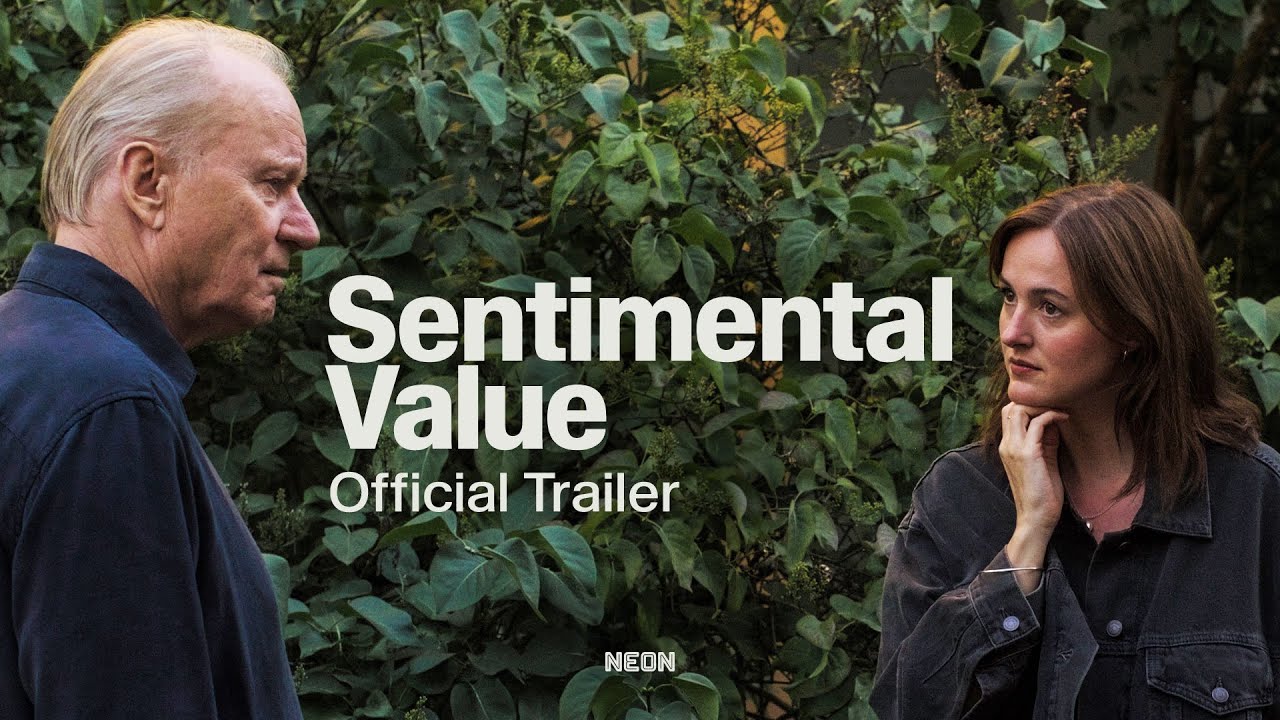
“Sentimental Value,” nominated for nine awards including Best Picture, Director, and leading and Supporting Actors and Actresses
In 98 years of Oscar history, only some 20 non-English-language films have been nominated for Best Picture. But that all started to change once “Parasite” won. Films that have won at Cannes or Venice are increasingly breaking through into the major Oscar categories. This year, Norwegian director Joachim Trier’s film “Sentimental Value” similarly won the Grand Prix at Cannes before the Academy turned their attention to it for nine different nominations. In an unusual move, all four of the film’s lead and supporting actors and actresses received nominations. It really speaks to how well the ensemble works together onscreen. The film also gave distinguished Swedish actor Stellan Skarsgård his first Academy Award nomination. Although nominated for a supporting role, he is actually closer to one of the leads.
The title “Sentimental Value” refers to those things that get handed down through family history—including the kind of generational trauma and emotions that they struggle in vain to let go of. Gustav, a middle-aged filmmaker who hasn’t made a film in years, spent his younger days pursuing his work exclusively at the cost of estranging himself from his wife and two daughters. The daughters grow up and lead lives of their own, until one day their mother dies and their father reappears after so many years apart, announcing he intends to make a film based on the family’s painful history. Not only that, but he wants to shoot it in the family home, and he wants his grandson to appear in it. Especially striking is the ending, which finally brings to the surface all the problems running through the family that prove you always hurt the ones you love. It’s the kind of film that evokes empathy with its power to invite audiences to project their own experiences onto it.

“Hamnet,” nominated for eight awards including Best Picture, Director, and Actress
Chloé Zhao’s film “Hamnet” is an adaptation of the Maggie O’Farrell novel of the same name—an imaginative account of what is considered the most defining event in William Shakespeare’s life as well as what may have led to the birth to his famous “Hamlet.” According to the historical record, Shakespeare was at the height of his career as a playwright when his son Hamnet died of the plague back home—a devastating loss that left him grief-stricken. Might Hamnet and Hamlet really be that closely connected? The film’s power of imagination is truly striking, and one of the most important functions of a work of art is to give audiences or readers a chance to become absorbed in a fictional world and identify with the protagonist’s story as if it were their own, leading to emotional resonance or release—in other words, catharsis. “Hamnet” gives that catharsis, the beating heart of art, a visual form—and it does so beautifully.
Shakespeare’s wife Agnes understands her husband’s creative spirit better than anyone and teaches their children to love nature and find a way through the pain that life brings. All of this is rendered with stunning visuals, music, and cinematography. Of all the films made about Shakespeare, few directors have demonstrated the same kind of command of their craft. Jessie Buckley’s performance as Agnes is so extraordinary that a Best Actress win feels like a near certainty. British composer and pianist Max Richter gave the film its score, which includes both original compositions and selections from his back catalog. The scene featuring “On the Nature of Daylight” off “The Blue Notebooks”—Richter’s album rooted in protest against the Iraq War and a contemplation of his own troubled childhood—is one of the year’s most memorable moments in cinema.

“One Battle After Another,” nominated for 13 awards including Best Picture and Director
Among working American directors, Paul Thomas Anderson has long been considered one of the great auteurs—and one of the great perpetual also-rans of the Oscars. He’s won awards for directing at Cannes, Berlin, and Venice, yet has never taken home an Oscar. One of the key questions of this year’s ceremony is how many trophies he might personally walk away with, given he’s been nominated for Best Picture, Director, and Adapted Screenplay. “One Battle After Another” is a remarkable and genuinely entertaining film, and once you’ve seen it, it’s hard to imagine PTA walking away from the ceremony empty-handed.
The film also marks a clear departure from anything the director has ever done before. It was made on a studio budget of over $100 million, was released in IMAX, and features a cast of major stars including Leonardo DiCaprio, Sean Penn, and Benicio del Toro. The story of failed revolutionaries on the run from the government for years is fictional, but it mirrors so many of the United States’ current social crises so precisely that it feels like a documentary. DiCaprio is nominated for Best Actor as Bob Ferguson, while Penn (Colonel Lockjaw), del Toro (Carlos), and Teyana Taylor (Perfidia) are all in the running for Supporting Actor and Actress. A new Best Casting award was introduced this year, and the film is a frontrunner there too—a testament to how well the ensemble performs as a whole. Chase Infiniti, who plays Ferguson’s daughter Willa, also delivers a standout performance, so her lack of a nomination has been widely seen as one of this year’s biggest Oscar snubs.

“KPop Demon Hunters,” nominated for Best Animated Feature and Original Song
“KPop Demon Hunters,” Netflix’s most-watched film of all time with over 300 million views, received two Oscar nominations. The movie is up for Best Animated Feature and the song “Golden” is vying for Best Original Song. “Golden” already took home the Best Original Song award at the 83rd Golden Globes—a traditional bellwether for the Oscars. At the Annie Awards in LA, organized by the International Animated Film Association, the film swept up 10 trophies, including Best Animated Feature. With over 100 awards from ceremonies around the world, “Demon Hunters” has become a bona fide cultural phenomenon. The other animated nominees this year are no less accomplished, but what “KPDH” achieved when it blurred the line between the streaming and theatrical worlds is remarkable in its own right.
Fictional though they might be, Huntrix and the Saja Boys have taken on a life of their own in the music world, their popularity now rivaling that of real K-pop groups. The soundtrack became the first in history to have four of its songs in the Top 10 of the “Billboard” Hot 100 simultaneously, and “Golden” won Best Song Written for Visual Media at the 68th Grammys, marking the first time K-pop songwriters and producers ever took home a Grammy. It’s not unusual for animated films that win at the Grammys to go on to win at the Oscars, so there’s a good chance they’ll be adding another trophy to the shelf. The competition for Best Original Song includes “Sinners” and “Train Dreams,” but if “KPop Demon Hunters” wins, it’ll become only the 12th animated film in Oscar history to take home the trophy. Director Maggie Kang has described the film as a love letter to K-pop and to her own Korean roots. With this film, she found a way to carry her message to audiences around the world through music and the power of quality animation.