A therapist once told me to cook more often. The idea was to wash, chop, and sauté with my hands—to wake up the body’s senses. It didn’t feel like throwaway advice, given how rarely we engage all five senses, smell and taste included, unless we actually step into a kitchen. I paused, though, because the therapist had said it while calling out one of my defense mechanisms. I was told I have a habit of examining situations purely through logic rather than facing my emotions head-on. In short: “Stop thinking. Feel what you’re feeling.” There was nothing difficult about hearing the message itself—and yet something inside me caved in a little, because I’m a film critic by trade. I’m already numb to my own personal triggers, so could I really have been picking up on the emotional lives of people onscreen? How many of the delicate moods radiating from films have I been missing all this time? I began to worry that I’d chosen a job I had no business doing.
Regardless, I cooked. And diligently. Whether it helped with my defense mechanisms is hard to say. What it did do was cut down on my food delivery bills. I made an effort to actually notice things—the moisture in tofu, the earthy smell of spinach, the viscosity of a raw egg. I paid attention to the green that spreads over the knife when cutting chives, the orange that lingers on your hands from carrots, the white foam that blooms on the surface when boiling chicken. It wasn’t until I’d built up a repertoire of dishes I could throw together without consulting a recipe that something clicked. I wasn’t watching films in spite of avoiding my emotions—I was watching them because of it. At least through film, I could overlay my own feelings on top of those of the characters. “I’ve been there. I’ve never gone that far. I’ve had it worse …” Film, along with theater and novels, gave me permission to murmur those things. I had to laugh. I’d crawled into a shelter of my own making and then worried I wasn’t suited for it. There’s no such thing as being deserving of a way out—there’s only the memories you want to escape from and a present in which you can’t.
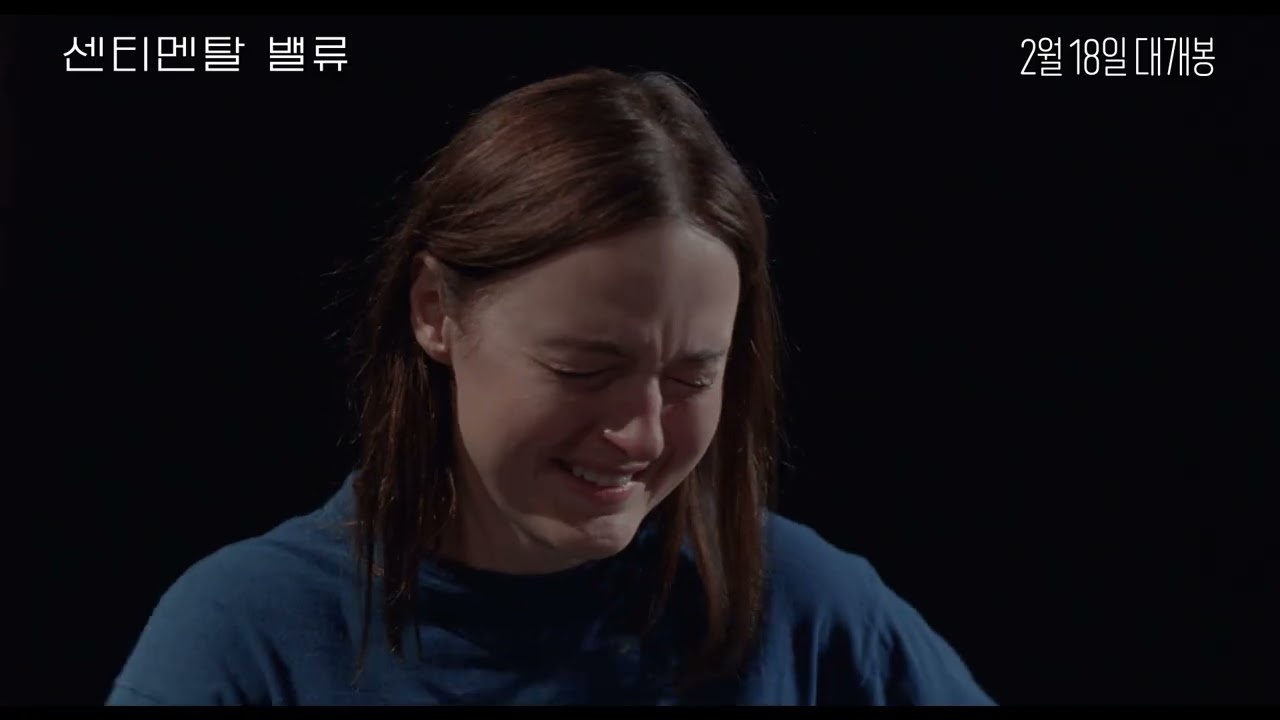
I found characters like that in Joachim Trier’s “Sentimental Value,” too. It didn’t take long to recognize myself in the father and daughter—not just because of what they do for a living, but in how they do it. The father, Gustav (Stellan Skarsgård), is a filmmaker. He hasn’t completed anything in 15 years, but he’s acclaimed enough to have had a retrospective at a major festival. His eldest daughter, Nora (Renate Reinsve), is a stage actress who struggles with stage fright and yet still manages to summon the courage to take on the role of Hamlet. At first glance, they seem like two people who might have shaped each other, working as they do in the same field. Instead, they’ve always kept their distance. Gustav, long absent from his family, only shows up for his daughters after his ex-wife—their mother—dies. He wears the look of someone fulfilling their obligations, while the sisters, still reeling with grief, grapple with a confusing turn of events where their mother left this world only for their father to return. The reunion comes with demands, though. Gustav drops a thick script Nora’s way, telling her he wrote a role for her and that only she can play it.
The scenes play out to provide background for what brought about the abrupt casting. What does he want to make with this movie? Why the part for her? Is it some kind of apology? Following a meeting between Gustav and Nora full of crumpled up papers, Trier simply cuts to each of them going about their separate lives at work. Gradually it emerges that Gustav once cast his younger daughter Agnes (Inga Ibsdotter Lilleaas) in a film exploring his own mother’s experience with trauma, that this new project also looks at his mother’s death, and that the role that eventually went to a Hollywood star was actually meant for Nora all along. Gustav, who’s long used cinema to excavate the things inside him that may ultimately find their roots in his family history, shows up to Agnes’s son’s birthday to gift him DVDs of “The Piano Teacher” (Michael Haneke, 2001) and “Irréversible” (Gaspar Noé, 2002)—because, he says, they’ll help his grandson understand women and motherhood. Whether the grandson will ever appreciate those gifts is another question, but the audience can at least begin to imagine what kind of mother Gustav grew up with—and why he sees something of her in Nora.
Nora has her own reasons for needing the world of acting the way she does. She tells a colleague she loves developing a character because becoming someone else and feeling their emotions gives her a safe way to feel her own. The film’s opening sequence offers a perfect example: an essay Nora wrote in sixth grade. Given an assignment to become an inanimate object, she writes from the perspective of her own home. The voice-over that opens the film sounds at first like a standard exercise in personifying a particular space, but it’s really the family history Nora could only disclose by first pretending to be their home—one that had to weather the noise of her parents fighting more and more, then the distaste for silence the family developed once her father was gone … By disappearing into the home, Nora found a way to open up. When asked by her colleague whether she simply doesn’t want to be herself, Nora offers a weary smile. That quiet response says everything about the subtle instinct that nudges Nora toward avoidance. She tells the man she’s sleeping with that she’s glad he’s married because it means she doesn’t have to face how much of a mess she is. There’s more going on with what she says than what’s directly at the surface. Nora already knows she’s a mess, but does she feel like she comes out ahead of a man cheating on his wife? More likely, she just doesn’t have the energy to actively confront anything about her real life. (It should be noted she once attempted suicide—just as Gustav’s mother did.) If he were single, she’d have to think about what comes next beyond just sleeping together. For Nora, there seems to be some relief knowing that, for now at least, there’s no need—which may also explain why she’s thrown when he tells her he’s getting a divorce.
These are people who can only face the shape of their own lives through the filter of art, who know their limits well enough to have decided to construct those filters themselves, and who have ended up unable to have a real conversation about each other without bringing up each other’s creative work. That Agnes is still there with Gustav and Nora, who have grown more alike the further apart they’ve drifted, is nothing short of a miracle for this family, and not just because she somehow manages to get her bickering father and sister to the dinner table despite their petty sniping about whether to make the film together. Unlike her father and sister, who are accustomed to communicating through interpretation and reenactment, Agnes, as a historian, deals in primary sources. She visits an archive and finds photographs of her grandmother covered in bruises—pictures of a woman who joined the resistance after World War II broke out, was imprisoned, and suffered torture. Trier conveys through Agnes’s eyes material that Gustav could not bring himself to examine, that Nora could never have anticipated.
Only then does the film intercut their three faces over a black screen. Those deliberate cuts soften the hard edges between three people who’ve been framing things in completely different languages. History hands its pain to art, and art sublimates the pain of history. Just as reality and its reenactment can’t be separated, Gustav and his daughters may not be able to live close together, but they’ll never be fully apart either. All they can do is hope that they can hear what the other is saying without twisting it, and vice versa. It’s also fair to point out that such a luxury isn’t available to fathers like Gustav, who doesn’t hesitate to speak Swedish to his children born and raised in Norway. Then again, maybe it’s exactly because he’s that kind of father that he showed up with a script. Gustav and Nora will now, thanks to Agnes, be able to collaborate, speaking awkwardly but nonetheless anew—as director and actress, as father and daughter, as two people dreaming of a shared language.