There’s a neighborhood in Seoul called Jae-dong. It sits near Anguk Station in Jongno-gu, home to the Constitutional Court in Seoul. The name Jae-dong comes from jae, a Korean word for the ash left behind by fire. The whole area was once so soaked in bloodshed that residents reportedly scattered ash all around, giving rise to its older name carrying that meaning, Jaetgol. In 1453, Suyang Daegun, the Grand Prince, staged the Gyeyu Coup, forcing out King Danjong and purging many of his officials in the process. The bloodshed from Gyeongbokgung Palace and Gwanghwamun flowed all the way to Jaetgol a kilometer away. Today, Jae-dong is a neighborhood open to all wishing to take a stroll, yet hidden within is a terror that gripped the young king.
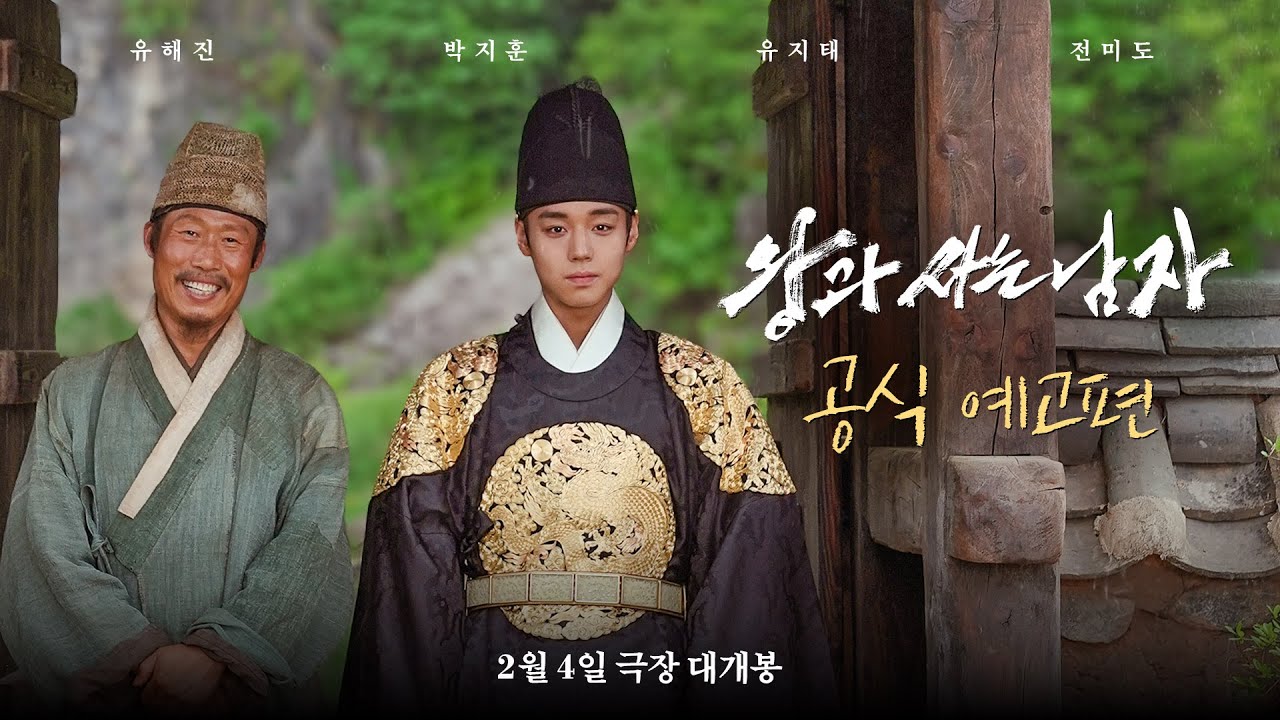
“The King’s Warden,” directed by Chang Hang-jun and the first Korean film of 2026 to cross the 10-million-tickets mark, opens with a recreation of the very terror that Danjong (Park Jihoon) must have felt. The small, gaunt young King Danjong endures the screams of his tortured subjects coming from beyond a palace door. Soon, Han Myeonghoe (Yoo Ji-tae), who’s been ruthlessly torturing court officials, strides in, and the camera looks past his towering figure to Danjong, seated low down, underscoring just how small and powerless he is. Danjong, averting his eyes, asks if he’s next—if Myeonghoe has come to make him scream like the others. The lines are framed as questions, but the actor’s trembling voice and hardened gaze make it immediately clear that they’re not questions at all—they’re the despair of someone who’s already faced with tragedy. Before long, Danjong is demoted to Nosan-gun (Prince Nosan) and exiled to Yeongwol in Gangwon Province. As he’s driven from the palace, the first thing his eyes see are the heads of executed subjects—the very massacre that gave Jaetgol its name.
It’s often said that actors communicate with their eyes, the idea being that they should convey a circumstance through more than dialog alone. They need to show emotion with their eyes, and in general, it means an actor must physically convey the story and their feelings. In that respect, Park Jihoon in “The King’s Warden” relies on nonverbal cues, like uncertain eyes, slumped shoulders, and a listless gait, to portray the king deposed at 17 onscreen. He swallows back his words and tears alike, as though grief has left him spent of every last drop of energy he once had to speak. Once Danjong sets foot in Gwangcheongol, Park becomes increasingly absorbed in conveying the emotion and narrative of the film with the body rather than with words. Danjong, gripped by an overwhelming urge to die, skips meals, is tormented by nightmares, and tries to take his own life in a perilous jump. The actor drains his body of all strength, embodying a character who seems to hover somewhere between living and dead. The film’s other visual devices help to amplify this helplessness. Most strikingly, the pure white hanbok Danjong wears in his early days in Yeongwol, when he’s at his most psychologically shattered, makes him look like one of the dead, as though he were a kind of ghost.
Seeing Danjong so helpless, the villagers of Gwangcheongol, and likewise the audience, no doubt find themselves all asking the same question: Was this boy ever really fit to be king? Interestingly, given the nature of dramatic film—where actor and character are so tightly bound—the question naturally extends to the actor himself. Can Park Jihoon, the idol-turned-actor who went on to act in the web series “Love Revolution” and the streaming exclusive “Weak Hero,” hold his own as the central character of a film in theaters? In this way, the two questions—Was this deposed boy king truly a leader? And, can this young actor carry the weight of a feature film?—are two sides of the same coin. And the answer to both, to get right to it, is yes. The clearest example can be seen in the scene where the villagers encounter a tiger and move away, calling it a king, and Danjong steps up unwaveringly and shoots it down with an arrow. Here, the villagers get to witness his leadership firsthand. Within the (fictional) world of the film, Danjong, who had seemed like nothing but a frail kid, jumps immediately into action to save the people of Gwangcheongol, his last remaining subjects. In the real world, Park leaps from a portrait of a powerless boy all the way to that of the virtuous ruler, demonstrating his full range as an actor. His performance in this moment is enough to paper over even the lackluster CGI tiger. The scene is also set back-to-back against one in which Danjong fires with an empty bow and says that the missing arrow was meant for himself for being too weak and pathetic to protect his people, quietly suggesting that not only did the tiger he shot represent Suyang Daegun, who seized power through violence, but perhaps himself as well. Perhaps that’s why Danjong is finally able to begin pulling himself out of his grief after the incident with the tiger, once again eating food, spending time with the people of Gwangcheongol, and displaying the qualities that are becoming of a virtuous ruler. And it’s likely from this scene on that the audience’s view of Park himself shifts decisively.

Once, on assignment, I visited the set of “Love Revolution” (2020), a KakaoTV original drama that, following his time as a child actor, can fairly be called the start of Park Jihoon’s adult acting career. At the time, he was playing Gong Ju Young, a playfully affectionate high school student who expresses his love from head to toe, and had to deliver the kind of endearing performance that audiences find completely disarming. The character in the webtoon on which the series was based was so full of charm that I’d gone to the set wondering how anyone could ever do him justice onscreen. A colleague of mine interviewed Park while I spoke with the rest of the cast, but I remember watching him perform on that set and thinking how cleanly he fit into the character from the webtoon. Perhaps thanks to his idol years he’d spent honing his craft, he put on an emotional display brimming with warmth, showing not a sign of nervousness or self-consciousness no matter how much the camera encroached on his space. His bangs dangled over his eyebrows, but his clear eyes sparkled even without the light of the stage. Watching “Love Revolution” later on the tiny screen on my phone, I remember thinking there was something clever in the way he was acting. There was also the impression that what he was channeling into his performance was essentially the same ability to pull people in in an instant through a single movement or facial expression that earned him the nickname Wink Boy.
But in the “Weak Hero” series, there was something somewhat different about him. Where before it had seemed like sunlight fell on his face wherever he stood, his face was cast in deep shadow and worry while portraying Yeon Si-eun. Si-eun was a character of minimal words and minimal movement. Caught up in school violence and cut off from the adult world his parents inhabited, he moved through the story with his arm in a cast, scars on his face, and almost no expression to speak of. By the time he was on “Weak Hero,” Park had learned to present a character’s individual circumstances in a more understated way. This represented progress of a different order compared to portraying a character like Ju Young through gestures, glances, and a playfully charming way of speaking. To dissolve effortlessly into a film’s carefully crafted mise en scène and convey a character’s life from within it, without making it feel forced or showing off, is a far more demanding skill. With “Weak Hero,” he gradually developed the kind of centeredness that lets an actor sink deeply into a character without rushing.
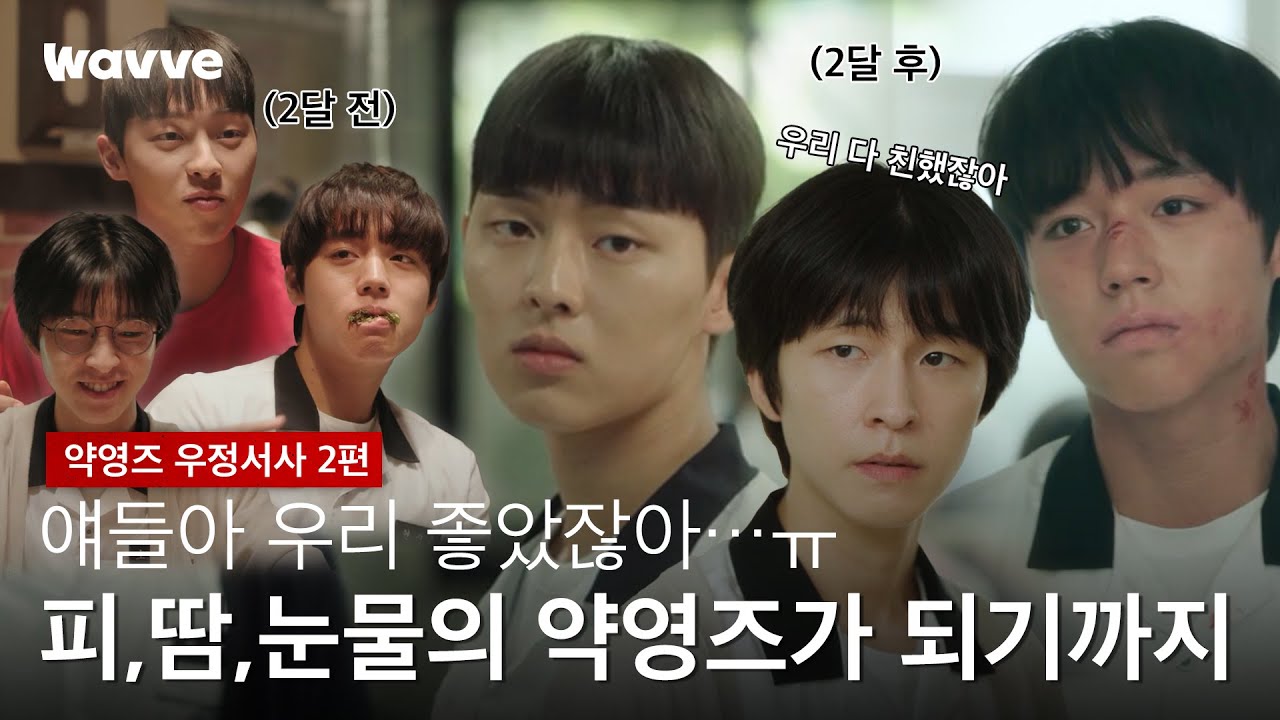
There are times when you’re sitting in a theater and you witness an actor starting a new chapter of their career. You walk in expecting the kind of performance you’ve always known them for, but every so often, you find yourself watching the screen open up into something new. Park Jihoon’s performance in “The King’s Warden” was one of those times. Building on the centeredness he’d refined with the “Weak Hero” series, Park brought out both the lowest lows and the highest highs of Danjong as a character, dissolving effortlessly into the world of the film and hitting the mark exactly in every emotionally charged scene without going overboard. As of March 23, “The King’s Warden” is on the verge of surpassing 15 million moviegoers, meaning it’s drawn in every kind of audience member out there. Having reached viewers of all ages and backgrounds, opinions on the film will naturally vary, but when it comes to Park Jihoon, surely everyone walked away thinking the same thing—that with this latest film, he’s left a vivid impression on everyone who saw it, and that he’s become the kind of actor who makes you excited to find out what he’s going to do next.
- The way MUN KA YOUNG loves2026.03.17
- “No Other Choice”: The Daughter Knows2025.10.20