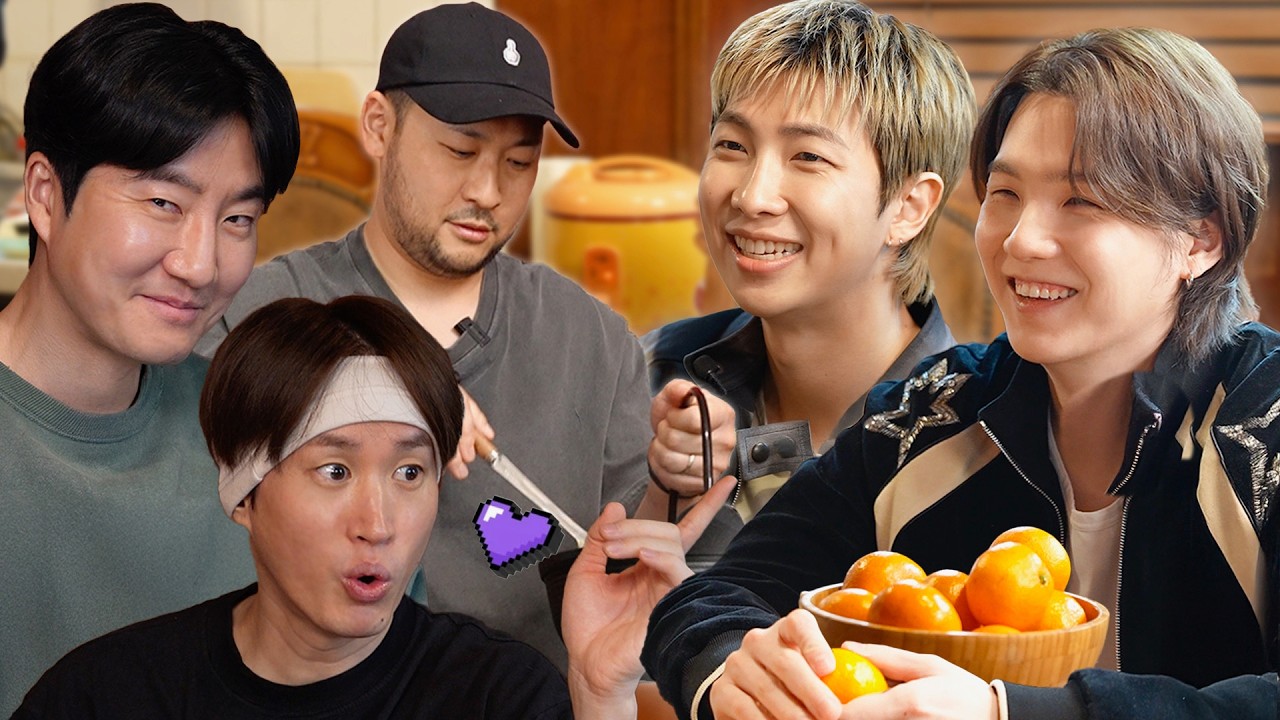
“Asking BTS all the questions we were NOT allowed to ask #RM #SUGA” (YouTube)
Song Hooryeong: “Were you always this good?” Watching the members of Epik High, RM can’t hide his amazement over how well they’ve “adapted to the YouTube era.” In a new episode of their webshow “EPIKASE,” Epik High lobs questions at BTS with a knowing grin—questions nobody has ever asked them, and probably never will again, like, what kind of videos dominate RM’s YouTube feed? Who’d win in a one-on-one fight between the BTS members? Childish, mischievous stuff. Then there’s the part where they whisk away the dining table and make RM and SUGA give them a deep sebae bow—the kind of friendly ribbing that only a group BTS is close with but who actually got their start first could make work. When BTS set off on uncharted waters, Epik High was practically the only pillar of support for BTS, but when Epik High starts telling BTS’s history from their own perspective, even RM and SUGA are hearing some of it for the first time. There’s TABLO’s memory of meeting SUGA, still in school uniform, at his studio in 2010, and memories of how, even as BTS was riding the massive wave of “Dynamite” in 2020, RM and SUGA each showed up at Epik High’s door a day apart to talk through all the thoughts about the group swimming around in their heads. Details like these offer a little glimpse into just how hard they work behind all that BTS glamour.
Epik High, who RM places in such high regard that he says BTS wouldn’t exist without them, has become just another YouTuber to younger viewers. Doing away with lavish titles, if you ask them now, they’re just “creators,” marking the start of the Epik High 3.0 era. And you don’t need to look any further than the view counts on “EPIKASE” videos to see how successfully they’ve evolved. Fittingly, BTS has similarly announced their next chapter to the world with “2.0” off their new album, “ARIRANG.” Seeing now what Epik High’s done in their own journey, what new changes lie ahead for BTS? Epik High in their 24th year, BTS in their 14th—the age of Epik High 3.0 and BTS 2.0 is unfolding. An endless desire to change, but with friendships that stay constant. That’s probably why these two groups, with a good 10-year difference between them, still seem so alike.
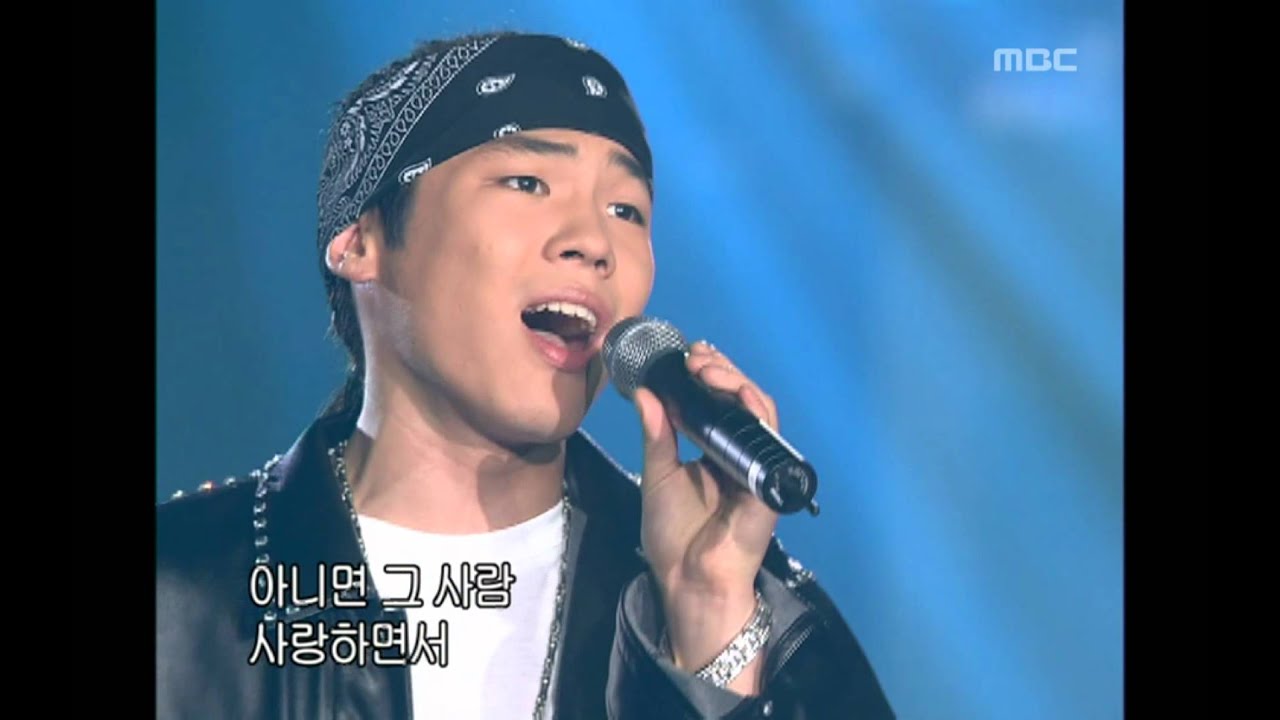
“Andoenayo” (Can’t You) (Realslow [Wheesung])
Kang Ilkwon (music critic): I can still vividly remember seeing Wheesung for the first time on TV in 2002. He was performing the heartfelt R&B ballad “Andoenayo” in cornrows and hip hop threads. It was a different kind of song from what D’Angelo would do, but something about Wheesung called that other artist to mind, singing soul while wearing the clothes of a gangster and moving like one. It was something altogether brand new. It was common enough in American R&B, but a rare sight for Korean pop at the time. It seems a lot of people found it jarring, though. Not long after, he returned looking a lot more clean cut from head to toe.
When Wheesung arrived on the scene, he grabbed as much attention for his appearance as for his music. At a time when R&B still hadn’t broken into the mainstream, he translated it into something the average listener could understand. And he didn’t sacrifice the integrity of the genre to do so, either. Rather than simply borrowing the production style and vocal techniques, he reshaped the genre to fit the rhythm and overall sensibility of the Korean language. His R&B drew directly from its American source while never losing the emotional thread that Korean audiences could readily identify as their own.
At the center of his music was always his voice. Wheesung’s vocal technique was impressive and precise but he also knew how to pack his words with emotion using a delicate touch. His high notes, for instance, weren’t mere showboating—he used them to drive home the emotional zenith. And the first three albums he put out, all centered around that amazing voice of his, became mainstays of Korean mainstream R&B. He didn’t stop at bringing the genre to life—he rewrote it in his own words. It was an achievement that set a benchmark for countless artists who came after him.
But his voice won’t be gracing any new songs now. March 10 marked one year since Wheesung left us. He came to carry light and shadow in equal measure. He was brilliant onstage, but inescapably unsteady off it. But we’ll remember him for the voice and music that touched on something deep, and for the lyrics that could capture life and love in just a few lines. It’s not a matter of nostalgia but what he did to prove just how much Korean R&B is capable of.
In memory of Wheesung, aka Realslow—one of the most luminous artists in the history of R&B in this country.
“The Emperor of Gladness” (Ocean Vuong)
Kim Boksung (writer): Struggling with depression, 19-year-old Vietnamese American Hai finds himself facing what could be his last moments on Earth in the fictional town of East Gladness. After a Lithuanian woman in her 80s named Grazina talks him down from a bridge, what starts as merely fortunate timing blooms into a friendship as the young man takes on the role of caretaker for the dementia patient. Poet Ocean Vuong’s sophomore novel is all about finding these gleams of hope in otherwise challenging and often downright upsetting lives on the fringes of first-world society. The prose is poetic, sometimes strange, almost always heartbreaking, even for the secondary cast of characters, exploring addictions, generational pain, self-deception, but also found family. From hallucinogenic flashbacks of war-torn pasts to a slaughterhouse scene that’s as eye-opening as it is difficult to stomach, Vuong writes with a beauty you would never expect from such subject matter and gives a voice to the voiceless in this semi-autobiographical series of harrowing vignettes.