In recent years, the announcement timeline for the Coachella Valley Music and Arts Festival has been moving steadily earlier. Coachella used to announce its lineup in January, about three months ahead of the event—a relatively late reveal compared to other major festivals. But the 2025 lineup dropped in November 2024, and the 2026 lineup came as early as last September. In other words, just five months after the previous year’s festival ended, the next lineup was already unveiled—leaving a longer, seven-month wait on the other side.
There are several reasons behind this accelerated rollout. For audiences, it allows more time to plan travel-heavy festival trips and brings ticket sales forward. At the same time, it signals that Coachella occupies a position beyond direct competition with other major festivals. It offers a stage large enough for legacy acts plotting a return, or for stars looking to cap off a successful run. It can honor established icons while also opening space for emerging talent. In an era defined by fragmented tastes, where consensus is harder than ever to come by, Coachella continues to function as more than a massive festival brand—it remains a trusted lens on where popular music is headed.
That’s why a Coachella poster is never just a list; it speaks for itself. Every festival lineup invites familiar criticisms—dismissed as “boring” by some, while others complain they don’t recognize half the names. The truth, as always, lies somewhere in between. If you want to understand where the heat in popular music is right now—and where quieter, simmering energy is beginning to build—it’s worth dedicating two weekends to finding out. It may mark the beginning of a new legend, or it may flicker out as a fleeting spark. Either way, each moment tends to carry its own kind of beauty.
Headliner: Justin Bieber
The widening genre spread at major festivals is nothing new. At Coachella, hip-hop and R&B have all but secured headlining slots year after year, while bands in the traditional sense have largely receded—the last being Radiohead in 2017. After the festival’s two-year pause during the pandemic, its 2022 return, led by Harry Styles, Billie Eilish, and The Weeknd, felt like a statement: pop had emerged from the pandemic era as the dominant force.
The 2026 edition ushers in a new era of pop headliners with Sabrina Carpenter, Karol G, and Justin Bieber. Among them, Bieber stands as the most challenging presence. In 2022, during his “Justice World Tour,” he was diagnosed with a rare neurological disorder that causes paralysis and chronic pain. He subsequently canceled much of the tour, and aside from a handful of sporadic guest appearances, he has not taken the stage under his own name. His widely discussed performance at the 2026 Grammy Awards marked his first major public appearance in roughly two years.
In the time since, Bieber has parted ways with his longtime manager, sold the rights to his catalog, and become a father. Then, with the surprise releases “SWAG” and “SWAG II” in 2025, he reinvented himself. “Baby” and “Peaches” are nowhere to be found. In their place is a stripped-down R&B record built on skeletal guitar riffs and what feels like voice memos—praised as “raw and truthful,” and nominated for four Grammy Awards, including Album of the Year.
His Coachella set is unlikely to look back, either. At a closed rehearsal in late March, Bieber reportedly performed 25 songs drawn entirely from the “SWAG” series. He seems to be betting that audiences will not come searching for past hits, but will instead follow him into new territory. That may explain why his return is unfolding on festival stages rather than through a traditional tour. Once again, Coachella becomes a moment of truth.
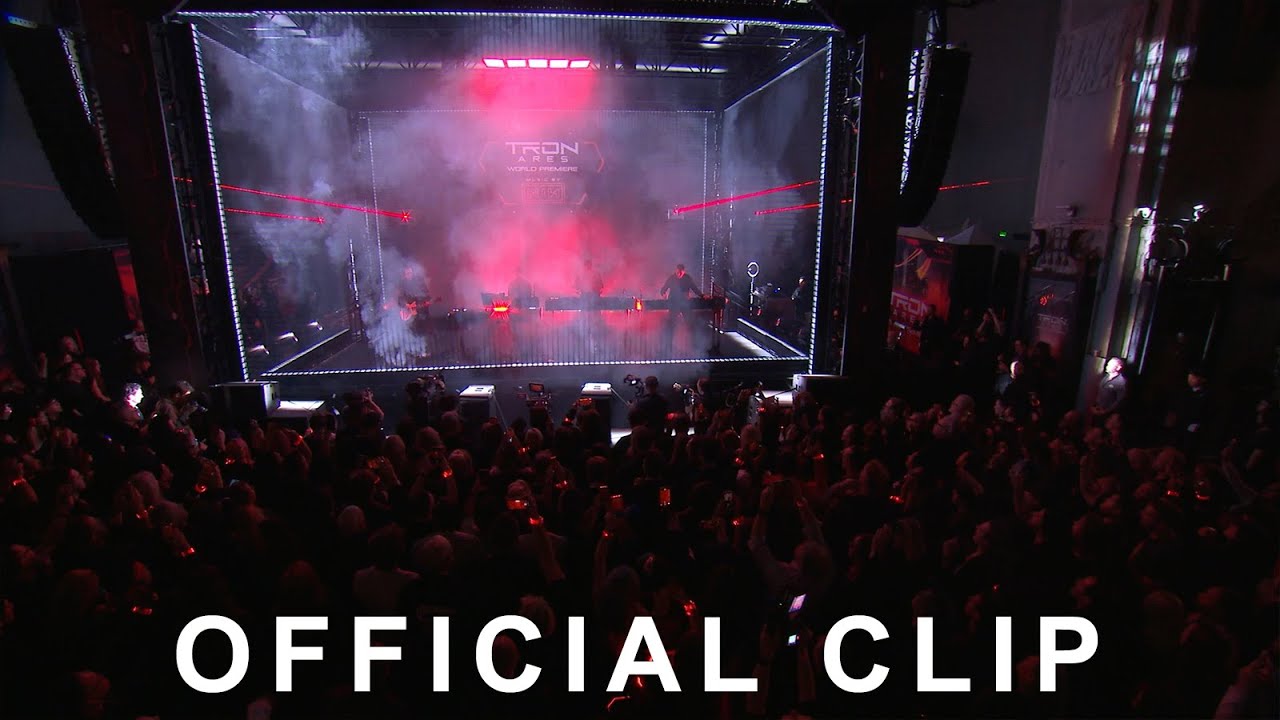
Debut: Nine Inch Noise
Nine Inch Nails recently wrapped up their “Peel It Back” tour, a run that spanned nearly a full year. With more than 60 shows across North America and Europe, it stands as one of the most successful tours in the band’s long history. The performances themselves drew widespread acclaim, frequently cited among the best live shows of 2025. Structured in four acts that move between full-band sets and DJ segments across two stages, the production was distinctive—but many pointed in particular to the involvement of German-Iraqi electronic producer Boys Noize. Opening each night and joining the band in the third act, he delivered remixed versions of Nine Inch Nails staples like “Vessel” and “Closer.” The fusion of the band’s millennial-era intensity with heavy techno earned recognition as more than a transitional device—it stood as a compelling statement in its own right.
This year, Coachella offers up the name “Nine Inch Noise” on its poster without explanation. It’s a rare case of a performance concept developed on tour taking on a new identity for a festival stage. As of now, there are no officially released tracks under the Nine Inch Noise name. Instead, the project will make its debut on one of the world’s most widely broadcast festival stages, powered by energy already tested in front of live audiences.
It also reflects one of Coachella’s most notable recent shifts: elevating electronic music into a spectacle on par with headliners. Nine Inch Noise is not the only debut. Anyma arrives with the “Æden” project, extending his ongoing exploration of audiovisual performance—less a conventional DJ set than a hybrid of augmented reality and large-scale projection. Whatever form “Æden” ultimately takes, it is poised to build on the immersive, almost magical stages he has already established. Beyond that, the lineup spans multiple electronic lineages: the UK house of Disclosure and Groove Armada, Röyksopp’s Scandinavian strain, and the EDM of Kaskade and Armin van Buuren, among others.

Comeback kids: FKA twigs
At this year’s Coachella, the return of FKA twigs feels like a long-awaited promise fulfilled—whether measured in a year or in a decade. Her 2025 album “EUSEXUA” has been widely regarded as a career peak, even for an artist who has spent more than ten years at the forefront of avant-pop, quickly securing its place in Album of the Year conversations. Naturally, her Coachella 2025 set was poised to be one of the festival’s most essential performances. It also marked her first appearance at the festival in a decade, following her debut at the Gobi Tent in 2015—skipping over major milestones like “MAGDALENE” (2019) and “Caprisongs” (2022) along the way.
But shortly after launching the “EUSEXUA” shows in Europe, news broke that visa issues would prevent her from entering the United States. As a result, not only her planned U.S. tour but also her Coachella appearance fell through. When FKA twigs said, “It pains me to say this, because I was so excited to share a creation I poured my soul into—one I believe is among my strongest work,” the sentiment felt entirely unfiltered. Now, albeit later than expected, the moment has arrived to experience her fully realized stage. Not just the music, but the full spectrum of her artistry: the physical language shaped by her background in ballet and contemporary dance, expanded through pole, martial arts, and voguing; the visual world spanning stage design and film; and the fashion that ties it all together.
Comeback kids: The xx
The comeback narrative doesn’t end there. The xx returns as their original trio after an extended hiatus. Between 2010 and 2017, they made five appearances at Coachella. Since their 2017 album “I See You,” the group has spent nearly a decade focused on individual projects, with no new recordings or live performances as a band. In that time, the three albums they left behind have taken on a kind of ageless permanence. Now, they have finally re-entered the studio, resumed headline shows, and made their way back to the festival stage.
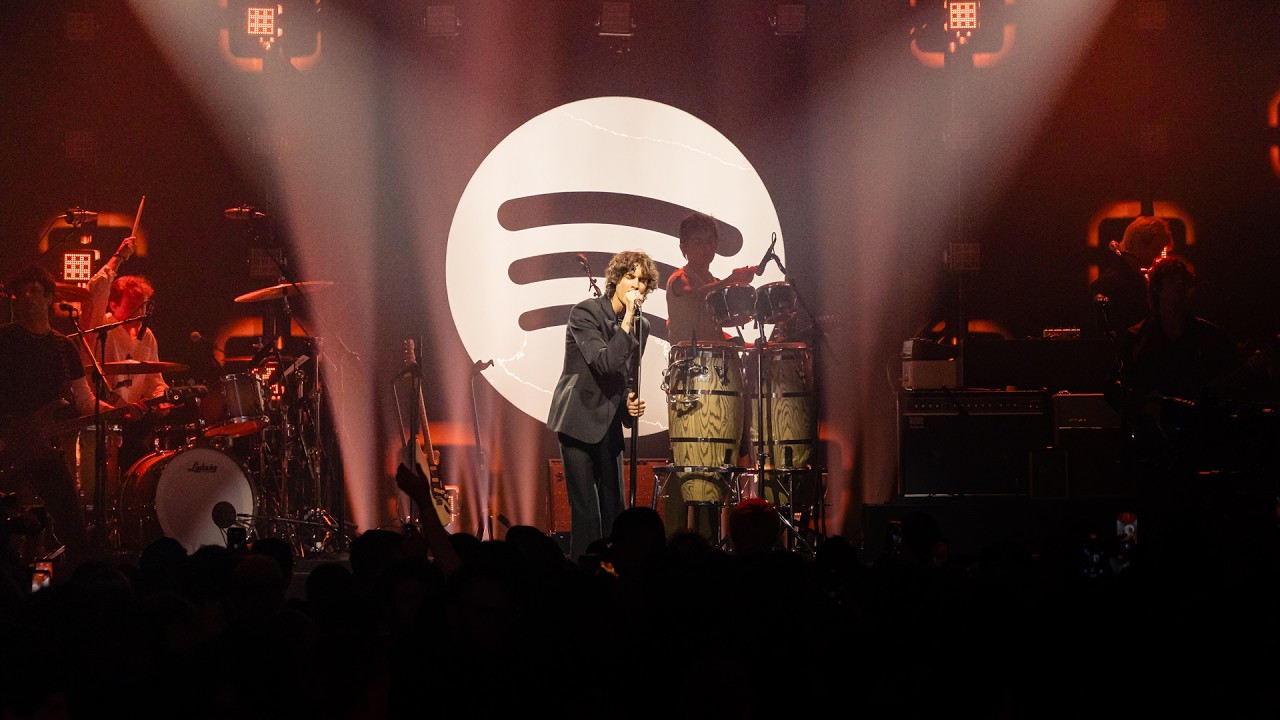
From TikTok to the desert: sombr
sombr’s rise is so compressed it almost forms a category of its own. He bypassed the traditional arc of building a career—no years spent grinding through small clubs, no carefully orchestrated A&R strategy, no early festival slots buried in the smallest type at the bottom of a poster. Instead, he built an audience at scale within months through music made in his bedroom and distributed on TikTok, landing a spot on Coachella’s top line.
His breakout track “back to friends” went viral on TikTok in March 2025, debuting on the Billboard Hot 100 and peaking at No. 7. “undressed” hit almost simultaneously, climbing to No. 1 on the Hot Rock & Alternative Songs chart and displacing Billie Eilish’s “BIRDS OF A FEATHER,” which had held the top spot for a record-setting 55 weeks. Then “back to friends” surged again, overtaking “undressed” in turn. By the time the Coachella lineup was announced six months later, sombr had already earned Best New Artist nominations at both the Grammy Awards and the MTV Video Music Awards.
He didn’t wait for permission—he made the music and uploaded it first. The algorithm caught it, amplified it, and turned him into a star within months. This year’s Coachella may mark the moment when even a festival ecosystem that prioritizes instantly recognizable names fully acknowledges this kind of artist—and the speed at which they move. And sombr is not alone. Addison Rae has transitioned from a mega-scale TikTok creator into a bona fide pop artist, now appearing on the poster’s top line alongside him. Gigi Perez, who debuted during the pandemic and faced a setback after being dropped by her label, has since rebuilt her trajectory through the viral success of “Sailor Song.” Coachella will capture them in motion.
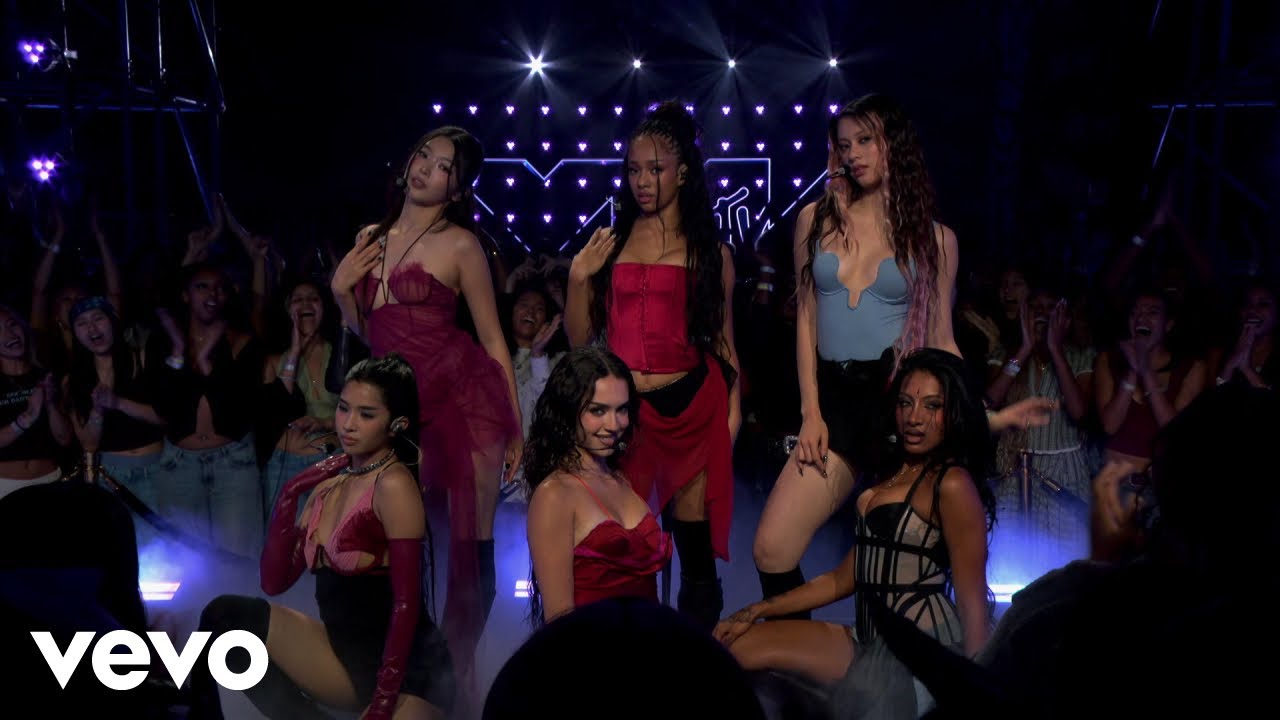
Beyond proof, toward a new set of coordinates: KATSEYE / BIGBANG / Taemin
K-pop is no longer a peripheral presence at Western festivals—it is now an essential component. In the process, it has moved beyond niche status to claim a clearly defined space within the global music landscape. From K-pop’s perspective, appearances at major festivals can no longer function as mere career milestones. Coachella seems to agree. This year’s K-pop lineup spans past and future, posing a set of questions. The stage will not serve as a trophy, but as an answer.
KATSEYE represents a challenge to the very idea of what K-pop is. Built on the structured training and development system associated with Korea’s music industry, the group is nonetheless aimed squarely at the Western pop market. The result has proven immediately viable: a multiethnic lineup that functions seamlessly in the U.S. market. With three Hot 100 hits and Grammy nominations for Best New Artist and Best Pop Duo/Group Performance, their achievements are difficult to ignore. Interestingly, to a festival audience with diverse tastes, KATSEYE may not register as a novel form of K-pop, but rather as a familiar Western girl group. In that sense, the Coachella stage may not ask how “K” they are. Instead, it raises a different question: what can the K-pop system produce when it moves beyond “K”?
BIGBANG was originally scheduled to perform at Coachella in 2020, but the appearance was canceled due to the pandemic. Since releasing “Still Life” in 2022, the group has remained inactive. Now, marking their 20th anniversary, BIBANG returns to the Coachella stage. Before BLACKPINK became the first K-pop headliner in 2023, before LISA and JENNIE took the stage as solo artists in 2025, before K-pop was fully taken seriously within the festival circuit, BIBANG was already breaking down the boundaries of genre. Their performance will not simply mark the return of a legend—it will reaffirm the historical foundation of modern K-pop.
Taemin is the only male K-pop solo artist on the 2026 Coachella lineup. K-pop is often defined by performance, and Taemin stands as one of its most refined practitioners. Since debuting with SHINee in 2008 and as a solo artist in 2014, he has continuously redefined the standard for dance within K-pop. On this year’s Coachella map, he forms a more intriguing dialogue with FKA twigs than with any other K-pop act. Both artists push the human body to its limits on stage, yet their aesthetic foundations diverge entirely. Which raises the question: how will K-pop’s highly refined performance language translate within the spontaneous atmosphere of a desert festival?

Expanding the Asian market: BINI
BINI is the first Filipino—or P-pop—group in Coachella history. The eight-member girl group only learned of their inclusion on the day the lineup was announced, as their management had kept it under wraps. P-pop draws from the training systems of Korea and Japan, but distinguishes itself through Filipino-language lyrics, localized storytelling, and a clearly defined cultural identity.
BINI’s popularity first surged domestically. Since debuting in 2021, they had been steadily building momentum, but the breakout success of “Pantropiko” and “Salamin, Salamin” in 2024 elevated them to a different tier. Their 2024 tour began in June at venues with a capacity of 2,000 and concluded that November in arenas holding 10,000. Just three months later, in February 2025, they sold out the 55,000-seat Philippine Arena—an achievement that propelled them into a world tour. Prior to BINI, artists who had sold out the venue were largely international acts, including BLACKPINK, TWICE, and Bruno Mars. Even so, as is often the case with P-pop, their recognition in the global festival circuit is still in the process of growing.
Historically, Coachella has shown a distinct ability to identify artists who are already massive in their home markets but remain relatively unknown in the United States. This year is no exception, with performers arriving from across Australia, Spain, Nigeria, and Brazil. But the presence of Asian artists now feels less like a one-off inclusion and more like a structural component of the festival itself. Alongside the expanded spectrum of K-pop, Japan is represented by artists across genres—Fujii Kaze (pop/R&B), Creepy Nuts (hip-hop), and ¥ØU$UK€ ¥UK1MAT$U (electronic), among others. Within that broader landscape, BINI stands as a new branch in the evolving ecosystem of Asian pop. If P-pop continues to prove its potential, there is little reason to believe other Asian markets will not follow.