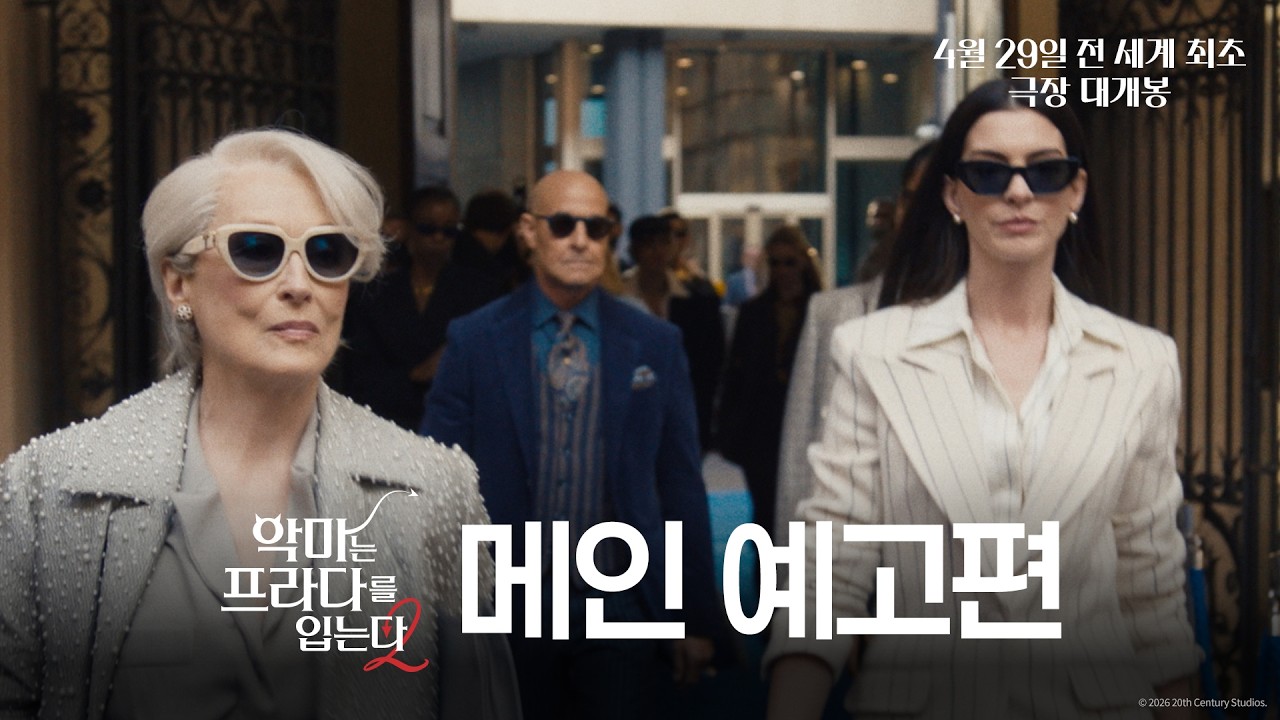
“The Devil Wears Prada 2”
Nam Sunwoo (CINE21 Reporter): There’s a growing list of films I know I can never watch again with the same heart. Sometimes it’s because a director or actor has crossed a point of no return; other times, it’s because I’ve traveled too far from who I once was. “The Devil Wears Prada” falls into the latter category. I was in elementary school when it came out. Back then, I resented the unyielding editor-in-chief Miranda (Meryl Streep), yet part of me longed to feel the sting of the very whip she wielded. I believed I could endure it like Andy (Anne Hathaway), proving my worth through sheer perseverance. The setting—a New York fashion magazine—certainly held my gaze, but what truly set my heart racing were the moments when these women seemed to recognize something of themselves in each other. As both noir and fantasy for career women and those who aspire to be them, the film also felt surprisingly grounded in its depiction of the domestic strains that accompany women’s professional success.
With time, I reached Andy’s age—and only after passing through a string of bosses did I come to understand: when someone cracks a whip, you step aside. No value is worth proving at the cost of humiliation. That holds true no matter how great the figure you serve. I no longer want to grow under a boss like Miranda. At times, I still wonder whether survival demands becoming as ruthless as she is. But in those moments, I find myself repeating—borrowed from an entirely different context—from Shohei Ohtani: “Don’t idolize… don’t idolize…”
I can’t be the only viewer who’s come to this kind of awakening—and yet, nearly twenty years on, a sequel arrives. I attended a 20-minute preview screening ahead of the official premiere. I wanted to see for myself: in a moment when print no longer holds the influence it once did, and awareness of workplace harassment has taken root, how would Miranda be drawn as a leader? “The Devil Wears Prada 2” seems keenly aware of those shifts from the outset. Set against a precarious media landscape, Andy, now working as a journalist, is abruptly laid off, while Miranda—still editor in chief—falters after a misreport goes viral. Their paths cross again when the publisher, intent on restoring the magazine’s standing by bringing in a proven journalist, places Andy back under Miranda. Miranda still dismisses her; Andy still shrinks in her presence. But Emily (Emily Blunt), a colleague from the first film, reappears—now a luxury fashion executive—leaving Miranda on the back foot.
A moment like this—when the balance of power quietly reverses—will likely come for Miranda and Andy as well. Miranda may come to recognize Andy; Andy, in turn, may come to understand Miranda. And perhaps it falls to us to project our own desires onto that portrait of two women. I hope “The Devil Wears Prada 2,” opening April 29, does more than simply reprise the pleasures of 2006—that it offers a vision persuasive enough for a 2026 audience to nod along. We’re still hungry for stories of sisters in the workplace—women who cry and laugh together as they make their way through it.
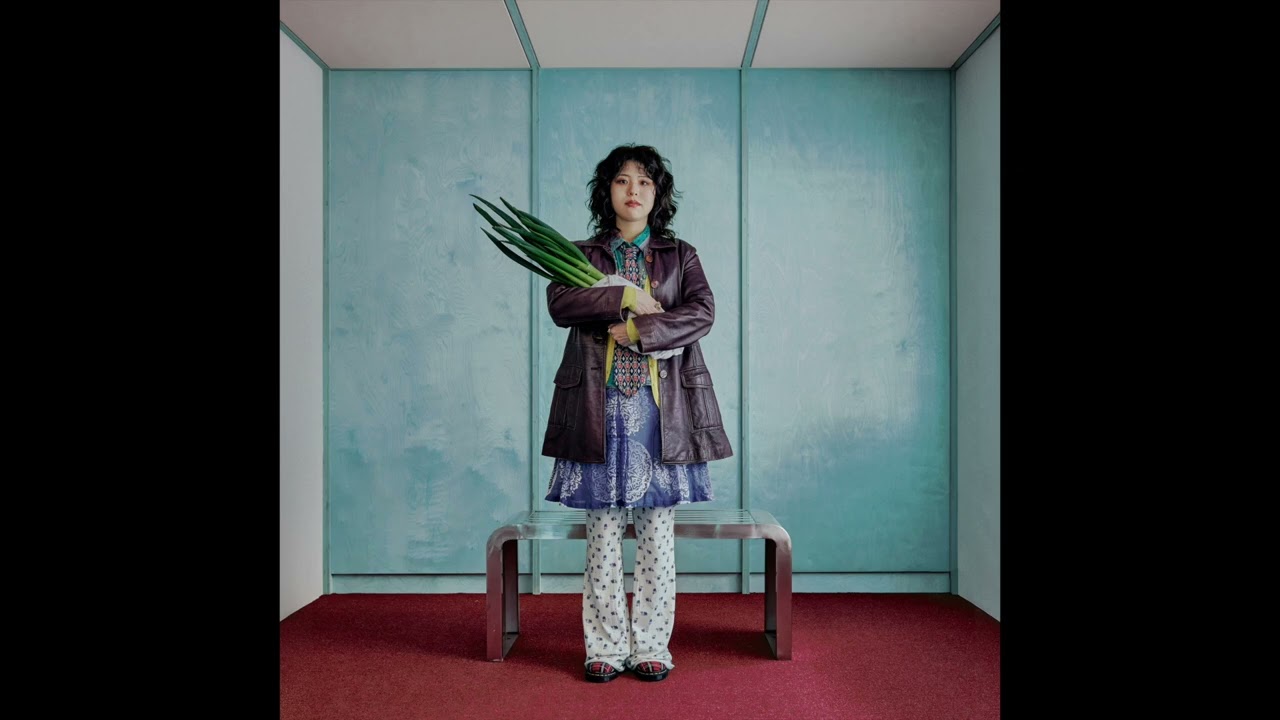
Haepa – “Loud And Obnoxious”
Na Wonyoung (Music Critic): Singer-songwriter Haepa introduces her second full-length album, “Model Citizen,” as “stand-up comedy for those who know sorrow.” From the opening track, a chorus of voices declares in unison, “The goal is to make you function as a member of a healthy society,” pressing the idea with a bright insistence that recalls the wholesome propaganda songs of Korea’s Fifth Republic—those chirpy refrains that nudged listeners toward becoming model citizens, whether they realized it or not. Rather than cast herself as a member of “Home, Very Sweet Home,” as the song would have it, the speaker instead “confesses” to being a villain, tossing off a faintly rancid joke at a world that demands such conformity. Yet even as it mocks the ideal of a healthy, exemplary society, a lingering self-consciousness curdles into something quietly bitter, and the brass that once entered like a sound effect—adding a touch of humor early on—begins to recede. As the blind buoyancy of “Comedy Scouts” gradually drains away, the humor, stripped of its earlier lightness, begins to generate sorrow.
“Loud And Obnoxious,” the track that effectively closes out the album’s arc, arrives at just this moment. If “I’m finally a ghost”—which occupied a similar position on the previous record, “Playing Dead”—gave form to the desire to become a ghost by sharpening the electric guitar tones that lingered throughout the album, “Loud And Obnoxious,” as it unfolds, learns how to simply shout in a stifling world. With Jowall, who previously collaborated on “Your Love as My Pretext,” now on board as producer, the drums and bass rumbling behind the squealing keyboard lines are deliberately rendered in a rough, low-fidelity register. Under his deft touch, they clatter freely, leaving behind textures meant to grate. Powered by that creeping noise—slowly eating away at what once felt like a clearer foreground—Haepa, too, begins to force out her voice in fragments. Like this. Like this again.
The way abrasive sounds begin by disrupting the sonic field—and eventually come to overtake it—mirrors the many layers “Model Citizen” sets in motion. It is, at once, the grating outcry of those who have slipped from the mold and the uneasy feeling of being that misfit—the nagging discomfort that lingers even as you want to shout, unsure what, exactly, that feeling is. In this sense, “Loud And Obnoxious” becomes a kind of rehearsal room: a space that opens up so you can make those sounds freely, imagine them, learn how to produce them. The listener is drawn, almost without noticing, into the process. In the final thirty seconds or so, the chorus and an even denser layer of noise join in, and at the edge of that swelling chaos, what cuts through with clarity is Haepa’s voice—shouting with force. Even if it leaves a rasp behind, it is loud, obnoxious, and almost dutifully exemplary: “Like this!”