Seven years of TOMORROW X TOGETHER has been condensed into a single album. The weight of responsibility that has accumulated since debut, the confusion from the gap between expectations and reality, and even the anxiety that surfaced ahead of contract renewal are all reflected in the group’s eighth mini album, “7TH YEAR: A Moment of Stillness in the Thorns.” We spoke with producer Slow Rabbit and BIGHIT MUSIC Artists and Repertoire Team 2 leader Kim Boram about how the five members’ seven-year journey shaped this album, and how those emotions became music.

This album, “7TH YEAR: A Moment of Stillness in the Thorns,” began with the emotions the members experienced over the past seven years since their debut.
Kim Boram: After wrapping up the worldview TXT had been developing through their previous albums, we spent a lot of time thinking about what story should come next. Around then, Si-Hyuk suggested that we reflect this big moment—the contract renewal—in the album. It felt like the perfect way for the members to naturally share their own experiences, and also the right approach to telling a story that only TXT could tell at this point. That’s how we began working on the album, starting with in-depth one-on-one interviews with each member.
While reviewing those interviews, Si-Hyuk mentioned that the song “Thorn Tree” by Towner & Town Chief felt deeply connected to what the members were experiencing emotionally. There’s a lyric that says, “There are too many versions of myself inside me,” which he felt captured the members’ complex feelings. After seven whirlwind years, it felt like the thorns that were constantly being battered by the wind finally paused, even for a moment. We all listened to the song together while reading the lyrics, and in that moment, the song overlapped so naturally with the members’ interviews. Both Dohyung (producer Slow Rabbit) and I felt it could become the starting point for the album. Si-Hyuk also suggested the album title, “7TH YEAR: A Moment of Stillness in the Thorns.” We wanted a title that captured the story clearly while still being unmistakably TXT. The title’s format was completely different from previous albums, giving it a new and innovative feel while still reflecting TXT’s identity.
How did the members’ conversations help shape the album?
Kim Boram: In the interviews, the members spoke very honestly about how they felt at the time of the contract renewal. Their honesty really resonated with us. Over the past seven years, there were of course many great moments, but there were also times when things didn’t go as expected or were downright challenging. Even knowing the future might hold similar challenges, they still chose to renew. Some dreams might never fully come true, but they still love what they do, want to do better, and still want to continue together. The intensity of those feelings may have varied across the members, but you could sense that everyone had gone through the same process before making their decision. In a sense, I felt the members had reached a new level of maturity by embracing these bittersweet emotions and committing to such a heavyweight decision; I also felt there was a universal resonance in that journey.
For example, the B-side track “Dream of Mine” captures the feeling of “Even so, I still want to do this. I still want to go forward with these people.” One member mentioned that at some point, his thought of “Why are we like this?” eventually became, “Ah, this is who we are.” That attitude was reflected in “So What.” “Bed of Thorns” expresses the determination to keep going, even knowing it might be difficult. The song was produced in the U.S., and after hearing the album’s theme, one of the participating songwriters suggested the saying, “You’ve made your bed; now lie in it.” So the message became clear: even if the bed was made of thorns, this is the bed we chose for ourselves, and we will gladly lie on it.
“Bed of Thorns” opens the album, and it feels like a song that fully embraces the consequences of one’s choices through both its lyrics and sound.
Slow Rabbit: “Bed of Thorns” was actually the first track we worked on while planning the album, and at one point it was even considered for the title track. Together with Si-Hyuk, we built the song around mysterious electronic sounds and lighter 909-based textures inspired by 1990s techno, which was something TXT had never really explored before. What was interesting was that those textures, which might have once felt familiar, now sounded almost unique by today’s standards. The energy felt very different from the kind of sound TXT had done before, but we still felt there was a certain strength and resilience within it. That’s why, in the end, we felt it worked best as the opening track of the album. If you close your eyes and listen to the intro, you’ll be able to feel that uncanny emotion of the wind finally going still amidst the thorns. The members chose the path of an idol, and there were certainly difficult moments along the way, yet in the end, they chose to lie back down in that bed and embrace that life once again. I found that deeply moving.
Kim Boram: The first time I heard the track, I thought, “This is it.” We had talked about showing a different sonic side of TXT on this album, but we hadn’t quite defined what that would sound like yet. This track really set the direction for the album. Through this song, Slow Rabbit showed us what direction that change needed to take.
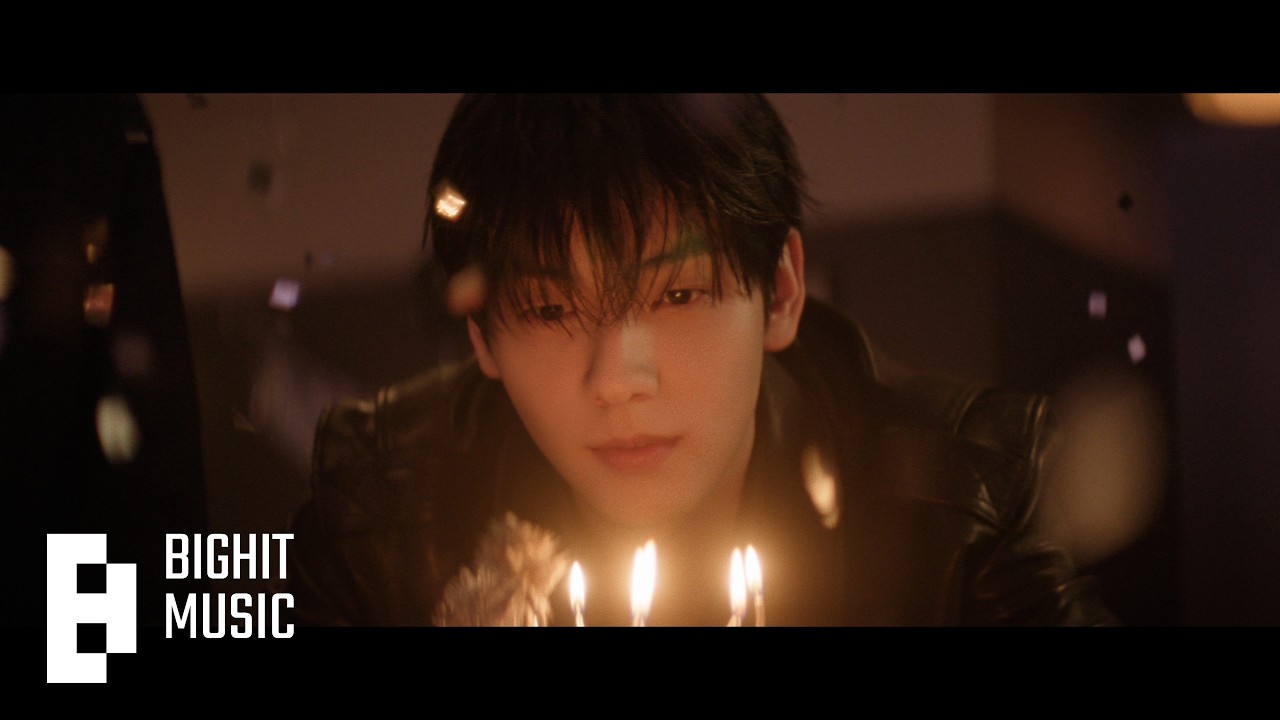
The title track, “Stick With You,” also expresses the desire to keep holding onto a dream. The chorus that opens and closes the song especially heightens that feeling of longing.
Kim Boram: As we talked with the members, we realized that getting back on stage and continuing to perform is still their dream, and that they genuinely love what they do. I think that feeling naturally made its way into the title track. On the surface, “Stick With You” is a love song spoken right before a breakup, asking someone to “stay with me just one more day.” But at the same time, it’s also about wanting to hold onto a dream, even without knowing how far you’ll be able to go. It carries the feeling of wanting to keep moving forward one day at a time without letting that dream slip away. Because of that, the song works both as the members’ own story and as a love story that anyone can connect to.
When we first started working on the track, the title was simply “Stick With You,” without the Korean title. But as the song started to feel more like a love song that anyone could relate to, we felt it needed one. We also wanted something that would flow naturally out of the chorus lyrics. We went through a lot of ideas, like “Just One More Day at a Time,” “Stay With Me for One More Day,” and simply “One More Day.” In the end, we landed on “Harue haruman deo (Just one more day, then one more)” because it carried enough emotions without feeling overly dramatic. We also liked that fans could shorten it into “Ha-Ha-Deo,” using the first syllables.
At the time we decided to include “Stick With You” on the album, the demo was actually still unfinished. Even so, the chorus melody that comes in right at the beginning was so strong that nothing else really compared. Once we decided it would be the title track, we finished building out the rest of the topline from there.
Slow Rabbit: After we finished the topline, Si-Hyuk told us, “Every melody here is perfect.” That feedback gave us even more confidence in the song.
TXT has always been a group whose message and sound are closely connected. This album keeps that approach, but it also stands out for its electronic sounds and less predictable structures. What kind of musical shift did this album need?
Slow Rabbit: TXT’s music has often been rooted in rock sounds, but after seven years together and a contract renewal, it felt like the music also needed to show growth and change. So, we intentionally looked for directions that could feel a little more unfamiliar and newer, and tried to bring in electronic sounds and textures that TXT hadn’t explored before.
With “Dream of Mine,” for example, the demo originally had a stronger 1980s retro feel. We kept some of that era’s electronic roughness but developed it in a slightly more indie direction. Rather than making something purely retro, it was more about taking sounds from the past and reshaping them with a present-day sensibility.
Kim Boram: Still, the most important thing throughout that process was not losing what makes TXT, TXT. During the interviews, one of the members said, “Success that comes from changing our color isn’t really ours.” That showed how much respect both the members and the production team had for the heritage and identity TXT had built over the years. So that became the core direction of the album: to change, but in a way that still felt true to TXT.

When it came to keeping TXT’s own identity intact, what mattered most musically?
Slow Rabbit: I think TXT’s biggest strength is melody, and they also have a very distinct way of expressing energy. Even when a track has a lot of energy, the vocals stay nuanced. That contrast feels very TXT to me. We also avoided the heavy, hard-hitting rhythm sounds often used in K-pop to create energy and intensity. Instead, we used lighter sounds and centered the arrangement more around synths. At the same time, we tried new things, like using distorted, rough-edged effects that feel closer to what you might hear in TikTok music these days.
When I first heard “21st Century Romance,” the sound of a motorcycle starting up felt really unique. But the melody itself was so TXT. I thought, “This could be the perfect first paragraph of a new chapter for TXT.” Still, we kept changing the chords to find something that truly suited TXT. Since melody is one of the group’s biggest strengths, I sent Boram several versions and kept asking, “What about this one? What about that one?” as we continued refining the track.
Kim Boram: The second verse of “21st Century Romance” was originally empty, but the version HUENINGKAI worked on was so good that we decided to use it as it was. After hearing his guide, I was even more convinced that the song would sound better once the members sang it. While making this album, we wanted each track to have its own genre and sound, but still feel connected when you listened to the album from start to finish. We wanted it to still feel like TXT, but in a more evolved way. For example, “21st Century Romance” leans toward alternative R&B, while “Take Me to Nirvana” is techno-based electro-pop. But even when you listen to the two songs back-to-back, their textures still feel like they belong on the same album. That was the kind of standard we used as we searched for the songs to include.
“Take Me to Nirvana” leaves a strong impression with its chant-like chorus and mystery, and Vinida Weng’s featured vocals seem to deepen that mood even more. How did this collaboration come about?
Kim Boram: One of the words we kept coming back to while making this album was “mysterious.” We wanted to capture the members’ layered emotions and the complicated moment they were in. It wasn’t simply bright or dark, sad or happy. Vinida Weng’s voice at the beginning of “Take Me to Nirvana” almost feels like a spell being cast, and it brings out the mysterious mood running through the whole album well.
Slow Rabbit: When I first heard the demo Boram brought in, my first reaction was honestly, “What is this?” But the more I listened, the more it grew on me. It felt mysterious, but still modern. Since the track blends 2000s house and techno, we wanted to find an artist whose voice could bring out that era’s nostalgia while also feeling current. That’s how we ended up working with Vinida Weng.
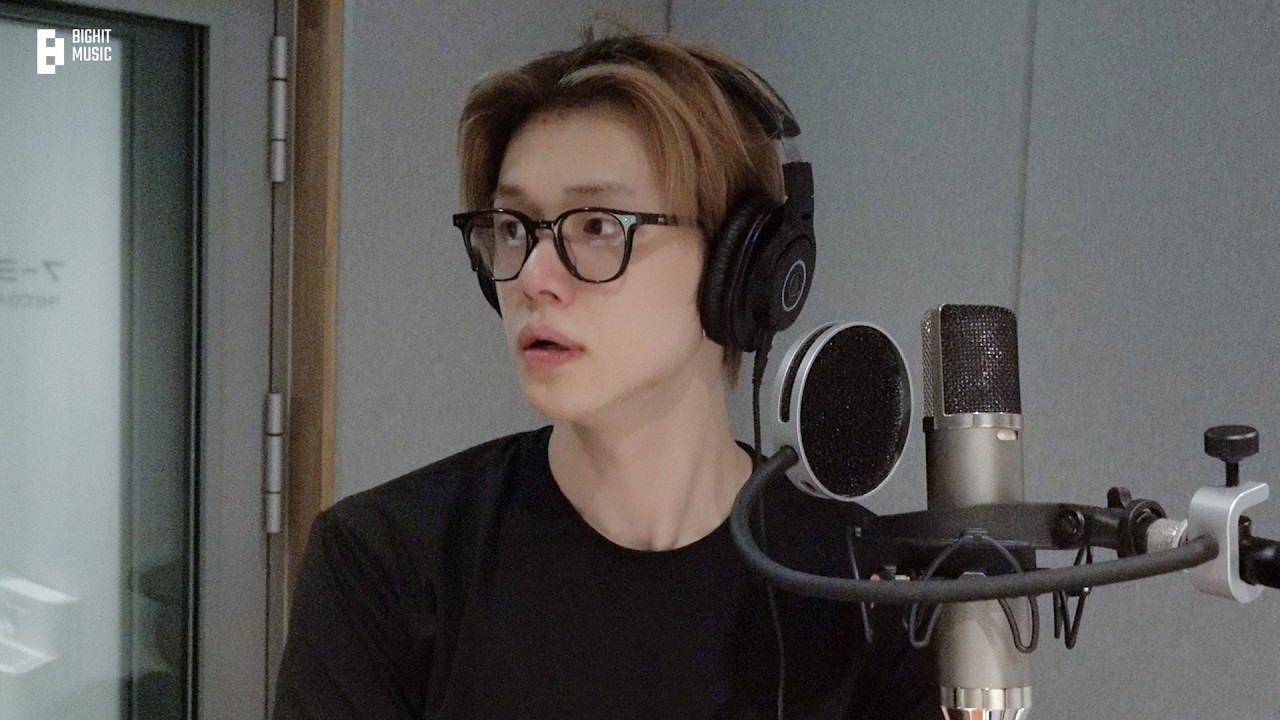
The members’ vocals also feel especially important on this album, particularly in how naturally and delicately they deliver emotion. After seven years, where do you think TXT has grown the most vocally?
Slow Rabbit: HUENINGKAI used to struggle a bit with falsetto, but he sounds much more comfortable using it now. As his vocal range has expanded, he’s become someone who can pull off all kinds of genres. SOOBIN naturally had a slightly lower range before, but starting around “Beautiful Strangers,” his upper range really started opening up, and he’s been taking on more choruses since then. BEOMGYU’s tone has a charm that instantly stands out, and I think this album does an especially great job of bringing that out. I also think he’ll keep getting parts that highlight his tone even more going forward. And YEONJUN and TAEHYUN have always been incredibly steady vocalists. They quietly take care of things like doubling choruses and recording guides without seeking the spotlight. They’re just so diligent.
Finally, what do you think this album represents as a look back on TXT’s seven years together?
Slow Rabbit: This album feels like a return to their roots. It captures the unique sensibility TXT used to show in the early days, and I’ve also seen reactions saying it feels like TXT in a way we haven’t heard in a while. I hope TXT continues to protect that unique identity while moving forward with the members. More than anything, after going through so much thought and uncertainty, the members’ growth really came through. It was also clear how much they truly love and care for the team. I think that sincerity is fully woven into this album.
Kim Boram: TXT has always felt like a team that keeps moving forward. In past albums, they told stories of boys trying to take one more step somehow. But when we talked about making this album centered around their own story, the members said things like, “We’re still curious about what comes next. We think we can do even better.” Like the title track lyric “just one more day, then one more,” they will keep chasing their dreams one day at a time, moving toward tomorrow, and trying to make it work. That feels like TXT’s color. The beauty lies in the process itself, and it makes you want to root for them.