In the lead-up to their second EP, “GREENGREEN,” CORTIS dropped their single “REDRED.” The music video passed the 10 million view mark on YouTube just 12 days later. The song hit Spotify’s global daily and weekly charts and debuted at No. 17 on the “Billboard” Bubbling Under Hot 100 chart for the week of May 16. The achievement marks a first for any K-pop boy band that’s debuted in the past five years. It’s not unusual for K-pop artists to make their mark through album sales early in their careers, but a track breaking into the US and knocking at the door of the Hot 100 is a different story. Which is why, right after “GREENGREEN” dropped, “TNT” was sitting pretty atop the likes of Spotify’s New Music Friday and Apple Music’s New Music Daily playlists. CORTIS’ success can’t be explained by the typical K-pop group growth narrative alone. It would be more accurate to call them rising stars with some of the fastest momentum in the US today. So what is it about CORTIS and “GREENGREEN” that transcends the language barrier, and in the same breath, what is it trying to say?
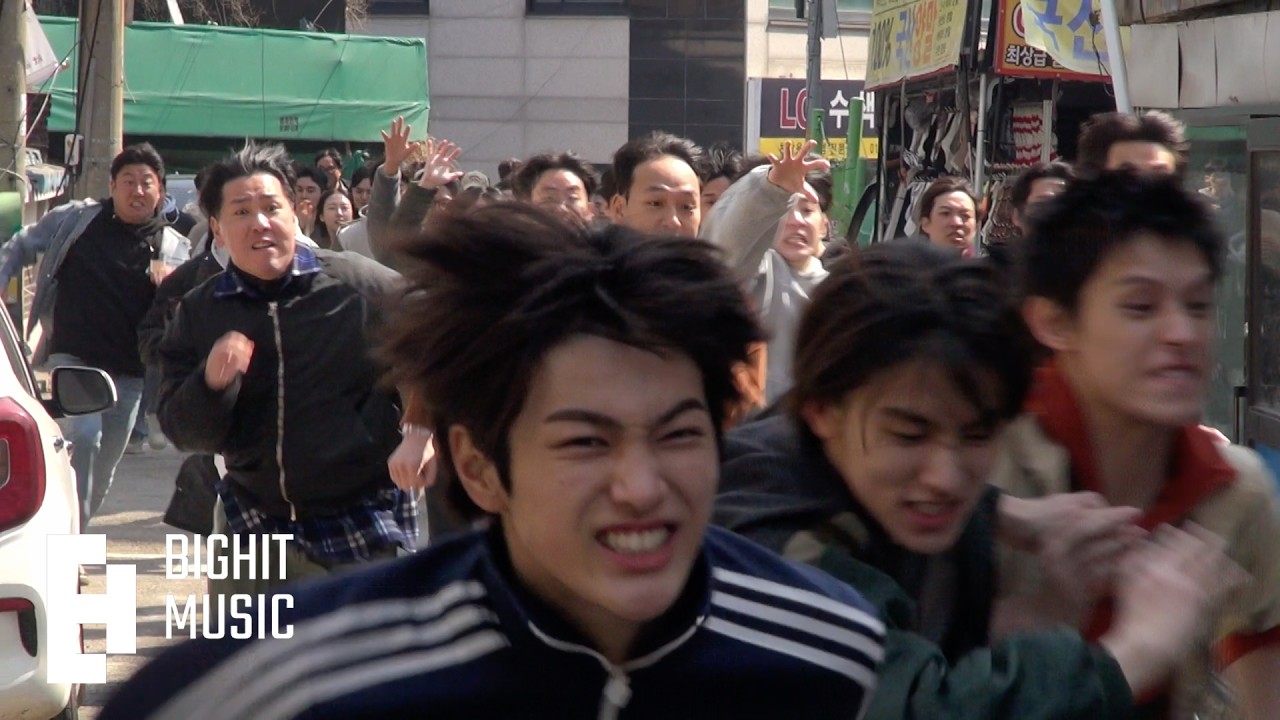
“TNT” opens like this: “Sixteen, still just clueless kids / Five brats in a room every night / At the studio PC waking their DNA.” Rather than outright announcing who they are, the group takes the approach of describing themselves. We’re 16, huddled in front of a computer screen every night, and we don’t really know what we’re doing yet. And this is all we have. Then they’re at the airport: “Incheon Airport, we bout to blow the roof / Gimpo Airport, we bout to tear the roof / 3, 2, 1, might as well be a missile / NY, LA, Tokyo, over the sea, zing.” Nine months in, these are places they’re actually passing through. The same goes for the “TNT” music video, with hundreds of people chasing after them. “TNT” is the label they give to the whiplash of change they’re now living through.
“REDRED” is more about their everyday experiences and more specific. The song opens with the line, “Hot vanilla latte, take a sip.” “When we wrote this song, it was cold in Korea,” they explain in a Genius interview. “That’s why we mentioned putting our hands in our pockets. We go outside, we bop our head to the beat.” And “ACAI”? The song was born out of the acai bowls they were eating almost every day while working in the US. As they shared in a recent radio interview, their second EP reflects how their lives have changed since their debut. “We have more to talk about in our music as we have gained more experience,” they said, “like going on stages, meeting our fans.” MARTIN is credited as a songwriter on every track, with everyone credited on five of them. The 16-year-olds behind “TNT,” the vanilla latte in “REDRED,” the lunch order they sing about in “ACAI”—these aren’t metaphors for some bigger message existing outside of their everyday lives. They’re not trying to say their bond is like an acai bowl. They’re a real-time portrait of the life these boys are living together as they make and sing these songs. They did the same thing in “FaSHioN” when they name-dropped Hongdae and Dongmyo. No matter how big their discography ends up being, we’ll have no trouble placing these songs in chronological order.
CORTIS didn’t get their start in a vacuum. Over the past few years, two currents have been running through Korean music in opposite directions at the same time. On one side, indie artists have been putting out sleek dance songs that rival the sound of the major labels—the Korean version of a global trend where bedroom producers are matching the polish of the mainstream. On the other hand, mainstream K-pop has been borrowing staples of everything retro and kitsch to create a raw sound through high levels of craftsmanship. CORTIS appears to swim somewhere in the middle of those two currents. They’re clearly working within the mainstream. After all, they’re a boy band under BIGHIT MUSIC—the label’s first new group in six years—with Supreme Boi and Hiss Noise on board as lead producers. At the same time, they take the creative reins not just in their music but across everything they do to make sure everything comes across in their own voice. And they said as much right from the start. “We wondered why idols often compose their own songs but not their own videos,” they explained. “As we’ve been filming since we were young, we wanted to make that part of our work.” The idea of idols who write and produce their own music isn’t new, of course, but it’s worth asking why the concept emerged in the first place.
CORTIS sidesteps the creative pressure that’s developed under K-pop over time. That pressure started as a rebuttal to earlier criticism that K-pop idols are mere puppets, but it gradually hardened into immense pressure for artists to prove they have agency. CORTIS ignored that demand outright from the start. For “GO!,” they borrow their head producer’s nickname (also head of the label) and use it like a punchline: “Wanna make a hit like a hitman so I reload.” They don’t deny being inside a massive system—they treat it as something to play around with. “YOUNGCREATORCREW” goes a step further, and they’re surprisingly direct about it. When they sing how the “old generation, they call us ‘those young c’ c’,” they’re not just talking about an age group. They take the label their company put on them, accept it wholesale, and flip it into something to laugh about—like, “Yeah, we’re the young creative crew, so what?”
In “REDRED,” everything they describe as “red”—being easily swayed, worrying too much about what others think, pretending to be cool—represents drifting away from your own center. “You got to read the room, but if you read the room too much, you lose your own opinion” (Genius)—or to put it another way, “It’s not a necessity to cover your butt” (“Cooking REDRED 1”). This is a creative crew the likes of which K-pop’s never seen before. They’re a part of the timeline and the system, but they don’t feel indebted to either. They grew up doing more than just listening to CDs and streaming music—they also listened to songs on SoundCloud and posted their own music on sites where anyone could do the same because it was the natural thing to do. They were free from the start and writing songs and doing things themselves by choice, not because they were pressured to. Consequently, “REDRED” isn’t them shouting out to the world that they’re the next hot thing in K-pop—it’s about why that’s unnecessary to begin with.
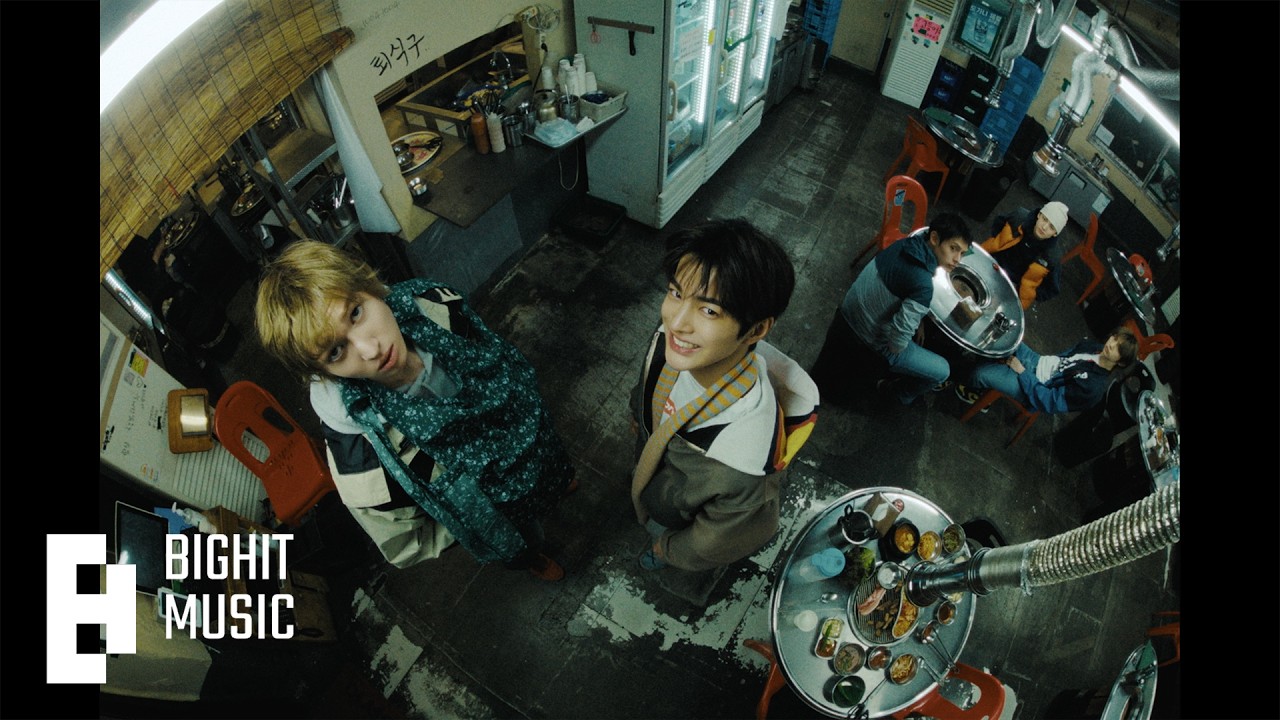
That same multifaceted attitude carries over to their visual work, too. The “REDRED” music video forgoes the typical lavish set and is instead shot in an old samgyeopsal restaurant, an arcade, and a thrift shop. KEONHO dons an apron with a floral pattern and plays a part-time worker. “Since we were talking about something that was authentic to us, we wanted a Korean restaurant,” the group explains. “Kind of a rough vibe. And we felt like this song has a similar vibe old Korean restaurants can bring” (“Cooking REDRED 1”). The “ACAI” music video, on the other hand, is on the kind of scale K-pop prefers to deliver, the members crossing a desert with a donkey and acai berries falling from the sky. And then there’s “TNT.” Everyone will have a different opinion about what those hundreds of people chasing after them are meant to represent, but whatever your interpretation, what’s surprising is just how visceral the whole sequence feels. Even the biggest, most spectacle-filled choreography rarely gives you that sense that you’re watching something real.

The three videos are all a bit different, but they spring forth from the same place—storyboards or rough shoots the group made themselves. And they’re the ones who get out there and explain them. The boys promote on English-language YouTube channels as much as Korean ones. That includes not just major outlets like “GQ” and “Vanity Fair,” but videos built around specific concepts and formats, like Complex’s “Sneaker Shopping” series, BuzzFeed’s “Puppy Interview,” and a radio show following their win at the iHeartRadio Music Awards—with all five of the boys speaking in more than ample English. And if any one of them struggles a bit, the others step right in. The result is that audiences in Korea and the US get the same experience. After all, nobody caught “tta-va-la” (“hot vanilla latte”) the first time around anyway.
“GREENGREEN” is great in itself, but it’s also interesting beyond the music for where the album’s positioned. The reason one of the songs can hit the Bubbling Under Hot 100 and the group can perform on a Korean music show in the same week is that consistent footing. CORTIS isn’t getting pulled toward the pressure for self-validation or polish, the two currents that have pushed forward throughout the history of K-pop. If “GREENGREEN” looks rough around the edges, know that you’re not seeing flaws but markers of new ground being broken.