BTS has been on their long-awaited “BTS WORLD TOUR ‘ARIRANG’” since April. The massive stadium tour marks the first set of performances with all seven of the boys since they went away, and the start of their new chapter, BTS 2.0. With the European leg of the tour currently underway, we’ve put together this “ARIRANG” tour report covering the creative direction and process that went into bringing the shows to life, a behind-the-scenes look at “THE CITY,” and some words right from the group themselves. Let’s dive into what all the fuss is about—and as they sing in the opening to “Body to Body,” “I need the whole stadium to jump!”

TOUR DATES
The “ARIRANG” tour kicked off on April 9 at Goyang Stadium in Korea and has since taken BTS to stadiums across North America, Europe, South America, Asia, and Australia. 88 shows spanning 34 cities have been announced, making it the largest tour ever put on by a K-pop artist. The Mexico shows this past May marked their first solo concert there since July 2015—marking a return after roughly 10 years and 10 months—and were met with overwhelming excitement from local fans. Some 50,000 people packed the Zócalo, where the reunited group greeted the crowd, with around 35,000 fans gathering outside the stadium on the second and third nights. In October, the boys will visit Colombia, Peru, and Argentina as a complete group for the first time. The tour springs from BTS’s desire to reconnect with ARMY after fans had waited out the pandemic and the group’s military service. “Ultimately, I think the most meaningful thing is the fact that we’re finally back together again” with ARMY, RM said regarding the push behind the “ARIRANG” tour. Asked how it felt to set off on a year-long world tour as a full group again, Jimin talked about how “there’s times when we’re onstage and I’m watching the rest of the group dance, listening to them sing, and it just makes me happy. Those are the moments it really hits me that we’re doing this all together,” he said. “And because they know me, and really know the group, better than anyone, I feel more grounded and relaxed than ever before.”
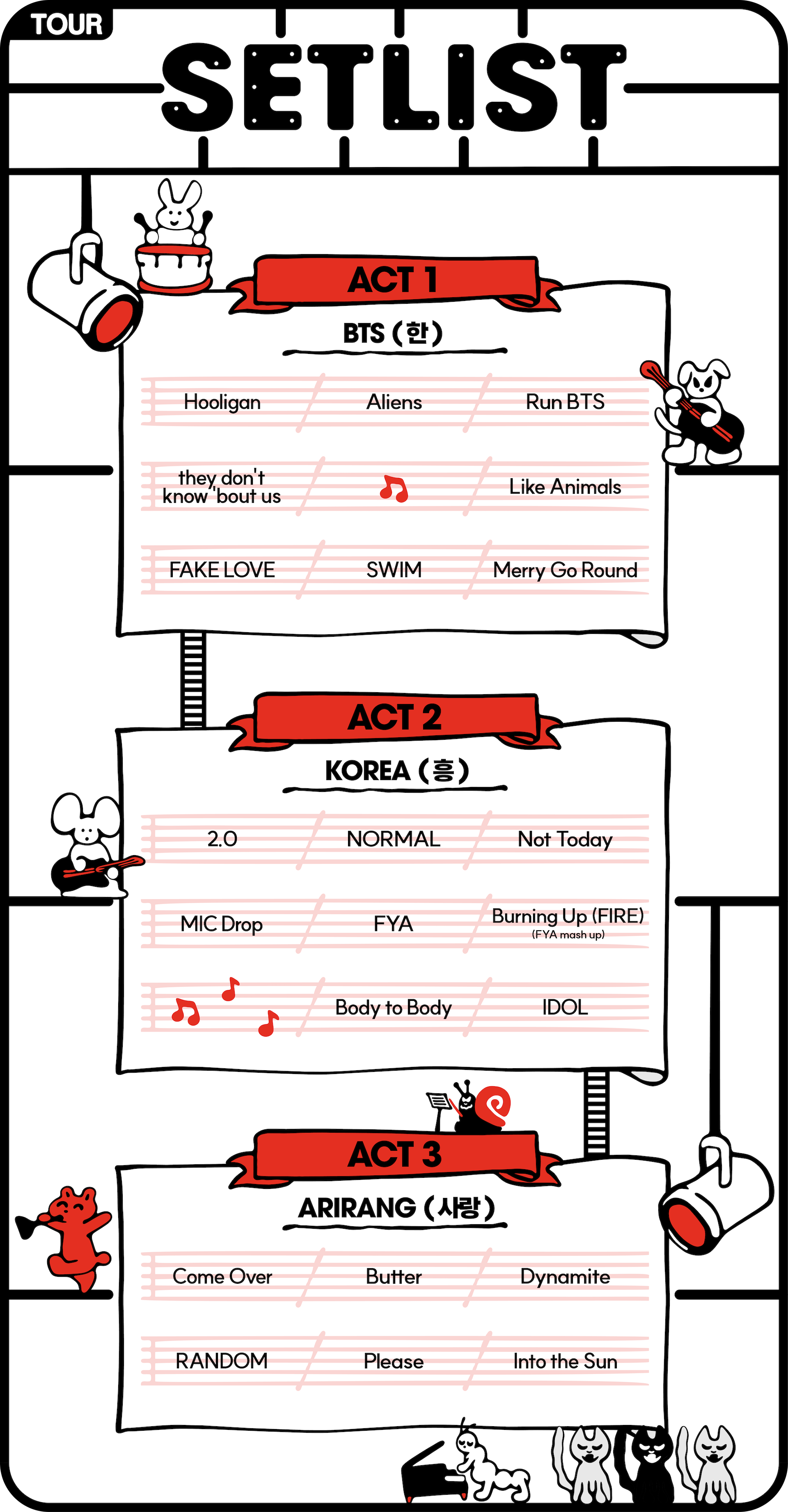
SETLIST
“We thought hard about the connection between the Korean folk song ‘Arirang’ and BTS’s new album ‘ARIRANG,’” the tour director explained, pointing out as well how “the folk song’s sorrowful sound is paired with an upbeat rhythm” and that the show aims to capture “the resilience and warmth of the Korean spirit, found in the harmonious cycle of finding heung in han,” or finding joy even where there’s sorrow. BTS’s latest album explores that same duality that’s a fact of life. On Weverse LIVE, for instance, RM talked about the track “NORMAL,” pointing out that despite the hopeful-sounding melody, the words are weighted with sadness. “This is a sad song,” he explained, but “there’s a part of me that hopes everyone will sing it happily” at concerts. Similarly, the director explained how the concert is structured around a thematic progression of han, heung, and love, corresponding to three acts titled BTS, KOREA, and ARIRANG. One of the key considerations for the concert, they said, was inheriting the core emotional aspects of the traditional song while “putting a new spin on it with BTS’s ‘ARIRANG.’”
The director explained that, because the album was shaped by “the group’s personal concerns about and pressure around living up to expectations after a four-year hiatus,” it was only natural for the first act to “be paired with BTS with the idea of han.” It’s also why, during the song “Run BTS,” when j-hope raps the lines, “Jimin, V, worked hard / Namjoonie, Hope, worked hard / Yoongi hyung, Jjin, worked hard / Jung Kook and everyone so thanks,” the camera shows each of the BTS members’ faces in turn, as if paying respect to them and bringing them some solace for everything they went through. The same section of the concert features “SWIM,” a song of hope in a relentlessly repetitious life, and the weariful “Merry Go Round.” Just as the folk song “Arirang” likens life’s ups and downs to climbing up and over a hill, the first act of the tour turns its focus to a fully fleshed-out reflection of the complex questions the members of BTS grapple with both as part of a group and as individuals.
Following an intermission, the second act reflects the director’s intent to capture “Koreans’ sense of heung, where they just let loose and have fun.” The “FYA” and “FIRE (FYA mash up)” performances see the group moving full tilt all over the stage, creating an atmosphere where anyone can jump in and lose themselves in the moment, while back-to-back performances of “Body to Body” and “IDOL,” staged with immediately recognizable symbols of Korea, become a highlight of the concert by “ramping up the heung to its fullest.” The final act puts the theme of love front and center. The director explained that this section was designed by “taking ‘Arirang’ and the question ‘What is your love song?’ and putting them together” to “bring the love and bond between ARMY and BTS to its zenith.” There was also an additional goal of “making a portion strictly for the fans about how much the group loves them.” According to the director, it’s long been on “the group’s bucket list” to have a segment where they perform a different catalog track at each show to infuse each night with its own special memories. After wrapping up the setlist with “Into the Sun,” the group walks off from the main stage, passes through the audience, and makes their exit to bring the show to a close—right back into ARMY’s embrace, bringing all the han and heung, the sadness and the gladness, along with them.
BEHIND THE SCENES
A single hooligan carrying a smoke flare comes charging in. The intro to “Hooligan” kicks in, and flames consume the traditional Korean paper projected onscreen. As more hooligans join in and take over the stage, a thick red smog spreads until it engulfs the crowd. Cutting through the chaos, the BTS members take their places on the central stage, and the concert’s opening song, “Hooligan,” begins. “We wanted to break away from the K-pop concert formula BTS has built on for over a decade and show the next step,” the director explained—“what BTS ‘2.0’ looks like.” The opening, they said, was designed to feel like “an entrance with a desire to flip the script all over again, now that they’re finally back, in a scene full of raw energy and intensity like never before.” The overall structure was also meant to break away from the usual K-pop concert mold with an opening that shines light on the artist’s aura in an entirely novel way.
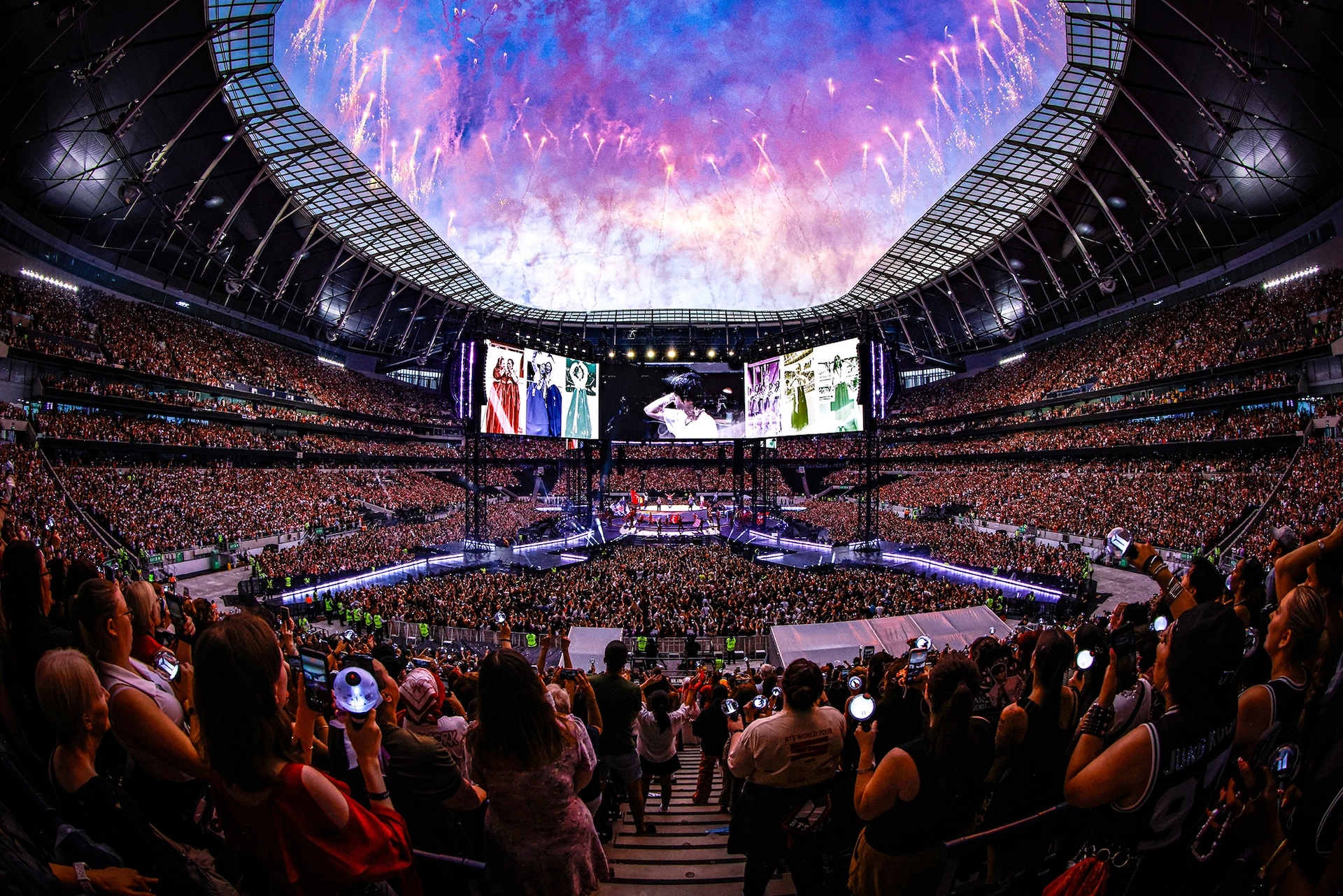
Another way the concert helps convey the ambition behind BTS 2.0 is with the 360-degree stage. j-hope noted that trying to do something even fresher was never going to be easy, “since BTS has already put on so many shows,” and that the goal “wasn’t to find the perfect solution but to work hard to get a little closer to it.” He added that performing in a stadium meant “accounting for weather, and every part of the show required close attention to things like changing the direction” they were facing on the central stage “during the performance, so there were plenty of twists and turns” along the way. But there was something to be gained from the whole process. “At first, the whole thing was scary to me, and it wasn’t easy to adjust,” he explained, “but I kept picturing the stadium with BTS there and filled with ARMY. Now I’m really confident that this tour’s a big step forward for the group.”
ⓒ BIGHIT MUSIC
“We’re all made in Korea.” When RM announced these words to the crowd on June 12 while performing “MIC Drop” at the first night in Busan, he was also conveying the message that underpins the entire “ARIRANG” tour. The director said it was important to show that “BTS is rooted in Korea,” adding that they “wrestled hard with how to introduce the most quintessential parts of Korea to audiences around the world.” That drive to organically link who the group is with traditional Korean aesthetics runs deep through the overall stage design. The main stage was conceived with “inspiration from Gyeonghoeru, where the king used to hold banquets.” They pictured BTS singing and dancing on their stage version with the same mirthful spirit. The upper portion of the stage was designed to resemble the roofline of a traditional nu pavilion, and also calls to mind the outline of the BTS logo when viewed from overhead. Meanwhile, the center ring of the stage floor draws from the South Korean flag’s taegeuk symbol, with the paths extending outward toward the gates in every direction modeled on geon, gon, gam, and ri. The same general idea of drawing on Korean aesthetics can be seen throughout the show in other ways, like the white cloth used as a key prop in “SWIM,” which was inspired by seungmu. Whether it’s images of traditional Korean masks on tablet computers during “they don’t know ’bout us” or LED flags and ribbons in “IDOL,” the concert’s stuffed with modern interpretations of traditional imagery to bring the “K-” to life in a distinctly contemporary form.
ⓒ BIGHIT MUSIC
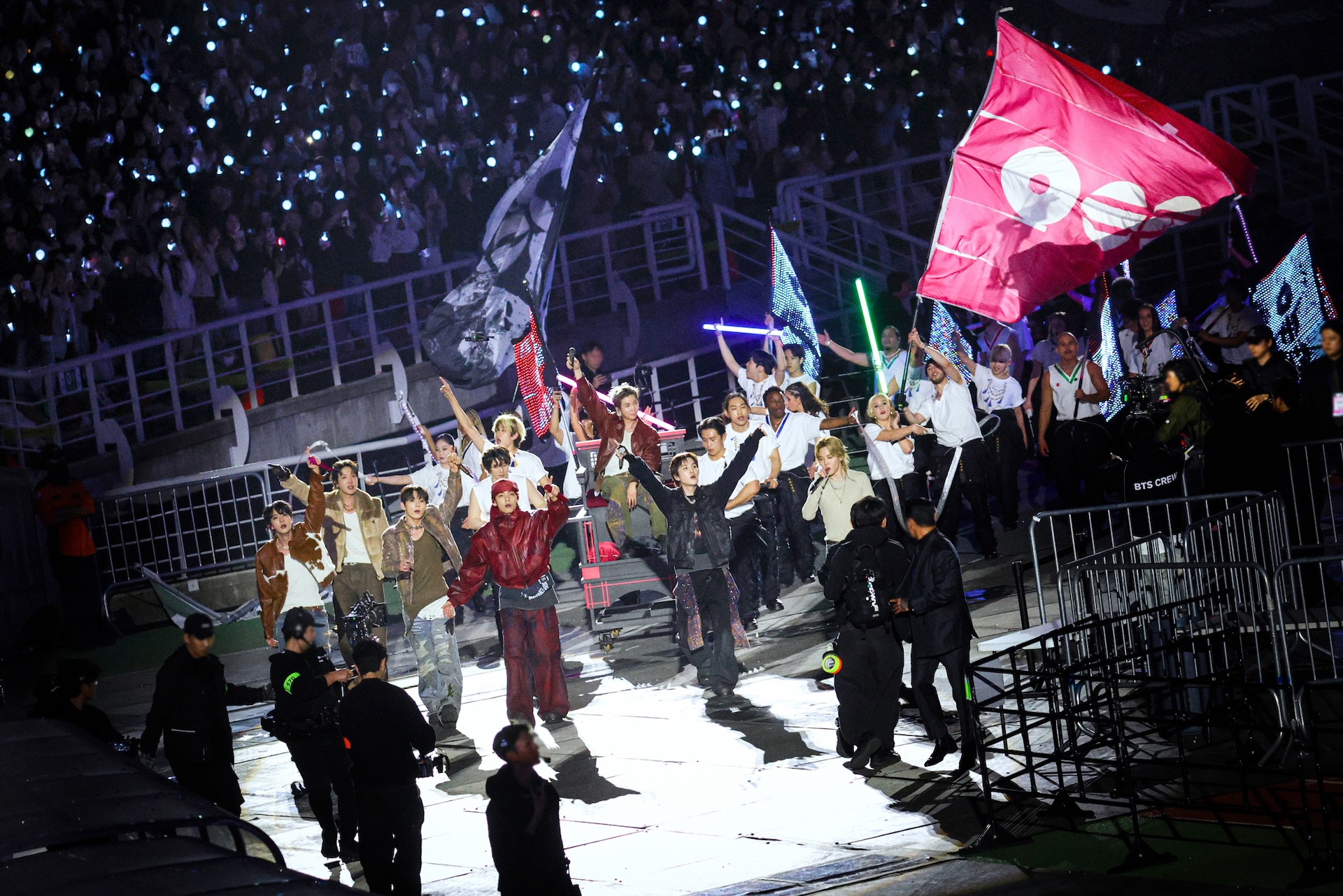
The back-to-back performances of “Body to Body” and “IDOL” bring all of these ideas together succinctly. RM talked on Weverse LIVE about how he drew inspiration from the band Koreana’s song “Hand in Hand,” the official theme song of the 1988 Seoul Olympics, and shaped that into what became the concept for “Body to Body.” The tour director explained that “the stage direction for ‘Body to Body’ and ‘IDOL’ similarly drew on the traditional ganggangsullae dance performed during the opening ceremony of the 1988 Games alongside the athletes’ entrance” for the Parade of Nations. “The 50 backup dancers come from a variety of different backgrounds. We had them circle the entire stadium together with the boys, just like at the 1988 Seoul Olympics when people from all over the world came together to do ganggangsullae. What we wanted to show was the beauty of Korea that BTS has in them, and what ‘ARIRANG’ really means.”
And so, when concertgoers around the world pack into a massive stadium and sing along in Korean to the “Arirang” fragment woven into “Body to Body,” it becomes a symbol of unity. This tour gives BTS and their audiences an opportunity to get closer to each other’s cultures and come together as one, with music acting as the bridge—like at the Stanford Stadium concert on May 19, during the US leg, when the crowd flew South Korean flags together as the folk song played. Jin pointed to “traditional Alpine yodeling” as an example of a singing style that’s become known worldwide, and shared how happy he is to be “able to introduce Korean folk music to fans everywhere and have them sing along” with the group. “When I’m up onstage and see the crowd all singing along to the ‘Arirang’ part in ‘Body to Body,’ it feels like a scene from a movie,” he said. “It’s something I never could’ve even imagined, and seeing it become real feels like watching the climax of that movie. I think we were able to introduce our fans to ‘Arirang’ in a way that felt approachable thanks to approaching it through music.”
BTS THE CITY
“BTS THE CITY ARIRANG” is a massive citywide festival being held in tandem with the group’s “ARIRANG” tour. It kicked off with “THE CITY SEOUL” in March and April to coincide with the release of the album, followed by “THE CITY LAS VEGAS” in May, “THE CITY BUSAN” in June, and “THE CITY LONDON” in July. “We saw how happy people were at the concerts and wanted to let that happiness last a little longer,” a representative for “THE CITY” explained, adding that the idea behind the campaign was “to take fan culture and all the different kinds of experiences that come with it—the kind that would normally be tied directly to the concert—and spread them out across an entire city.” The key is in extending the concert experience across the whole urban space, giving fans a one-of-a-kind delight that can be experienced exclusively in person. The rep added that “THE CITY” is “designed so that hardcore fans, tourists, and locals alike have opportunities to encounter the artist and their work as they go about their day, naturally drawing them into a novel culture.”
Touring across the globe as BTS does, the group naturally gets to “immerse” themselves “firsthand in and enjoy the character of each city and the people there,” j-hope said. In a similar way, the rep explained, “THE CITY” aims to make each concert even more engaging by “reflecting the local color of the city” where BTS is performing, “all while consistently tying the campaign back to the message behind their album, ‘ARIRANG.’” “THE CITY SEOUL,” for instance, was designed with the Korean capital’s “blend of historic landmarks and everyday spaces in mind so that fans could experience a unique kind of festival as they moved about the city,” while “THE CITY BUSAN” worked to “capture the emotional weight of the group’s homecoming, coinciding as it did on June 13 with their BTS FESTA anniversary event, plus the group’s first concert in a good four years.”
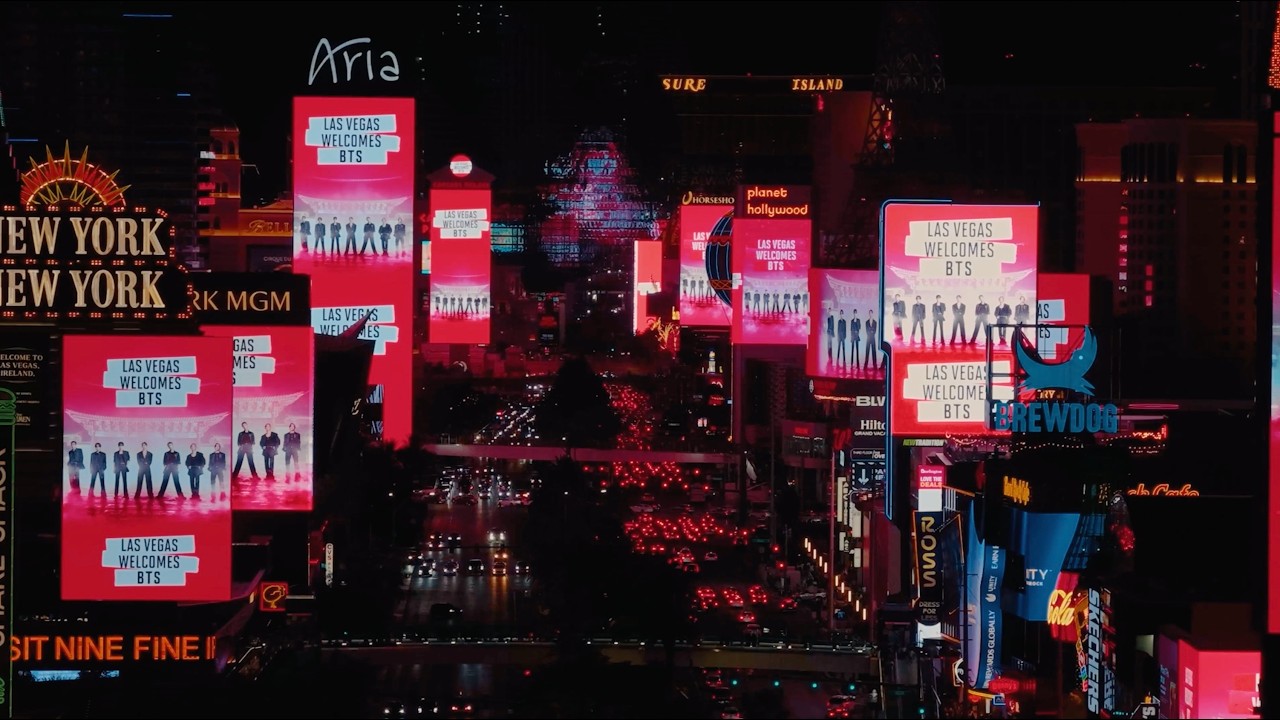
“THE CITY LAS VEGAS,” held earlier this year in May, demonstrated the sheer strength and status of the BTS name, while also proving how much “THE CITY” itself had grown. The rep described the reaction on the ground—locals and tourists stopping in their tracks, saying, “Is this all for BTS? That’s amazing”—and highlighted the sheer scale of the digital Marquee Takeover across the Strip, a key commercial district, and downtown, and the Red Illumination that bathed the entire city in red. “THE CITY” marked the first time a musical artist has pulled off a citywide event on the same scale as the Super Bowl or Formula 1. “The daejong bell, the central symbol in the video we made specifically for Sphere, was inspired by the track ‘No. 29’ off ‘ARIRANG,’” the rep explained, referring to the major Vegas landmark that’s also the world’s largest spherical venue. “We wanted to convey the exact moment our sound rang out from the heart of Las Vegas with that sense of reverberation. Then there’s the cheongsachorong lantern, which ties back to the Sungnyemun media facade from ‘THE CITY SEOUL,’” they went on, referring back to the digital display on the capital’s Namdaemun Gate. “We wanted to tell a story where the journey of the tour connects each city, lighting them one by one.” The end result is that “THE CITY” moves in perfect harmony with the “ARIRANG” tour every step of the way.
ARMY
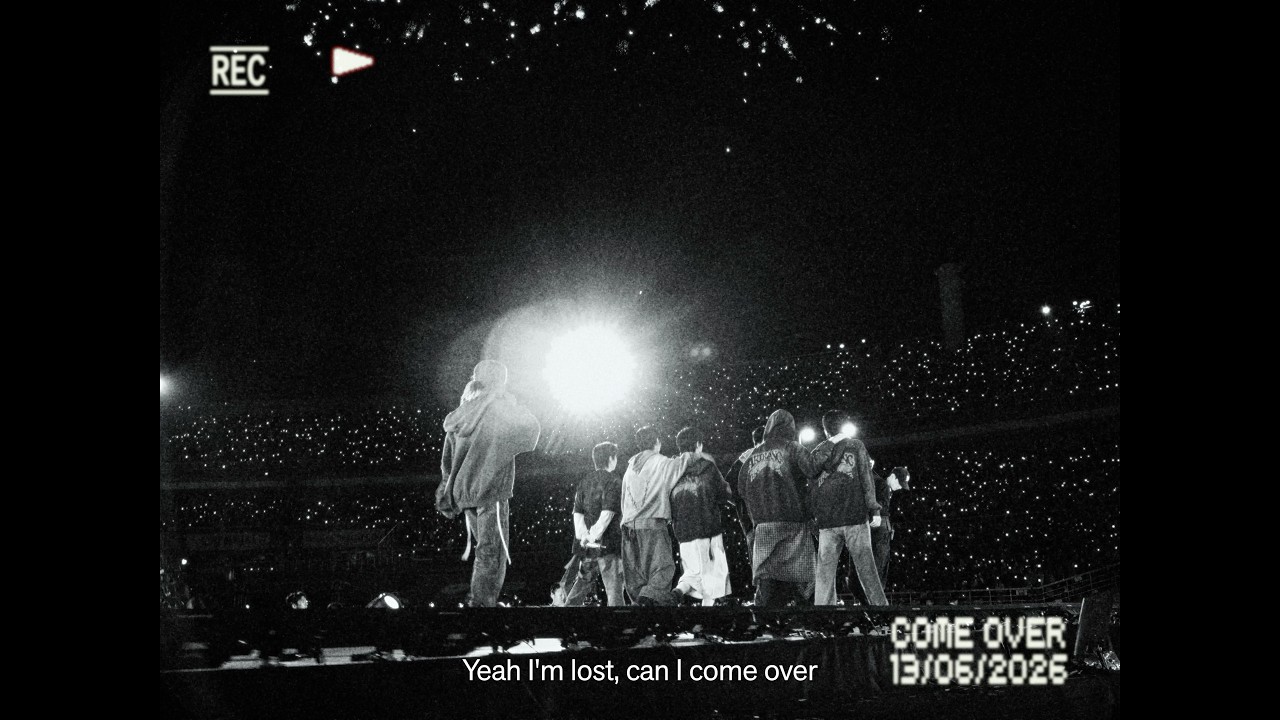
During the song “Come Over,” SUGA asks ARMY, in a calm, quiet voice, how they’ve been: “Sorry, I’m a little late, huh? / You been good, nothing goin’ on?” By now, it’s become something of a tradition on this tour for fans to respond to his rhetorical question about being late with a booming “no way!” “I’m just happy I get to sing ‘Come Over’ together with the rest of the group onstage,” SUGA said, adding that, “since it’d been a while since we’d made an album,” the song as it stands today is “just the thoughts that came to me, exactly as they were.” To borrow a line from the lyrics, BTS’s “ARIRANG” tour feels like they’re writing the story of the group “starting again.”
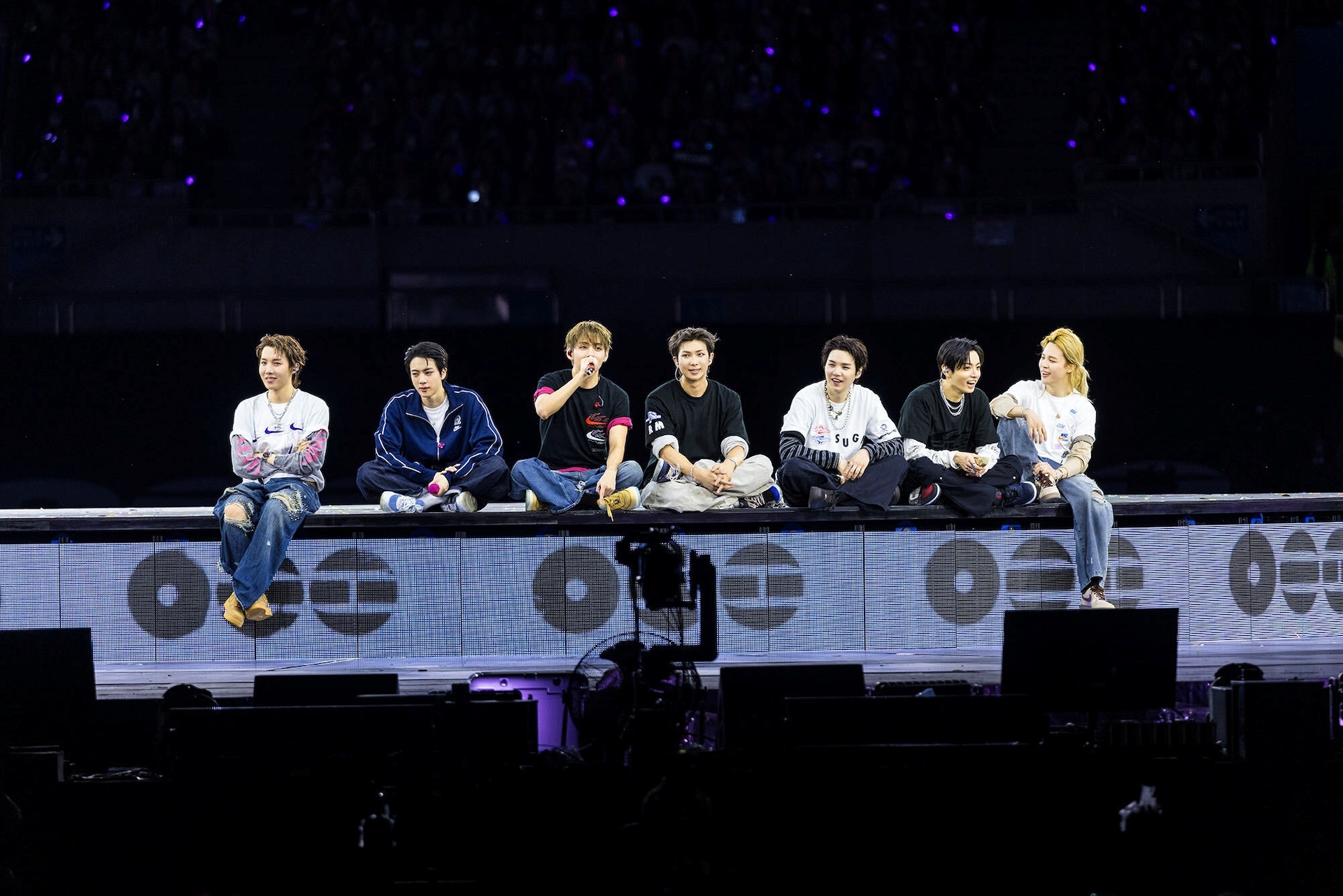
But even as they start again, some things remain the same. Jung Kook has been filming and editing his own vlogs on the road, despite the tour’s packed schedule, and posting them to his Instagram, calling to mind the Golden Closet Film series he used to upload to BTS’s YouTube channel. “It reminded me of when I used to film things every once in a while, back in the day,” the idol said when asked what prompted him to start vlogging. “Keeping a record of everything not just with photos but with video makes it easier to remember exactly what things were like at a given time, so I thought it’d be nice to build a habit of documenting my day for ARMY every now and then!” Another blast from the past comes from the inclusion of two different surprise songs near the end of each show. As the UK magazine “NME” put it, “this being the ‘ARIRANG’ tour, most of the setlist is pulled from that album,” but there’s still “older songs sprinkled here and there,” and the fact that each show comes with its own unique surprises makes for a “great” concert “of past and present combining.” V, too, has found the surprise segment to be an energetic, emotional experience. “When an old song comes on, the memories from back then suddenly come clearly into view,” he said. “I guess I just can’t forget that period of time, so those memories come rushing back, and my body starts moving on its own. Maybe it’s because I’m so happy and excited, but I start dancing without even knowing it. Honestly, there’s some songs I practiced so much back then that they’re just there in my body. I don’t think I could forget them if I tried.”
ⓒ BIGHIT MUSIC
On June 12, the first night playing the Busan Asiad Main Stadium, BTS surprised the crowd with performances of “Paldogangsan” and “Ma City.” In these respective songs, BTS has sung about how they came together as a group in Seoul after coming from different regions all across the country (“From Seoul and Gangwon to Gyeongsang-do / From Chungcheong to Jeolla-do / We’re here to say we’re here”) and affirming their diverse roots (“I was raised by that city”). It showed just how closely the latest album and tour are tied to the roots and very essence of BTS, then, when RM got on Weverse LIVE and summed up the current state of the group as “the new beginning of seven young Korean men,” and posed this question: “Then what sets BTS apart
from other groups? And what have we been doing all this time?” Theirs has been a process of growth, crossing the boundary from hometown to Seoul, from Korea to the world, and connecting with more and more along the way. By the time the current tour winds down, what will be the answer BTS has found to that question?
“I always feel like an album isn’t really ours anymore once it comes out,” RM said. His words reflect what the tour is coming to mean for both the group and for ARMY. “The evaluation and appreciation of it all belongs entirely to the listeners and the audience at that point. It’s still hard to say for sure, but I do feel like we’re moving toward some next step, whether that’s in our work or in our personal lives. I’m just not totally sure yet what direction that is.” Conveying, right here, right now, their own story through music. Proving themselves onstage and finding that meaning together. There’s no telling what’s waiting on the other side of the hill, but even so, BTS is beginning their next chapter—as they always have.
- For BTS, time flows on2026.03.25
- [MINI GAME] DIVE INTO BTS2026.04.27
- BTS: bigger, better, on their own terms2026.03.27