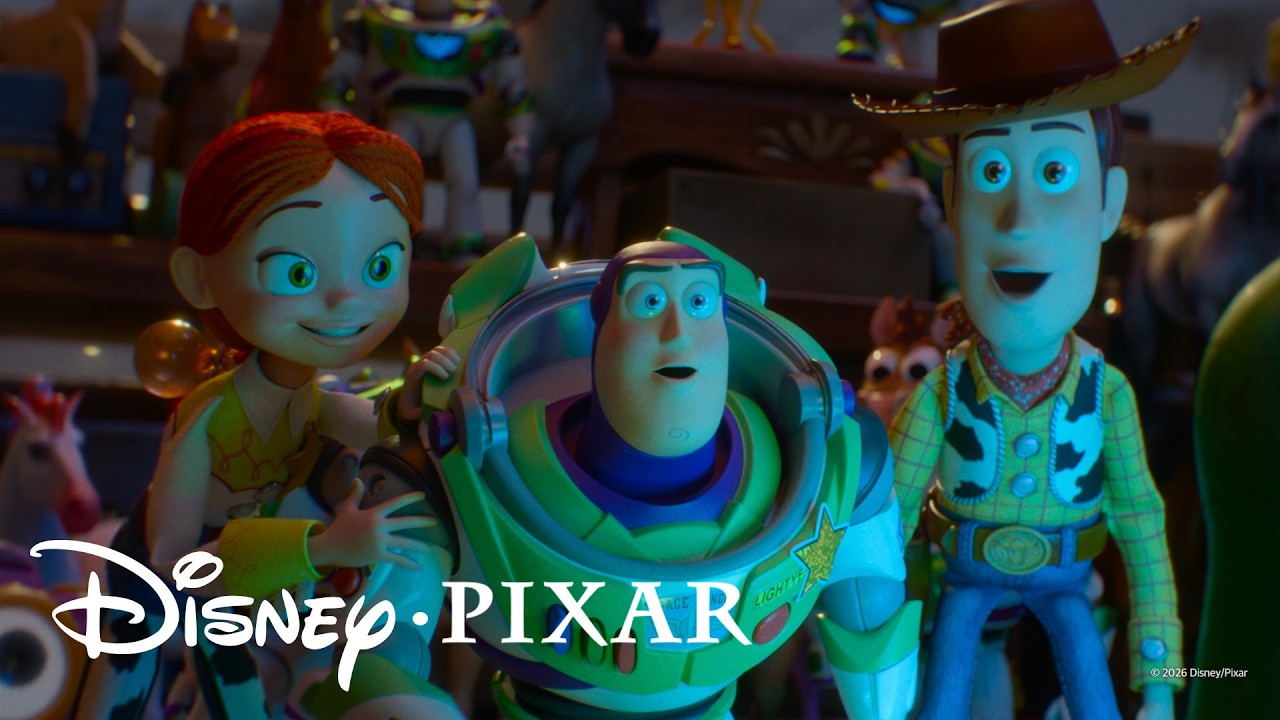
It’s been more than 30 years since Pixar’s enduring “Toy Story” series first graced theaters. In that time, there’s been more than one shift in the way kids play. The era of dolls and robots has long since given way to computers and video games as their entertainment of choice. And yet, five installments in, and the message at the heart of “Toy Story” still speaks to us. But why?
Released worldwide in June, “Toy Story 5” has already pulled in more than $700 million at the box office, and it’s still going strong in Korea too, with 2.75 million tickets sold and counting. Pixar’s always looked at the ordinary through an extraordinary lens, shedding some light on what it means to be human along the way. Now, let’s take a closer look at the latest story they’ve brought to the screen and what makes “Toy Story 5” worth watching.
Toys vs. tech
Released in 1995, "Toy Story" was Pixar's first feature film and the first computer-animated feature ever made. It won over critics and audiences alike, and Pixar kept building on that success with sequel after sequel, with 2010’s “Toy Story 3” praised as rounding off one of the most accomplished trilogies in film history. Somewhere along the way, though, the digital age arrived and playtime moved toward computers and video games, a generational shift the makers of “Toy Story” worked organically into their screenplays.
Before diving into the fifth installment, let’s take a quick look back at the series’ ambitious journey. The story has always revolved around toys facing existential crisis. When young Andy gets a state-of-the-art plastic action figure, Buzz Lightyear, for his birthday, it feels like the world turned upside down for Woody, a stuffed cowboy doll who’s the boy’s very favorite toy. Fearing he’ll be cast aside by Andy now, Woody grows jealous of his fellow toys, but after all kinds of adventures with Buzz, he ends up with an inseparable best friend instead.
Later, Woody and Buzz come to fully realize the reality of the situation—as Andy grows up, he’ll inevitably grow apart from his toys, too. In “Toy Story 3,” with Andy leaving for college, the two help make sure his toys find a new home with Bonnie, who lives nearby. By “Toy Story 4,” Woody proves that toys can choose a life where they’ll never be abandoned again. Thanks to him, toys are no longer confined to a kid’s bedroom—they can go out and see the world.
So what kind of crisis rattles the toys’ world this time around? “Toy Story 5” is back, this time tackling the very thing that’s upending the modern child’s daily life: the rise of smart devices.
The idea of conflict arising between old toys and new characters isn’t a new one. There was the friction between old-timer Woody and shiny newcomer Buzz in the first film, the standoff with the aging prospector doll craving to be swooped up by a collector in the sequel, and the battle with Lotso, the strawberry-scented bear still sour over being abandoned by his kid, in the third. The series has dipped into this same structure again and again. “Toy Story 4” had the anxiety-ridden Forky in place of a true bad guy, but even then, the underlying conflict didn’t dramatically change shape from previous entries.
In the latest film, though, the crisis takes on a different flavor entirely. On the surface, it looks like the same old story—aging toys jealous of Lilypad, the shiny new gadget vying for Bonnie’s affection—but that’s not the whole picture. Our toy heroes come to realize the real crisis isn’t with tech-forward Lilypad but with Bonnie.
If Bonnie never managed to connect with other kids and just grew up lost in solo make-believe in her room, the extra time being loved by her would probably suit the toys just fine, but that’s not what’s best for the little girl. That’s where the film shifts gears, and what follows is a mission to help her find friends who share her interests.
Did you notice something about that last part? You can tell that Pixar had parents’ concerns at heart when they came up with the story. What is playing really all about? What’s the one thing adults owe it to kids to pass down to them, no matter what? What the film wants to say is that playtime was never about collecting a bunch of expensive toys. It’s about helping to bring kids together, face to face, and build real connections. That’s what “Toy Story” believes toys are for, and what real play looks like.
A new generation of toys and a new generation of Pixar
This time around, the crux of the story revolves around Jessie. In the earlier films, it was always Woody and Buzz front and center taking care of the issue of the day, so audiences who know the series inside and out may very well rejoice to see Jessie stepping up into the leadership role, with some help from Buzz. Take note as well of one of the most memorable scenes from the third film and the most romantic moment in the whole series. After his settings get reset and he’s switched to Spanish mode, it’s love at first sight when Buzz spots Jessie, after which point he’s ready to risk everything to keep her safe.
The filmmakers didn’t let that history between them go to waste, and they really played it up in “Toy Story 5.” It’s adorable watching Buzz shower endless devotion on Jessie, the new leader of the bunch. The new movie also sheds more light on Jessie’s backstory, and it’s a real tearjerker. The film takes another look at Emily, Jessie’s kid who loved her unconditionally, and digs into just how profound an effect a toy can have on a child. It really underscores how toys aren’t just there to amuse a kid but act as friends who help them grow into a better adult, and the love and care that Pixar has for toys and this power of theirs comes through loud and clear.
Taylor Swift, who wrote and performed the fifth movie’s theme song, “I Knew It, I Knew You,” penned it with Jessie’s feelings in mind. The song looks back on a past connection since lost, but it’s less about longing and more about looking ahead. It’s about how much the people who were once there with us shaped who we’ve become, and about appreciating the value there in that connection while it lasted. Jessie’s always carried around the pain of being abandoned by Emily deep in her heart. There’s something sad about realizing that Jessie, who’s played the eternal optimist throughout the series, has actually been privately carrying that weight with her all along, but the moment she finally learns the truth about Emily’s feelings and starts to move past that trauma hits all the more powerfully for it—and Swift captures all that in a song.
Jessie taking the reins from Woody and Buzz to become head of the toy world isn’t the only handoff happening here. The people behind the camera have experienced a generational shift as well. Co-directing alongside Andrew Stanton, who’s been a part of the “Toy Story” team since the very first film, is Kenna Harris, who joined Pixar as a story artist in 2018. A CalArts graduate, Harris worked as lead storyboard artist on “Luca” and story supervisor on “Inside Out 2,” eventually working their way up to the co-director’s chair on “Toy Story 5.” It’s genuinely exciting to see a young director in their 30s stepping up to the helm of a Pixar film.
Like every “Toy Story” film before it, “Toy Story 5” owes its story to the concerns of its time. These days, the bad guy that kids have to face isn’t some alien invader, it’s the screen right there in their hands. It’s hard not to sit with the question of what, exactly, adults should pass down to the next generation. Is limiting screen time really the answer? What kind of world should we be handing off to a generation that’s more comfortable chatting online than talking face-to-face?
In that sense, “Toy Story 5” is without a doubt the best toy of its era—one that leaves us with a surprisingly important realization.