
“Spider-Man: Brand New Day”
Nam Sunwoo (“CINE 21” Reporter): “Spider-Man: No Way Home” opened with Peter Parker (Tom Holland) exposed to the world. “Spider-Man: Brand New Day” begins with the opposite premise: no one knows who Peter Parker is. In the aftermath of a brutal ordeal, his only remaining family is gone, while his friends and the girl he loves remember nothing of him. Sometimes grief finds its outlet in work. As his classmates head off to college and step into their futures, Peter has only one path left: swinging through New York’s concrete canyons as Spider-Man.
The villain Peter comes up against is, in many ways, the film’s other protagonist. Sadie Sink, unforgettable in “The Whale” and Netflix’s “Stranger Things,” plays a character who serves as Peter’s mirror image. Immense power. Shared wounds. Opposite responses. Call it another familiar superhero trope if you like. Anyone who has followed Peter’s journey, however, will recognize how the contrast captures both the boy he was and the man he’s becoming. Peter’s brief connection with the character also points toward the Marvel Cinematic Universe’s next chapter. The kid who once wanted a seat at the grown-ups’ table has learned to extend a hand even to a villain who’s lost her way. Even in a world where no one remembers his name, Peter can still recognize someone who mirrors his own struggles. That alone makes him more compelling than ever–-and suggests that this friendly neighborhood hero is about to open up the MCU in ways we haven’t seen before.
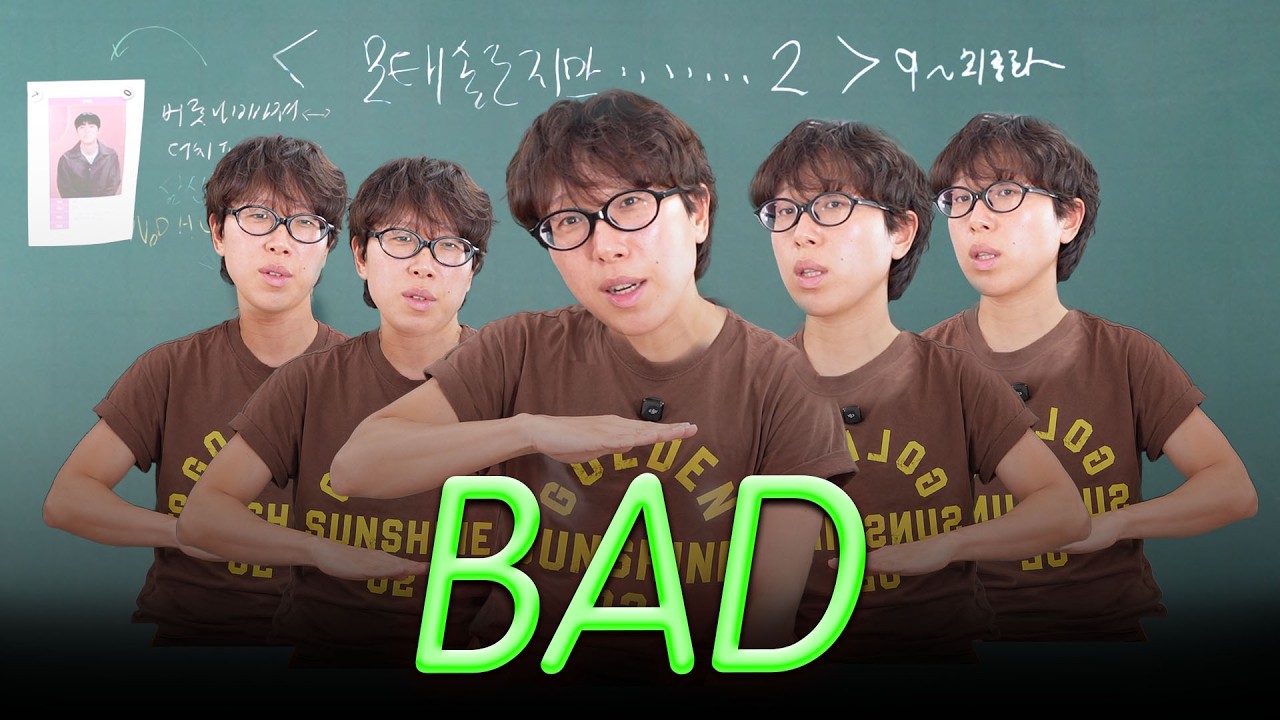
“heavytalker”
Oh Minji: The world is always telling women how they should live. Are you keeping up with your skincare routine and staying in shape? Are you investing in yourself through exercise, study, and constant self-improvement? Are you building a career, saving money, and maintaining a relationship—all at once? Beneath those expectations lies a quieter demand: be the kind of adult who never lets self-care or self-improvement slide, while somehow excelling at work, relationships, and everything else.
Against this backdrop, “heavytalker” neither openly resists those expectations nor embraces them. It simply shows what life can look like when women who genuinely enjoy one another’s company build a life together. The creators behind the channel—Kang Min-ji and Seo Sol, and their editor, Janni—live with friends. They share studio lunches, travel together, and invite other friends over for an impromptu home-cooked meal. One day, they wander through Dongdaemun Market looking for the perfect squishy. Another, they buy whatever is in season and cook a generous meal to share. They try—and fail—to stick to the Miracle Morning routine. They take their friend’s dog, Kkallong, for a walk and somehow end up bickering with the dog. They put down their books in the library for a convenience-store run, buy everything they’re craving, and put together an extravagant “emperor’s feast.” And they’ll happily review just about anything that catches their interest, from regional dialects and variety shows to books, TV dramas, and food.
There are few grand achievements or remarkable success stories in “heavytalker.” Kang Min-ji and Seo Sol neither do everything perfectly nor feel compelled to. They spend time with the friends they feel closest to, indulge their interests, laugh off their failures, and simply move through life one day at a time. In that sense, the lives “heavytalker” portrays are not another prescription for how women ought to live. They offer something far more liberating: the possibility of living differently. One where you do not have to excel at everything—or constantly strive to—and can still live well.

Kim Doeon - “Green and Pink”
Na Wonyoung (Music Critic): In the music video for “Green and Pink,” the lead single from producer Kim Doeon’s second full-length album, a hexagonal shape glides across the screen in steady time with the beat. A drum machine rhythm, recalling the opening bars of “The Nutcracker March,” sets the pulse before the warm glide of Kim Jae-ho’s fretless bass falls into step. On “Damage,” Kim filled “Newbie”—a song about “a world crowded with symbols I never chose”—with a dense thicket of electronic sounds. “Green and Pink” operates much the same way, meticulously arranging sonic fragments with distinct shapes and textures into a richly detailed soundscape. Taken all at once, it can feel almost excessive. As wave after wave of synthesizers and sampled sounds join the procession, the music itself seems to keep changing shape, fairy-like.
And yet, if you follow the steady pulse of the march, patterns begin to emerge from the sea of sounds. Consider the sampled traditional Korean instrument, its finer details blurred until it hovers somewhere between its original timbre and the bowed resonance of a string instrument, sounding almost like someone humming. Fragmentary as it first appears, its distinctive tone and clearly defined melodic line gradually come into focus. Before long, it begins to sing in its own voice, weaving together with the surrounding fragments into a single melodic thread. Each sound that catches the ear recalls the distinctive voices of the musicians featured on “Damage.” As critics at “TONPLEIN” have noted, Kim blurs the boundaries between individual sounds, inviting listeners to reconsider what is “natural” and what is “artificial.” “Green and Pink” extends that inquiry in another direction: whether each flickering sound can be heard as the continuation of the one before it. If, even unconsciously, you find yourself connecting those fleeting arrivals and departures, the march reveals how a multitude of disparate sounds, each shaped differently, can cohere into a single piece of music.