J-pop holding its own on Korea’s music charts is no longer a surprising sight but a fact of life. This year, J-pop’s finding Korean fans through all different means—anime theme songs, tracks that blew up as dance challenges, and music that surfaces out of nowhere on someone’s YouTube feed via the algorithm. Riding that wave, I picked six J-pop artists who’ve each built their own fan bases in their own distinct ways. Some of these names you’ll already know, others you’ll be hearing for the first time. Either way, their music is what’s reshaping the J-pop landscape right now, so rest assured that you won’t be disappointed.

Aimer
Aimer followed what’s become the textbook path for how today’s J-pop artists build a fan base. Her first single under a major label, 2011’s “Rokutouseino Yoru,” first caught the public’s attention when it was chosen to be the ending theme for the anime “No. 6.” Her eighth single, “Brave Shine,” released in 2015, became the opening theme for the second season of the anime “Fate/stay night [Unlimited Blade Works],” and went on to win Best Theme Song at the “Newtype” Anime Awards in October 2015, hosted by the namesake anime magazine.
Aimer, who’d already benefited enormously from these brushes with anime, hit new heights in 2021 with “Zankyosanka.” The opening theme for the Entertainment District Arc of “Demon Slayer: Kimetsu no Yaiba,” one of the most popular animes at the time, “Zankyousanka” took off as it played on repeat across countless short-form clips and anime edits. As a result, the official video has racked up 303 million views on YouTube as of August 19, while the live performance released by THE FIRST TAKE in February 2022 has hit 57.8 million. The song even topped the year-end “Billboard JAPAN” Hot 100 in 2022 and earned triple platinum certification (750,000 copies) from the Recording Industry Association of Japan. With all that to her name, Aimer broke out of a niche subculture and captured the attention of mainstream listeners, cementing her status as a singer-songwriter in the truest sense.
In July, Aimer released the digital single “Live to Survive,” showcasing her signature husky vocals. The single acts as the theme song for “Echoes of Aincrad,” a video game based on the popular light novel series “Sword Art Online.” Aimer is clearly doubling down on the territory where she feels most confident and has cemented her status there.
frederic
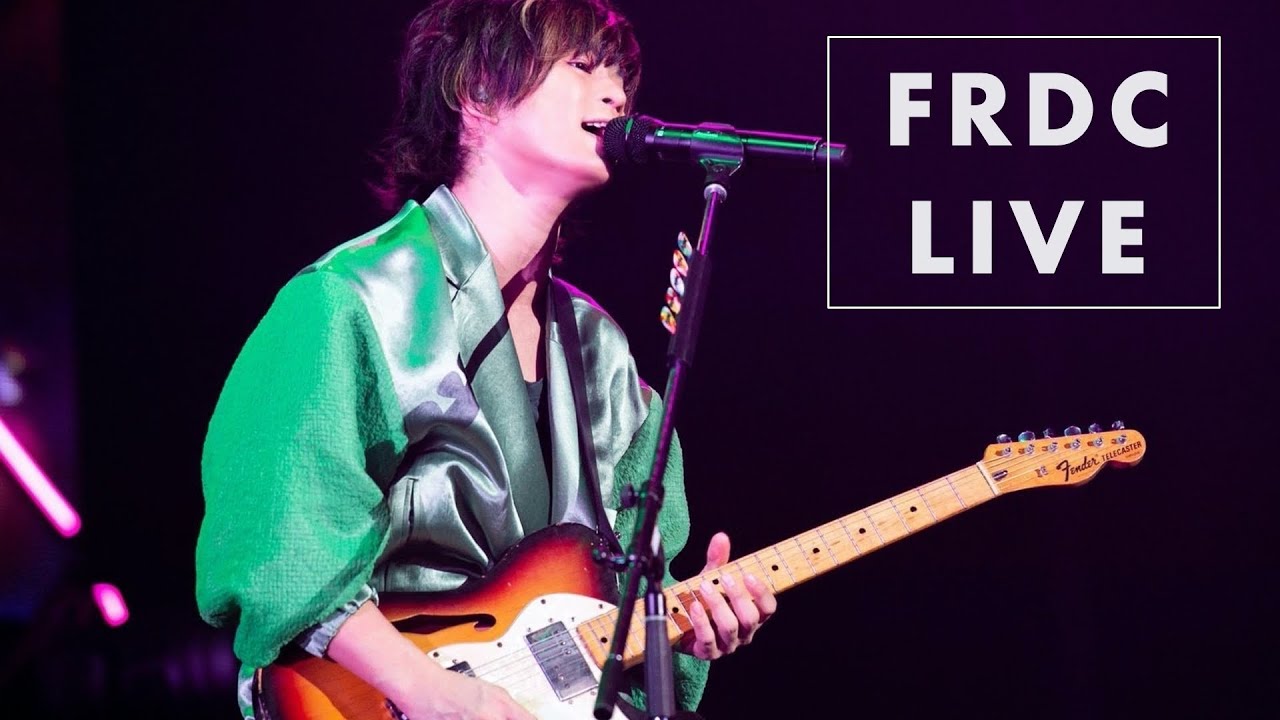
At first glance, the band frederic might seem like a case of getting lucky with the algorithm and blowing up in 2020. But that would be a gross misunderstanding. The band’s been at it a long time, getting their start as independent artists back in 2009. They always seem to have to wait for success to land. Even their signature song, the “Yamada-kun and the Seven Witches” opening theme “Oddloop,” didn’t come out until they signed with a major label six years after forming.
So what made “Oddloop” such a massive hit? For one, the thumbnail grabs you instantly—two women standing with blank expressions, striking, well, odd poses. Curiosity gets the better of you and you click, and suddenly there’s a rock song so infectious it makes you want to dance, just as the title promises (the Japanese title is a pun on “dance”). The nonstop, breathless pace stands in strange contrast to the video, though, where everyone sings, dances, and plays their instruments completely deadpan. And let’s not forget how catchy the melody and lyrics are, never feeling stale despite the repetition—like a loop, in other words. All of this came together to push “Oddloop” to No. 1 on the TikTok HOT SONG Weekly Ranking chart, and by earlier this May, the music video had surpassed 200 million views. In other words, “Oddloop” had every ingredient for going viral baked in from the start.
Interestingly, in an interview with Uta-Net back in 2016, bassist Koji spoke to the band’s use of repetition, saying, “These days there’s so much information out there that everything just kind of flows right by, but still, I think repeating our message over and over in song is our way of getting it across.” That philosophy still holds for the band today, and it happens to get at the heart of exactly what today’s listeners are eager to hear. As long as that philosophy stays intact, frederic might just pop up in our feeds again with a brand-new song.

Daoko
“Fireworks” is often cited as the song that made Kenshi Yonezu a household name, but it also marked a turning point for Daoko. From there on, Daoko moved in a direction that broadened her musical horizons.
In 2012, when she wasn’t even quite out of middle school, Daoko began her music career in earnest with a so-called Nico rap—a rap version of a Vocaloid song on the website Niconico (aka Nico Nico Douga). With her knack for dreamy choruses, murmur-like rapping, and emotionally charged lyrics, Daoko showed off a distinct artistic style all her own, and she signed on with a major label just as she graduated high school. From there, she kept people’s attention with a string of releases, including “Samishii Kamisama,” a cover of the tofubeats song “Suisei,” and “Kakete Ageru.”
But by the mid-2020s, Daoko had veered onto a wholly different path. She reverted her stage name from the all-caps DAOKO back to the standard case of her indie era and went independent by founding her own label, teftef. Then she just kept going, releasing her self-produced album “Slash-&-Burn” in 2024. A year later, she moved to UNIERA, a new label under Bandai Namco Music Live. “The otaku culture I loved as a teenager was coming back into style,” she said in an interview, “and that lined up with what I was sensing, which was that it was time to return to pop.” Daoko constantly finds her own footing as she traverses the ever-shifting J-pop landscape. There might not be any J-pop artists out there quite so of her time as her.
Yuika
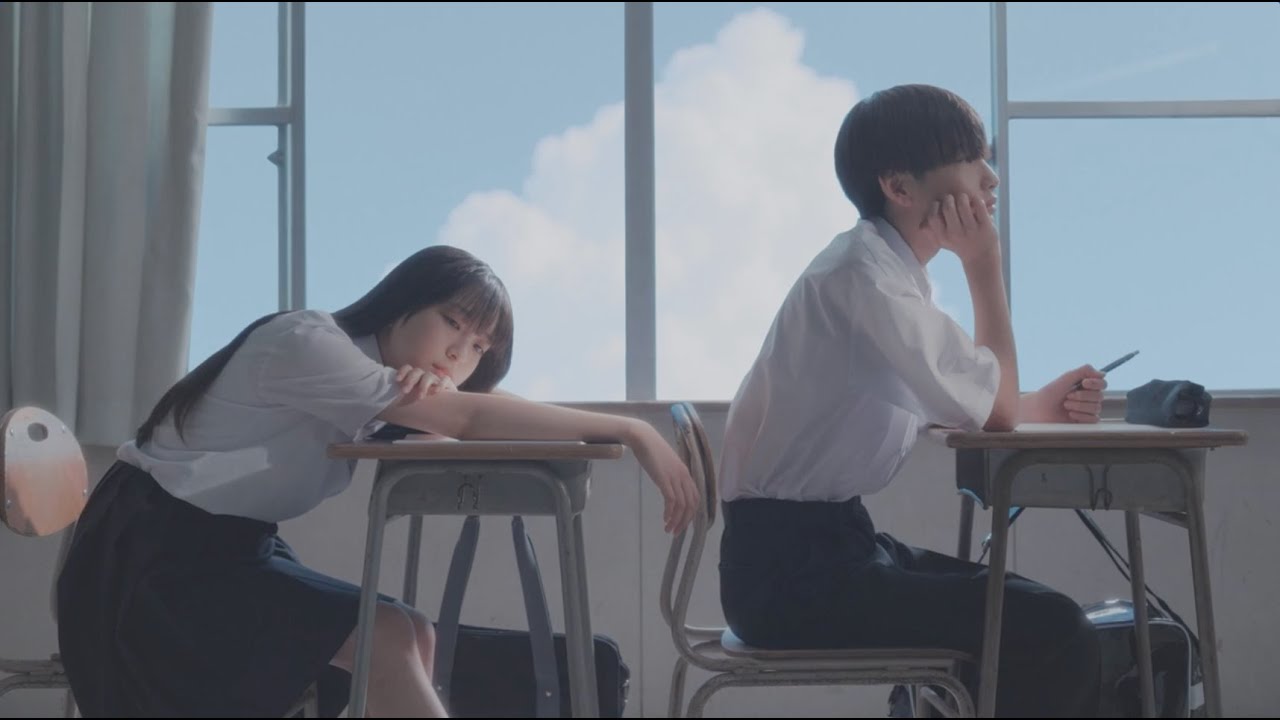
Singer-songwriter Yuika’s become synonymous with the ache of unrequited love. Unlike Aimer, she became a sensation practically overnight once the algorithm caught onto her. She started making a name for herself in 2020 on TikTok by posting covers of songs on guitar.
But it wasn’t until 2021, when she wrote and uploaded “Sukidakara” to YouTube that she truly endeared herself to the masses. The song went viral and has racked up roughly 200 million views as of August 19 (130 million for the lyric video, 58.7 million for the version featuring Ren, and 7.6 million for the music video of the rerecording).
The song started gaining wider recognition in Korea around 2022 as various streamers began covering it. TOMORROW X TOGETHER member BEOMGYU uploaded his own cover of the song to the group’s YouTube channel in May 2024, and former IZ*ONE member and actress Kang Hyewon performed a cover of it at a fan meeting event in Japan. Yuika, who had previously performed in Korea last year, held her second concert in the country earlier this year in response to the surging popularity of her song.
Yuika’s clear, timeless vocals and her emotional yet believable lyrics have struck a chord with Gen Z, making her a regular feature on unrequited-love playlists. On June 13, she saw her one millionth subscriber on YouTube. As she continues to enjoy viral popularity, Yuika’s discography only grows wider and deeper. She’s a prime example of how J-pop’s carving out its place in Korea’s pop music world.
ORANGE RANGE
Celebrating their 25th anniversary this year, ORANGE RANGE is that rare group that’s lived through every phase we’ve covered so far. Their career’s basically a living history of how J-pop has spread over the years.
Formed in 2001 and signed to a major label by 2003, ORANGE RANGE went all in on media tie-ins. No song did more to make them famous than “Hana,” the theme song to the 2004 film “Be with You.” It was a massive success, topping the Oricon for four consecutive weeks and staying on the chart for 52 weeks. After that, though, their momentum began to slow, and while they kept up the releases, none of them made as much of a splash. That is, until 2025.
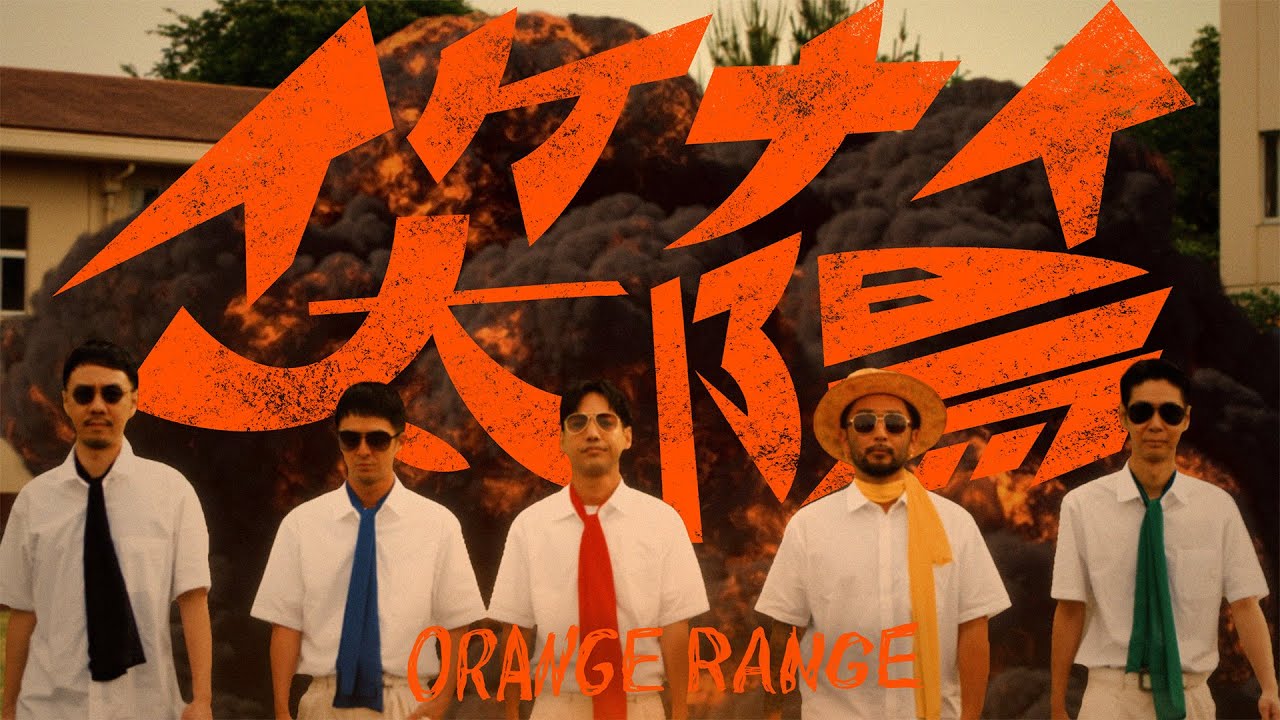
Last year, ORANGE RANGE’s name resurfaced. Their 2008 track “Fashionable School Gang Leader” (aka "Oshare Banchou," and feat. Soy Sauce) suddenly went viral on TikTok, racking up 300 million views. Catching wind of this, the group teamed up with popular comedy duo MAYURIKA to update the music video for their 2007 song “Ikenai Taiyou” for Japan’s current Reiwa era. Packed with 72 references to the Heisei era (1989–2019), the new video went to No. 1 on YouTube’s list of trending videos the instant it dropped on July 2, and all the excitement landed them a spot on “Red & White Year-End Song Festival” for the first time in 19 years.
“But we haven’t really changed what we’ve been doing,” ORANGE RANGE member YAMATO said in an interview with “Billboard JAPAN.” “We’re currently riding the wave and experiencing firsthand what it means to go viral, but intend to continue doing what we do and should do, as we always have.” Just as they kept at it even after the “Hana” glow wore off, the band will presumably keep forging their own way ahead after this viral hit too, staying true to their sound.

DECO*27
I kept going back and forth on whether to include this artist, but there’s no talking about modern J-pop without bringing up the Vocaloid scene—and DECO*27, the artist leading it. DECO*27 kicked off his music career in earnest all the way back in 2008 when he posted “Boku Mitaina Kimi, Kimi Mitaina Boku” (feat. Hatsune Miku) on Niconico, and he’s been steadily putting out a stream of songs in the 18 years since. According to the musician, he considered retiring in 2013 and bringing a five-year journey to a close, but he reversed course and remains one of the few Vocaloid producers still actively working today.
During his Niconico days, DECO*27 built his name on lyrical, atmospheric songs like “Yowamushi Mont Blanc” and “Mozaik Role” (both featuring GUMI), along with “Delusion Tax” (feat. Hatsune Miku). But as he gradually shifted his output from Niconico to YouTube, he moved toward faster BPMs and a richer, more experimental sound, and his lyrics increasingly opened themselves up to multiple interpretations. Songs like “Rabbit Hole,” “The Vampire,” and “Monitoring”—all featuring Hatsune Miku—define this YouTube-era version of DECO*27. DECO*27 said in an interview this past March that “these are songs I made with live performances in mind. I felt like that’s what was needed.”
DECO*27 writes songs with hooks strong enough to stop a thumb mid-swipe on a short-form video binge. And that’s exactly how he taps into that so-called dopamine rush, drawing in Gen Z listeners who previously knew nothing about Vocaloid and eventually bringing them into the subculture, widening J-pop’s reach in the process.
- Check out CUTIE STREET, the KAWAII MAKER2026.04.28
- The world of Lilas2026.01.26