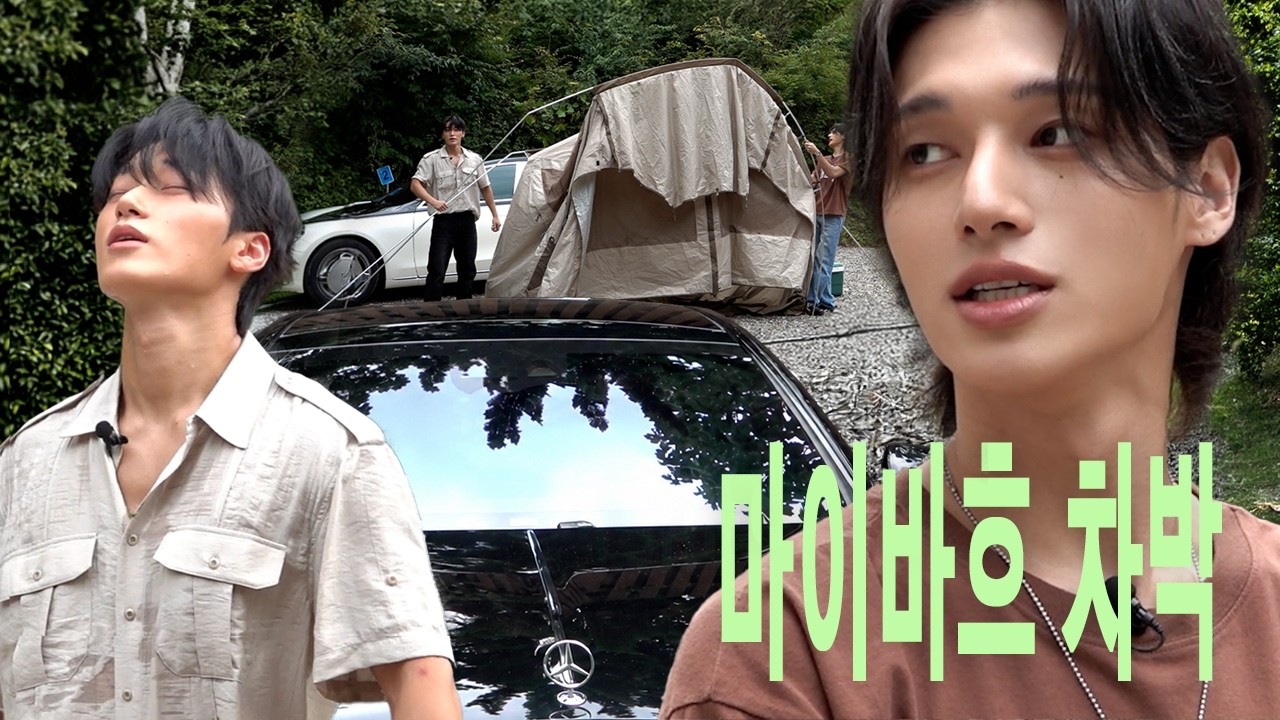
Go Nine or Go Big
Jeong Dana: “So do we get to film nine episodes in total?” That’s how it started—ATEEZ members WOOYOUNG and SAN’s YouTube channel, Go Nine or Go Big, built on one rule: If they can’t crack 500,000 views within nine tries, it’s over. The name alone sets a clear numeric goal, but the actual missions the channel sets up for the two of them are anything but lavish. Video titles like “Driving to Eulwangni Without GPS” read like a simple diary entry of whatever they’re doing that day, and the thumbnails are likewise just a frame from the episode with a short caption.
In “A Formal Family Meeting with a ‘Rejected at First Sight’ Face,” WOOYOUNG and SAN suddenly find themselves in a formal meet-the-parents scenario with the parents of three daughters they’ve never even met. When an actor playing one of the mothers-in-law jokingly asks, “Is it okay if we tag along on the honeymoon?” SAN fires back, “That seems like a brilliant choice.” The two idols sing and joke around with these adults they’ve just met without building a wall of distance. Leave just the two of them alone, though, and a different side comes out. In “Driving to Eulwangni Without GPS,” they take a map of South Korea and one of them drives while the other becomes the “passenger seat GPS” as they try to find their way to Eulwangni. When he can’t see the labels on the roads, WOOYOUNG asks SAN to zoom in so he can see it, and SAN puts his hands in the shape of a camera and holds them up to his eyes. It’s the kind of natural, silly atmosphere and unrestricted banter that only comes from knowing someone a long time. But when the setting changes, it’s not just their playful side on display. In “Stealing the Boss’s Car for Car Camping,” SAN is fielding concerns sent in by people working in the entertainment industry when he says, “Most things start to decline after about six years, right? There’s rarely anyone who gives honest criticism.” WOOYOUNG responds, “But one of our team’s greatest strengths is our members give each other honest feedback.” What starts as someone else’s concern organically leads to talks of their personal experience with ATEEZ, a group that’s been together for more than six years, then flows back into their own relationship and everything they’ve been through.
Go Nine or Go Big blew past its original 500,000-view goal a long time ago. But with each of the nine “tries,” a different side of WOOYOUNG and SAN pops into view—a new look at two people who’ve known each other so long they got matching friendship tattoos with text that means, “We’re friends until we go into our coffins.” As SAN puts it, “Whatever we do, it’s … content”—and maybe that’s the real test Go Nine or Go Big is tackling with its nine tries: not views, but just how many stories the combination of WOOYOUNG and SAN can produce.

“The End of Oak Street”
Nam Sunwoo (“CINE21” reporter): Growing up, whenever my family went to the movies, we always saw the blockbusters. I remember the weekend we saw “Harry Potter and the Chamber of Secrets” (2002) and stopped by my grandmother’s house afterward to borrow my uncle’s copy of the book. The school break when “The Host” (2006) kept me away from Hangang River Park where I used to bike rides with my dad. The evening I passed out cold next to my parents and my sibling while they enjoyed the loud spectacle of “Avatar” (2009). Only in hindsight do I look back at these irreplaceable memories with fondness. At the time, going to the movies was just going through the motions—brief getaways, undemanding cultural refinement that you might say took care of both parenting and filial duties in one sitting. Which is exactly why we needed blockbusters—ones that could immediately satisfy a crowd, with sights and sound you could just sit back and enjoy.
“The End of Oak Street,” directed by David Robert Mitchell and set in 1982, takes exactly what makes that family-friendly genre tick—and then cooks up something a little mean with it. The family at the center of the film includes a father who’s lost his job, a mother contemplating divorce, a daughter who idolizes Carl Sagan, and a son who’s got a crush on a girl in the neighborhood. You can already pick up on the archetypes. As if they didn’t have enough problems already, dinosaurs start showing up in their town. From there, the story follows the familiar beats of a sci-fi disaster movie—then progressively goes off the rails. The monsters go from terrifying to ridiculous, from attack mode to mating. Our heroes save each other one minute and get sick of each other the next, band together and then fall apart as if they just can’t take it anymore—like you might expect from a typical household.
Even so, the ending of “The End of Oak Street” caught me off guard with the way it seems to play it safe for the families sitting there silently judging—but what’s wrong with that? The more I think about it, the more this finale carries with it a waft of metafiction. There’s a kind of introspection in there around the act of watching a blockbuster full of danger-filled chaos with your family. It’s not trying to say something about realizing how precious family is in the end. What matters is the movie theater and what the power of imagination can do to illuminate it. How precious is a place where you can lose yourself in unbelievable danger and forget your troubles for a while? Maybe the Oak Street family got a little lucky in the same sense. There’s no telling how long the optimism will last, but that’s fine. Movies come to an end after two or three hours, but you can always watch them again.
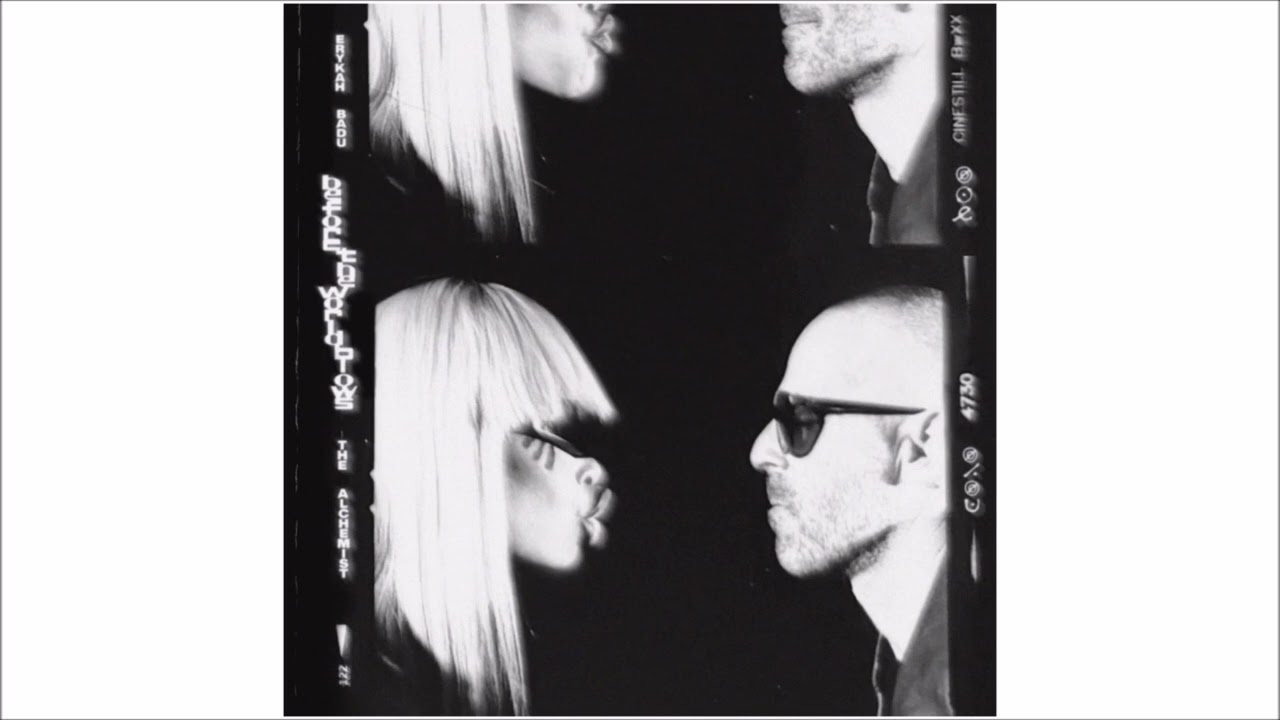
“Before The World Blows” (Erykah Badu & The Alchemist)
Kang Ilkwon (music critic): When the world feels like it’s falling apart, that’s when people usually raise their voices. They’re louder, their messages stronger, in an effort to prove something. But Erykah Badu and the Alchemist took the opposite approach. On “Before The World Blows,” their collaborative album, the pair reins in the noise of the world a bit and follows the measured heartbeat of the music.
Soul, blues, jazz, funk, and hip hop flow freely into one another, and the whole thing comes together as something avant-garde, psychedelic, and experimental. Badu’s voice drifts through it all, sounding otherworldly. At times, even the boundaries between songs start to blur. But within that slow, carefree space, a strangely distinct tension builds. It feels like something’s about to happen, and yet the music never picks up speed.
The neo soul icon and the beat alchemist. Their collaboration began when Badu said she wanted to rap over Mobb Deep’s “The Realest,” a track the Alchemist produced. That’s how they first met, and they discovered they shared a similar approach to creating music, which eventually grew into a full collaboration.
They work in a way that breaks away from the usual collaboration model. It’s not just the Alchemist making a beat and Badu singing over it. Instead, they each take the other’s music and reinterpret it in their own way. Badu pulled the Alchemist’s hip hop into her vision, and the Alchemist folded Badu’s soul back into his sampling aesthetic. As they move back and forth between each other’s musical worlds, the songs keep shapeshifting. In one case, the Alchemist provided a beat, Badu took it apart piece by piece, then put it back together with kalimba, chords, and drums her way.
Even in a world practically on the verge of collapse, the two of them weren’t out to make some grandiose statement. They took the music they already knew, broke it down, and pieced it back together in a new way. And somewhere in that familiar material, they found a novel way to look at the present. Maybe what we can do in the face of global collapse is simpler than we think—make good music and listen to it together.