Can you find paradise somewhere you run away to? That’s the central question behind volume one of the trailer for “THE SIN: BLISS,” ENHYPEN’s latest album. The video jumps between shots of the six boys, peacefully spending their days with the person they love—and the wreckage left behind once that peace is shattered. Their love interest wears a tracking device around her neck, and the chase comes without warning, like a bullet fired out of nowhere. For them, happiness is as fragile as the dandelion seeds the camera keeps returning to, liable to be whisked away at any moment. On “Two Fools,” the album’s opening track, ENHYPEN declares that “nothing out there / Can tear us apart” and insists “a love like this” won’t “ever come to an end.” But on the interlude track “Breaking News,” that same love is said to be “violating sacred taboos.” One person’s bliss worth fighting for till the end is a sin in the eyes of others. As the trailer closes out, NI-KI holds a dandelion and the words “When the sun rises will we finally lose each other?” appear on screen.While the run rises to create the rift between night and daybrea, the band on the run finds themselves caught between hope and tragedy.
A vampire falling for a human—immortal loving mortal. The deeper that love, the graver the danger to the beloved. That’s always been the dilemma at the center of ENHYPEN’s story. In “Bad Desire (With or Without You),” the lead single off “DESIRE: UNLEASH,” they plan to “curse you to be with me forever,” and that’s then played more literally in “No Way Back,” the first chapter of the concept film for the follow-up album, “THE SIN: VANISH”—a vampire caught in the act, just as he’s about to sink his teeth into his lover’s neck. And on “THE SIN: BLISS,” that dilemma still hasn’t been resolved. On “Stuck,” ENHYPEN admits, “I see it now, the real danger to you / Isn’t this world, it’s me.” But at the same time, they sing on “Bad For You” about how “no matter how much we hurt each other / It’s you” they love. That conflict—one driven by a love they can’t let go, no matter the circumstances—is reflected in the recurring imagery of two clasped hands all throughout “THE SIN: BLISS.” On “Two Fools,” ENHYPEN sings, “Your warm hands made me believe in forever / Overwhelmed with hands held tight,” while “Stuck” asks, “I know it’s greedy but still … How could I let your hand go?” But by the time the album reaches the lead single, “Bloody Paradise,” they’re still “holding hands” but will “hesitate no more.” The vampire’s still tormented knowing his very existence could hurt the one he loves, but by the time “THE SIN: BLISS” reaches a crisis point, he ironically decides to accept the risk, finding pure bliss simply in being together.
The interlude track “Remnants of Love” frames ENHYPEN’s story as a tragedy, describing how “the lovers’ happiness, once at its peak, plummeted without any sign or warning.” The line, “A toppled wine glass on the floor, a broken vinyl record,” calls back to the scenes of wreckage in the album trailer, while the line, “Like a song cut short, their private celebration came to an abrupt end,” paints their love as something that’s already over. But then, the very next track, “Bloody Paradise,” flips that outside perspective on its head with, “Love’s permanent.” The rapid-fire, repetitive Brazilian phonk rhythm and the extra kick of rough rupturing it provides conjures the urgency of being chased while also laying down a groove that gets the body moving. The same rhythm that signals the danger of their situation doubles as the engine driving the dance. And for the choreography, the group leans less on sharp, angular movement and more on loose, fluid motion, connecting torso, shoulders, and hips through quick footwork. Clocking in at just over two minutes, “Bloody Paradise” is short, sweet, and sharp, and doesn’t overstay its welcome by stretching the fun thin. It feels like an echo of the lyrics themselves, which capture the liberating feeling of keeping up a fleeting, euphoric dance “till the sunrise.” Where the “Remnants of Love” interlude frames the “tangled footprints as if someone had tried to hide in haste” as evidence of a getaway, “Bloody Paradise” leaves room to interpret those same footprints as traces of the most intense dancing of their lives. And just as “Highlight” is about how “someone out there / Could call us thoughtless / And miserable, and still / It’s our highlight,” “THE SIN: BLISS” can be seen as a story about taking the world’s tough rules and reframing them as paradise through the eyes of the people living under them.
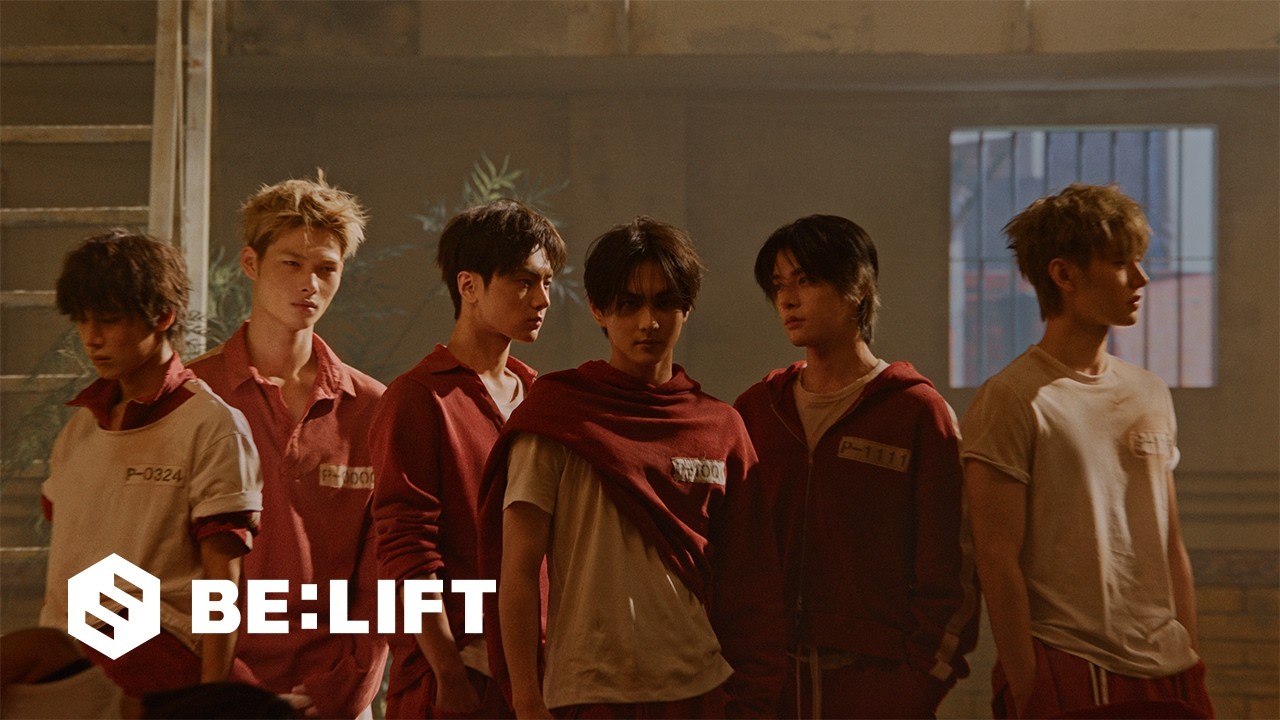
The “Bloody Paradise” music video opens with a sunrise. In the album trailer, the sunlight fills the lovers with fear that they might lose each other, but in “Bloody Paradise,” ENHYPEN moves freely under the shining rays. In one scene, JAKE walks alone against the flow of other inmates in a prison, eating tofu—a nod to the food customarily given to people released from prison in Korea. When NI-KI smashes right through a wall, the space beyond opens up into a beach. Outside, bathed in sunlight, the group jokes around with the handcuffs that once restrained them, races through the streets at night, and soaks up a festival atmosphere as they’re raised into the air by the crowd. But after all these scenes of freedom, the video ends back in the prison, with the six of them staring straight into the camera. We don’t know if they really escaped only to return again, or if what they experienced in the outside world was really all in their heads. But for ENHYPEN, who no longer fear the rising sun and even turn their shackles into toys, paradise isn’t some physical place you get to by running away—it’s more of a state of mind shaped by the meaning you choose to assign to the reality around you.
“Two Fools” rides on a bright, country pop rock guitar riff, but outside of the distant-sounding voices singing “woah oh oh oh” in the chorus, ENHYPEN keeps their emotions fairly contained. “Bad For You,” arguably the album’s most poetic track, similarly leans into a back-and-forth between powerful vocals and gentle falsetto to draw out the fine emotional details. The melody doesn’t really shoot up into a high register, instead dropping again and again, mirroring intense feelings that are nonetheless too complicated to express directly (“Even when I try to hide it / Can’t get you off my mind, I’m going crazy”). Even on “Highlight,” the most hopeful song off the album, their vocals are stripped-down and restrained, in contrast to the soaring melody of the chorus. They casually talk-rap lines that reframe everything they’ve been through (“We’re a classic scene, every moment timeless”), and make declarations with minimal embellishment (“someone out there / Could call us thoughtless / And miserable, and still / It’s our highlight”). Rather than amping up the emotional shift from the precarious happiness of “Two Fools” to the inner turmoil of “Bad For You” and the conviction of “Highlight,” “THE SIN: BLISS” holds back. Maybe the happiness defined by the album isn’t about a momentary explosive high, but something closer to the assuredness that, even after you’ve pushed through all the uncertainty and danger, you can still call your own choice bliss.
“THE SIN: VANISH” and “THE SIN: BLISS,” two albums framed like episodes of a mystery show investigating a vampire escape, weave together the world’s view of them—as heard through the narrative interludes—and ENHYPEN’s own perspective, told through song. That story reaches its conclusion on “The Veiled Truth,” the narrative final track off “THE SIN: BLISS,” with the opening line, “The lovers who once tried to break a taboo have now become a taboo themselves.” The vampire hunters no longer pursue them, and the lovers’ story is erased as though it “had never existed at all.” But paradoxically, the moment they vanish from the world’s record, the eyes that had always seen them as living in sin and ruin can no longer follow them, either. In the end, the paradise described by “THE SIN: BLISS” isn’t a safe haven where all danger disappears, or a love story with the happy ending that comes with everyone’s blessing. As has always been the case with ENHYPEN’s narrative, the dilemma of potentially putting the one you love in danger still lingers, and the sun they fear will rise again. Even so, ENHYPEN chooses to grab hold of the hands they were supposed to let go of, to turn fleeing footsteps into dance steps, and to call a life the world views as “thoughtless and miserable” their own personal “highlight.” That’s how they turn the place they ran away to into paradise. Paradise, after all, isn’t about reaching somewhere safe—it’s the condition of being able, even in the fragile imperfection of the real world, to look at your love and choices that the world calls a sin and define them for yourself as perfect bliss.