On August 19, at 6 p.m., BIGBANG released a new single to mark their 20th anniversary to the day. “BiiiG” shot straight to No. 1 on the Melon TOP100 and daily chart. That’s something you can’t pull off without having both enthused fans and attention from the mainstream. It’s why it’s more than just the new song turning heads—BIGBANG’s whole back catalog is seeing a resurgence. According to Melon Data Lab, streams of BIGBANG’s songs on the streaming service spiked 333% compared to July’s average right after the single dropped. “HARU HARU,” from 2008, returned to the TOP100, climbing as high as No. 67. 2007’s “LIES” and 2022’s “Still Life” came back into rotation too. It’s a sign that listeners are revisiting the full two decades the group’s discography spans.
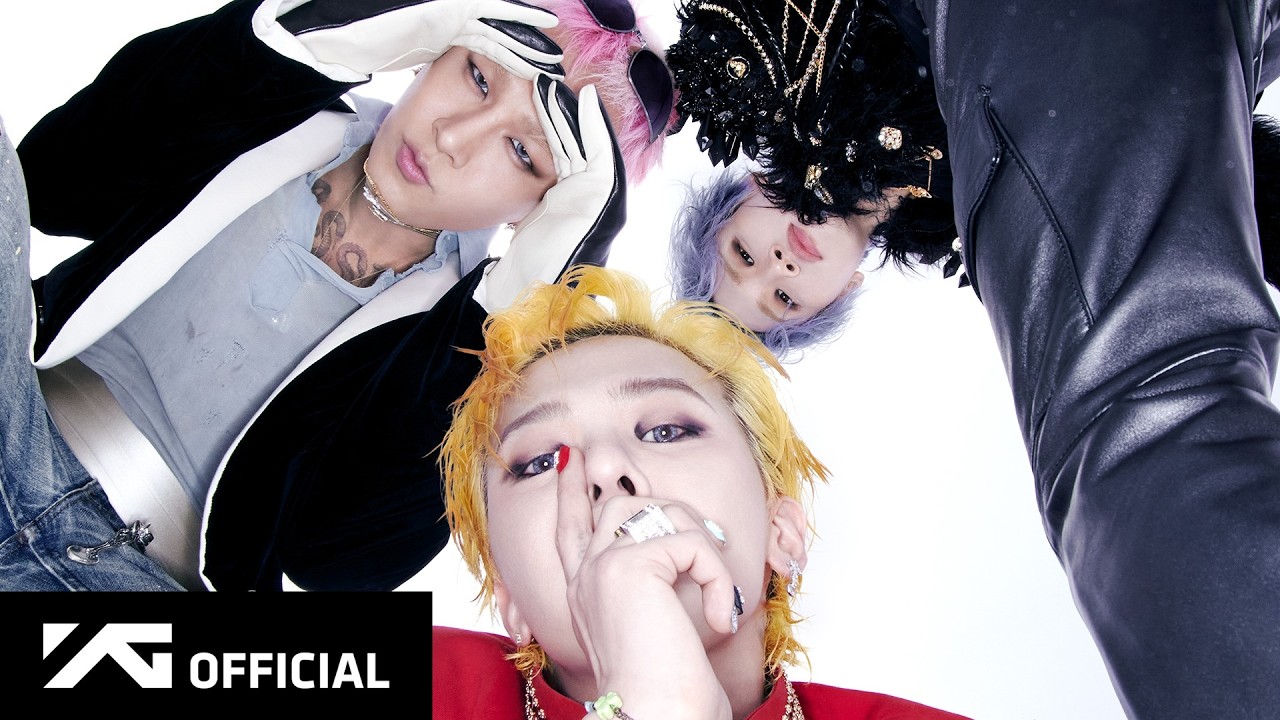
The intense response is rooted in BIGBANG’s staying power, which is to say the distinct aura that’s earned them OG status, beyond just whether the music holds up. When “Newsis” asked eight pop music experts about the significance of the group’s 20th anniversary, their answers all pointed toward a similar sentiment. Basically, BIGBANG made a convincing case for idols as a creative collective, celebrating the individuality of each group member rather than flattening them into a uniform group. The value of that approach is something countless K-pop groups to come after them have since refined and expanded on in their own way. BIGBANG is still the archetype everyone references, meaning, to explain K-pop as it stands today, we end up pointing back to the choices this one group made.
At the center of those choices is G-DRAGON. Here’s an artist who doesn’t draw any lines between songwriting, how he dresses, or the way he portrays himself onstage. When “Vogue” talked to him last year about his guiding principles when it comes to interpreting fashion his own way, he said it’s “all about the present. I focus on the here and now, striving to be honest about what I want and like … However,” he said, “I also listen to the advice of experts around me to stay grounded. After all, I’m not always the one with all the answers.” For him, it’s not about being a mythical figure who always knows exactly what’s in fashion. What matters is staying true to the moment. The same goes for the music. BIGBANG was never the work of a single genius acting alone. G-DRAGON’s role has always been the axis around which both the group’s collaborative style and what it produces are shaped. It’s no coincidence that across BIGBANG’s history, in addition to their output as a group, G-DRAGON’s solo and subunit work carry great weight, and that those projects sit at the center of the bigger BIGBANG picture.
Part of why we can still extol their virtues today is that the nature of a 20-year span—a generation’s worth of time, and in BIGBANG’s case, 2006 to today—has changed significantly. Think about the 20-year period of pop music that started in the ’80s. In the span of two decades, the Korean style of ballads, dance music, and hip hop were all refined, and the foundations of the K-pop idol system put in place. For young people at the time, music from 20 years earlier felt unmistakably like a relic of the past because those genres and the industry as a whole had been completely overhauled. The 20 years since the mid-2000s are different. The skeleton of K-pop’s talent scouting and training system, its fandom economy, and its overseas expansion model were already in place by the start of that period. That’s not to say the past 20 years have been all refinement and no innovation. What’s changed is the relationship to the past. For young people today, music from the late 2000s isn’t just music their parents are nostalgic for—they can discover that music on their own and work it into their personal preferences.
This isn’t restricted to pop music, either. Think of “Infinite Challenge,” which premiered around the same time. The show ended in 2018, but people still watch it on YouTube and stream it today, with new memes appearing all the time. When it was still airing, there were criticisms about the cast getting too old. These days, that feels unfathomable. The decline of legacy media turned out to be a platform problem, not a creativity problem. In other words, aughts culture isn’t some relic of an earlier generation—it’s an early version of the language we’re still speaking today. Access has played a role, too. When clips of live performances and variety shows from 20 years ago are just a click away, there isn’t the same walled-off generational gap from time passing as there used to be. The real challenge now is surviving the algorithm.
That doesn’t mean everyone who was part of that era survives. When such a massive archive opens up, the reason to revisit something can’t just be about “the good old days” but the inherent quality of the work. BIGBANG’s set at Coachella this past April showed exactly how they still function as the archetype pointing toward K-pop’s future. One social media user posting about the performance talked about how so many Asian Americans grew up listening to the group. That brings to mind when 2012’s “ALIVE” became the first Korean-language album to enter the “Billboard” 200, something that came from digital downloads alone, without the kind of promotion or physical distribution targeting the US that artists get today. BIGBANG gained global recognition all while singing in Korean, and for Asian American audiences, that made the concert feel less like a discovery and more like a reunion—the Asian pop stars they grew up listening to, up onstage even today. While that doesn’t strictly speak for the Asian American experience at large, it does offer something of a glimpse into the audience’s relationship with time that mainstream American perceptions alone can’t account for.
It’s also why we can’t write off DAESUNG’s solo trot performance as just a fun detour. Trot is a genre that’s structurally absent from K-pop’s globalization narrative. At overseas festivals, the usual strategy is to strip away local flavor and lean into a more universal sound. DAESUNG went the opposite direction, and the crowd sang along with him, meaning the people in the audience there that day had each found their own way into the 20-year history of BIGBANG’s music. In the not-too-distant future of K-pop, we’re sure to see more like this.
Things aren’t any different in Korea, either. Asking why BIGBANG hasn’t been filed away as a thing of the past isn’t a question looking for an answer. It’s a way of looking back at what one shining era of Korean pop culture left for us. Simply saying the group’s stood the test of time doesn’t quite capture the magnitude. According to NOL Ticket data cited by “Newsis,” the age breakdown of tickets booked for G-DRAGON’s fan meeting event this past February was 10.3% teens, 31.5% 20-year-olds, 36.0% in their 30s, 16.7% in their 40s, and 4.8% in their 50s—a strikingly even distribution, and surprising if you were expecting it to skew one way or another. You can’t chalk a picture like that up to nostalgia alone. What it means is that there’s accumulated cultural value that still holds today, and BIGBANG created that value during an era when the entire country was consuming the same thing. And you can go online and dig through an archive on your service of choice that allows you to check all that out, even today. Fashion fades, but style stays. It stays in the memory for a long, long time, and there’s always new people discovering it for the first time.