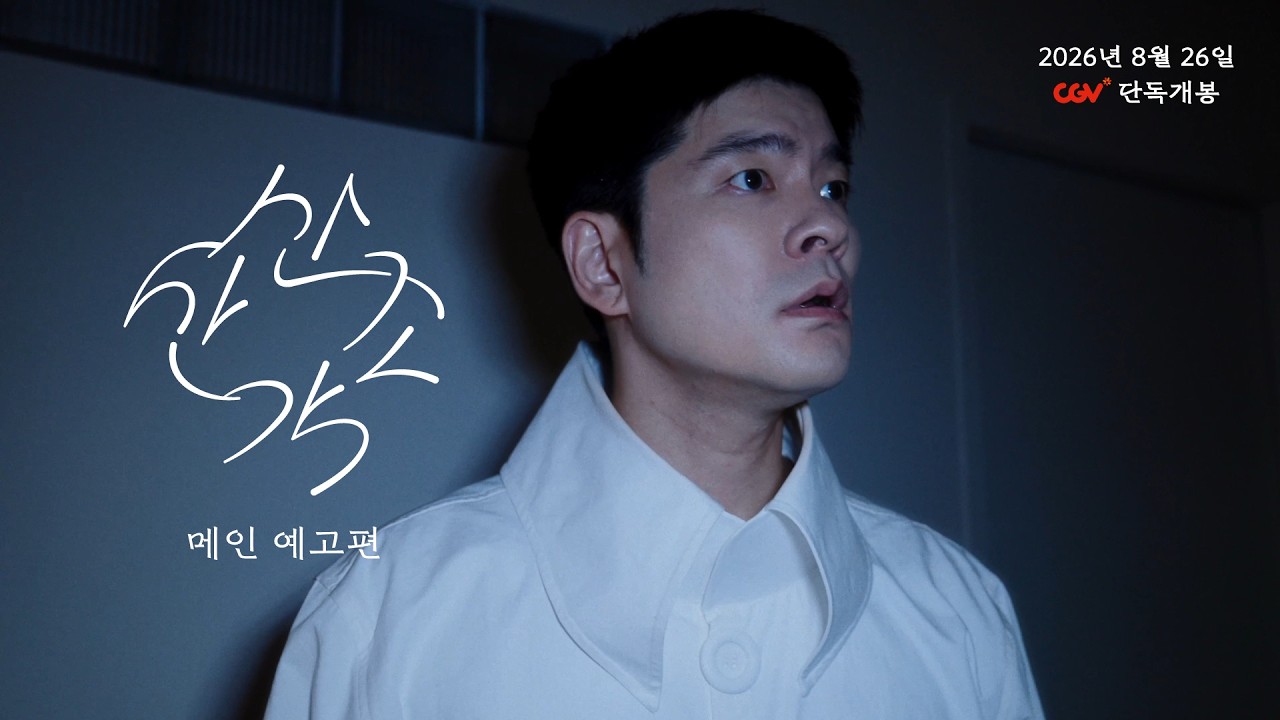
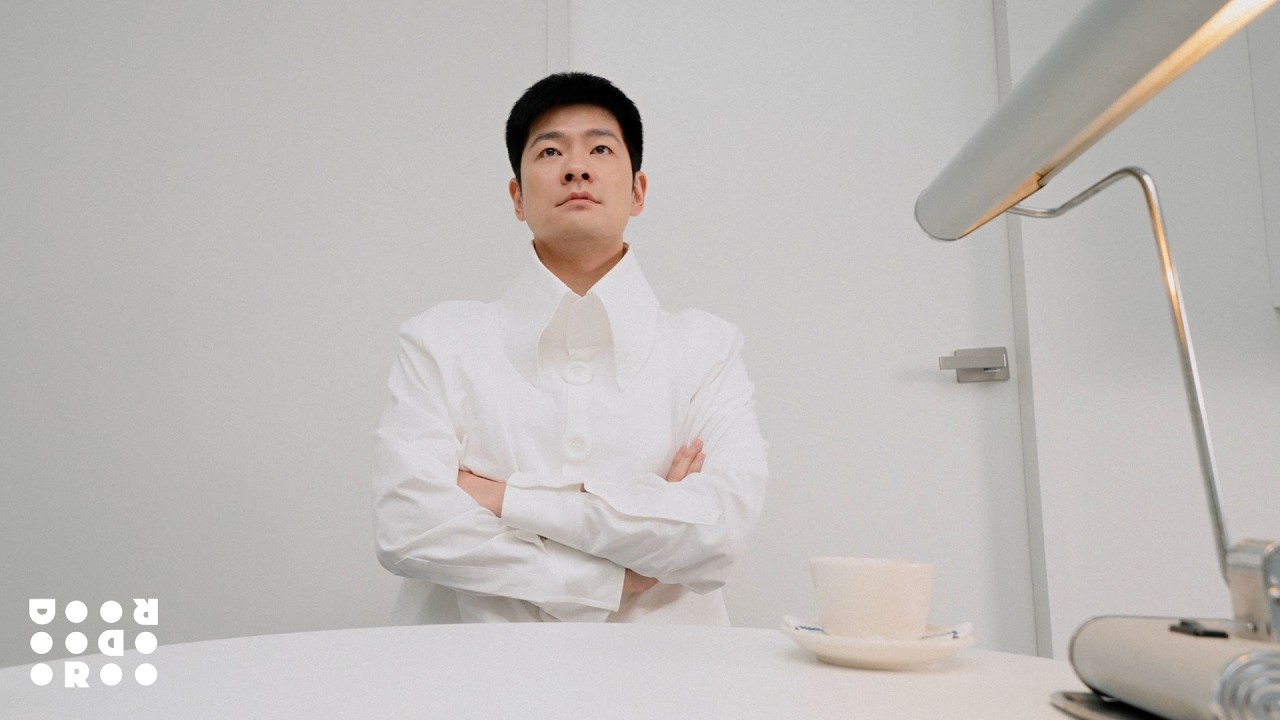
You’re telling me Chang Kiha finally released his first full-length studio album? “San San Jo Gak” comes four years after the singer’s first EP, “Levitation,” and a full 18 years after he first made his debut. The titles of his new album and of that EP perfectly capture Chang as he stands today. After 10 rewarding years with Kiha & The Faces, he disbanded the group, and while he never went into hiding, he’s not exactly been heard from much, either. To a lot of listeners, he’s been hard to pin down. “San San Jo Gak” might come across like disconnected sensations levitating around and floating free, but it’s actually where the paths Chang has taken and the approaches he’s tried out during his solo years all converge. To that end, I went digging through his elusive period in the 2020s for the scattered pieces that make up “San San Jo Gak” and glued them together into something that forms a decent picture. Of course, he could always borrow the title of a concert film by his beloved Talking Heads and tell me to “Stop Making Sense.”
Some things just don’t matter: “Sanggwan Eomneun Geo Aninga?” (2020)
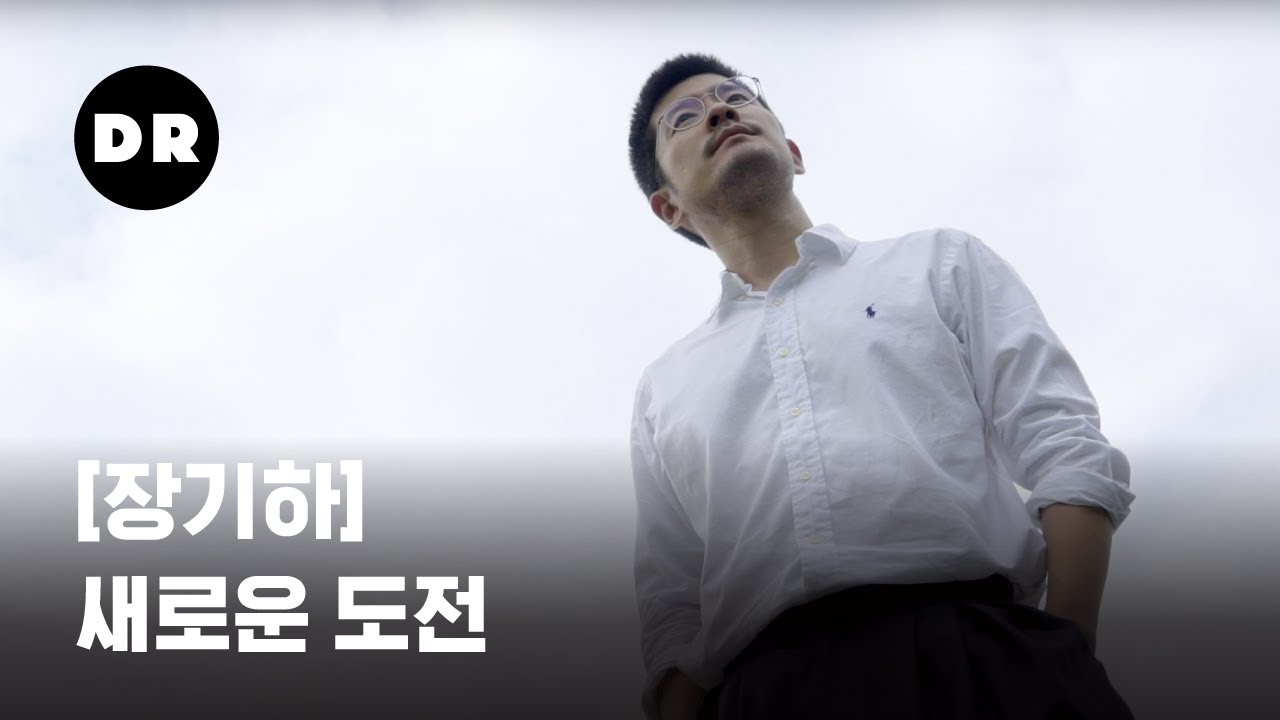
Let’s start with his essay collection “Sanggwan Eomneun Geo Aninga?” (“Does It Even Matter?”), published in the fall of 2020, since the book looks back at the decade leading up to 2019, the year after the Faces officially split, and also provides clues as to what his future work holds. Right from the preface, Chang says he’s going to “write about things that just don’t matter,” and indeed the book lays out whatever topics pop into his head rather than trying to assert a clear point. But as he also writes, “Quite a few of the headaches I end up wrestling with unintentionally really don’t matter.” In this book, Chang turns to writing to finally stop sweating such problems and ask himself the question the title poses. As he notes, the urge to control the uncontrollable has been with him since he began his career in earnest—everything from his focal dystonia to the breakout hit “Cheap Coffee.”
Of all the ways he could go about that, Chang seems to have settled on reduction. As the band closed up shop and he stood poised to begin his solo career, he described the Faces’ five studio albums (at least from the second on) as “a process of trimming the fat,” or more precisely, “an effort to turn down the sound and turn up the empty space.” Hearing that, the book of essays seems to be Chang’s way of attempting to clear away the past to make room for what comes next. He did the same with “mono” by stripping things back as far as they could go until just a single audio channel was left and then closed it out with “Nothing After All.” Some readers may find the book meaningless, but isn’t that exactly what makes it meaningful? As of 2020, Chang seems to want to shed even more of the weight of meaning and needing to matter, predicting that “the next album, which will be my first solo record, will probably be even more sparse.”
How long could it last?: “Levitation” (2022)
And so, Chang’s first EP, “Levitation,” became the pinnacle and end point of the subtractive method he’d spent years honing. As the album description puts it, he set out to make music for a life “floating around with nowhere to be grounded,” and with no need to adhere to the rock band format anymore, he took the bold step of pulling out the bass, the sound everything else is grounded on. As Park Soojin wrote in a review, the subtraction “blunts the skeleton of pop music and leaves space within space with a refined sound.” What’s left is the sweet sound of the words themselves, unanchored by meaning or message and drifting along at ease. To keep from being bogged down by gravity, he stalls ever so sneakily in “Envy None.” He gets his point out of the way in the first line, then endlessly contradicts and qualifies with caveats, putting off pinning down what he means and giving room for the feeling of the words themselves to grow instead. Even with the standalone single “2022/02/22,” which repeats the upcoming album’s release date over and over, he seems to be less interested in promoting his new work than in enjoying the sound of the number repeating rhythmically six times.
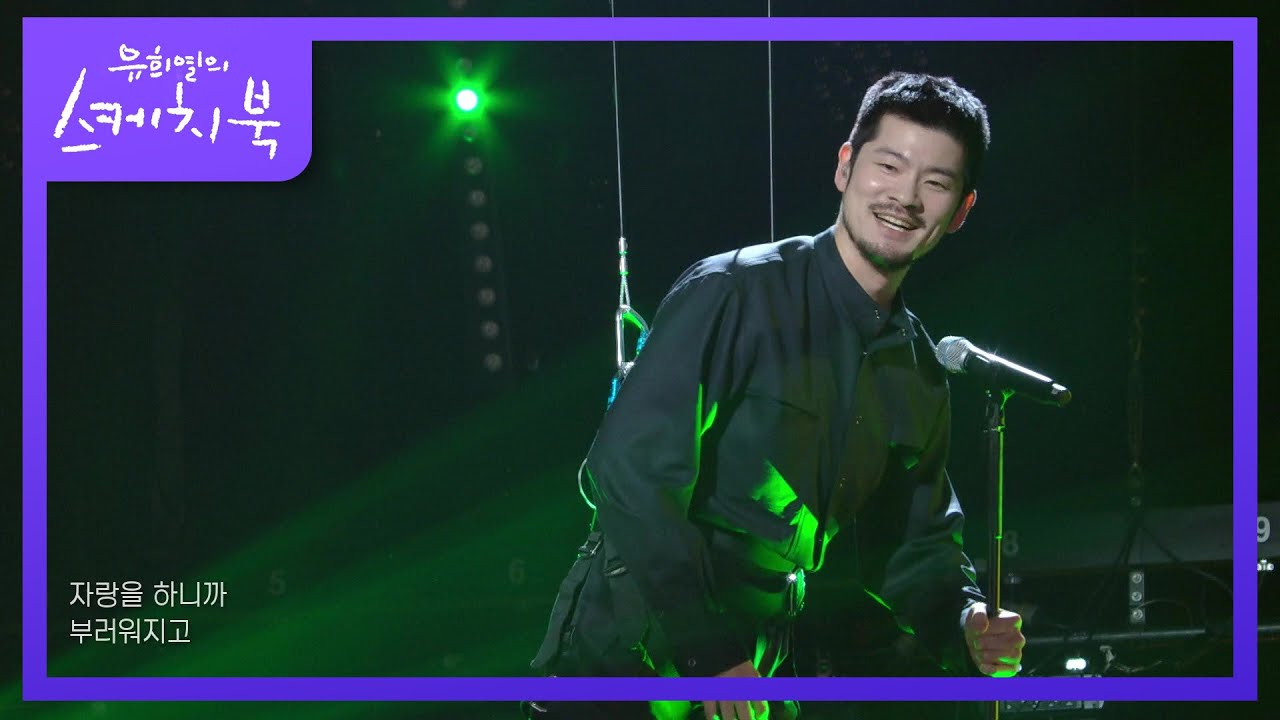
Another way “Levitation” goes about subtracting is through sampling. The chopped up cross-sectional latticework shows up in the keys and guitar on “How Long Could It Last?” and even on Chang’s vocals in “Envy None,” but the standout is “Why Do You Try to Do Something When It’s Totally Okay to Do Nothing?” While the voice of pansori singer Lee Jaram gets chopped up and bounced around, Chang repeats the title in an almost irritated tone, sounding like he’s either yelling at the EP because it’s been stripped too bare or grumbling that it isn’t going as well as he’d hoped. When you take out this much sound, what’s left to cut? Even if you’re hoisted into the air on wires, as Chang was when he sang “Envy None” on TV, sooner or later you have to drop anchor and put your feet back on the ground. But then what? If you fall at breakneck speed out of the air, you’re going to shatter as soon as you hit the ground.

If I’m gonna do something, I’ll do it: “Smugglers” music director and “Do / Do or Don’t” (2023)
Chang kicked off 2023 singing “Go up to the top of the mountain” (aka “Go Up Mountaintop”) at Songolmae’s KBS-hosted Seollal concert, “The flight in 40 years,” and closed it out in spectacular style, performing at the Blue Dragon Film Awards and then taking home the Best Music trophy for his work as music director on “Smugglers.” He didn’t put out any albums, but 2023 was an important year because he discovered a different approach from the one he took with “Levitation.” Set in the 1970s, “Smugglers” already had period-appropriate songs picked out for it by director Ryoo Seung-wan. Chang’s job was to put on the finishing touches by creating a mix of psychedelic and funk songs for the score to fit in both with the existing soundtrack and with the scenes onscreen. In other words, he was working within the confines of an existing framework. mogeosu made a silent short film called “San San Jo Gak” based on Chang’s poem of the same name, and Chang again worked within a framework to write nine suitable songs.
The influence of revisiting a 1970s band dynamic, the same one that informed Chang’s musical style, is written all over “Do / Do or Don’t,” which he released that year. Chang, “whose sleek talent of spewing out a ceaseless stream of words as sounds rather than their meaning,” as I wrote at the time, was pushed to new extremes by the expert playing of his fellow musicians in the rock band Bongjeingan. While “Levitation” drifts like wisps of cloud in the sky, this pair of songs rips by like a typhoon, riding the tension between a commanding “do” and a waffling “do or don’t?” The lyrics repeat with progressively morphing grammar but go nowhere in terms of meaning. Still, the chaotically jumbled soundscape jumps around between loud and soft, long and short, standing in deep contrast to the bassless sound of “Levitation.” Chang found a way to carry on the vision of his previous release while negating the sound, cutting down on what doesn’t matter but stopping before it gets out of hand.
Knocking one of us down: BIBI’s “Bam Yang Gang” (2024)
The fact that BIBI’s single “Bam Yang Gang,” the song of 2024 and a Korean-language one at that, was written, composed, and arranged by Chang may come as a surprise at first, but it makes perfect sense once you listen. The words glide along on a waltzy push and pull of nasal and liquid consonants in a way that no one other than Chang could have made sound so smooth. For most of his collaborations throughout the 2020s so far, he was there to do little more than bring life to the words out loud (see his songs with Mommy Son, Leesuho, HYUKOH, and Mudd the student). By comparison, there’s a lot more meaning to “Bam Yang Gang,” which Chang conceived of as a companion piece to “Side By Side,” but which sat on the shelf a long time before finally finding the right voice and being released.
But the real value in “Bam Yang Gang” comes from the power of BIBI’s voice. BIBI has a knack for fully embodying the characters she sings as, and she’s just as fantastically expressive on this track. She’s the exact opposite of Chang, who until then had only ever sung as himself. If Chang picked up anything from BIBI while working with her, it’s the ability to become someone other than yourself, if only for a moment. After all, the urge to control the uncontrollable isn’t just there when collaborating—it runs especially strong when acting and when breaking up, too. “Side By Side” casts regret over not thinking about “what you really want,” while “Bam Yang Gang” is about someone insisting they’re not asking too much, just “what I’ve always wanted,” just that “one thing.” Both songs come down to a misunderstanding, and having the wrong idea about something is worse than having no clue at all, so BIBI sings “Bam Yang Gang” sweetly at first, then sharp with disappointment, aimed at someone who “never knew who I really was.” That’s why Chang’s own version of “Bam Yang Gang” sounds like two exes, each acting out their mismatched side of the story, until he splits in two and starts fighting with himself, just like in the “video music” for “San San Jo Gak.”
Nothing matters, whether you’re me, I’m you, or where we are: “HAKICHANGKIHA” (2025)
In 2025, the movie “Virus” finally saw a release after drifting here and there much the way “Bam Yang Gang” did. For his role, where he basically played a version of himself, Chang was awarded the third Choi In-ho Youth Culture Award. In his acceptance remarks, Chang said that if the committee “decided I deserve this, I trust that must mean I do,” even as he admitted there “wasn’t much of a grand purpose” behind his making music in the first place. He was more interested in “the words in music”—words that may or may not mean anything, that can stay pure sound or be dressed up as music. Unlike outside interpretations that keep trying to assign meaning to his words, Chang has spent his whole career trying to strip meaning away, and now, whether he’s emptying the music of sound on “Levitation” or of meaning on “Do / Do or Don’t,” there’s nothing left to cut out. So what exactly can he do now?
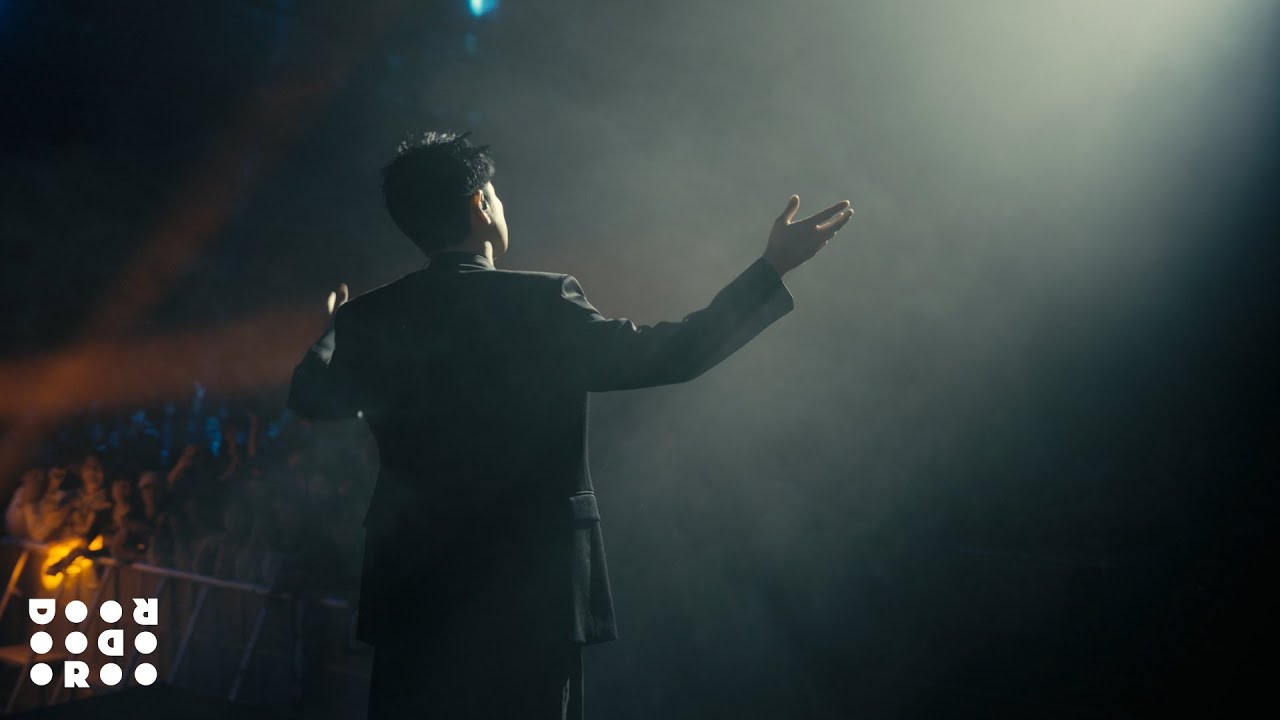
“HAKICHANGKIHA,” the 2024 year-end concert that came out as a live album and concert film the following year, took Chang’s entire career up to that point, chopped it into pieces, and stitched it back together into one spectacle that “flows like water,” like “a seasoned DJ” might, as the album description puts it. Chang’s name and a new live band made up of session musicians unify a setlist of songs from some 15 years of toying with the balance between what words mean and how they sound. The title is really one piece of wordplay that forms a massive 117-syllable description of the concert, but it even goes a step further: Together, the HA and KI that mirror the syllables of Kiha also mean “doing” in Korean. In other words, from “HAKICHANGKIHA,” Chang is “doing Chang Kiha”—a way to levitate all he wants, shatter all he wants, and just as easily come down to earth and become one again. It’s the same approach he used to score “San San Jo Gak,” with every song an organic fit within the 30-minute film.
We’re not that different: “San San Jo Gak” (2026)
And so, “San San Jo Gak” is the album that stitches Chang back together after he’s removed what doesn’t matter, levitated off the ground, and shattered into pieces. Lyrics that could pass for a love story, like “Bam Yang Gang,” turn into a literal tale of Chang splitting in two, bickering with himself in the first scene before reuniting—ironically to the words “Now there’s no going back / To a time before we met.” The most interesting part is something Chang stressed in an interview—the “endlessly repeating, cyclical structure.” In the video, the two Changs bicker, then swap places and reset. On the album, “So It Was a Leaf” and “So It Was the Sun, Sun, Sun, Sun, Sun” ride out the changing seasons until the last song links right back into the first. In audio and video alike, the whole thing is a kind of closed circuit. By Chang’s own account, “it puts the mind at ease a bit to think everything goes round and round,” so maybe a loop like this is one more attempt to control the uncontrollable flow of time—which happens to be exactly where music shines.
If you look at the album as three sets of three songs, “All In An Instant,” “Hey, That’s Mine,” and “Nuh Na Na Na” sit together at the very center, and they’re its most eclectic stretch. They revisit the subject of love (especially “All In An Instant”), shaking up the soundscape with an anxious look at that which can’t be controlled. The fix offered up by “Nuh Na Na Na,” the lead single that closes out the middle section, isn’t to strip away all meaning and float off like “Levitation.” It’s to accept that we’re not that different, you and I, but that we aren’t quite the same either, so it doesn’t matter if you break to pieces. Only then can you choose to become something that’s not that different from you nor all that similar. In that sense, the album “San San Jo Gak” puts forth Chang’s career as a case study in how to strip yourself down and put yourself back together again. That’s what Chang’s learned as of 2026, after everything he’s been through levitating in the sky and shattering on the ground. And he goes on his way like always, as if nothing happened.
- What the meadow can teach us2026.04.30
- A Present Woven from JANNABI’s Nostalgia2025.12.02
- WONPIL traces the heart through the beat2026.04.22