
“The Small Talk Club”
Oh Minji: Can people who seem to have little in common become friends over just one thing they share? That’s the premise of “The Small Talk Club,” which airs on Channel Bandal on the 21st of each month. Described as a show where “people with something in common get together to eat and chat,” it brings together an unlikely mix of guests united by a single common thread. The first episode featured K-pop group leaders from different generations, including SECHSKIES’ EUN JIWON, EXO’s SUHO, SEVENTEEN’s S.COUPS, and BOYNEXTDOOR’s JAEHYUN. The second brought together the youngest members of their respective groups: SUPER JUNIOR’s KYUHYUN, SHINee’s TAEMIN, SEVENTEEN’s DINO, and TWS’s KYUNGMIN. Despite their differences in age, personality, and background, the guests soon find themselves looking for other things they might have in common, from attending the same middle school or living in the same neighborhood to favorite school subjects and even similarities in their facial features. As the conversation unfolds, they discover small connections they might never have thought to look for.
“The Small Talk Club” has no set topics, no missions to complete, and no particular goal to achieve. One guest shares a story, another chimes in with a similar experience, and sometimes someone offers comfort by sharing an entirely different one. Some struggles are familiar to almost anyone who has been part of an idol group: the hard work of building a lasting career onstage, or the discomfort of squeezing into cramped cars while rushing from one commitment to the next. So, too, is the realization of how much the members mean to one another as they work to keep their group together over the years, or the gratitude they feel for the love they receive when they describe being an idol as “a happy job” and the present as “a brilliant moment.” These are experiences that only fellow idols can fully understand. But different generations bring different perspectives, too. When BOYNEXTDOOR’s JAEHYUN opens up about hurtful comments he has received, SEVENTEEN’s S.COUPS gets angry on his behalf. When S.COUPS worries that SEVENTEEN may not have a generation-defining hit, SECHSKIES’ EUN JIWON reassures him: “The name SEVENTEEN is a hit in itself.” As fellow idols who know what it means to be a group leader or the youngest member, they can open up about their struggles, find common ground, and offer one another support. As the conversation unfolds, the boundaries between groups and generations begin to fade. As KYUHYUN points out, having something in common gives them plenty to talk about. The experiences one person has lived through can offer comfort to another, while worries carried alone can feel a little lighter when met with understanding and encouragement. What begins as small talk about a single shared experience gradually brings people from different backgrounds a little closer together.

“Being Heumann”
Nam Sunwoo (“CINE 21” Reporter): When “CODA” won Best Picture at the 94th Academy Awards in 2022, Apple TV became the first streaming platform to claim the Oscars’ top prize, beating Netflix to the honor. Four years later, “CODA” director Sian Heder returns to Apple TV with “Being Heumann,” a drama based on a true story that premieres November 13.
The film follows Judith “Judy” Heumann (played by Ruth Madeley), a disability rights activist who lived from 1947 to 2023. Heumann helped lay the groundwork for the Americans with Disabilities Act and served as a special advisor on disability rights during the Obama administration. She had used a wheelchair since childhood after contracting polio and was even denied admission to school on the grounds that it would be unsafe for her to attend. Undeterred, she went on to earn her teaching credentials and became a leading advocate for disability rights.
Rather than chronicle Heumann’s entire 75-year life, “Being Heumann” focuses on a roughly 20-day period in 1977, when she and more than 100 fellow activists occupied a federal health and welfare office in San Francisco. The sit-in was a protest demanding the implementation of regulations prohibiting discrimination against people with disabilities. As the group’s leader, Heumann spearheads the effort while navigating conflicts both within the group and with those on the outside. In those hallways, romances blossom, friendships form, and divisions emerge. The camera follows Judy closely throughout, tracing her efforts to bridge the gap between where she can go and where she wants to go.
This carefully chosen focus is what makes “Being Heumann” so remarkable. By confining the story to a specific time and place, Heder makes Judy’s physical limitations seem less pronounced. The film seems to suggest that Judy can move freely wherever people have agreed to make room for her, and that it is up to future generations to keep expanding those spaces. That makes the long staircase without a ramp that stops Judy in her tracks near the end all the more heartbreaking. It is, after all, a reminder of the reality that awaits viewers beyond the film.
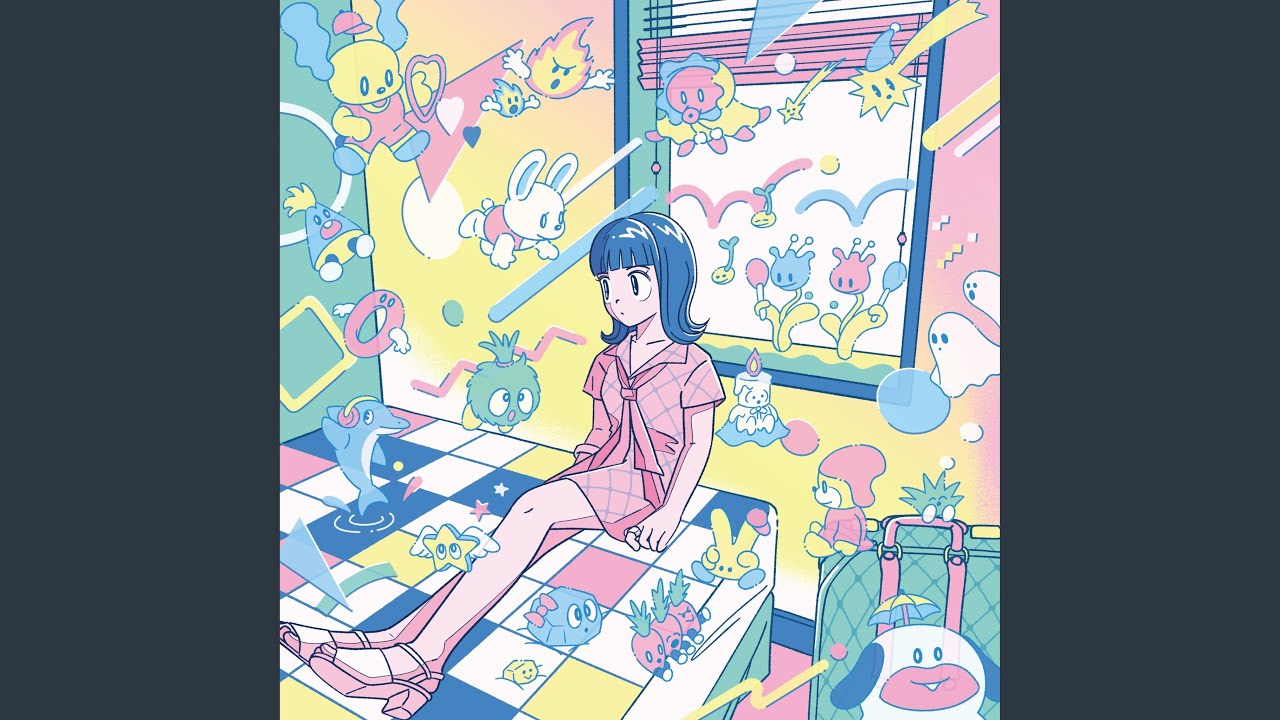
Woomin – “Lens Flare (2026 Remaster)”
Na Wonyoung (Music Critic): In the mid-2000s, a corner of Korea’s indie pop scene seemed to exist in several eras at once. As Korea opened up to Japanese pop culture and the internet became part of everyday life, listeners gained unprecedented access to popular music from different times and places, with far less filtering or mediation. The new styles that emerged drew freely from Korea’s 20th-century pop history, taking it apart and putting it back together, or enthusiastically pieced together such a wide range of cultural influences that it was sometimes hard to believe the music had been made in Korea at all. Korean Shibuya-kei was a product of this same phenomenon. In Japan, Shibuya-kei evolved over the first two decades of the Heisei era, shifting from retro-obsessed pop to house-driven electronica. In Korea, by contrast, that evolution was compressed into just a few years, with widely different styles often grouped together under the Shibuya-kei label.
The recently remastered “Say Hello to Every Summer,” reissued 20 years after its original release, is a case in point. Alongside Smilz’s “Strawberry T.V Show,” it was one of the few Korean albums to come close to the original strain of Shibuya-kei exemplified by Pizzicato Five. Produced by Woomin under the name Elena Jung and DJ soulscape under the name Espionne, the album lovingly recreates an idealized golden age of pop, drawing on the chanson, lounge music, and bossa nova of the 1950s and ‘60s. The opening line, “Do you still miss the moments you once let slip away?” takes on a new significance two decades later. Music that had long since drifted free of its original time and place is now heard through the lens of 2000s nostalgia.
Take “Lens Flare,” at the album’s midpoint. The sound of screeching tires gives way to a buoyant, 1950s-style pop beat, dressed up with rich organ tones, a crackling guitar solo, and sweet vocal harmonies. Just as Woomin explored memory and forgetting on her second album, “Tender Tender Trigger,” “Say Hello to Every Summer” seems vaguely conscious of being pop about pop: a derivative work, an imitation, an artifice. The album drifts through a world of perpetual summer, forever bathed in nostalgia. Its remarkable Korean lyrics conjure vivid images from ordinary words, stirring up “old memories that served no purpose in the early summer, as the same weather comes and goes.” They capture the flashes of “endless yesterdays returning once again,” the “shattered light” of countless eras colliding at once. That light is easier to find on the original cover than on the remastered edition’s, which Satoshi Jimbo has redrawn with charming characters. On the original, from before the album’s sound was polished to a sharper clarity, Woomin sits alone in an empty room with nothing but a suitcase, a brilliant white glow filling the window behind her. And we, looking back from the future at the radiant sounds of a past that may have been constructed in much the same way, are left dazzled.