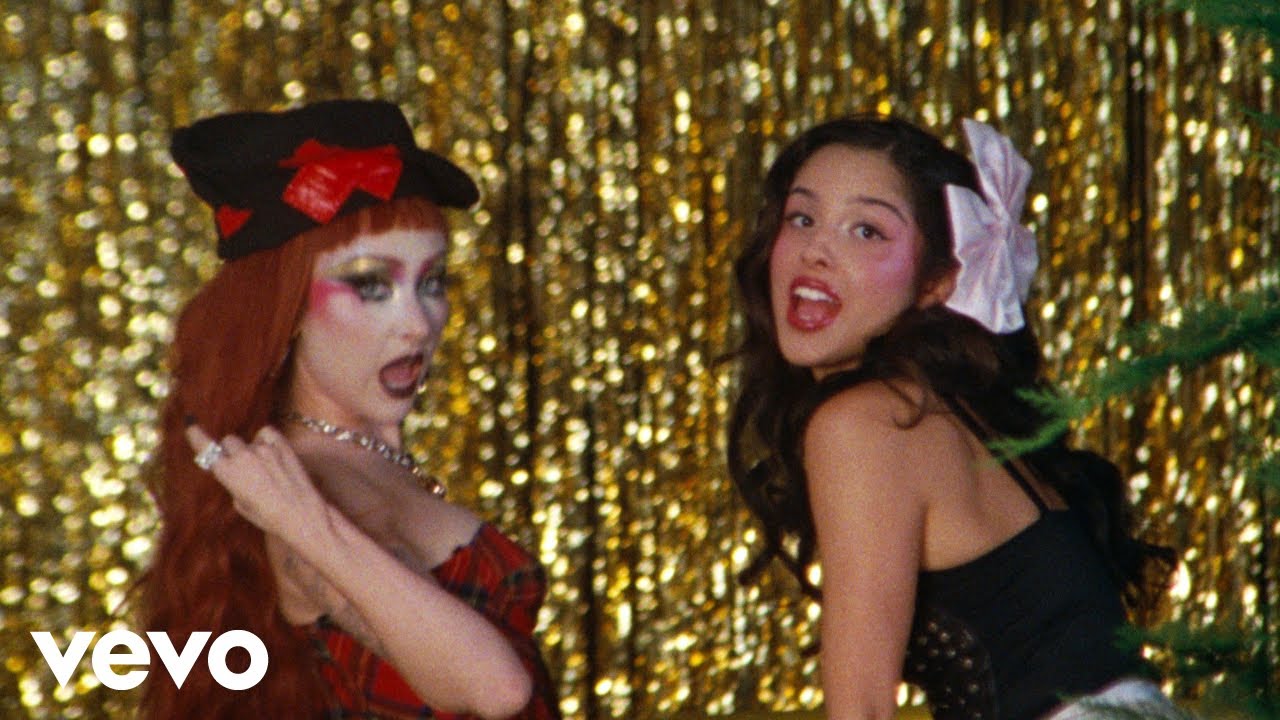
On October 15, Olivia Rodrigo released a remix of “expectations,” a song off her third album, “you seem pretty sad for a girl so in love,” with Chappell Roan. It’s Roan’s first credit as a featured artist and the first time Rodrigo has put out a proper remix of an original song, as Roan says directly at the beginning of the hit (“Ooh, Olivia does remixes now”). After the remix came out, the song—previously having fallen outside the Top 60—jumped to No. 3 on the “Billboard” Hot 100. The original version peaked at No. 20. Meanwhile, the album, which came out in June, returned to the top of the “Billboard” 200, adding two more weeks at No. 1 for a total of four.
The remix of “expectations” isn’t that different from the original, maintaining the same structure. The only real changes are a newly written second verse for Roan and that the two sing the chorus together. Beneath the surface, though, there’s a lot of significance to these two singers coming together. Ultimately, the remix is a window into where Rodrigo’s at post-“SOUR” and “GUTS.”
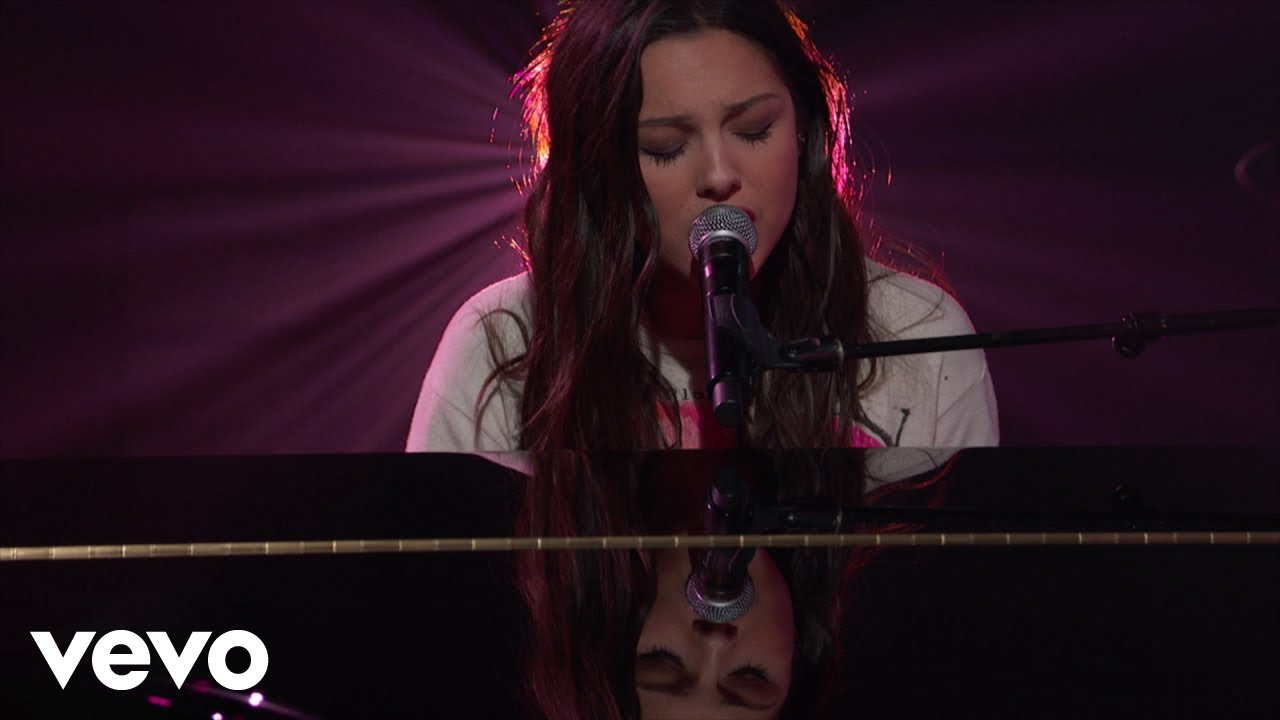
Shortly after releasing “GUTS” in 2023, Rodrigo talked about how “there are so many expectations placed on women,” adding how, “growing up, I really struggled with the conflict of having all these feelings that I felt like I couldn’t externalize and this expectation that I wanted to be this good girl.” That album opens with “all-american bitch.” The men in her songs from the period were mostly people who hurt her. You can hear it in “vampire,” likening an older man who used her to a bloodsucker, and “get him back!,” where she rattles off a guy’s flaws but still can’t let go. Before long, with Rodrigo, Sabrina Carpenter, and other women in pop singing about how tired they are with men, it started to look like a trend, and even earned itself a name: heteropessimism.
Three years on, “you seem pretty sad for a girl so in love” traced Rodrigo’s first “adult relationship” from start to finish. The album’s first six songs are the “girl so in love” half, with the seven that follow the “you seem pretty sad” half. The album has a different sound, too. The pop punk that anchored her first two albums takes a back seat as ’80s and ’90s new wave takes its place. She even had Robert Smith from the Cure on “what’s wrong with me,” giving the song vocals from a voice that practically represents the origins of the sound, and a title that connects the two sides of the album in an ominous fashion. At the very least, she doesn’t seem to have simply swapped her anger at dumb guys for a love story of giddy highs and the crash that follows. So what is Rodrigo saying instead?
At first glance, the second track, “stupid song,” looks like a hetero version of Troye Sivan’s song “One Of Your Girls”—a passionate, almost embarrassing, outpouring over finding love anew—but speaking on a “New York Times” podcast, Rodrigo brought up Annie Ernaux, winner of the 2022 Nobel Prize in Literature. “I was really inspired by this book, ‘Simple Passion’ by Annie Ernaux,” she said. “She’s having this affair with this person and she’s not quite happy. She’s kind of just going insane,” adding, “I was really inspired by just all of the ways in which love makes you insane and miserable. You know what I mean? I think that there’s a lot more to mine there than just like, ‘Yay, oh my god, he’s so hot. He loves me’—that type of thing.” In other words, the title “stupid song” isn’t ironic, it’s brutally honest. It’s self-deprecating, but it’s also what you get when you accept that love won’t save you, and “the cure” confirms that.
Once she sets aside the idea of a man being her savior, “expectations” comes along to lay out her standards for her next romance—a guy with a real job who isn’t desperate for love, but who also isn’t indecisive, which is painfully unattractive. The bar doesn’t feel nearly as high as the repetition of “I’ve got really big expectations” in the chorus seems to insist, poking fun at the fact that she ended up with a guy who couldn’t clear even that modest bar. The remix expands on who’s doing the introspection. According to an Apple Music interview the two singers did together, when Rodrigo told Roan about everything she’d been through with different men, Roan fired back, “You need to start dating girls.” Roan then wrote lines about getting ghosted by a girl (based on a real story involving a boy). She also changes the chorus to be about a girl when she sings it.
Adding a queer perspective to the remix was a brave move. As Roan stressed in the interview, not everybody would be open to having a fully queer stanza added to their song. But Roan’s involvement is about more than setting two perspectives side by side. The remix shifts the song’s subject matter from a man to a mindset. Guys aren’t the only ones who can be letdowns, and everyone has the right to be upfront about what they want.
Their collaboration and interpersonal bond didn’t come out of nowhere. Roan worked on Rodrigo’s album “GUTS” and opened the first 24 shows of the tour. In fact, all the opening acts on that tour were women. In February 2024, Rodrigo launched “Fund 4 Good.” A portion of her ticket proceeds go to organizations that support women’s education, prevent gender-based violence, and more. Rodrigo said her work took on added importance because the tour came right after Roe v. Wade was overturned. That December, she gave more than $2 million to 10 organizations.
Rodrigo has since upped the ante. After taking part in a documentary about Lilith Fair, a women-centric music festival from the ’90s, she started dreaming up a festival of her own. The result was Daisy Chain Fields, announced right after her third album came out. Every act in the lineup was a woman or a woman-led band, and tickets sold out in 30 minutes. She said she wanted to push back on the idea that girls have to compete with each other for the top. Around 45,000 festivalgoers attended. With $10 million in proceeds matched by Melinda French Gates, a total of $20 million went to 10 organizations supporting women and girls. Rodrigo’s current tour follows the same model: Women open the show, and a portion of ticket proceeds goes to Fund 4 Good.
Rodrigo’s moved around from singing about the past to the future, and from outside to inside, but she’s always open. She’s gone from singing about the one who got away to herself in love, then to the standards she’ll hold the next one to. She sings about those expectations with a fellow singer she tapped to open for her before anyone knew her name, and shares the stage and the proceeds with other women. She’s an artist who calls out how “the people who want to keep us down are really relying on us feeling alone” and says that “the antidote to that is joy and community.” She’s now put those words into her music and into action, and they’re backed up by the success of her tours and festival. That’s the kind of weight Olivia Rodrigo’s name carries in the world of pop music today.
- How ADÉLA became ‘PRIMA’2026.10.06
- Five artists for the post-“BRAT” era2026.08.10