In August, Anna Gaca, an editor at the world-renowned music magazine “Pitchfork,” proposed a new genre name: hyperclash. “A new wave of dance acts is reverse-engineering the iconic sound of the ’00s underground dancefloor,” according to the official “Pitchfork” playlist on Apple Music, “and making hedonism more complicated than ever.”
So what exactly is hyperclash? Musically, it takes electroclash, the synthpop-meets-punk provocation that set clubs on fire in the early 2000s, then mixes in the warped madness of hyperpop, the foggy haze of cloud rap, and the buildup–drop tag team of EDM. Its artists are clever and hold nothing back. They put on an image of sexual provocation, reckless parties, and hedonistic stage personas, but just beneath the surface there’s cynicism, anxiety, and vulnerability. They take nostalgia for the turn of the century, which they either lived through or experienced online as kids, and exaggerate it out of proportion.
What happens when we hold the “Pitchfork” naming convention up to today’s Korean pop music? Interestingly enough, there’s an active group of artists who share hyperclash’s musical vision or are developing their own sound in hyperclash-adjacent genres. Let’s check out some of the electronic pop artists in Seoul who are helping develop the same era of music from unique standpoints.

The Deep
No one’s refining the hyperclash sound more impressively than the Deep, who’s also been working with other artists from around the world. Her first studio album, “KPOP B!TCH,” came out last December and was largely co-produced by Frost Children, whom Anna Gaca named a leading hyperclash figure. The Deep started out as an alternative R&B singer, then pivoted to 2000s electro synthpop and was reborn as an audacious party girl.
The singer herself couldn’t care less about labels. “I don’t really see myself making hyperpop,” she said in an interview with “Dazed.” “Since I’m Korean and I sing in Korean, I think it’s fair to define my music as K-pop,” she went on. “K-pop is very polished, it’s perfectionism in a way, and I’m very DIY.” The crew she does indie K-pop DIY with, MY UNNIES, is just as international, including Korean American producer kimj—who’s worked with 2hollis and glaive—rapper Effie, and Shanghai-born SEBii.
The Deep’s music is getting more attention abroad than in Korea. As of November, she has 140,000 monthly Spotify listeners, predominantly from LA, New York, London, and Chicago. “The FADER” listed her among musicians from “East Asia’s underground music scene” who “release music to cult fanbases in the US.”
The Deep has increasingly been working within the K-pop world, with credits on ILLIT’s “It’s Me” and KiiiKiii’s “Hey Hi,” and she’s releasing her next EP, “Quest,” on December 9. Co-producers include Dorian Electra, Angel from Frost Children, and Danny L Harle, whose name is synonymous with the heyday of PC Music. The Deep gives listeners a way to revel in the electropop that has succeeded the hyperpop of the 2010s.
Effie
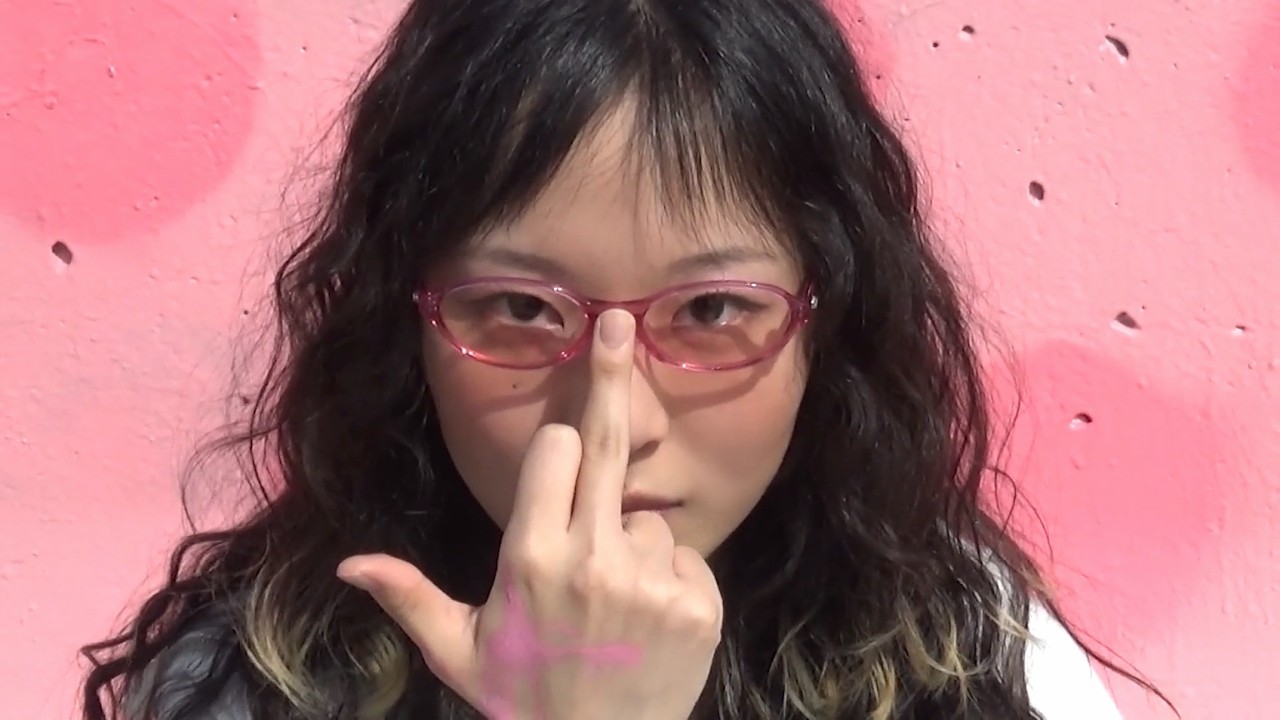
Effie’s connection to hyperclash is through cloud rap. As a student, she went looking on SoundCloud for music and stumbled onto Drain Gang from Sweden, home to Bladee and Ecco2k, and it floored her. “That style didn’t really exist in Korea when I was growing up,” she explained in an interview with “Dazed.” Her breakout album, “E,” was named as an homage to Ecco2k’s album of the same name. Emerging through the Internet in the late 2000s, cloud rap thrives on old media noise and scraps of pop culture, and it’s a genre that the “Pitchfork” classification of hyperclash recognizes as part of the same family tree.
Effie draws from the only recently passed early portion of the 21st century in Korea. Born in 2002, when the country hosted the World Cup, she fills her songs with Korea as she’s seen, heard, and remembers it. “coca-cola” captured Cyworld, early internet community memes, and BIGBANG songs with clarity. Then came “kancho,” named for the snack every Korean kid grew up on, and “MAKGEOLLI BANGER,” which raises a glass to its namesake drink, both bouncy hauntology tracks that spring to life.
Effie used to “try to look like a mainstream K-pop artist in my music videos,” she said in her “Dazed” interview, “but I realized that it ruined the unique atmosphere of my music.” She’s since dreamed bigger, becoming a creator of alternative K-pop, including earlier this year when she helped write the KiiiKiii song “Candy Pink Magic Hole Flip Phone.” Her 17-track album, targeted for early next year, is a decalcomania-style project that folds the number 2002 into two overlapping halves. She’s slated to shoot a music video in Berlin with Anton Tammi, the director behind The Weeknd’s “Blinding Lights” video.
NECTA
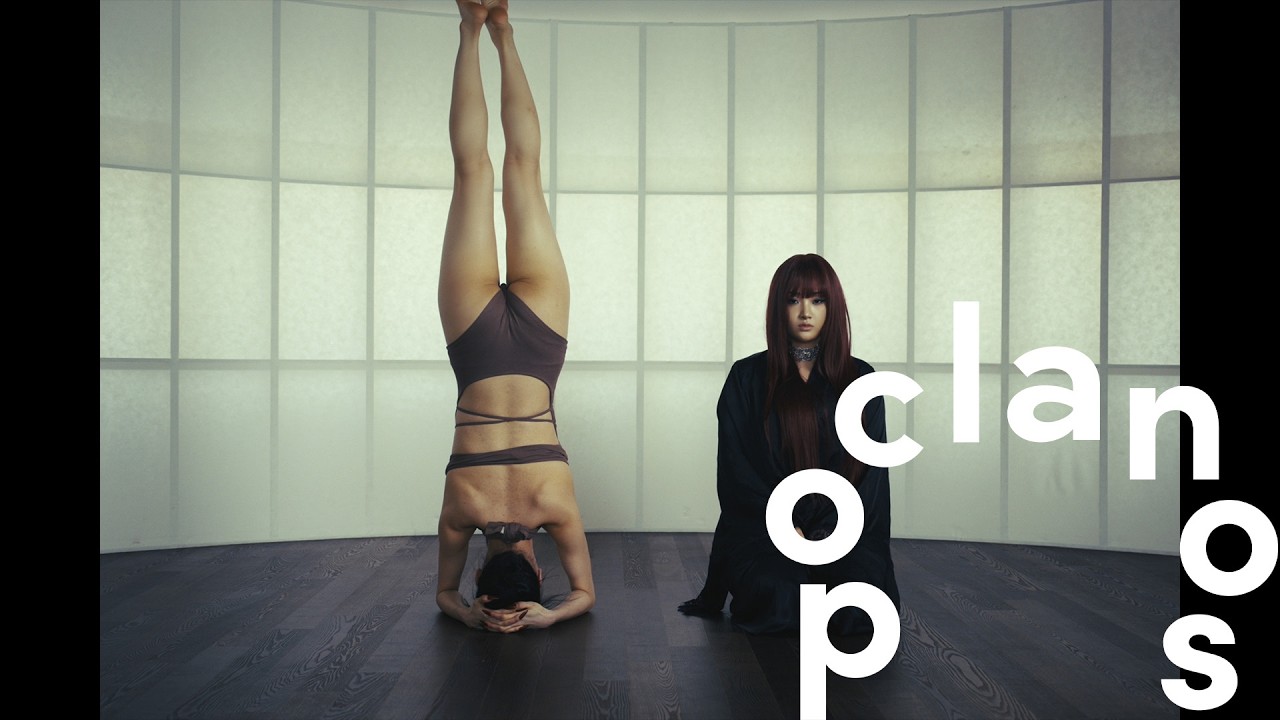
NECTA shares hyperclash’s themes of hedonism and the club as its setting. Like the Deep, NECTA started out as an R&B diva and now makes music where her voice functions as one instrument among electronic sounds and rhythms. For her first studio album, “GIRLHOOD,” released in March, she chopped up house, techno, and other electronic genres into pieces and reassembled the fragments into something experimental. She treats her voice like another sample after learning last year, while making “Seoul Bizarre,” that vocals don’t always have to be the centerpiece of a song.
The electronic music NECTA picked up firsthand in Seoul’s Itaewon neighborhood has a more strictly defined sense of genre than electroclash or pop does, but at the same time, the way she reverse-engineers that has hyperclash written all over it. What she ultimately seeks to express is being boldly self-assertive and completely open about desire, putting this young artist in good company with other creative people worldwide. Her hyperclash side really comes through in “LOVEY DOVEY,” a humorously indirect letter to an ex, and “TONGUES ON FIRE,” a swirl of emotion and sensuality written with singer-songwriter YOUHA.
Sion
Sion sits outside the immediate sphere of hyperclash. Born to classically trained singers and raised in Germany, he started out as an R&B singer who became known for his so-called “sudden acceleration” vocal shift in “Braindead.” He built a following and kept making music, but burnout eventually set in. “Repeating the same genre, sound for multiple years, feels like death to me,” Sion said, before finally stumbling upon hyperpop. In search of music he could truly enjoy, he dug into the digicore scenes in Japan and the US, including Porter Robinson.
He was especially active in his exchanges with Japanese artists like Peterparker69 and lilbesh ramko, who reinterpret Western/US-UK trends in their own way. As Sion refined his approach as a creator, he picked up tricks like pitch shifting his vocals and bending the stereo image from Peterparker69.
The end result was an EP called “eigensinn” that Sion put out last September. Meaning “stubborn” in German, it’s an appropriately fitting title for the EP, which he wrote the lyrics, music, and arrangement for on his own, pushing himself to new limits. He works through the ambivalence of the Internet era with a distinctive audiovisual approach, and the way he mixes multiple genres into a single song was inspired by Chopin’s “Fantaisie-Impromptu,” a favorite from his days studying classical music. Still doing hyper collaborations with artists like HYPNOSIS THERAPY and SATOH, Sion shows how East Asian musicians who grew up online are working together.
V8
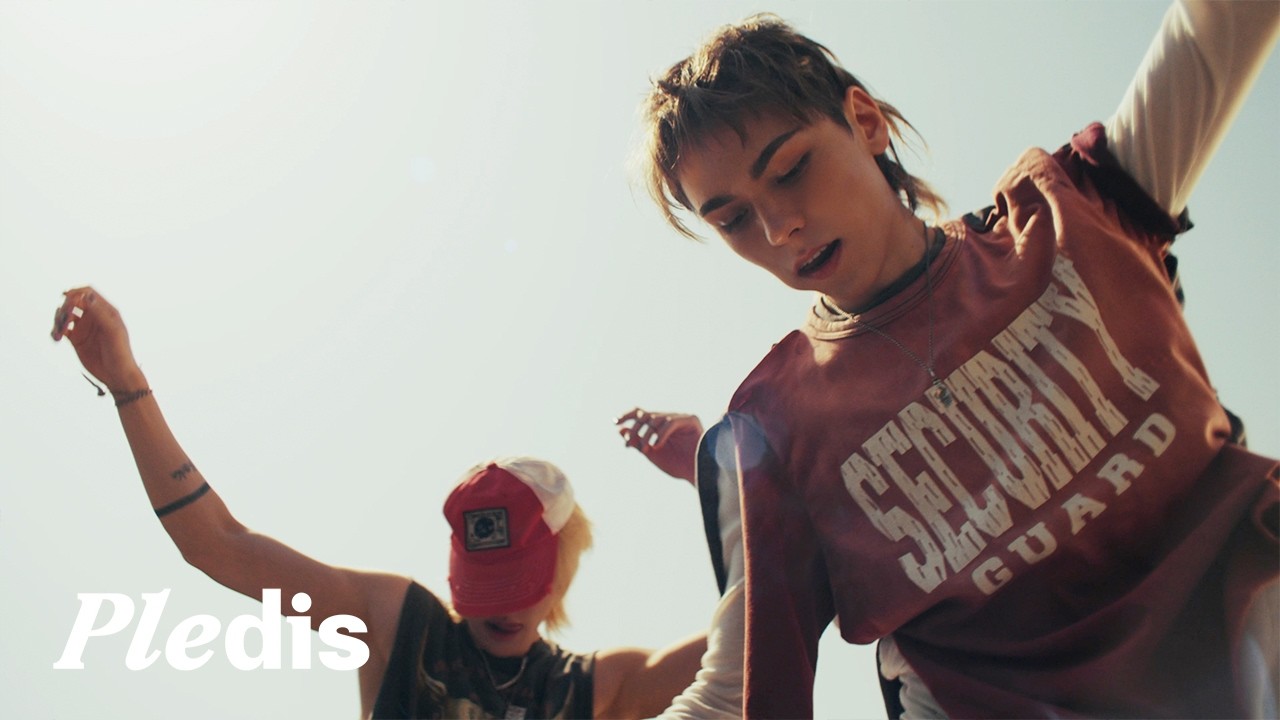
When K-pop took on hyperclash this year, one album went beyond adopting the genre as a surface concept and instead emerged as a full-fledged creative case study: the self-titled EP from V8, the SEVENTEEN subunit formed by THE 8 and VERNON, released June 29. Blending EDM, bloghouse, hyperpop, and alternative pop, the album inherits from late-2000s electroclash.
The musicians who helped create the EP are at the forefront of hyperclash, too. Mechatok, who co-wrote the lead single, “singasong,” is a producer with close ties to Drain Gang. The team of producers also includes Dylan Brady from the hyperpop duo 100 gecs and Alice Longyu Gao, who became known to K-pop fans for her work on the KATSEYE song “Gnarly.” “mia,” a solo track KIRARA worked on, was first born out of a remix of the Blur song “Song 2” by Madeon that VERNON was obsessed with. (Madeon was also a source of inspiration for Ninajirachi, who made “I Love My Computer.”) KIRARA described “mia” as “almost like a punk song made with electronic sounds,” which lines up with the electroclash approach of combining punk rock attitude with synths.
“We weren't trying to be rebellious or think outside the box,” THE 8 explained while interviewed. Mechatok, on the other hand, felt that “maybe in the context of K-pop it seems unusual or rebellious.” That mix of readings was on display at Seoul Community Radio’s 10th anniversary party, held August 11 at Dongdaemun Design Plaza (DDP). FKA twigs headlined, and the Deep took the stage too. When Mechatok dropped “singasong” in the middle of a DJ set, THE 8 and VERNON jumped onstage unannounced.
Seoul Community Radio founder Rich compares the relationship between K-pop and the current generation to UK garage and grime. Grime was born by taking UK garage, the dominant dance music in British clubs back in the 1990s, and roughly turning it inside out. Young musicians are taking the excess of K-pop and repackaging it in a rawer, more DIY form. In their hands, hyperclash is revealing new, exciting possibilities in Seoul and all around Korea.