Near the end of the title track “May the TENDERNESS be with you! (feat. KARINA of aespa)” from “Sound of Music pt.1”, there is a moment that stands out. As Choi Jung Hoon and KARINA hum “In the name of love” in a soft, playful blend, a bright piano riff and Kim Do Hyung’s electric guitar solo take turns in eight-bar lines. In this passage, the piano’s light, lyrical tone that hints at ABBA contrasts with the guitar’s clear, classic sound that recalls Brian May.
JANNABI have used this kind of tone-based quoting before. Their second album, “LEGEND” from 2019, leaned into the polished Korean pop of the 1980s and 1990s, and their third album, “The Land of Fantasy” from 2021, reached for the big, dramatic sounds of 1960s and 1970s British and American rock. Connecting both worlds is a larger pop encyclopedia that spans more than a century of musical tricks and charms. As devoted students of that history, JANNABI selected two of its most familiar ingredients and placed them neatly at the end of “May the TENDERNESS be with you!”

“Sound of Music” is filled with references and citations built from specific tones. What sets it apart from JANNABI’s earlier work is a wider range of sources drawn from the entire pop canon of the late twentieth century. From “FLASH,” the track that officially opens “pt.1,” you suddenly hear a 1990s alternative dance beat, turntable scratches, and overdriven guitar tones that feel far more modern compared to the orchestral arrangements that shaped their previous albums. “To the Rainbow, Juno!” combines the Roland JUNO synthesizer sound, which played a major role in 1980s pop, with the tones of a drum machine and electric guitar, just as its title suggests. And if you expand the frame to “pt.2,” which links Jack Kerouac and New York City with youth, the sweet and lively rhythms of 1950s vocal groups and lounge music run throughout much of the fourth album.
As they explained while working on “pt.1”, the sound of “Sound of Music”, which they describe as a “museum of nostalgia, a collage of sounds”, functions as a hands-on sampling space built from the vintage instruments and gear JANNABI have collected. The album they complete this way feels like both a museum and an encyclopedia, filled with carefully assembled sonic artifacts drawn from the objects they genuinely love, so that half a century of pop’s past seems to play at once. What becomes especially interesting is how these many references and borrowed sounds, gathered from different moments and places, come together as a single musical texture.
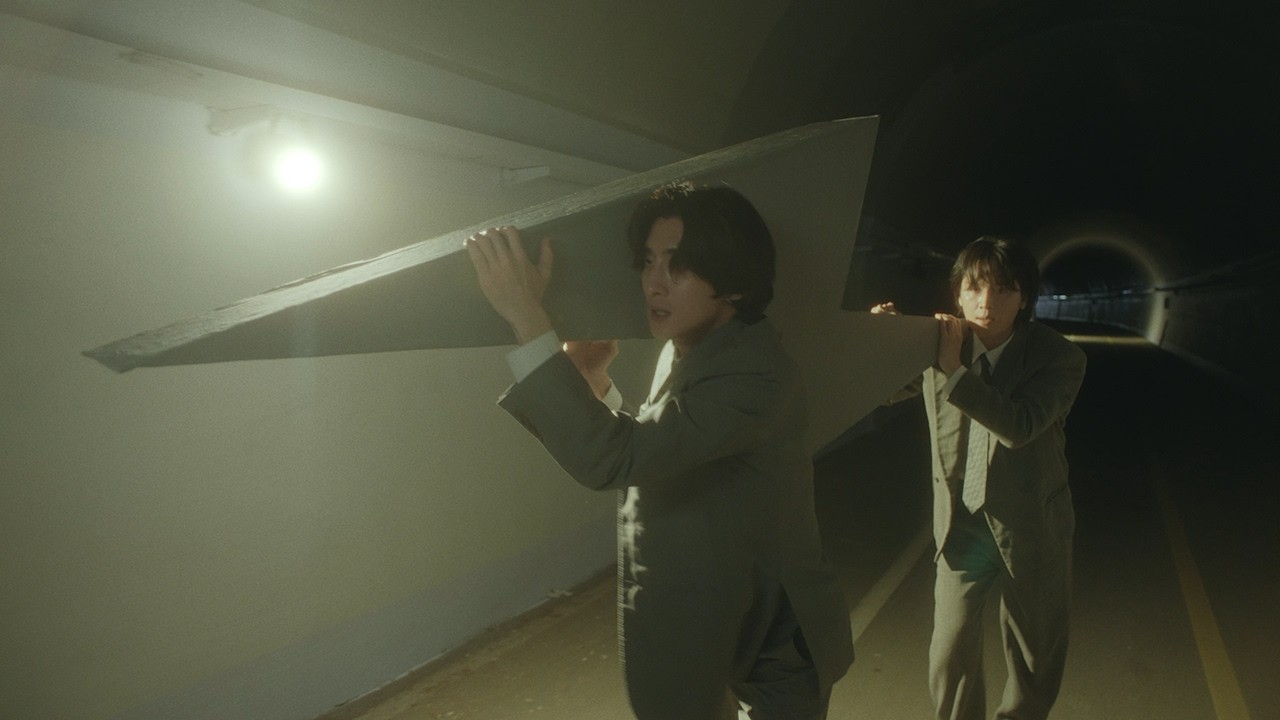
Let’s go back to the solo section of “May the TENDERNESS be with you!” Each phrase there doesn’t simply connect to the next. Instead, clusters of electronic and orchestral sounds rush in and fade out in turns. It feels less like flipping TV ads for a summer-night strongman show and more like slipping into a dream or watching one come to life in front of you. And once you hear it that way, “Sound of Music” becomes an album filled not only with the materials JANNABI collected but also with the glue-like sounds that hold all those pieces together.
These leftover textures that sit outside the main elements show how JANNABI pull in the classics they have absorbed by ear and how they study “pop” as if it were both a textbook and a guide. Just as Korean pop of the 1980s and 1990s feels to them like a “legend” passed down through stories, and British and American rock of the 1960s and 1970s feels like a “land of fantasy” they can only imagine but never visit, the pop they create with their own vintage finds becomes a dream pieced together from the countless details that once captivated them. It becomes a world of dreams, legends, and fantasies where different eras merge easily. In that world, it even feels natural to believe in the charming anachronism of musicians who seem to step out of the Romantic era while standing among machines.

This is why “pt.2”, which they compare to a “live-action world” rather than the “cartoon-like universe” of “pt.1”, still carries a floating, dreamlike feeling. And here lies one of the most meaningful aspects of “Sound of Music”. Even though the album leans toward more “realistic” themes through acoustic folk arrangements and lyrics drawn from everyday life, the dreamy choruses and orchestral colors from their earlier work continue to sit quietly in the background and shape the mood. The opening track “Earth” begins with the line “Wake up” and the sound of a yawn, as if shaking off a daydream. But as the second verse enters, the ambient texture that made everything feel grounded suddenly fades, and the song slips back into a dreamlike space. Near the end, the chain of collected sound fragments you first heard in “FLASH” returns in rapid succession, almost like a montage. If so, perhaps the album suggests that no matter how firmly you try to plant your feet in the present, the sounds of dreams, legends, and fantasies still linger across the ground; and no matter how much you try to stay here and now, the past continues to press forward with its own steady force.
Just as a star-filled universe surrounds the earth’s surface, the reality JANNABI move through is filled with the dreams, legends, and fantasies they create. In that space, time does not move in a straight line. Yang Hee-eun can sound like a voice of youth, and Lee Suhyun can sound like a mother, so the past and present continue to overlap. As the new subtitle suggests, “pt.2” turns toward the idea of “life”, yet that life is shaped less by the present and more by memories of adolescence, imagined reflections on aging, and personal pasts they can return to at any moment. Those private memories blend with the public past they constructed in earlier albums, mixing together through vivid arrangements, decorative sounds, and layered effects.

Along with these private memories, one of the clearest sources of reference and quotation in “Sound of Music pt.2” is JANNABI themselves, rather than the pop sounds of the past. This becomes even clearer when you look at the skit, which they describe as a self-parody of the “JANNABI-branded summer and fantasy”, and at the way an old unreleased track appears in the middle of a period when they are producing new songs with the kind of speed Koreans compare to “roasting beans over lightning”. Expanding the frame back to “pt.1”, traces of their earlier work are tucked into the lyrics as references and quotations, as in “All the Boys and Girls, Pt.1: Birdman”. This kind of self-reflective gesture makes the album feel like a collage-like museum that celebrates their own history in much the same way they once explored the pop of the late twentieth century. In this space, the public past of old pop and the private past that JANNABI revisit and honor become inseparable from one another.
As they explained while working on “pt.2”, calling their fourth album both “an ending and a beginning”, “Sound of Music” becomes a place where all the time JANNABI have built so far gathers at once. Unlike their previous albums, which had clear eras they aimed to recreate, this one mixes the sounds and periods that shaped JANNABI less uniformly, placing it in a particularly interesting spot in their career. In the middle of the many fragments of the past they have collected for years, the band admits that they are still drawn to the sound that once filled their dreamlike world, the sound of “Sound of Music”. And if they have succeeded in shaping the pop they love and the selves formed by that pop into the concrete form of “May the TENDERNESS be with you!”, then now, as they step down from that universe-like dream onto the ground of reality, the question becomes where their restless urge to collect will head next.
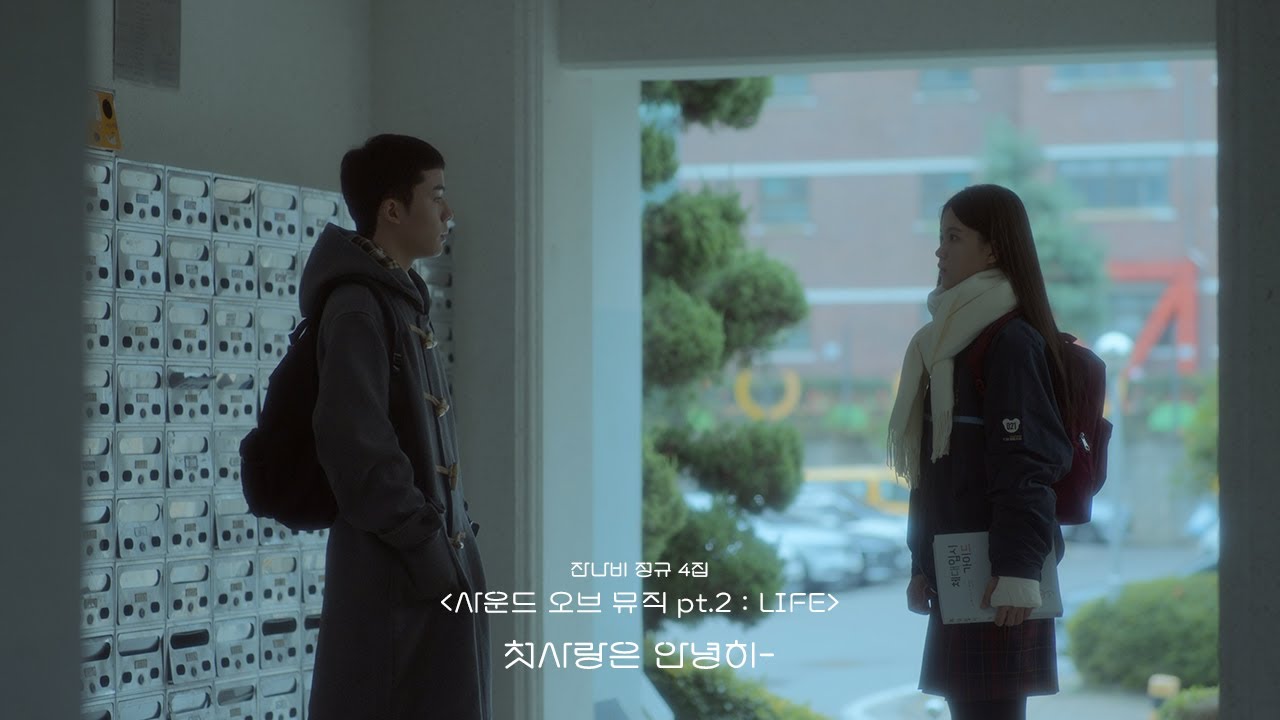
This is why it makes sense to return to “May the TENDERNESS be with you!”. Once the solo sections fade, a cheerful rhythm inspired by 1950s pop and a faint chorus carry the inserted line, “Remember this time. It will not last long.” When placed next to the following lyric, “This era still feels dizzy to me”, the interruption inside this sweet love song takes on a surprisingly eerie tone. These “romantic” moments that lift the anchor from a confusing reality come from the dreamlike world that great pop has offered for more than a century, and the real question is how long such moments can stay. Standing on the ground while looking out toward the distant universe, JANNABI may already be quietly working out the answer.