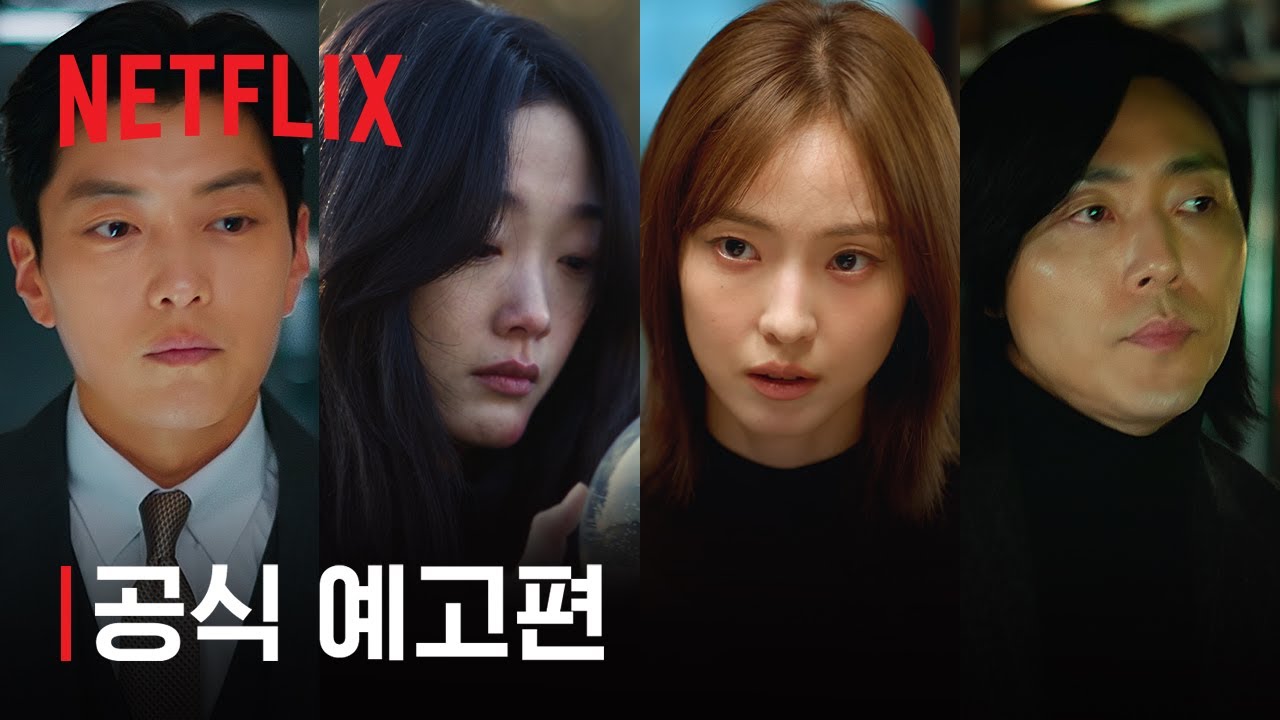
“As You Stood By” (Netflix)
Kim Rieun: “As You Stood By” is a relentless excavation of the blind spots within the institution of marriage. The series opens inside a luxury apartment adorned with immaculate wedding photos, closets glittering with designer jewelry, and a husband who, as an associate branch manager at a securities firm, seems to embody professional success. By the familiar logic of capitalism, Jo Hee-su (Lee You-mi), a full-time homemaker, appears to have secured an enviable marriage. But the façade is paper-thin. Her husband, Noh Jin-pyo (Jang Seung-jo), masks his violence beneath elegant classical music—melodies loud enough to swallow Hee-su’s screams—and then smothers the aftermath with gifts and bouquets. Once a promising children’s book author, Hee-su now withers under Jin-pyo’s constant surveillance, her inner world shrinking by the day. And yet, the forces that save her are not the ones society prescribes. Not the police station she bravely visits, nor the lectures delivered by her mother-in-law, Go Jung-suk (Kim Mi-sook), a renowned feminist scholar who publicly urges victims of domestic abuse to seek help from those around them. Instead, salvation comes from Jo Eun-su (Jeon So-nee), Hee-su’s childhood friend who once hid in a closet with her younger brother to escape their father’s assaults on their mother. Eun-su decides to intervene—ending her lifelong game of survival and, in the process, striving to rescue herself as much as Hee-su. Like Brazilian jiu-jitsu—the martial art Eun-su trains in, where leverage allows the weaker to topple the stronger—their chosen path operates outside sanctioned systems. Through the illicit act of murder, they confront the fortified structures of capitalism and patriarchy that have failed them at every turn. In this sense, the title “As You Stood By” becomes a pointed, double-edged question. Who truly killed Jin-pyo? Was it Hee-su and Eun-su, who finally fought back? Or a society that persistently averts its eyes from domestic violence, dismissing it as a private matter?
Not every woman saves another woman. Despite her public persona as a feminist scholar, Jung-suk turns a blind eye to the violence Hee-su endures, choosing instead to protect her son with a mother’s unquestioning loyalty. Meanwhile, Noh Jin-young (Lee Ho-jung), Jin-pyo’s ambitious younger sister and a rising star in the police force, pursues the murder case not out of justice but for self-advancement. Yet these figures function less as stereotypes of unsympathetic women and more as symbols of the entrenched brutality embedded within the institution of the family itself. Against them, the series offers evidence that solidarity among women, though fragile, is real. A woman living in the apartment below, who senses Hee-su’s abuse and tries to help; Kim Mi-kyung (Seo Jeong-yeon), a VIP client who was once inconvenienced by Eun-su at the department store yet worries first about Eun-su’s safety—these characters reveal a quiet but persistent network of care. Then there is Jin So-baek (Lee Moo-saeng), the head of Jingang Company, who steps in again and again to support the two women. In a drama that otherwise mirrors the bleakness of reality, he is its lone fantastical figure. The series departs from the original story by making this character a man, and his ability to marshal institutional power or exert physical dominance suggests an uncomfortable truth: in a world where even jiu-jitsu cannot guarantee the triumph of the vulnerable, a stronger form of solidarity may be required for real survival. Thus, as “As You Stood By” moves from a social critique into a tightening crime thriller, its ending becomes a convergence of retribution, reflection, and solidarity. There is judgment—an unambiguous assertion that violence can never be justified. There is introspection—the recognition that the true perpetrator is not the individual but the society that refuses to confront domestic abuse. And finally, there is solidarity—the fragile but luminous hope that those carrying their own traumas can walk toward a more peaceful life together. In the end, “As You Stood By” is both a tragedy and testament. A story of devastation, yes, but also of possibility—a reminder that the meaning of its title may yet change, depending on what kind of world we choose to build next.
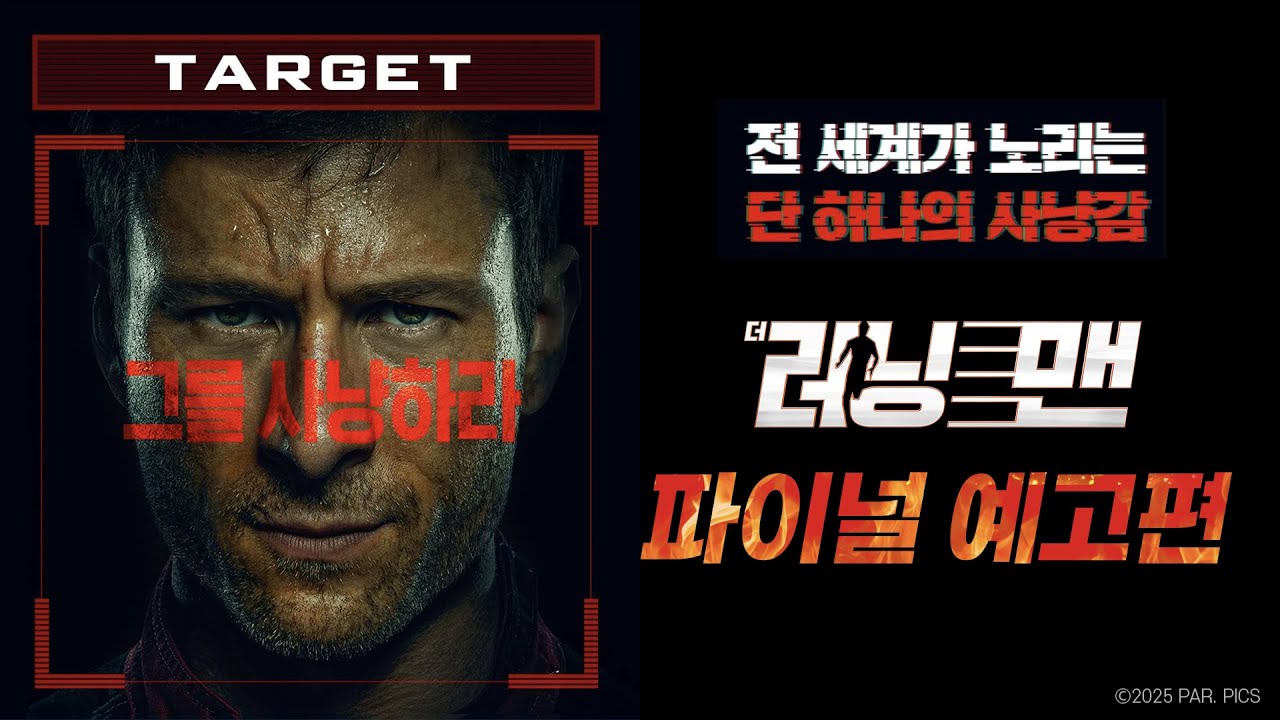
“The Running Man”
Bae Dongmi (CINE21 Reporter): Will people of the future live in comfort, or in quiet desperation? “The Running Man” imagines the latter—a world where economic polarization has grown so severe that vast swaths of the population are pushed into near-total destitution. It’s a society where people knit their own socks not out of sentimentality but necessity, and even basic cold medicine becomes a luxury item. At the center of the film is Ben Richards (Glen Powell), a worker fired for blowing the whistle on a radiation leak at his factory. His dismissal isn’t just unfair; it marks him with a corporate blacklist that bars him from finding any job at all. In the world of “The Running Man,” poverty isn’t merely a matter of hardship—it’s a matter of survival. Ben can’t even secure proper medication for his two-year-old daughter, who has endured a fever for a week due to a simple cold; with the medical system in shambles, drug prices have skyrocketed, and essential medicine circulates mostly through the black market.
Even in the world of “The Running Man,” where wealth divides nearly every aspect of life, the rich and the poor share one grim commonality: both groups avidly consume a brutal survival show that wagers enormous prize money on human lives. The most popular of these televised blood sports is also called “The Running Man.” Desperate contestants, known as “runners,” sprint through a labyrinth of danger, while heavily armed “hunters” pursue them. The outcome is always the same. The hunters win. The runners die. And yet, the poor continue to line up for a chance to participate. Ben, initially hoping to join a less lethal survival show just to afford medicine for his daughter, finds himself manipulated by the show’s calculating producer, Dan Killian (Josh Brolin). Seduced, or simply out of options, he ultimately steps into the arena of “The Running Man.”
Edgar Wright’s latest film, “The Running Man,” returns to the world first imagined by Stephen King in his 1982 novel of the same name. Not long after the book’s release, a 1987 adaptation starring Arnold Schwarzenegger brought the dystopian tale to the screen. Wright, a director celebrated for his razor-sharp editorial instincts, approaches the material with his signature precision. He weaves together Ben’s simmering, first-person rage, the maliciously edited version of him crafted by the show’s producers, and the behind-the-curtain machinations of Dan and the network with brisk, rhythmic clarity. The novel imagined its dystopian future as the year 2025—a coincidence made all the more striking by the film’s own 2025 release. And while the world depicted in both versions is undeniably exaggerated, it brushes up uncomfortably close to our present. The public’s addiction to ever more sensational reality programming and the relentless widening of economic inequality create unsettling parallels. True to Wright’s previous work, “The Running Man” sweeps viewers along with breathless momentum, yet never without leaving them with something to chew on.
Spotify Playlist: “Perfume ZO/Z5 Anniversary ‘ネビュラロマンス’ Episode TOKYO DOME”
Baek Seolhui (Writer, Columnist): On September 21, the Japanese trio Perfume announced that they will enter “cold sleep”—a full hiatus—after closing out 2025, the year marking their 20th anniversary since their major debut. Comprised of A-chan, Nocchi, and Kashiyuka, Perfume has long occupied a singular space in Japanese pop. Under the production of Yasutaka Nakata of CAPSULE, the group forged an unmistakable technopop identity: hyper-precise and delicately restrained choreography and a near-futuristic stage language built on media art.
This playlist follows the setlist of “Perfume ZO/Z5 Anniversary ‘ネビュラロマンス (Nebula Romance)’ Episode TOKYO DOME”—a concert that serves both as a long-awaited “revenge” performance after their 2020 Tokyo Dome show was canceled due to the pandemic, and as Perfume’s final concert as a group.
True to the structure of their two-part “Nebula Romance” project—released in 2024 and 2025—the setlist is divided into a front and back half, mirroring the split between the ZO and Z5 tours. The opening section leans heavily on tracks from “Nebula Romance – Part II”, released on September 17. The latter half, however, is anchored by Perfume’s career-defining classics: the razor-sharp “edge,” the electronic purist’s dream “FUSION,” and “Electro World,” one of the cornerstones of their early near-future trilogy. Together, these selections capture the full arc of Perfume’s musical and performative evolution. The group has also secured their 17th appearance at NHK’s “Kouhaku Utagassen” this New Year’s Eve—setting a record for the most entries by a women’s group. As they prepare to place a definitive period at the end of the Perfume era, this setlist invites listeners to speculate: with which song will they choose to say goodbye to the “now”? And in a twist of fate for long-time J-pop fans, the five-member idol group Arashi, Perfume’s peer and debut-era counterpart, is also approaching disbandment next year. It’s hard to shake the sense that we are witnessing the turning of a page in J-pop history.