In many ways, it’s like SUNMI’s music has a life of its own. It’s especially apparent in songs like “Gashina,” where she dances alone with such ferocity that it’s like she’s shaking off stale emotions, or “TAIL” and her creepy-crawly dance across the floor. It’s fair to see them as short standalone theatrical productions—one-woman plays where the character dominates the stage like a hurricane. Even though she takes a leading role in the creative process behind all her music, the real-world SUNMI and the SUNMI she portrays in her songs are entirely separate people. With every album, she dons a new mask and steps into a space detached from reality.
It’s safe to assume that, for SUNMI, music serves as her sole refuge and outlet for release. She must’ve had deeply personal thoughts and emotions simmering beneath the surface that she wouldn’t dare express in real life but relished in her mind. SUNMI jumbled these raw emotions together and sculpted a fresh character each time, pouring them into the safe vessel of her music. As a result, the songs she’s released as a solo artist don’t feel like they belong to one smooth, continuous narrative. Rather, it’s more as though spectacularly colorful, piercingly sharp fragments of her complex inner world have burst their way out.
SUNMI’s personal journey
SUNMI was just 14 years old and in her final year of middle school when it happened. Before she even found out what class she’d be in, she debuted as a member of Wonder Girls, JYP Entertainment’s first girl group. It’s an age when you barely understand how to build relationships with others, let alone understand yourself, but SUNMI wasn’t granted any time for self-reflection. With the massive success of “Tell Me”—essentially, in hindsight, Korea’s first dance challenge—followed by more red-hot hits like “So Hot” and “Nobody,” she was on an unstoppable roll at breakneck speeds. She had to commit herself wholly to plans meticulously laid out for her. Rather than taking the reins to find her true colors, her priority—and really, her only option—was to dress up in whatever shades her producers envisioned for her and live up to the image the public so craved. She was just 16 years old, a mere two years into her debut.
While Wonder Girls were on tour in the United States, it was announced that SUNMI would be pressing pause. It wasn’t until three and a half years later that she would restart her career, this time under her own name. She solidified her standing in the public eye as a soloist with popular songs like “24 Hours” and “Full Moon.” Strictly speaking, though, SUNMI wasn’t really a creator at that point, more of a performer—phenomenal though she was—who perfectly captured some producer’s vision. She was handed a picture, and she used her talents to pour herself fully into it.
When her journey as a creator truly began was when she joined back up with her old group. Wonder Girls were taking things in a rock band direction, and when each of them was tasked with learning an instrument, SUNMI took up the bass guitar. With a new framework to articulate her moments of otherwise intangible musical inspiration, she now started to write music herself. The songs she worked on mirrored her own personal journey. Rather than personally address listeners directly, SUNMI was crafting music that took what the group already had and gave it a fresh coat of paint. A prime example, which had the group venture into reggae-influenced sounds for the first time, is “Why So Lonely.” SUNMI built on the retro image Wonder Girls had already worked to establish, giving it an all-new flavor by painting over it in deep, vibrant hues that awakened the senses.

After leaving the nest of the agency where she had spent so much of her time, right from her days as a trainee, SUNMI joined a new label, where she spread her wings as a producer and creator. The trilogy of “Gashina,” “Heroine,” and “Siren” was massively popular, establishing her not as just a former girl group member gone solo but as one of the most notable solo artists in Korean music history. Ironically enough, her extensive experience as a vessel for others’ ideas became her greatest asset as a creator. Even when writing her own songs, she excelled at crafting the kind of characters the music called for rather than simply writing about herself.
SUNMI wasn’t writing songs like they were diary confessionals but fodder for portraying alternate egos onstage. It’s no wonder her music from that period feels like sharpened fragments here and there rather than one seamless narrative. Each piece was its own unique being—undeniably imbued with strokes of the real SUNMI, but each with its own desires.
SUNMI takes control of the story
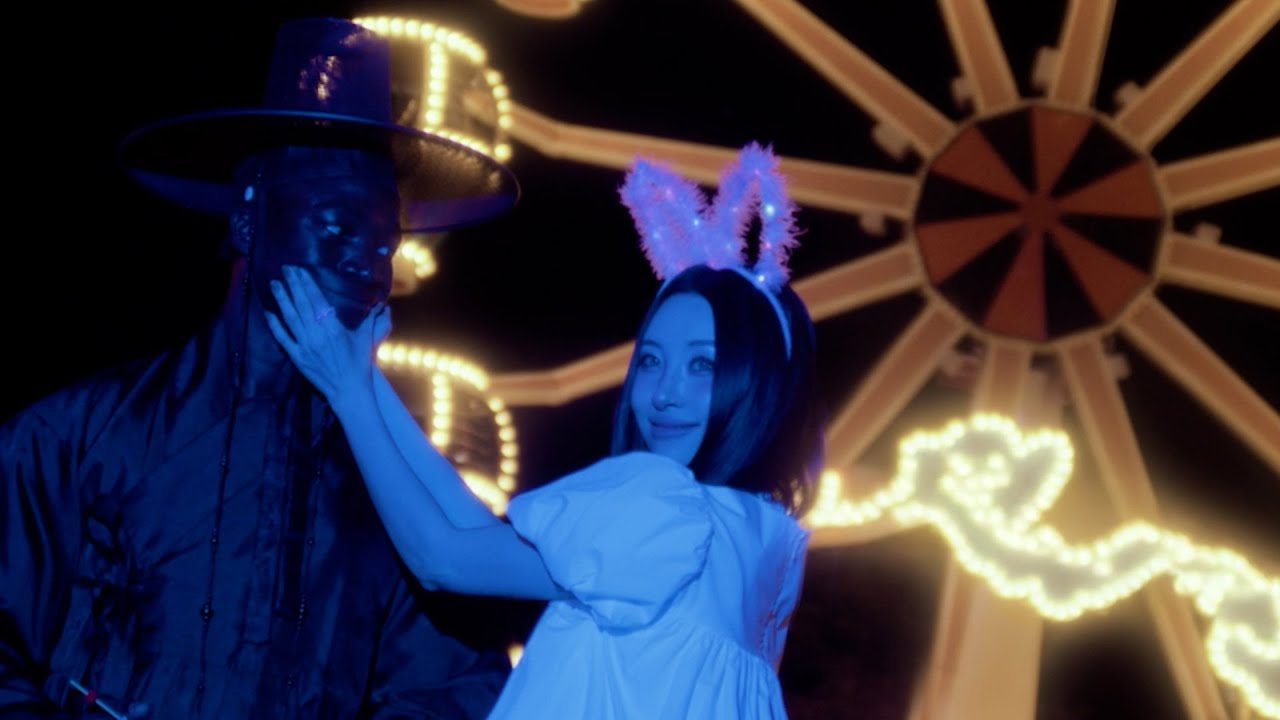
And therein lies the reason why “HEART MAID,” SUNMI’s latest release and her first studio album in 18 years as a singer, feels particularly unique. It’s less of a compilation of fragmented short stories and more like a carefully braided novel. With this longer thread woven, you start to notice a transformation. Those unique beings with their own desires from before now converge to form one recognizable face under the singular gravitational pull of SUNMI.
The variety of genres don’t pass by like items on a list—they work together organically to create something akin to one monumental memoir exploring SUNMI’s journey, layer by temporal layer. When you listen to the 13 tracks that make up the album, it sounds like they’re largely divided into four eras. The first showcases the glitzy Wonder Girls period that everyone knows as well as SUNMI as a solo artist. From the intense electronic opener “MAID” and the unforgettably synthy “CYNICAL,” to the nostalgic ’80s synth pop vibe of “Sweet nightmare” and the echoes of the Wonder Girls song “I Feel You” in “DDU DDU,” SUNMI kicks her album off with a condensed look at the most glorious highlights of her past.
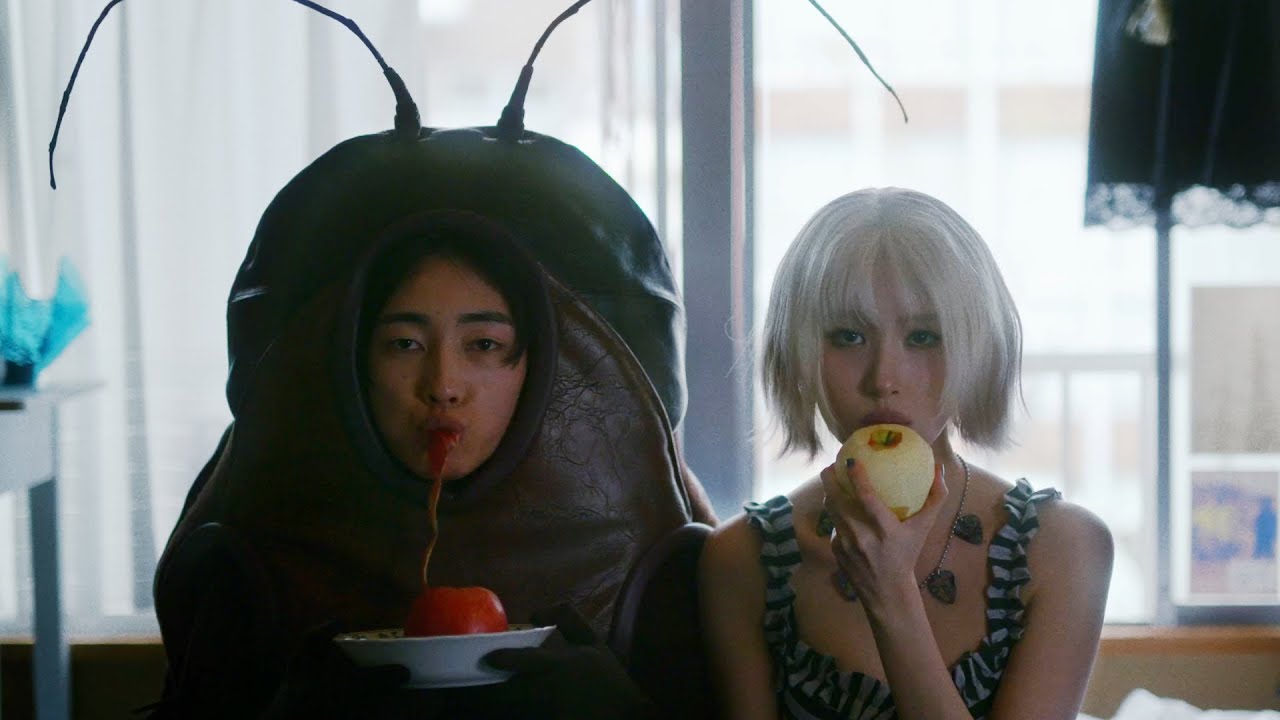
The next segment opens with “Mini skirt” and “Tuberose,” slowing the tempo and building up a dreamy atmosphere that shows SUNMI’s performer side and adheres to the image people have of her. It continues on with a rock turn through “Bass(ad)” and its lonely plunking bass. The next section, spanning “BLUE!,” “Balloon in Love,” and “Happy af,” intertwines and overlaps SUNMI’s bass guitar days and where she is today. The section anchors the middle of the album with tracks that demonstrate once and for all that her experiences and experiments during that time weren’t a one-off thing.
All that passion winds up to a close with “Walking at 2am,” “Bath,” and “A long long night,” tracks that unveil the singer’s deeply personal musical tastes that tend to remain hidden behind the spotlight. She voices this final section in a calm, intimate voice, bringing the long overarching narrative to a close as she bridges the gap between the SUNMI her audience sees and the music she so dearly loves.
By the time the last track ends, the title “HEART MAID” has become the key to understanding who SUNMI really is. The singer has said that she hopes the album “can serve to look after people’s emotions.” Behind the mask of the performer who dominated the stage with thorns out and tail up, there lived a kind soul—someone who looked deeply into peoples’ hearts and cared for them with quiet tenderness like no other.
Across its 13 genre-spanning tracks, the album traces the countless emotions SUNMI’s encountered in life, handling each with care. The young girl who once shaped herself to fit a mold made by others grew into a performer who could bring their vision to life—and, in the end, into an artist who fashioned all the masks she needed for the performances of her own design. Now she’s slowly taking those masks off, one by one, to reveal what’s behind them. From that perspective, “HEART MAID” represents a self-portrait and an origin story 18 years in the making. The album shows us what SUNMI has been striving to achieve as an artist all this time. It creates, with the kindest of hearts, a world for us—and that’s why this record stands as SUNMI’s true artistic genesis.
- Ten years in TAEYEON’s own voice2025.11.11
- Yerin Baek’s metamorphosis2025.10.28