Let’s step back and revisit Rosalía’s earlier albums—her debut, “Los Ángeles” (2017), “El Mal Querer” (2018) and “MOTOMAMI” (2022). It wouldn’t be an exaggeration to call this the best one-two-three punch an up-and-coming artist’s put out in the past decade—a holy trinity of releases. The only question is whether we need to look beyond simply pop music. No doubt Jordan Peele would have something to say about this.
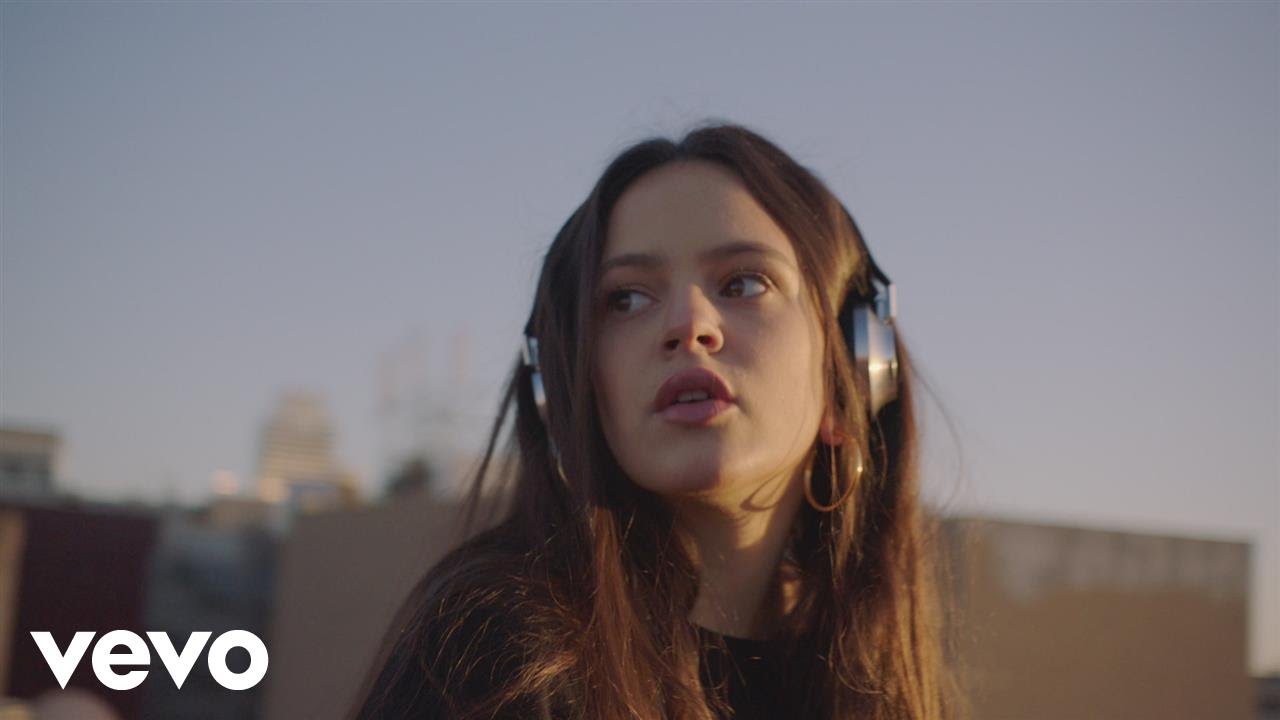
“Los Ángeles” is the root of Rosalía’s musical vision. The album’s entirely her vocals and Raül Refree’s guitar. Rosalía began singing at age 13 after falling for flamenco and later majored in the genre’s singing component, cante flamenco, at Catalonia College of Music (ESMUC), a program that only admits one student each year. Even if she hadn’t become a pop star, she would’ve been remembered as an extraordinary contemporary cante singer, or cantaora. “Los Ángeles” remains an influential experimental folk record centered around the theme of death.
“El Mal Querer” began its life as Rosalía’s ESMUC graduation project. Her ambitious thesis proved that flamenco could make the transition to modern pop without losing its soul. And there was more to the album’s success than that. The Latin Grammys named it Album of the Year, while “Rolling Stone” included it in a 2020 update to its list of the 500 greatest albums of all time, placing it at No. 315. “El Mal Querer” is the highest-ranked Spanish-language album on the list, and it’s the third-highest of all non-English albums, released over 40 years after the albums by Kraftwerk and Stan Getz/João Gilberto that top it.
By the time “MOTOMAMI” came out, Rosalía had nothing left to prove, leaving her free to explore. The album doesn’t need the consistent thematic thread of “Los Ángeles” or the narrative borrowed from old novels, as is the case with “El Mal Querer.” The music roams freely through reggaeton, jazz, bachata, and emotional ballads with often nonsensical lyrics. A young singer-songwriter started with a blueprint of traditions, used it to construct a sacred drama, and ended up tagging it with graffiti.

When Rosalía announced her new album, “LUX,” she did so with a bold statement. “‘MOTOMAMI’ was minimalist,” she says in an interview with Apple Music. But this time, with “LUX”? “This is maximalism.” So “MOTOMAMI,” with its fragmented genres and overabundance of imagery, was somehow minimalist? That’s right. In fact, that might actually be the perfect entry point into “LUX.” When the only single to date, “Berghain,” dropped in advance of “LUX,” we could hear several unmistakable characteristics. First, the orchestral music used throughout the track. Second, the influence of arias and operatic vocals on the songwriting. Third, the trilingual lyrics mixing German, Spanish, and English. Fourth, the collaborations with avant-pop icons Björk and Yves Tumor. When the full album came out, it was clear that “Berghain” wasn’t just a demonstration of how “LUX” would differ from “MOTOMAMI,” but also the most accessible introduction from the tracklist.
At the heart of the album is a profound exploration into the lives of female saints, mystics, and prophets around the world practicing in the Catholic, Buddhist, Hindu, Sufi, and Jewish traditions. Rosalía learned of “a lot of women that were extremely interesting” in that “they were nuns, they were poets,” the singer explains in the same Apple Music interview. “And I was like, okay, I’m gonna read about them. I’m gonna read what they actually wrote.” Over the course of a year, Rosalía immersed herself in their hagiographies, studied the language they used, and crafted her lyrics from there.

“LUX” features 13 languages, going beyond Spanish and English to include Italian, German, Ukrainian, Arabic, Hebrew, Latin, Japanese, and more. The choice isn’t “linguistic tourism” or a merely aesthetic one—each language connects with the national, historical, and religious context of the saints who inspired the songs. For instance, the Japanese lyrics in “Porcelana” are inspired by the legend of Ryonen Genso, a 17th-century Zen Buddhist nun. Celebrated for her beauty, the head monk is said to have refused to take her on over fears that her presence would distract the other monks. She famously burned her face with a flatiron in response. “Mio Cristo Piange Diamanti” is an ode in Italian to the spiritual relationship shared between Saint Francis and Saint Clare of Assisi, as well as the sacrifice they made by renouncing sweeter worldly things.
Rosalía seems to see her own life as a modern artist in her study of saints who were nuns and poets. For her, music is a mystical experience of revelation, akin to the pure devotion that goes into seeking God in the midst of worldly suffering—a God who demands absolute obedience and sacrifice. Ahead of the album’s release, Rosalía published a Substack piece titled “Una escalera hasta Dios” (“A Ladder to God”). In it, she writes, “Singing is the most beautiful exercise that exists against gravity” and “a love letter to verticality, a ladder to God.” Accompanying her words is a photo of Maria Callas, patron saint of modern music and role model to Rosalía.
“LUX” knows that there’s no easy way to approach it. This album sits firmly on the opposite end of the kind of passive listening fueled by algorithms and dopamine. It’s a sort of anti-easy listening. The orchestral arrangements embedded in this album aren’t there to add a sugary coating to make the music more palatable—more like the kind of complex flavor that might make someone take a pass on classical music. With the Daníel Bjarnason-led London Symphony Orchestra, and arrangements contributed by contemporary composers Angélica Negrón and Caroline Shaw, the orchestral elements become the structural backbone of the entire album. There’s also something unsettling about it thanks to the chaotic energy brought courtesy of producer Noah Goldstein—known for such notable contributions as his work on Kanye West’s album “My Beautiful Dark Twisted Fantasy”—and experimental electronic artist Venetian Snares’ drum programming. Meanwhile, there are no loops on the album, which was a deliberate choice. Rosalía even recorded new vocals for each repetition of the choruses. It’s not about getting from A to B but about the journey itself—that’s what keeps it engaging. In the end, we witness a level of human artistry that AI can’t replicate. The orchestra’s disruptions in the “Berghain” video aren’t something that can be created with a green screen.
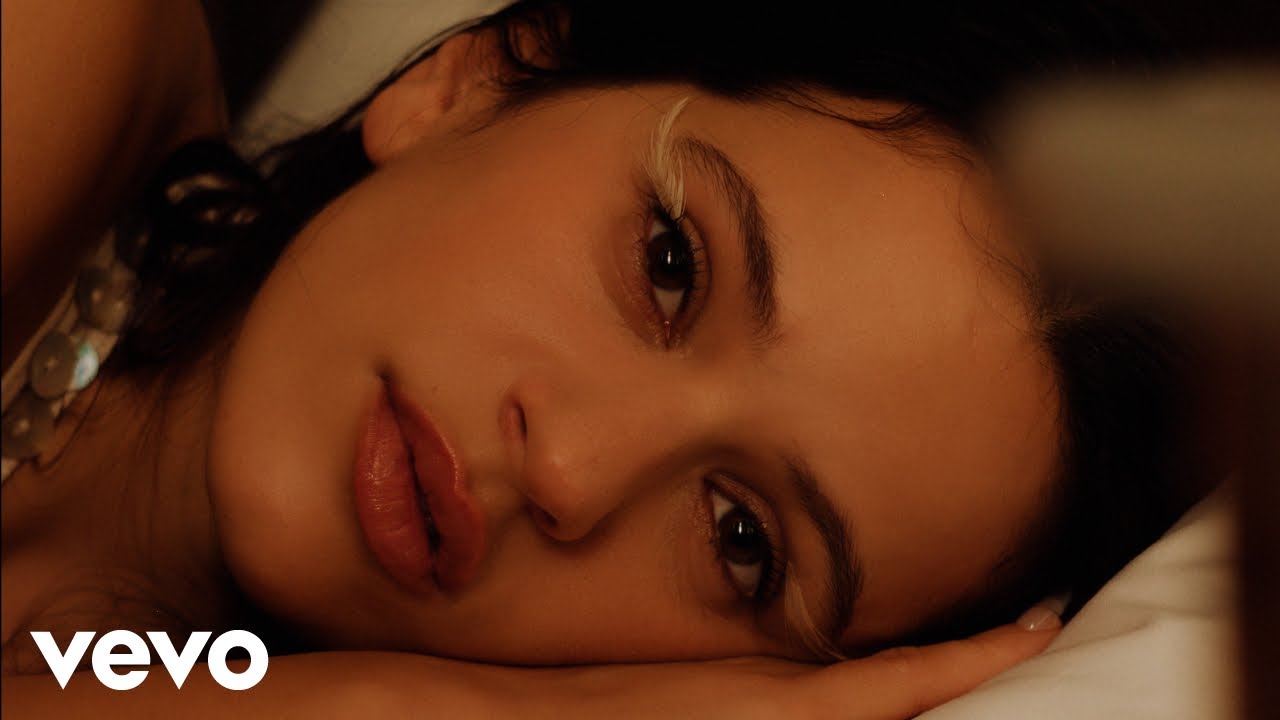
As with any sacred ritual, religious garb is a given. Even before the music starts, the album cover already says a lot. Rosalía calls to mind the image of a nun as she dons a certain headpiece and outfit—but it resembles a straitjacket at the same time. The video for “Berghain” is a proper deep dive into the late ‘90s and early 2000s fashion archives. Notably, the eerie feel and religious undertones of the briefly seen Alexander McQueen rosary heels reinforce the album’s theme of exploring religious symbolism and the sanctification of women.
So how did this incredibly ambitious album do? Within a single day, “LUX” racked up over 42 million streams on Spotify, far more than doubling the 16 million streams achieved by “MOTOMAMI” on its debut day, and breaking the record previously held by KAROL G for a Spanish-speaking female artist. Rosalía’s album debuted at No. 4 on the “Billboard” 200, a massive leap from the peak of No. 33 that “MOTOMAMI” enjoyed. “LUX” ultimately went on to become the most critically acclaimed album of the year. With a score of 97 from review aggregation site Metacritic, it currently ranks as the best album of 2025 and fourth-highest of all time. It’s already widely regarded as a frontrunner for the 2027 Grammy for Album of the Year.
All this was achieved by an album containing long, complex songs performed in 13 different languages and set against orchestral backdrops. Rosalía has redefined the concept of excess in popular music. “LUX” is Latin for “light,” but the singer-songwriter doesn’t evoke the gentle warmth of sunlight. Rather, she envisions an overwhelming force—one that performs miracles and causes total destruction with equal indifference. It’s the kind of blinding light seen in the film “Sunshine.” Or the angelic visitation described in Ted Chiang’s short work of fiction “Hell is the Absence of God.” Some music can take us to faraway places, and sometimes it takes us so far that it’s hard to go back to the way things were before hearing it. Rosalía may very well follow in Maria Callas’ footsteps and find herself canonized as a saint.