In most art scenes, putting “female” in front of a role leaves a lingering unease. Hip-hop is one of the rare spaces where it can land differently. “Female rapper” isn’t a put-down. It names another voice, someone who started from a different line. It did not start that way. The respect women MCs hold today was earned through years of work and fight that reshaped what the culture was willing to recognize. So when a woman rapper names her gender, she is not narrowing the story. She is widening it because she can tell the parts that male rappers cannot speak for.
After a quiet stretch in the late 2000s, women rappers are back in force, and the current moment feels like a second boom. What is even more striking is that an Asian rapper is firmly inside that surge. She is Awich, from Okinawa, Japan. For many listeners, 2020 was the year her name began to reach beyond the Japanese hip-hop scene, when she signed with Universal Music Japan and released the EP “Partition.” Her profile rose again two years later with the album “Queendom.” It is easy, then, to think of her as a rapper who arrived in the 2020s. In reality, she is a veteran with a career spanning nearly two decades.
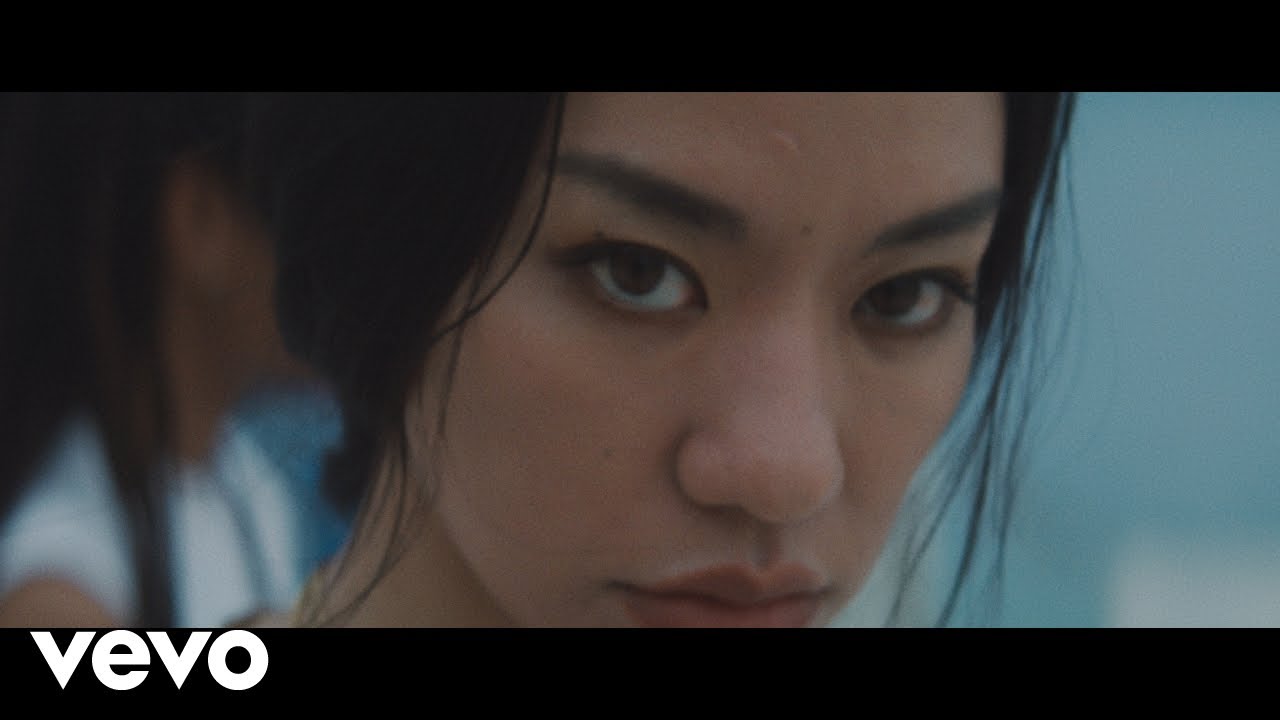
Her official starting point was the 2006 EP “Inner Research.” The following year, she released her first studio album, “Asian Wish Child,” as an independent project. Then came a long gap. She moved to Atlanta, Georgia, stepped away from music, and built a new life. Awich married an American man, had a daughter, and earned a bachelor’s degree in business and marketing. After she lost her husband in a tragedy, she returned to Japan and picked the mic back up.
That return is where Awich’s musical vocabulary comes into focus. The path from life in the U.S., through loss, and into the climb toward Japan’s mainstream weaves together personal grief, motherhood, a bond with hip-hop, and Okinawa’s geopolitical and cultural backdrop. Awich presents Okinawa’s historical context, including the U.S. military base issue, with restraint, but never allows it to recede into the background. When she raps about motherhood, it is not only a private narrative. It is also her way of telling her story on her own terms, in public. And when she collaborates with artists overseas, it feels less like a marketing move and more like a cultural conversation.

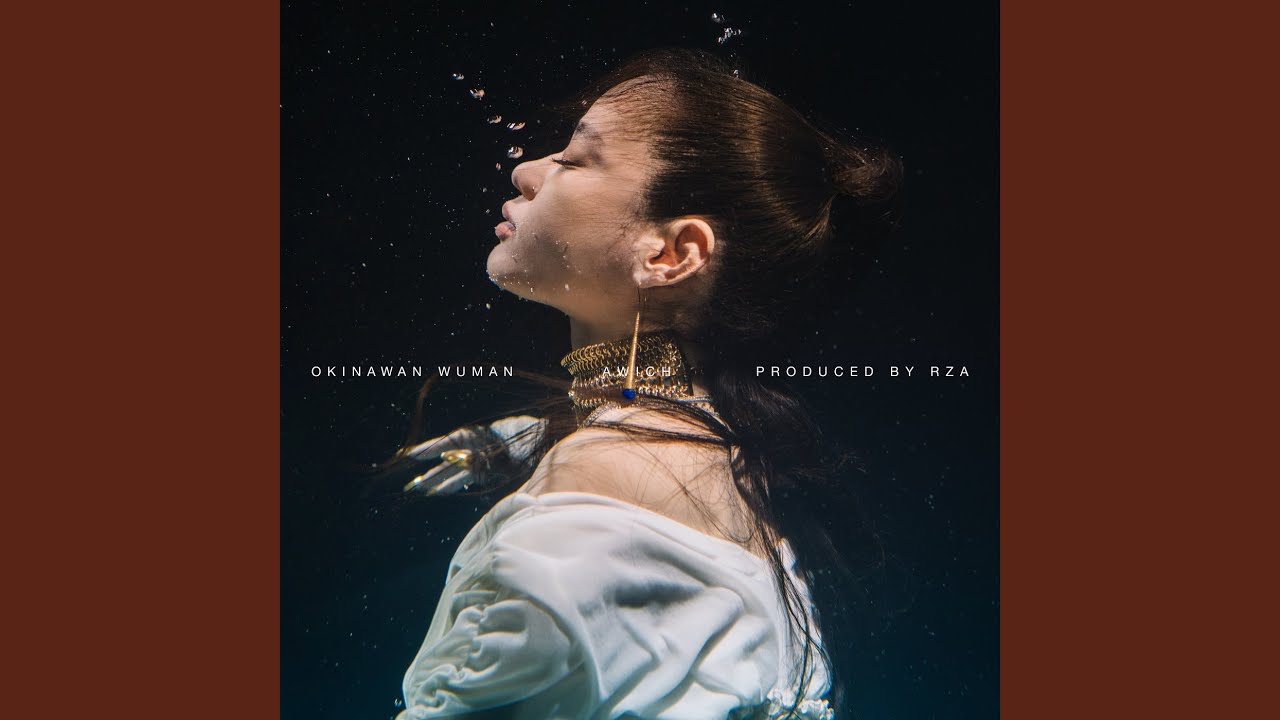
Awich’s new studio album, “Okinawan Wuman,” brings together all of her musical signatures and strengths in one record. With high-profile figures across U.S. hip-hop on the tracklist, including Joey Bada$$, FERG(aka A$AP Ferg), Lupe Fiasco, and Westside Gunn, the biggest surprise is that RZA serves as the album’s executive producer. RZA is the driving force behind Wu-Tang Clan, the legendary crew of rappers known for their singular personalities and skills, and one of the key figures who helped revolutionize 1990s hip-hop. He has also consistently brought East Asian cultural motifs he is drawn to, kung fu, swordplay, and samurai imagery, into his work.
Wu-Tang Clan’s music fused New York street spirit with East Asian martial arts and philosophy. RZA carried that sensibility into his later work, too. He also contributed to the soundtracks for the film “Kill Bill” and the anime “Afro Samurai,” where samurai action plays a central role. That is why Awich and RZA’s partnership feels like a collaboration built around a shared sonic philosophy and mood. Awich has said she was proud that, with RZA as her mentor, she could link Okinawa’s spirit with hip-hop and shape a journey to the world stage.
The album is built around RZA’s dramatic sampling, dark, heavy beats, and the gritty texture that defines East Coast hip-hop. “Wax On Wax Off” samples “Jeans Blues” (1974) by Meiko Kaji, the actress and singer best known for her starring roles in “Female Prisoner Scorpion” and “Lady Snowblood.” “Hold It Down” lays a fluttering sample melody over blunt, heavy drums. And “Noble Lies” keeps transforming, moving from a Wu-Tang style into laid-back trap production, then opening into a more kinetic alternative hip hop sound. Together, they are some of the album’s production highlights.
In that sense, the album heads in a completely different direction from “Queendom” (2022), which was built on trap beats and leaned heavily into trend-focused production, such as drill, reggaeton, and pop rap. This time, instead of working with a team of producers, Awich works with one dedicated producer. This shift appears to be more than a stylistic change. It reads like a decision to write her story with tighter control.
Let’s take a moment to look back at Japanese hip hop’s history. Like many scenes outside the U.S., Japanese hip-hop was shaped by East Coast influence through the mid to late 1990s, not only in sound but also in the way lyrics carried locality, politics, and cultural roots. As Southern rap and pop rap took over in the 2010s, the sound shifted, and Japanese hip-hop synced up with the U.S. mainstream. Themes and lyrical focus inevitably moved with it.
Right in the middle of that change, Awich subtly reorients Japanese hip-hop by placing Okinawa, a place shaped by history, at the center and bringing her roots and present into the same frame. Okinawa is not simply her hometown. It is a site of memory, layered with war, history, a language pushed aside, and songs reclaimed. The distance from mainland Japan is rarely spelled out, but it quietly sets the album’s emotional tone. Personal experience opens outward into collective history, then narrows again into one voice. In other words, Okinawa is both a subject and a lens. Listening to “Okinawan Wuman” can feel like drilling down through memory layers, layer by layer.
Awich’s rapping is technically solid, but on this album, she does not show it off. At times her delivery cuts like a blade; at others it moves like wind. Her flow feels closer to a gesture, one that reshapes the emotional landscape as she goes. Instead of spotlighting her pain or her wins, she uses the album to lay out how she got here and the circumstances she came through. More than ever, the rap plays like testimony, and that posture holds throughout the record.
“Fear Us,” an Awich and RZA track featuring Joey Bada$$, is a prime example. Unlike many of her peers who were absorbed in 2010s trap, Joey Bada$$ came up fronting New York boom bap. Drawing on their own experiences and perspectives, the three artists rap about people who fear the truth. The title feels less like a threat than proof of having survived and still being here. Take Awich’s literary opening verse: she invokes the wartime tragedy Okinawa was forced to endure and captures, with striking clarity, her reflections on fear and identity.
It is also worth paying attention to the womanhood that comes through on this album, or rather, the womanhood Awich is intent on showing. It carries the responsibility of someone who remembers history, and the voice of someone who survived. Awich designs the record so that birth and death, wounds and healing, collapse and rebuilding, private memory and collective history all fit within one woman’s life and run through the entire album. Reaching the final main track, “Noble Lies,” reveals what moves this world at its core: “noble lies” (“The world goes around on the noblest lies”).
Over the course of the album, what Awich delivers is more than music. It carries the warmth of a life, the weight of a place, the pulse of an era. It also traces how a voice that begins in Okinawa moves across Japan, then Asia, and out into the world. That is why the album’s ending can feel, paradoxically, like the start of Awich’s next chapter. It has been one of hip-hop’s oldest questions: Who are you? Awich leaves her answer here.