In 2025, iconic Japanese idol franchise “THE IDOLM@STER” celebrated its 20th anniversary. To commemorate the milestone, a live, franchise-wide event called “THE IDOLM@STER M@STERS OF IDOL WORLD 2025” was held at Kyocera Dome on December 13 and 14. The show was overwhelmingly well received, drawing in roughly 390,000 attendees over the two days.
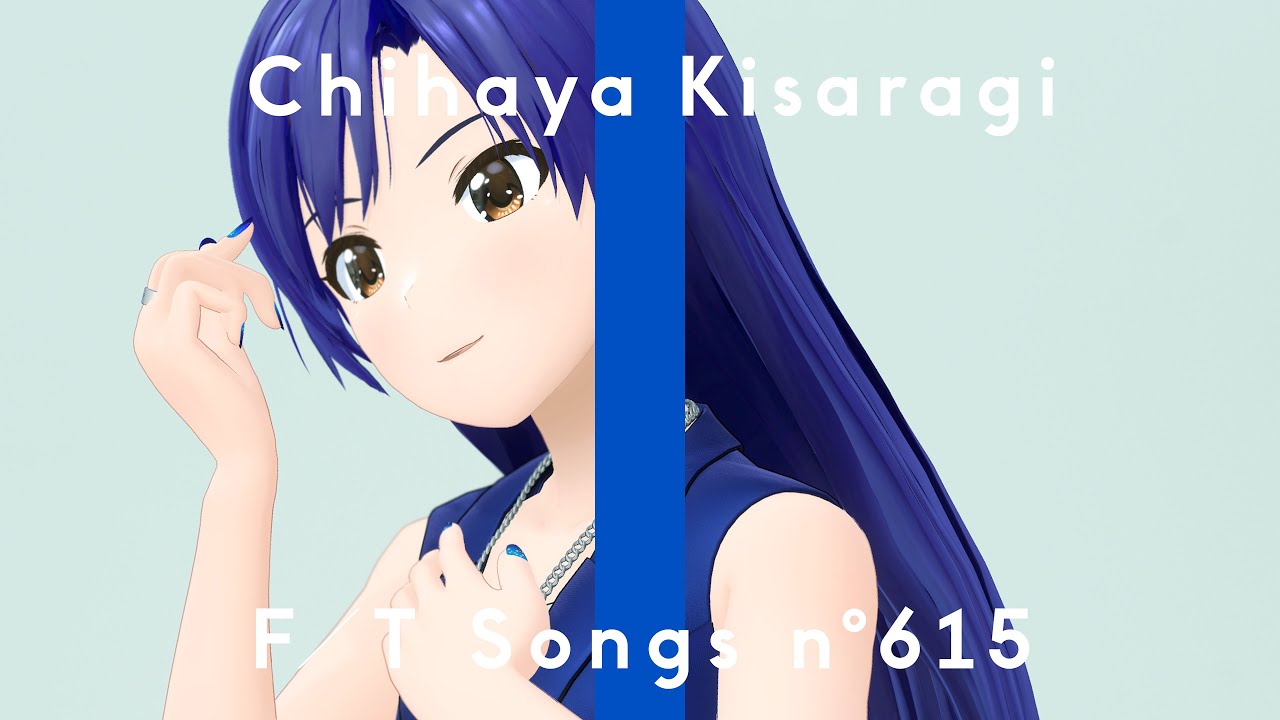
Another idol franchise, “Love Live! School Idol Project Series,” also reached its 15th anniversary. When Aqours, the second group to come out of the series, held their final concert, “Love Live! Sunshine!! Aqours Finale LoveLive! ~Eikyuu stage~,” on June 21 and 22, 100,000 fans were in attendance.
The popularity of idol voice actors now extends to Korea as well. The groups have been making regular visits to the country since the end of 2024, including “IDOLM@STER” subunits and “Love Live! Superstar!!” group Liella! in the past year. There were also others, like the concert held at KINTEX on December 6 by kessoku band, the voice actors from the anime “BOCCHI THE ROCK!,” and finally Roselia, from voice actor band franchise “BanG Dream!,” who also performed in Korea on December 24.
The idea of combining voice actors with idol culture isn’t exactly a familiar one in Korea, but nothing could be further from the truth for people into otaku culture like manga and anime. In Japan, the birthplace of idol voice actors, the concept continues to enjoy immense popularity and exerts a kind of influence that just can’t be ignored. But how exactly did the phenomenon get its start?
Tracing the history of idol voice actors from Lynn Minmay to μ’s
The idea of idol voice actors dates back to the 1980s. The practice of debuting a new singer as the voice of a lead character and having them perform live under the character’s name started with the 1982 anime “Super Dimension Fortress Macross.” Mari Iijima auditioned for the role of Lynn Minmay just before she was slated to debut as a singer. It was through this role, where she both voiced the protagonist and provided her vocals during songs, that she first became famous. The in-universe song “Ai Oboete Imasu Ka” (“Do You Remember Love?”) ended up selling 270,000 copies. On the heels of such success, similar examples began cropping up one after another, such as Takako Ohta with her role in “Creamy Mami, the Magic Angel” and Noriko Hidaka from the anime “Touch.” But these are all examples of voice actors who balanced that work with their idol career—they didn’t go out and perform live in character.
The foundation for the modern idol voice actor was laid in the late 1990s and early 2000s. In 1997, Hekiru Shiina became the first voice actor in history to hold concerts at the Budokan and Yoyogi National Stadium and appeared on the hit Japanese music show “MUSIC STATION” on TV Asahi. Following in Shiina’s footsteps, Nana Mizuki broke into the mainstream by becoming the first and only voice actor to perform at venues like Yokohama Arena, the BELLUNA DOME, and the Tokyo Dome. Although the two might more accurately be described as celebrity or idol-level voice actors, they proved that even voice actors, when propped up by a strong fan base, can find the same kind of success as idols.

The 2005 release of the arcade game “THE iDOLM@STER” marked the beginning of voice actors bringing their animated characters and their songs to life through live performance. The anime “K-ON!,” which revolves around high school girls forming a band, hosted live events in 2009 and 2011 where the voice actors performed songs from the series, the second drawing an impressive 30,000 attendees. The success of “K-ON!” expanded the possibilities for idol voice actors, paving the way for the “BanG Dream!” franchise and the “BOCCHI THE ROCK!” manga.
The true golden age of idol voice actors really kicked off when μ’s (pronounced “muse”), the first “Love Live!” group, formed in 2010 and went on to become explosively popular. The group’s tremendous success led the market to expand in the 2010s to include franchises targeting female consumers like “Utano☆Princesama,” “Ensemble Stars!,” and “IDOLiSH7.” Meanwhile, 2014 saw the launch of the aforementioned “BanG Dream!,” and in 2015, Aqours, the second of the “Love Live!” groups, was formed.
An alluring, immersive experience where the 2D and 3D worlds meet
But what exactly makes idol voice actors so popular? The fact that they make appearances dressed up as and portraying the characters they voice plays a big part in it. To make sure they don’t ruin the immersion for fans, they refer to themselves and to each other in character exclusively and use the same singing voice they use in the anime, all of which works to blur the boundaries between the real-life voice actors and the fictional characters and keep things engaging—and what lies at the core of what makes idol voice actors so alluring. In fact, Yohei Kisara, who produced music for μ’s, alluded to as much in an interview with “CINRA” in reference to “THE IDOLM@STER.” “It’s the voice actors standing there, but the characters are right there without having to close your eyes,” he explained. “In a live setting, that’s the most important aspect.”

Another key factor is how Japanese idol culture places particular emphasis on personal development. Idol voice actors are typically chosen from among aspiring voice actors, sometimes without even having any prior experience in singing or dancing. Given the opportunity, though, they pour their all into practicing and gradually improve, and fans draw parallels between the actor’s real-world development and their character’s growth. Take when Anju Inami, the voice of Aqours member Chika Takami, had to perform a backflip for the song “MIRACLE WAVE.” The task may have been a daunting one, but Inami pushed herself relentlessly until she was able to nail the move—much to the roaring delight of her audience. Similarly, for the “BanG Dream!” band Roselia, who sing and play their own instruments, drummer Megu Sakuragawa and guitarist Haruka Kudo were complete beginners at playing, but they improved so much through their numerous shows that they eventually went on to perform solos. It’s moments like these that resonate so deeply with fans and are likely a major reason idol voice actors are so beloved.
Of course, environmental changes have also played their part. Anime reached out to new fans through streaming platforms during the COVID-19 pandemic, and as things entered the endemic phase, the increased demand for in-person experiences only made idol voice actors and bands even more popular, as they offered fans a chance to see the beloved characters onstage.
The next frontier in the world of idol voice actors
On Christmas Eve, Koreans were given an opportunity to experience the raw energy of a band of voice actors through “Roselia ASIA TOUR 「Neuweltfahrt」 in Seoul” at Korea University’s Hwajung Fitness Center. Megu Sakuragawa, a serene smile across her face, was an absolute powerhouse on drums from start to finish, making it hard to believe she was once a complete beginner. The same went for Haruka Kudo. Early in her Roselia days, Kudo posted a picture of herself holding a double-neck guitar on her blog with the caption, “Someday, at a Roselia concert ….” Eight years later, she stunned everyone at “Animelo Summer Live 2025” by coming out onstage with the very same instrument. Alas, she visited Seoul with only a regular guitar in hand.
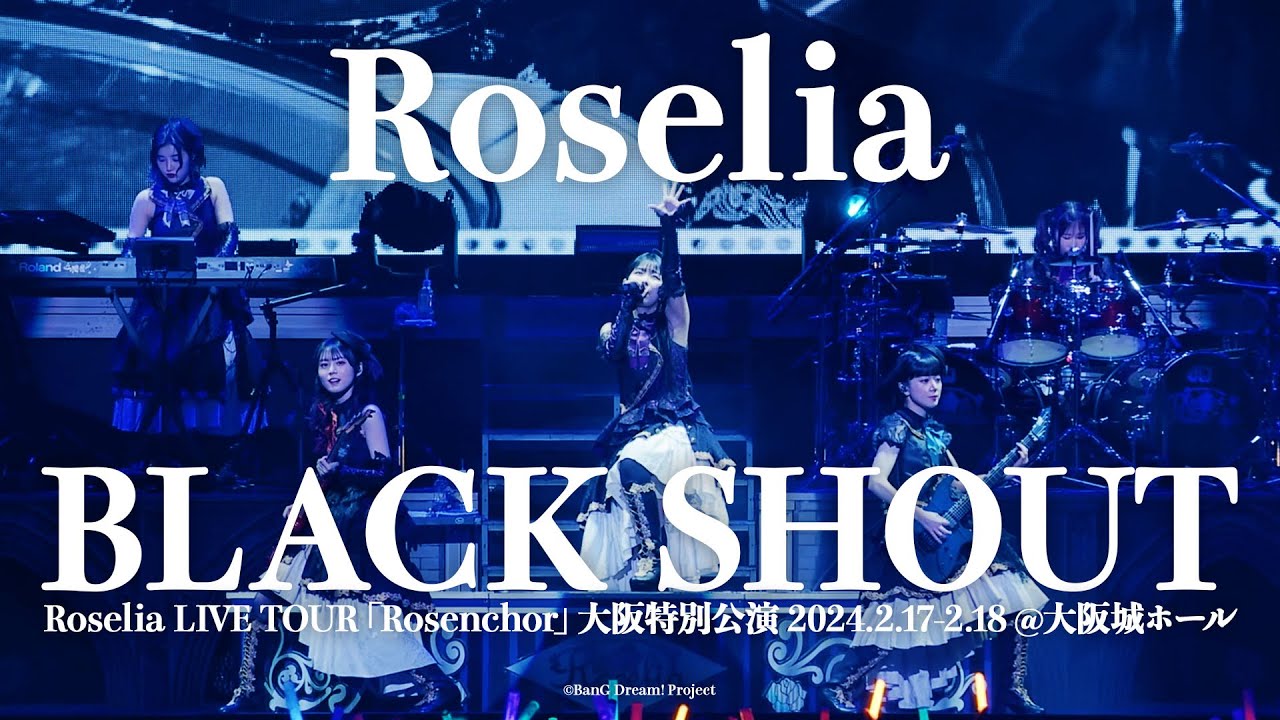
Fans all throughout Hwajung Fitness Center broke down into tears the moment the concert began. I, too, realized, the moment I heard their voices, that Roselia was right there in front of my eyes, in the flesh. With voice being a central element of every character arc, idol voice actors seem to have carved out a secure space for themselves.
Where else, and how far, can the fantasy world created by idol voice actors go? The industry has begun looking beyond them and into the virtual realm. In 2022, “Love Live!” announced its real-time virtual idol project, “Love Live! Hasunosora Girls’ High School Idol Club,” while “BanG Dream!” followed suit in 2023 with the launch of the virtual band “Mugendai Mewtype.” With the line between idol voice actor and virtual idol only continuing to blur, the entertaining world of idols continues to evolve alongside changing trends and transcend all boundaries.