
Chef Sung Anh (Studio Slam)
Kim Rieun: Can taste be objectively measured? This is the question posed by cooking competition shows like “Culinary Class Wars.” Sung Anh, owner-chef of Mosu Seoul—formerly Korea’s one and only three-star Michelin fine dining restaurant—appeared to provide an answer through his approach to acting as a judge on “Culinary Class Wars.” He evaluated contestants using clear-cut criteria, such as the doneness of ingredients, the relative necessity of floral garnishes, and effectively conveyed intent, lending credibility to an absolute measure of the traditionally subjective realm of taste. However, on Chef Sung Anh’s self-titled YouTube channel, he shifts his focus and instead takes a relative view of taste. He takes pains not to step on his guests’ toes while they’re cooking, respecting their individual approaches. For instance, when Suzy uses minced garlic while making gamas al ajillo or realizes she’s used too much onion, Anh focuses on her intentions with the dish and decides to “put it on hold” instead of eliminating her. He similarly respects Chung Seung Je’s recipe, standing back while the renowned math instructor seasons raw chicken and cuts his ingredients up into big chucks. At Mom’s Table—the restaurant run by Family Style Meal Mogul, as she was known on the first season of “Culinary Class Wars” before being eliminated for serving salty side dishes without rice to add balance—Anh shows a new emphasis on the emotional component of food as comfort when he explains that “eating whatever is served is what Mom’s Table is about.” Through his channel, Anh’s expertise transforms from pointing to absolute standards of taste to exercising a discerning eye for the unique value of every dish he tries.
It might be a fool’s errand to seek irrefutable satisfaction where something as subjective as taste is concerned, but a conversation between Anh and Choi Kang-rok, the winner of the second season of “Culinary Class Wars,” reveals that staying true and relentlessly pursuing the impossible forms the very backbone of cooking. Choi, who got into cooking as a business venture, confesses that he “had to pretend. Pretend I was good. Pretend I knew a lot. Pretend I was well trained.” Anh, proving even those at the top of their game can remain introspective, replies, “I was pretending to be good at judging too.” Professional though he may be, Anh still misses things here and there, and he’s happy to admit it. In one video, Anh accepts the comments from viewers that his attempt at Korea’s viral Dubai chewy cookies turned out as “Dubai rock-hard brittle” instead because he was overly concerned about making something too sweet for his daughter, and he apologizes to her for it. When Suzy asks Anh what he would wish for from a genie, he says he wouldn’t wish for anything because it’s the “process” that “is precious to” him. Maybe the perfect pastry, Anh says, is one layered through endless trial and error in impassioned pursuit of the moment you take a bite. What makes a taste memorable is when it’s paired with a desire to discover the unique value in and meaning of what we find on each table. Maybe that even goes beyond the table—maybe it’s a taste of life.

“Sirāt”
Bae Dongmi (“CINE21” reporter): A group of men struggle to make their way through dry, sandy winds, hauling massive speakers with them. Once the techno music begins to pour forth, the barren desert transforms into a place of euphoria. The scene is a rave in the middle of the deserts of Morocco, an unauthorized gathering filled with loud music and uninhibited dance. Luis (Sergi López), a middle-aged man, arrives at the festival with his young son Esteban (Bruno Núñez Arjona) in search of his runaway daughter, Mar. When Luis hears the kind of music they play at raves, it’s just noise to him. He’s here because he heard rumors that his daughter often attended events like this. The father and son duo dutifully distribute flyers with Mar’s photo, but their efforts are all for nothing because no one they talk to has seen her. Meanwhile, the Moroccan military arrives to break up the unauthorized gathering, and Luis and Esteban join a tight-knit group of five ravers—Tonin (Tonin Janvier), Jade (Jade Oukid), Bigui (Richard “Bigui” Bellamy), Stef (Stefania Gadda), and Josh (Joshua Liam Henderson)—on their journey to Mauritania for the next party. Unlike the ravers, who are seasoned partiers accustomed to desert life, Luis and his son are unfamiliar with such festivals and their car is ill-suited for the harsh conditions. To make matters worse, news of an armed conflict comes over through the radio, and their route turns to a steep, rugged canyon.
“Sirāt,” which won the Jury Prize at the 2025 Cannes Film Festival, brings to mind other films that evoke extreme sensory reactions. William Friedkin, famed for “The Exorcist,” has trucks drive across a treacherous jungle bridge during a torrential storm in “Sorcerer” (1977). Gus Van Sant, director of “Good Will Hunting” (1997), pushes humanity to its extremes in an endless walk through the desert in “Gerry” (2002). There’s no doubt that “Sirāt” draws heavy inspiration from these films, but the way the techno reverberates through the audience’s chests sets the film apart in a very visceral way. “Sirāt” sets audiences down in an unfamiliar landscape, only to plunge them into unrest, turmoil, and hazy hallucinations, then drive them right into sheer terror. Electronic musician Kangding Ray turns a simple road movie into an incredibly vivid cinematic experience with his musical direction. Incidentally, the title “Sirāt” is in reference to the bridge described in Islam that every soul must cross in order to reach paradise. Said to be thinner than a single strand of hair and sharper than the edge of a knife, the bridge is the perfect metaphor for the circumstances the film’s characters find themselves in. Once the movie begins, there’s no escape. The audience, too, must traverse their own bridge, unable to look away, no choice but to keep moving forward.
“Yoo-hoo” (Shintaro Sakamoto)
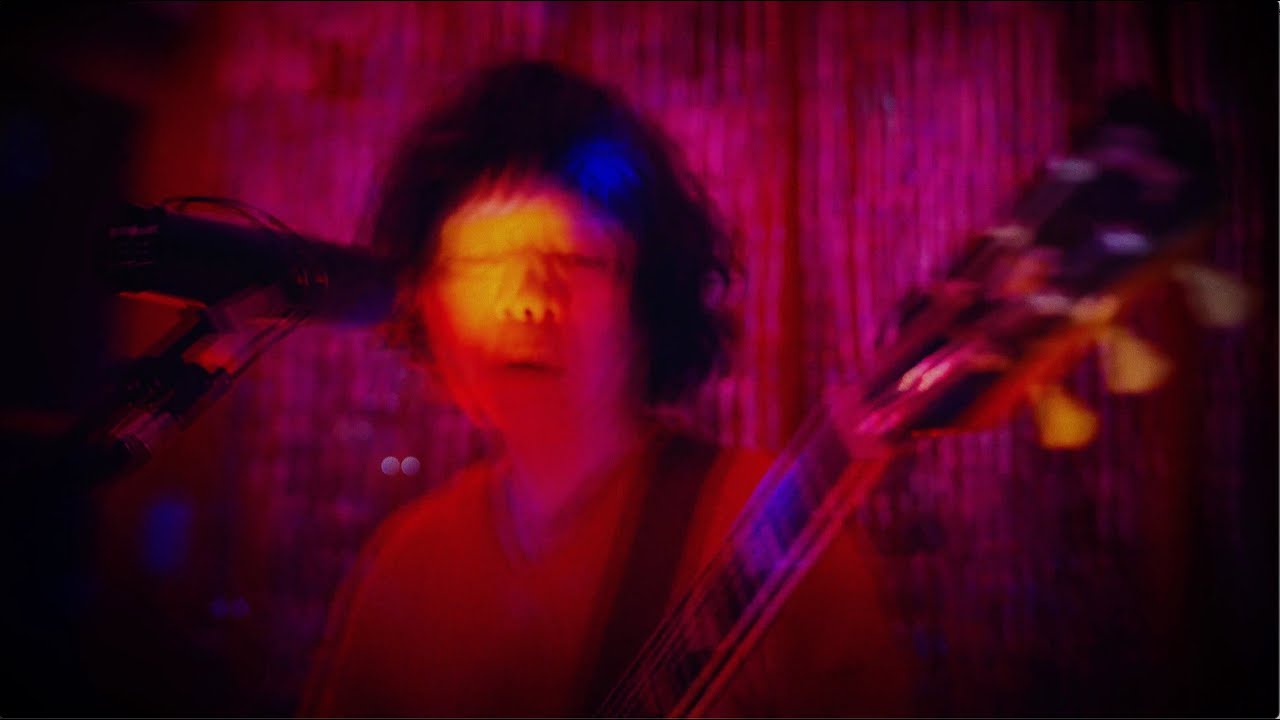
Hwang Sunup (music critic): It’s been 15 years since Shintaro Sakamoto retreated from the praise-filled days of his time with Yura Yura Teikoku into his deeply personal solo career. The once deliberately languid warbling of his steel guitar has evolved over time into a signature sound rooted in solid group music. He’s even back to live performances, which he had shunned to emphasize the music over the performer, now fulfilling his artistic duty to the public. In the interim, streaming and social media broke down all borders. The global attention—calls coming from distant corners of the world in search of collaboration—were likely far outside Sakamoto’s expectations. After all his time working crowds everywhere from the US to Mexico and monumental performances in Korea, he’s now extending an unprecedentedly intimate hand with his fifth studio album, arriving three and a half years after his previous one.
Unlike the surfy rock ’n’ roll-driven zest of the last album, “Like a Fable,” his latest release introduces bits of blues, old-fashioned tunes, jazz, and funk, which he weaves into a surprisingly pastoral and folksy sound. Amazingly, what stands out most is how this feels less like a transformation through working in specific influences and more like a pop-forward progression of the Shintaro Sakamoto sound.
The second track, “Is There A Place For You There?,” and its subtle misalignments between the lead vocals and backing harmonies, feels like an invitation, after which the album steps on the gas with “On The Other Side Of Time,” a striking interplay of crisp guitar and lo-fi saxophone. The highlight, though, is “Numb,” where a groovy intro reminiscent of Parliament transitions into the bridge with a kind of intimate spontaneity you’ve likely never heard. Beyond the typical ensemble, there’s a wide wind section, a marimba, and more that are more present and more assertive than ever, and Sakamoto’s clear, restrained vocals prove you don’t have to rely on artificial energy to bump up the resolution of a song. In many ways, a pro like Sakamoto reflecting the shift the era’s undergoing could arguably act as a bridge to a wider audience. If you ever had a hard time getting into his music, now’s the perfect time to try again.