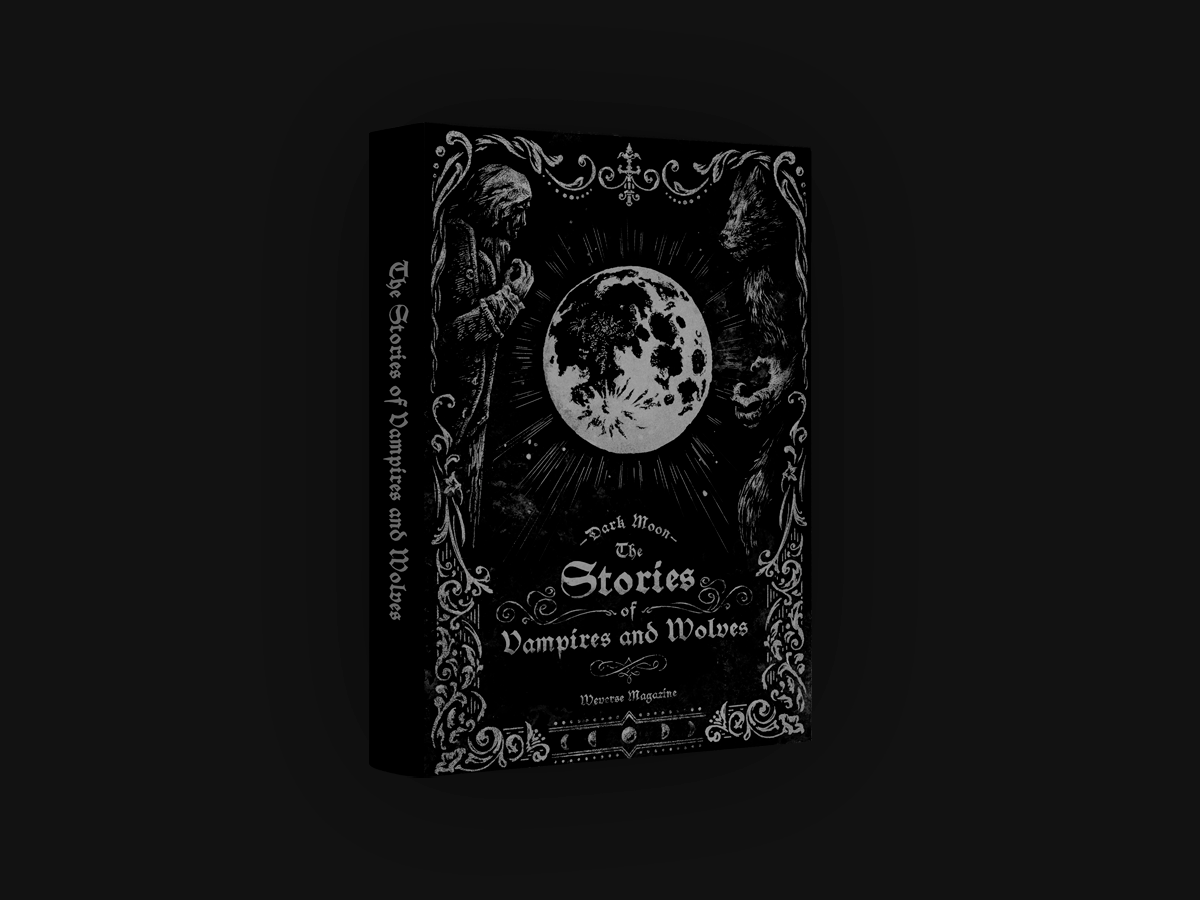
The “DARK MOON: THE BLOOD ALTAR” anime, an original HYBE franchise created in collaboration with ENHYPEN, premiered in Japan on January 9 and is now streaming in more than 80 regions worldwide, including in North America and Europe. “DARK MOON” marks the first time a K-pop original story has been green-lit into an anime series after first seeing webtoon and web novel releases. It’s also a global project that showcases a new kind of collaborative Asian entertainment to the world, as K-pop joins forces with Korean webtoons and Japanese anime. To celebrate the fourth anniversary of the “DARK MOON” series, we spoke with Aniplex producer Shizuka Kurosaki, who produced the anime. Read on to learn all about what they kept and what they reworked from the original webtoon as it evolved into an anime, and all the other creative decisions made throughout the whole process.
Please introduce yourselves to the “Weverse Magazine” readers.
Kurosaki: Hello, I’m Shizuka Kurosaki from Aniplex, producer of the “DARK MOON” anime. For this project, I took on proposing the anime adaptation to HYBE during the planning stage, overseeing the business aspect of things, building relationships with the animation teams, including TROYCA, and designing the overall business structure. I’m also currently the head of Aniplex Shanghai, our Chinese branch, and am in charge of promoting the “DARK MOON” anime in mainland China.
“DARK MOON” began as the fictional story project of K-pop group ENHYPEN, first as a webtoon and a web novel, and now an anime. As one of the first instances of a K-pop original story being developed into a franchise, I’d love to know what led you to become a part of the project.
Kurosaki: As anime is has rapidly expanded to become a part of global pop culture, even back when I was working at Aniplex headquarters in Japan, I was looking into source material that was popular not only in Japan, but also in places like Korea, China, and the United States, to find opportunities to work with them in the context of Japanese anime. It was during that process that I came across the webtoon “DARK MOON: THE BLOOD ALTAR,” which was doing extremely well in Korea, China, North America, and elsewhere. I started digging around and that was when I first found out it was an original story created in collaboration with the K-pop group ENHYPEN. As I read the webtoon and got to know ENHYPEN’s music and their music videos, I was very much drawn to how the two were fused into one through vampires as a theme, at which point I became invested in the idea of turning it into an anime.
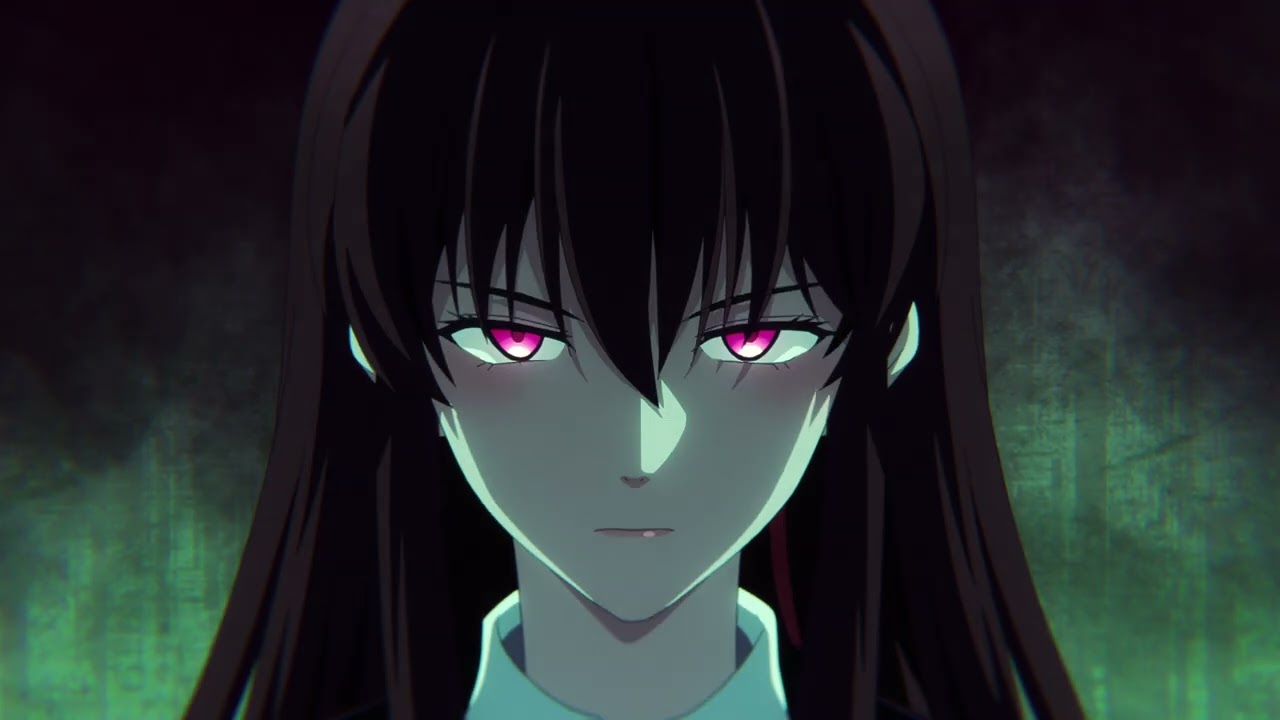
“DARK MOON” is a dark fantasy story with vampires and werewolves, but it’s also striking in the way it tackles realistic themes like identity crises, personal growth, friendship, and love experienced by those who never fully belong to any one society.
Kurosaki: Reading the original webtoon, I felt that “DARK MOON” is a romantic vampire story that deals with other themes at the same time, like how loneliness is part and parcel of a life of choice, and how you need to define yourself through your choices to live life when you’re different. In the human society of “DARK MOON,” vampires are made out to be unorthodox heathens. What really left an impression on me was how that same story shows these characters searching for how to live and what to hold onto, all in a school setting. School forms a kind of boundary. It’s kind of an in-between space. Because the drama unfolds in that “in-between” that’s not quite childhood and not quite the adult world, and the intersection between humans and these others, I saw it as a story about boys and girls who are in some way incomplete but learn to grow. And I felt that the way the characters wrestle with their sealed fates and fear of their own power, yet still try to break through those barriers, connects to the psychological barriers felt by the younger generation today. In reality there are countless ways to connect with the world, but I feel the series expresses a very modern kind of conflict, where a sense of uncertainty keeps you from taking that first step.
One thing that really got people talking about the anime adaptation was the lineup of voice actors.
Kurosaki: One of the most important parts of adapting another work into an anime is selecting the voice actors who will portray the characters. We held auditions to decide for this series, and our first criterion was whether they could embody the personality and image of each “DARK MOON” character and make it feel natural. For some of the characters, we also considered how well the actor fit the artist who inspired them or the world of the story. We felt it was important to look at subtle nuances so that, even though the “DARK MOON” characters would stand completely on their own, it would all still resonate with people who know ENHYPEN. The voice actors we ultimately went with confronted their characters’ emotions and breathed life into them with interpretations that exceeded our expectations. How that comes across is something I’d like to leave to viewers, but from our perspective, we assembled a fantastic group that does a lot to support the world of the series.
You had a very broad target group to consider while developing this series—not only the existing webtoon and web novel fans, but also ENHYPEN’s fandom and first-time anime viewers. What kind of deliberation and fine-tuning went into trying to satisfy them all?
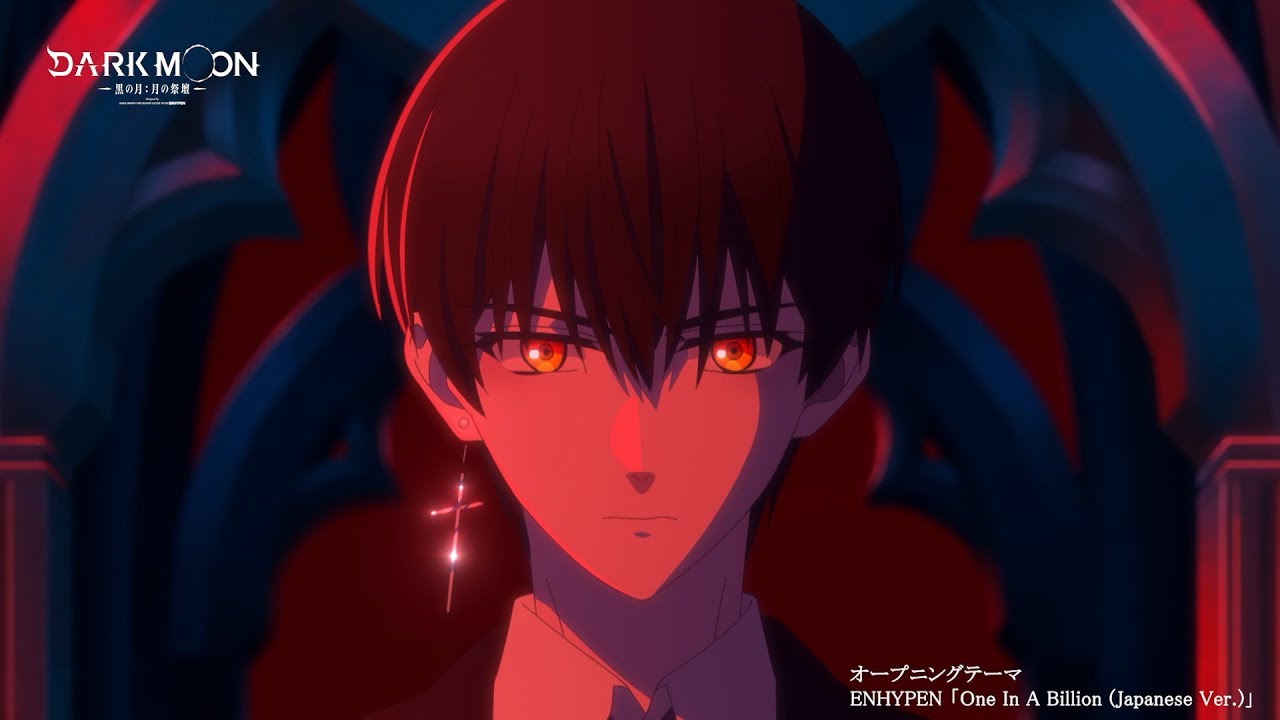
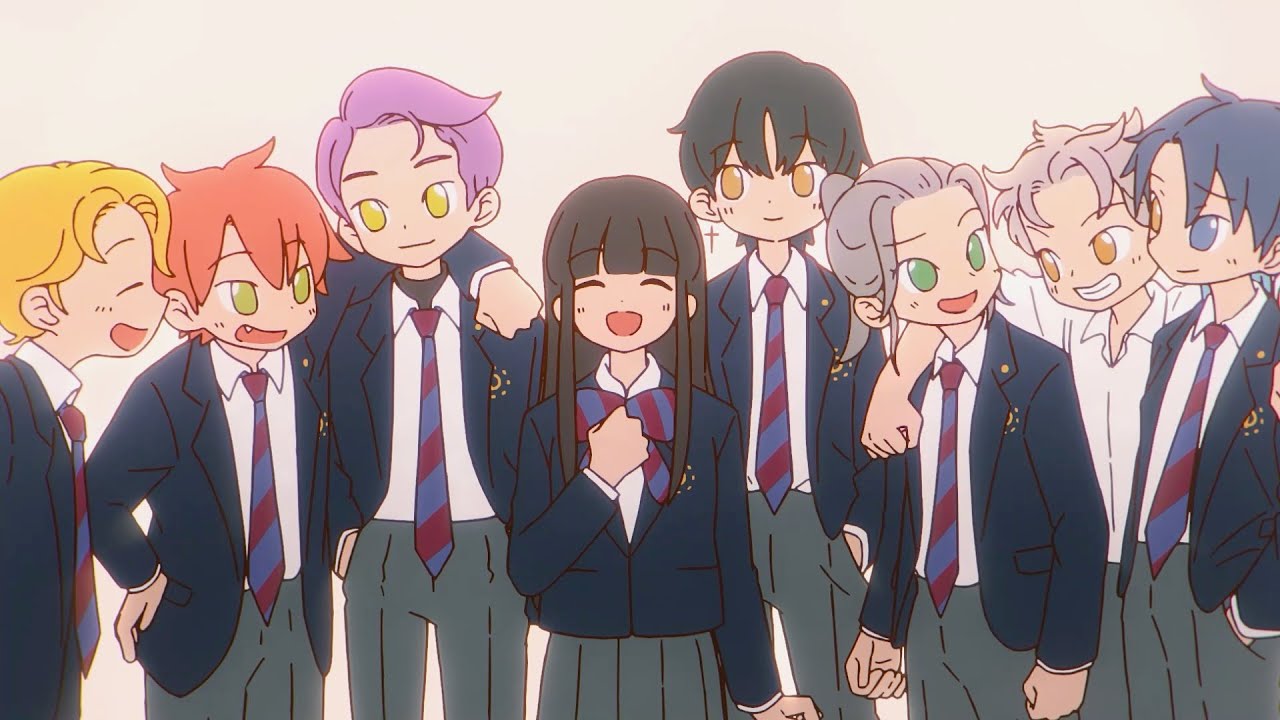
Kurosaki: The best thing about “DARK MOON” is that the artists who serve as its inspiration are real people and that the story has a direct relationship with them. Because the themes in ENHYPEN’s songs and music videos are intricately linked with the narrative of “DARK MOON,” this project is uniquely designed in layers so that you can experience one unified world from three different dimensions: music, visuals, and story. We were originally going to use the song “One In A Billion” from the webtoon for the opening, but at HYBE’s suggestion we newly recorded a Japanese version specifically for the anime. The new Japanese lyrics tie in more closely with the characters’ emotions, which pulls viewers even deeper into the story. For the ending, we went with two songs, “Fatal Trouble” and “CRIMINAL LOVE.” The director had the idea for “Fatal Trouble” to incorporate plenty of symbolism from ENHYPEN’s music videos, so fans can think of it almost like a treasure hunt. Then there’s “CRIMINAL LOVE,” which features the adorable chibis from the social media account for the original story. I should say, though, that we didn’t obsess over all those references. When it came to depicting the characters’ emotions and structuring the drama, we placed equal importance on respecting the source material and capturing what makes anime intrinsically enjoyable. As we worked on the episodes, we deliberately changed the order of some things compared to the original and incorporated aspects from “DARK MOON: THE GREY CITY” to give the anime its own distinct flavor. I believe that when you watch the series, you’ll feel how these choices create an even more solid “DARK MOON” universe.
Before we go, could you share your overall thoughts on the “DARK MOON” anime adaptation?
Kurosaki: Webtoons and K-pop are a part of Korean culture that Korea is proud to share with the world, and anime is a part of Japanese culture that Japan is proud to share with the world. We felt we could be trying something innovative and new by bringing the cultures of these two major Asian countries together. During the actual collaboration process, people from HYBE, Aniplex, and the animation studio TROYCA, all with different cultural and professional backgrounds, were engaged in these passionate discussions, all for the sake of this one project. The experience of respecting one another’s strengths while exploring, from multiple angles, how to turn the world of “DARK MOON” into an anime was an incredible learning experience. This project let me see and feel why the Korean entertainment industry is at the forefront globally in spaces like K-pop, drama, and film. Korean content production involves having a clear global strategy right from the planning stage, and expects to target the whole world as the work progresses. In contrast, Japanese anime production still starts with a goal of becoming a domestic hit a lot of the time, so this collaboration made Aniplex acutely aware of the need to expand anime production to have a more international framework. In that sense, “DARK MOON” is a whole new kind of project that brings together different segments of the entertainment industry across Asia to make a series intended for global audiences, and it was a deeply meaningful challenge for us to take on. We poured our hearts into making it so that not only fans of the original “DARK MOON,” but also people who are new to ENHYPEN or dark fantasy, can all enjoy it. I hope you’ll come with us and experience this new take on their world—what happens when the music, story, and anime come together as one.
- EXPLORE ‘DARK MOON with ENHYPEN’2025.10.03
- ENHYPEN FANTASY2022.08.29
- [Interactive] DARK MOON2023.12.28