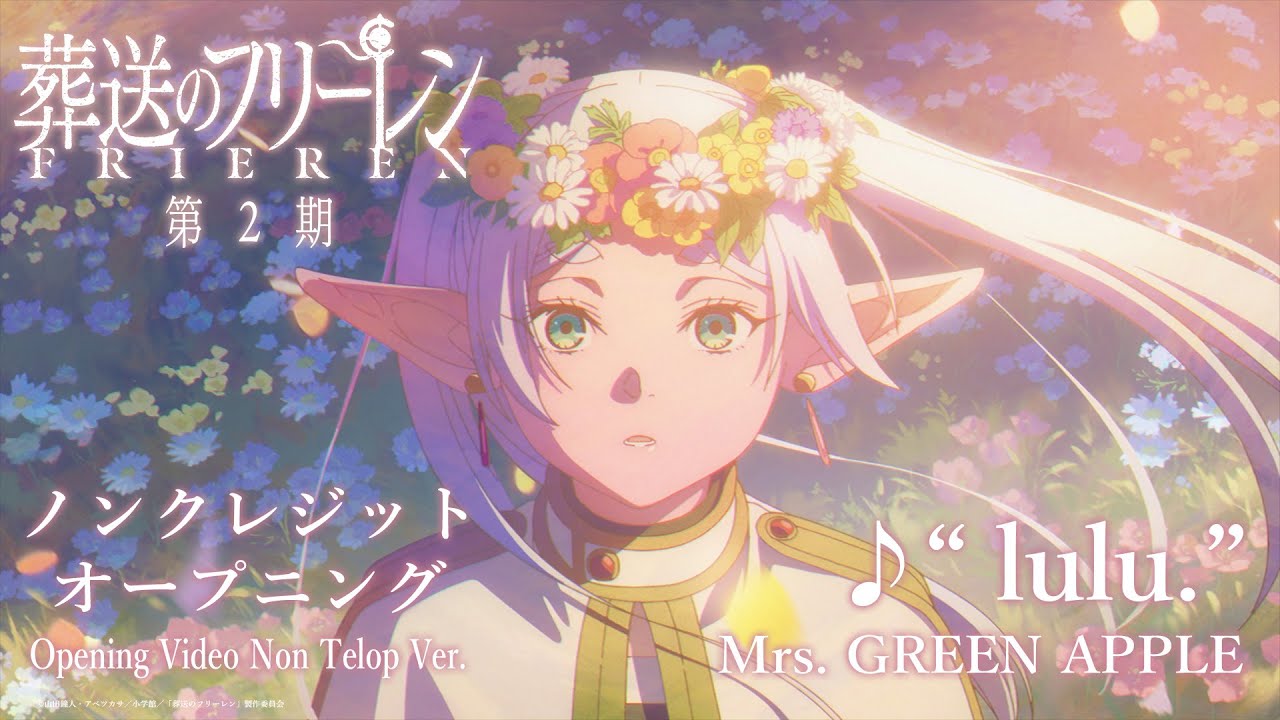
Frieren: Beyond Journey’s End (Streaming on Netflix and other platforms)
Yoon Haein: The anime “Frieren: Beyond Journey’s End” begins where most stories end. Himmel’s death becomes the point that marks the passage of time. An elf who lives for a thousand years, Frieren once traveled with the human hero Himmel, the priest Heiter, and the dwarf warrior Eisen. After ten years of adventure, the four defeat the Demon King and bring peace to the world, becoming heroes. They spend the next fifty years living their own lives before meeting again. But a thousand-year elf and a human do not experience time the same way. For Frieren, fifty years is barely a blink. For humans, it is more than half a lifetime. When Frieren watches the elderly Himmel pass away, she feels for the first time the weight of loss and regret that come from human mortality. After some time, Frieren returns to Ende, where the Demon King was once defeated and where Aureole, a place said to let the living and the dead speak, is believed to exist, hoping to meet Himmel’s spirit. This new journey brings new companions. At Heiter’s request, Frieren takes in the war orphan Fern and takes her on as an apprentice, and she welcomes Eisen’s disciple Stark as the party’s vanguard. For the two who have just begun as adventurers, Frieren becomes a guide, offering caring guidance drawn from her abilities and experience. In the process, Stark, who once believed he lacked the courage and skill to fight, begins to reveal his own strength and role as the party’s vanguard. Fern, who at first appears ordinary, draws on the deep training she has built over the years and comes to be recognized as a first-class mage, powerful enough to defeat a replica of Frieren, whose abilities are almost absurdly powerful even within the world itself. As for Frieren, the long and burdensome life she must live as an elf had left her filled with cynicism and intellectual curiosity alone. Through her relationship with the two, she gradually comes to understand the small worries and everyday value of human life. This may be why “Frieren: Beyond Journey’s End” is often regarded not simply as fantasy or adventure, but as a comforting story of growth.
In the course of her adventures, Frieren often takes on small requests, such as cleaning statues of Himmel scattered throughout the villages or handling tasks that seem unimportant. Her reward is not worldly money or fame, but a trivial grimoire that does little more than turn red apples green. Though she may seem indifferent by nature, she understands the simple desire of ordinary people to protect their homes, and she willingly uses her powers to help them. There is only one reason for this: “That’s what Hero Himmel would have done.” In this way, by following the path Himmel once walked, “Frieren: Beyond Journey’s End” clearly presents the qualities a hero should possess in human stories. It is the courage to use one’s strength with kindness. That kindness leads not to the pursuit of some absolute ideal, but to a message about looking after those around you and valuing the process over the result. For that reason, “Frieren: Beyond Journey’s End” brings to the forefront not the fights and battles that arise during an adventure, but the attitude of embracing the adventure itself as a journey, just as Frieren recalls Himmel once saying: “Even if things don’t turn out the way you hoped, it’s enough if the journey was fun.” By using the premise of a thousand-year elf, the series metaphorically asks, from a human perspective, “If you were given a second life, how would you live?” In a life where trivial things are unavoidable, how can one face it without sinking into a sense of meaninglessness? A hint lies in what Eisen tells Stark in Episode 31: “It was a truly trivial adventure. But isn’t it strange? Those trivial adventures we shared with our companions became memories we would never trade for anything.”

Rei’s Winter Break
Nam Sunwoo(CINE21 Reporter): While countless films romanticize summer vacation, winter break has often been overlooked. Perhaps it is the difference between a season when anything seems possible and one when nothing does. Yet “Rei’s Winter Break” reminds us that some stories surface only after they have sunk and gone quiet.
Rei, played by Kurosaki Kirika, lives in Tokyo. Her mother is away caring for her grandmother. Her father is consumed by work. Her older brother has already moved out. Left all by herself, Rei paces around the apartment, then steps outside, idly dribbling a basketball. There she meets Gyu-ri, played by Jung Joo-eun, a Korean girl in much the same situation. Gyu-ri has flown a long way on her own to see her father, who works abroad, but her busy father is rarely around.
Maybe loneliness recognizes its own kind. Rei and Gyu-ri turn coincidence into connection. They keep the conversation going in halting English. They chatter about their families, their futures, the places they hope to visit someday. Then they add, “Goodbye, see you later. Call, call!” Their farewell carries the easy confidence of those who believe they will meet again. After spending several days together without even the help of a translation app, what they gain is not perfect understanding but a way of staying present, choosing warmth over precision. Director Park Suk-young withholds subtitles at times, inviting the audience to build the same muscle. If this is what winter break can be, you would want to live through it again and again.
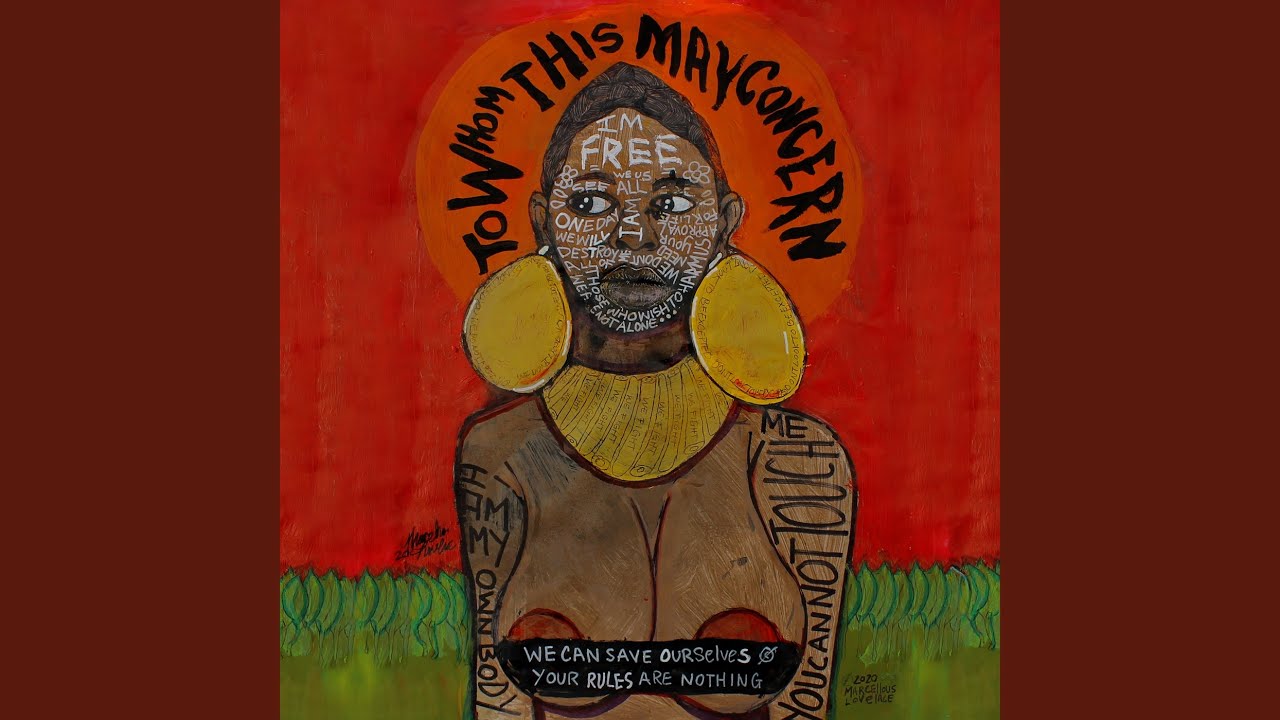
Jill Scott – “To Whom This May Concern”
Kim Hyojin (Music Columnist): Jill Scott’s sixth studio album, “To Whom This May Concern,” marks her first full-length release in eleven years, and it reads as far more than a comeback. It is a sweeping statement, something like a modern epic, that shows just how wide her artistic horizon can stretch.
More than anything, the album is driven by its central concerns. It departs from her earlier work without losing what makes her sound like herself. Where “Woman” lingered on intimate love and interior confession from a grown woman’s perspective, this latest record turns outward. It looks squarely at “us” as a community and at questions of humanity. Even so, women’s solidarity still sits firmly at the center of the community she imagines.
That message of solidarity comes through most clearly on two of the album’s tracks, “Pressha” and “Beautiful People.” “Pressha” takes on the visible and invisible pressures modern women face with sharp insight and pulses with defiance, while “Beautiful People” offers warmth and generosity to those fighting their way through it. Jill Scott moves effortlessly between clear-eyed social critique and deep compassion, delivering one of her most nuanced gestures of support to women living through this moment.
Her musical approach feels more daring than ever. She draws boldly from house, hip hop, and electronic influences, expanding the reach of her sound. Built around a house beat, “Right Here Right Now” makes it clear that her musical instincts remain razor sharp. Collaborations with younger artists such as J.I.D and Tierra Whack bring a contemporary edge and new energy to the album.
The long eleven-year hiatus became a period that strengthened and replenished her creative well. As she puts it, “I did not have a creative block, I just took a creative break.” The album more than justifies the long wait, delivering a remarkable level of craftsmanship. As her voice returns, it embraces listeners in a time of confusion, especially the many women still searching for their own voices, with warmth and unmistakable strength.