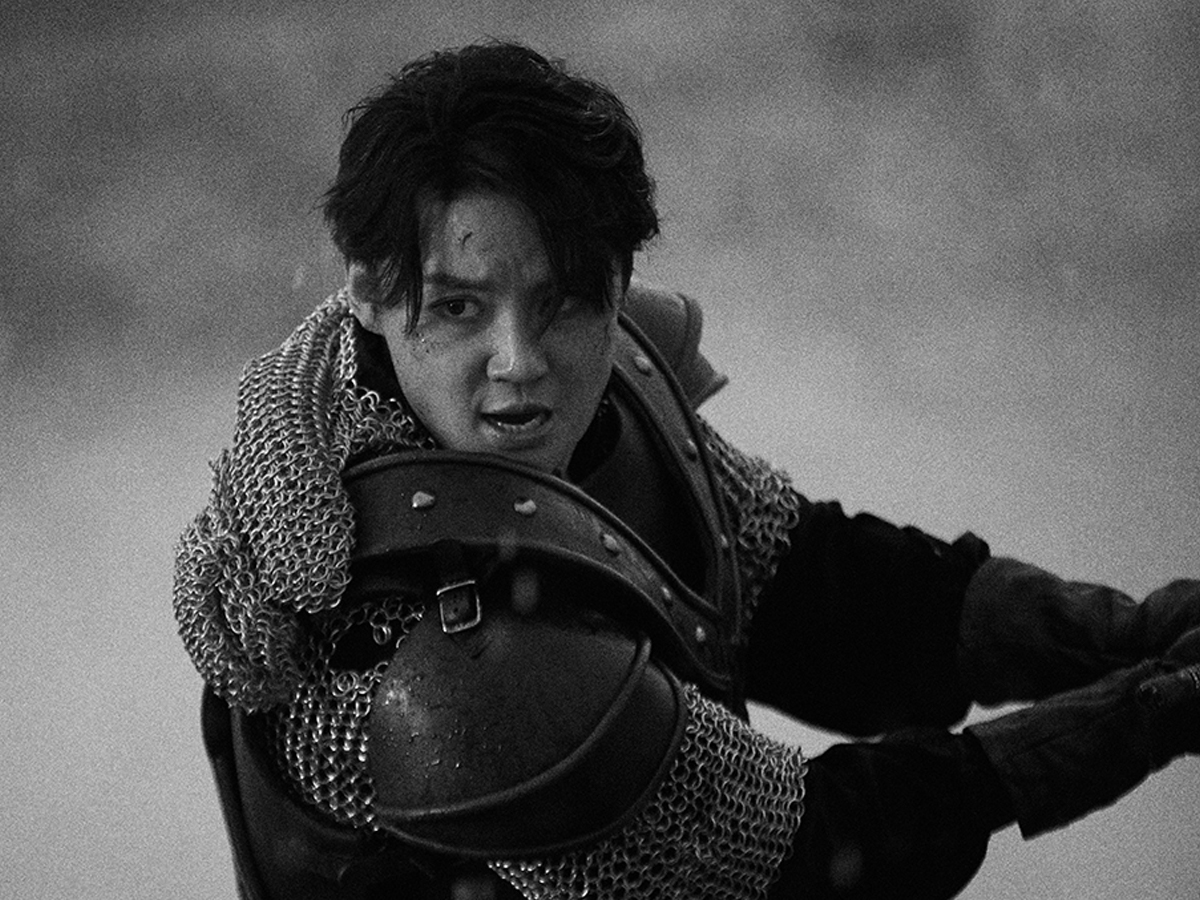
The OD Company licensed production of the musical “Death Note,” staged at D-Cube Link Arts Center, is now in its fourth and longest season, a seven-month run from October 14, 2025, to May 10, 2026. The current production is an attempt to build on the box office success seen over the three previous runs—the completely sold-out 2022–2023 shows at the Chungmu Arts Center Grand Theater, the Seoul Arts Center Opera Theater (extended run), and the Charlotte Theater (encore run). At the same time, it’s also the recent larger testbed for long-running musical productions. In Korea, musicals are usually given a limited run of two to three months, but starting in 2024, more and more shows have been running for six months or longer. OD Company’s 20th-anniversary production of “Jekyll & Hyde” at the Blue Square Shinhan Card Hall, which ran for six months from 2024 to 2025, and S&Co’s premiere licensed Korean production of “Aladdin,” which ran for seven months at the Charlotte Theater and then an additional two months at Dream Theatre in Busan, are prime examples. “Death Note” is the latest to step up and try its hand at the trend.
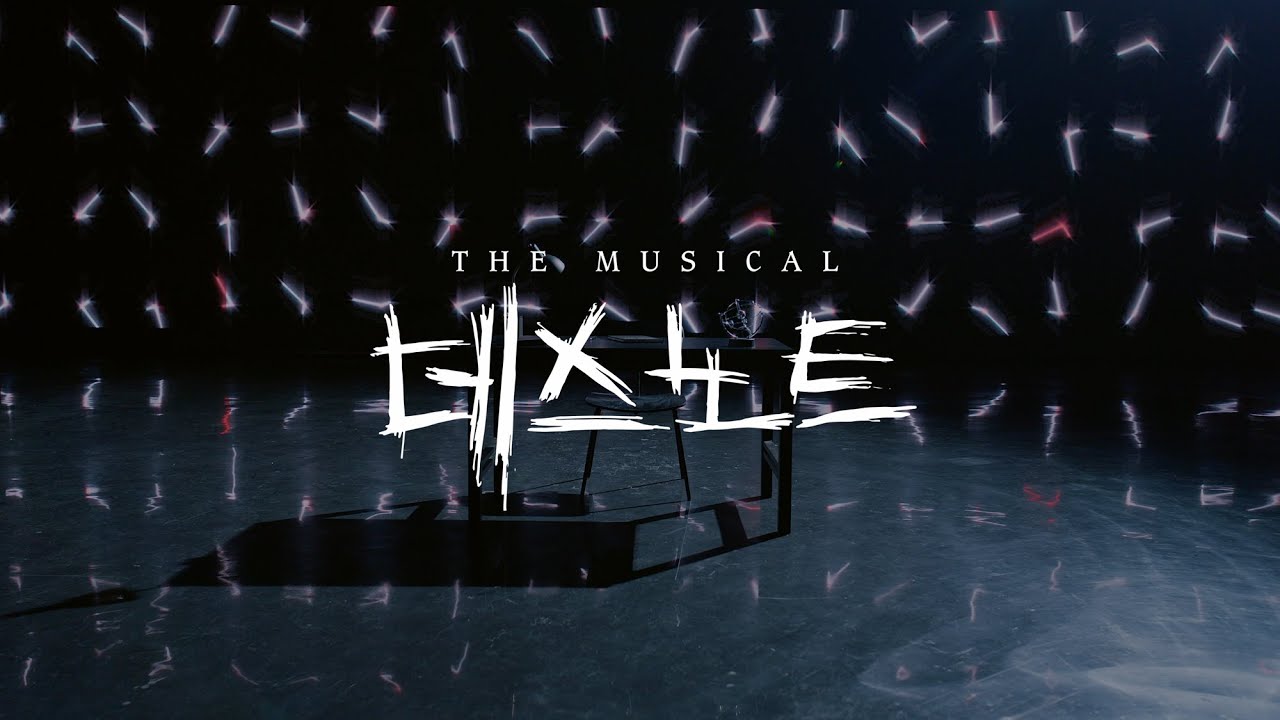
Korea’s non-replica production of “Death Note”: A new chapter for the musical
The “Death Note” musical premiered in April 2015 at the Nissay Theatre in Japan, produced by major entertainment company HoriPro. Frank Wildhorn composed the music, Jack Murphy wrote the lyrics, Ivan Menchell wrote the book, Jason Howland handled the orchestration and arrangement, and the production was directed by Tamiya Kuriyama, bringing together the Wildhorn dream team with one of Japan’s leading directors. Wildhorn first broke into Japan with “Jekyll & Hyde” (Nissay Theatre, 2001), produced by TOHO, HoriPro, and Fuji TV, and deepened his collaboration with HoriPro by developing “Mitsuko” (2011).
Developed between 2011 and 2013, “Death Note” was HoriPro’s first global endeavor, and it embodied the company’s vision for Japan to make musicals one of its national exports. At the time, some in Japan criticized this collaboration with Wildhorn and his associates as not being purely Japanese, but HoriPro nevertheless doubled down on its belief that cross-border collaboration would lead to better quality musicals and turn Japan into a cultural exporter of the form. And by entrusting directing duties to Kuriyama—who served as director of the New National Theatre Drama Studio in Tokyo until 2016 and had built up a distinctive body of work encompassing commercial plays, avant-garde theatre, musicals, and opera—they made it clear that the work was firmly rooted in Japanese soil.
The “Death Note” musical is based on the manga of the same name that was serialized from 2003 to 2006 in “Weekly Shonen Jump,” published by Shueisha and written by Tsugumi Ohba with art by Takeshi Obata. In 2006 the series was adapted into a live-action film starring Tatsuya Fujiwara and Kenichi Matsuyama, and a 37-episode anime produced by Madhouse also aired from 2006 to 2007. In that sense, “Death Note” can be seen as a compelling example of a “2.5D musical.” 2.5D musicals, now recognized in Japan as the most profitable approach to creating musicals, is a term that arose organically around 2010 among fans of “Musical: The Prince of Tennis” (2003). Today, the term is generally understood to mean a live-action “3D” musical production based on Japan’s modern popular “2D” media—manga, anime, and games—created with the original’s fanbase in mind. “Death Note” has become a hit musical in Japan and Korea, now in its fourth season in both countries, and continues to test the waters for itself and 2.5D musicals as a whole in the English-speaking world and beyond, with a concert staging of “Death Note: The Musical” at the London Palladium in the West End in 2023 and a special panel at the New York Comic Con featuring, among others, Adam Pascal.
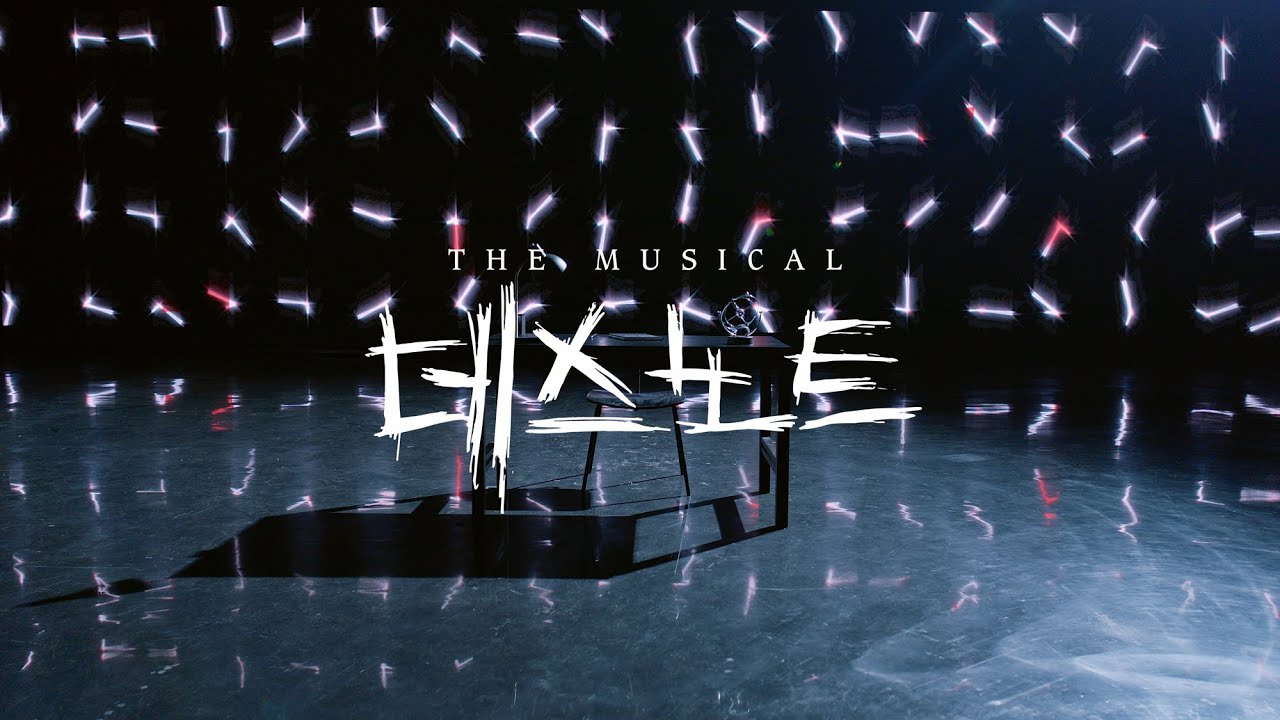
But most intriguing of all is the Korean production, which, after its 2015 premiere and 2017 revival, had new life breathed into it when it began to follow its own path as a non-replica production. After two runs produced by CJeS Culture and directed by Kuriyama himself, OD Company acquired the performance rights and, beginning with the 2022 production, “Death Note” underwent a distinctly Korean transformation with radically different stage direction—a shift rooted in OD’s particular experience and expertise. Everything the company learned from importing Wildhorn’s Broadway musicals “Jekyll & Hyde” (2004) and “Dracula” (2014) as non-replica licensed productions and then firmly establishing them in the Korean repertoire truly came to fruition with “Death Note.”
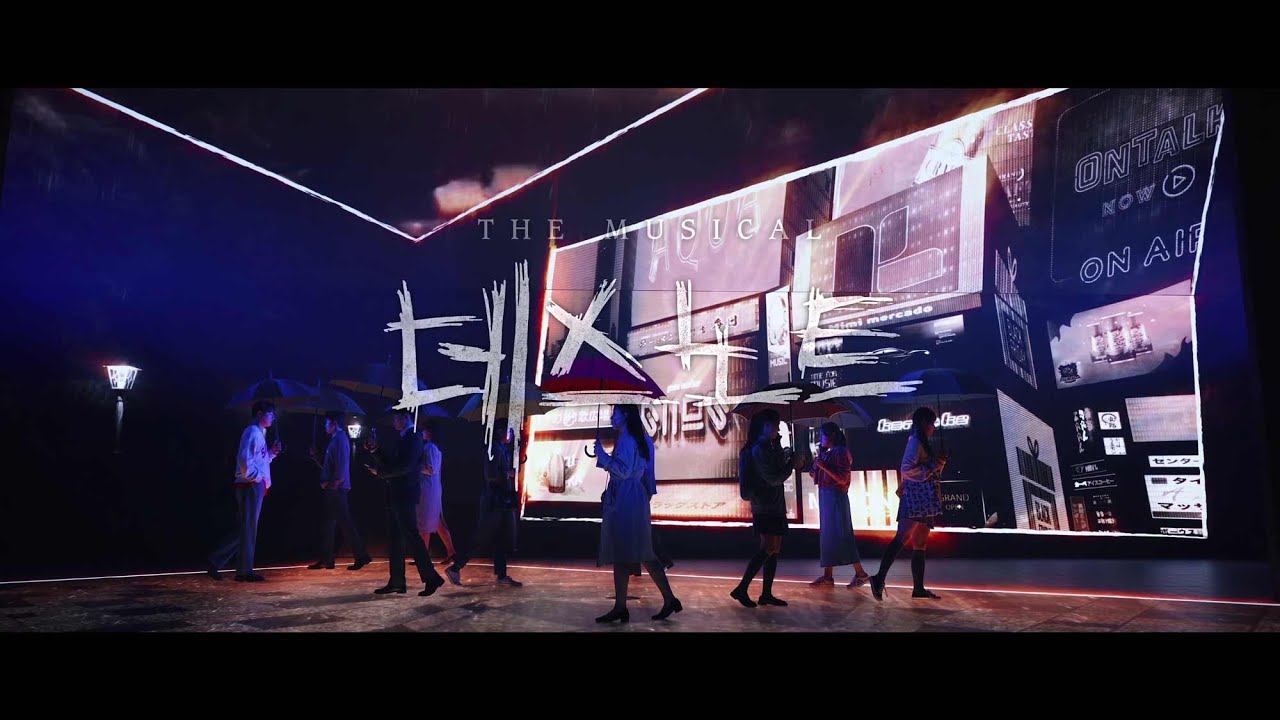
The ideas dreamt up by Pilyoung Oh—whose approach has continuously deepened while heading up set design for all of these musicals—made it particularly clear that the very stage on which “Death Note” is set is both a perspective and a message. For instance, in “Jekyll & Hyde,” a two-tiered diamond stage separated upper and lower class, good and evil, and Jekyll and Hyde, and in “Dracula,” four nested revolving stages visually suggested Dracula’s power radiating out from the center. In “Death Note,” human fate is shown as being in the palm of a god’s hand through lines that define the limits of the dramatic space. An astounding 1,380 high-resolution LED panels with a 3 mm dot pitch were installed across the floor, ceiling, and walls of the stage, and for each scene, lines were drawn to stand in for the eyes of a god, making the audience feel as if they were being sucked into a completely different space and time. The design also aligns with the vision of director Kim Dong-Yeon, who was brought on for the new non-replica production, refining the mise en scène in such a way that the actors are made to perform within the lines. It all stands in clear contrast to Kuriyama’s visuals for the original, which unfolded on a stage like a white sheet of paper in a black notebook, onto which the characters’ dialog and movement, and all the music, were inscribed.
Battle of the gods
The stage design is ultimately a visual amplification of the story driving “Death Note.” Unlike how the character Light is portrayed in the original manga, where, like the shinigami Ryuk, is apathetic about life, the musical version centers on a version of him who possesses what he feels is a keen eye for the ills of society from the very moment the curtain rises. Light doesn’t have faith in the world, so he doesn’t hold any ideas of universal justice either. And when Ryuk drops the powerful notebook, the Death Note for a laugh and it just happens to fall into Light’s hands, Light decides to make himself the justice in the world and begins wiping out, one by one, all the evil people—at least, who he personally deems evil. A smart but otherwise ordinary high school student, Light slowly turns into a monster as he falls under the delusion that, armed with the absolute power of the Death Note, he has become god of a new world.
The musical maintains the tension all the way to the end through the mind games between Light and the genius L, who’s solved every major criminal investigation on Earth. The conflict between Light, now widely known as Kira (sounding like “killer”), and L, determined to reveal his true identity, is the real highlight of “Death Note,” and not just because of the dramatic tension and entertainment value. Though their showdown is depicted like a clash between omnipotent gods, at its core it’s a clash of ambitions—two people willing to use any means necessary to find each other’s weaknesses and destroy one another—and of personal interpretations of justice that calls to mind the countless conflicts that challenge our own here and now. Rem, the shinigami who sacrifices herself for Misa—who herself loves Light—embodies a kind of noble love, but in the end, “Death Note” closes the case with the deaths of Light and L, ruthlessly exposing the violence and cruel egotism that can be hidden behind the banner of justice. In the final number, “Requiem,” the show’s heavy message—that a human stripped of their humanity is equally as directionless as a bored god—fills the theater like a deafening silence.
- Four ways of understanding Min Kyoung Ah2026.01.27
- The enchanting journey of Jeong Sun Ah2024.10.17
- Kim Junsu has a firm grip on Excalibur2022.03.24