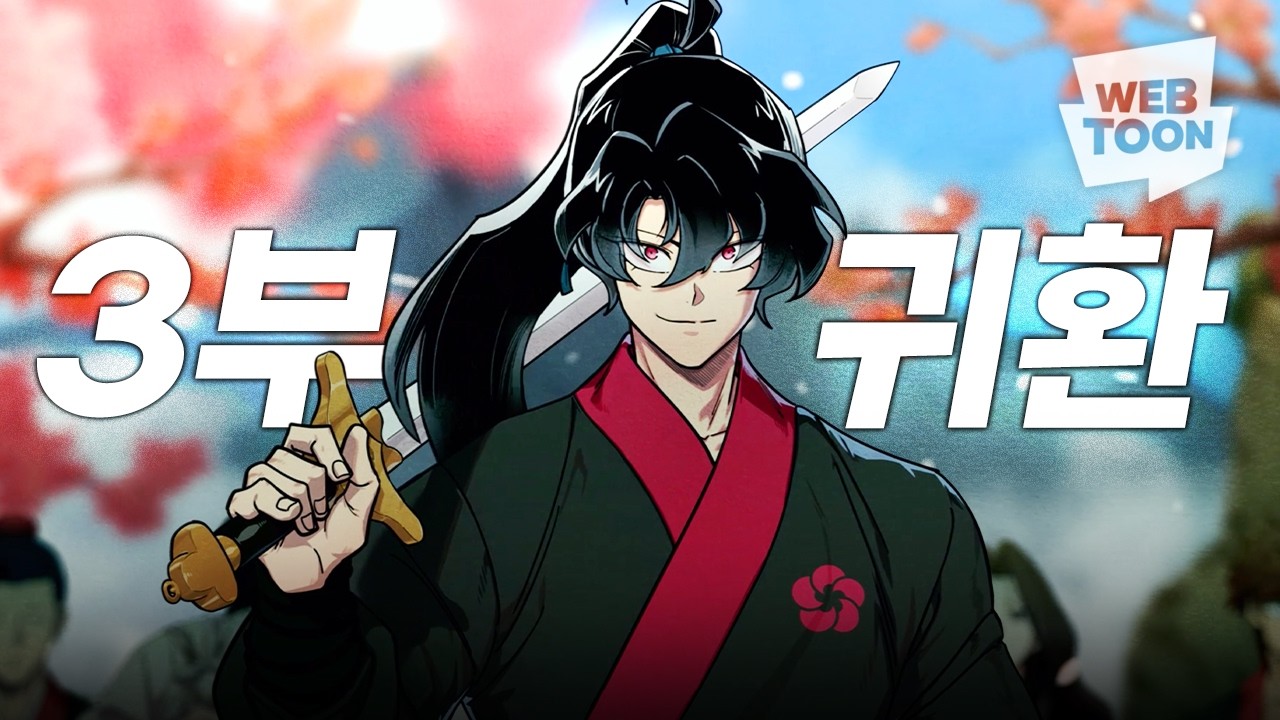
Cheongmyeong, the 13th-generation disciple of the Mount Hua Sect and one of the greatest swordsmen of his age, was known throughout the martial world as the Plum Blossom Sword Saint. In the final battle at the Ten Thousand Great Mountains, he lands the decisive blow against the Heavenly Demon, only to perish alongside him. A century later, for reasons unknown, he awakens to find Mount Hua reduced to a shadow of its former self. The sect is bankrupt, its disciples stripped of both pride and purpose, dreaming only of escape. Determined to restore Mount Hua, Cheongmyeong sets out to rebuild it himself. The irony is that the disciples before him are, in truth, generations younger than he is. Yet in this new life, they outrank him within the sect. That does nothing to stop him from barking: “Get your heads over here!”
If you’ve read this far and still have no idea what any of it means, congratulations. There is still plenty of joy left for you to discover. This is the world of “Return of the Blossoming Blade”—the Naver Webtoon adaptation of Biga’s hit web novel, illustrated by LICO for Seasons 1 and 2 and by ARCHE for Season 3. On April 14, 2026, the series returned after a 469-day hiatus. Prior to Season 3, Naver Webtoon had taken a relatively restrained approach to marketing the series. Promotional efforts appeared from time to time, but rarely on the scale of a full-fledged campaign. This time was different. Naver Webtoon promoted the comeback across its app, Naver Maps, Spotify, and a wide range of influencer channels. From trendiest neighborhoods to recommendation algorithms, the campaign seemed to be everywhere. The scale reflects the size of the franchise itself. The original web novel has accumulated more than 700 million views, while the webtoon adaptation has surpassed 2.1 billion. Yet numbers alone do not explain the response to Season 3’s return. Readers welcomed it back with unusual enthusiasm. Long regarded as a genre aimed primarily at older male audiences, murim fiction rarely commands this kind of broad appeal. “Return of the Blossoming Blade” does. The question is why.
The myth of the hardworking hero’s decline
A common claim about contemporary fiction is that modern audiences no longer care for hardworking protagonists. It isn’t true. Readers still care about effort. What they no longer need is a step-by-step account of that effort. They want to see what comes after it. Once certain narrative devices become established genre conventions, they no longer require explanation. Genre is, in essence, an agreement between creators and readers—a shared language built on mutual expectations. If a truck barrels toward someone in the middle of a crosswalk, readers instantly recognize the setup. If a Korean protagonist is suddenly transported to another world, audiences already expect a cry for a status window. In a romance fantasy, flowers blooming around a newly introduced character are enough to signal that the character matters. Some things no longer need to be said.
The same logic applies to effort. In “Solo Leveling,” Sung Jinwoo trains relentlessly and grows stronger as a result. Tanjiro does the same in “Demon Slayer.” To claim that modern protagonists no longer work hard is to ignore the fact that effort itself has become part of the genre’s shared language. Readers already understand it: of course they trained. Of course they struggled. After all, who gets through modern life without effort? What audiences reject is not hard work but repetition. In Korean, there is a word—kkondae—for someone who keeps repeating lessons everyone already knows. Genre conventions exist to avoid exactly that. They allow stories to move past the obvious and focus on what comes next.
In “Return of the Blossoming Blade,” Cheongmyeong is constantly working toward something. The difference is that the series rarely dwells on the work itself. Instead, it highlights the moments that matter—the results of that effort and the changes it creates. Through that process, Cheongmyeong begins rebuilding the Mount Hua Sect, pulling it out of the defeatism that once defined it. This is how “Return of the Blossoming Blade” depicts growth: by showing how the progress of one person becomes the progress of an entire community. Cheongmyeong trains disciples who are, in truth, generations his junior, even if they technically outrank him within the sect. As they grow stronger, so does Mount Hua. Because audiences already assume that a protagonist works hard, a hero who gains power without effort is rarely compelling. What readers respond to is the belief that effort leads somewhere—that persistence is rewarded, and that hard work can produce real results.
Reality, of course, does not always work that way. But popular fiction does not need to reproduce reality’s disappointments. “Return of the Blossoming Blade” instead presents a world in which effort is rewarded. Through Cheongmyeong’s second chance at life and Mount Hua’s gradual revival, the series gives readers a chance to witness that process unfold. The disciples who once cursed Cheongmyeong come to respect him. The people who doubted him begin to follow him. Mount Hua, once on the verge of collapse, begins to rise again. In that sense, the series offers something increasingly difficult to find in real life: a world where hard work pays off.
The ideal community of “Return of the Blossoming Blade”
One of Cheongmyeong’s central goals throughout Seasons 1 and 2 of “Return of the Blossoming Blade” is rebuilding the Mount Hua Sect. In most martial arts stories, the restoration of a fallen sect is framed in lofty terms: reviving its traditions, preserving its philosophy, or pursuing spiritual cultivation. Readers expect the disciples of a Daoist sect to devote themselves to discipline and enlightenment. Cheongmyeong has other priorities. “Money!” He is, quite literally, obsessed with it. And readers love him for it. There is something inherently funny about a Daoist swordsman who chases money before training manuals or rare elixirs. Yet beneath the joke lies something deeper. After sacrificing everything to defeat the Heavenly Demon, Cheongmyeong awakens a century later to find Mount Hua impoverished, forgotten, and barely surviving. His obsession with money is not simple greed. It is the determination of someone trying to restore what was lost.
Cheongmyeong’s obsession with money mirrors the way many people think about it today. He demands hard work from Mount Hua’s disciples, but he also rewards it. He gives them the finest elixirs, clear goals, and tangible recognition for their efforts. In many ways, he resembles an ideal leader. Although the disciples technically outrank him within the sect, they trust him because he continually proves himself through action. Skill matters more than hierarchy. If a leader demonstrates ability and earns that trust, people follow. That is the world “Return of the Blossoming Blade” presents. A world where effort is recognized, competence is rewarded, and trust is built through results. Reality rarely works so neatly, which is part of the series’ appeal.
The Mount Hua Sect of “Return of the Blossoming Blade” is an idealized world shaped by Cheongmyeong. It is a place where people trust one another, commit themselves to a shared goal, and are rewarded for their efforts. At times, Cheongmyeong can seem harsh, even ruthless. Yet when he says, “I’m doing this for your own good,” it is hard not to nod along.
How “Return of the Blossoming Blade” changed murim
Murim was not always a genre with broad appeal. Traditionally, its heroes move through the world of jianghu alone, pursuing strength above all else. They grow stronger through hardship and eventually rise to the top of the martial world. Even when these stories invoke hyup—the moral code at the heart of martial arts fiction—it usually serves as a justification for confronting evil rather than a framework for everyday relationships. Readers are not invited into a community. They stand at a distance, watching the hero’s journey unfold.
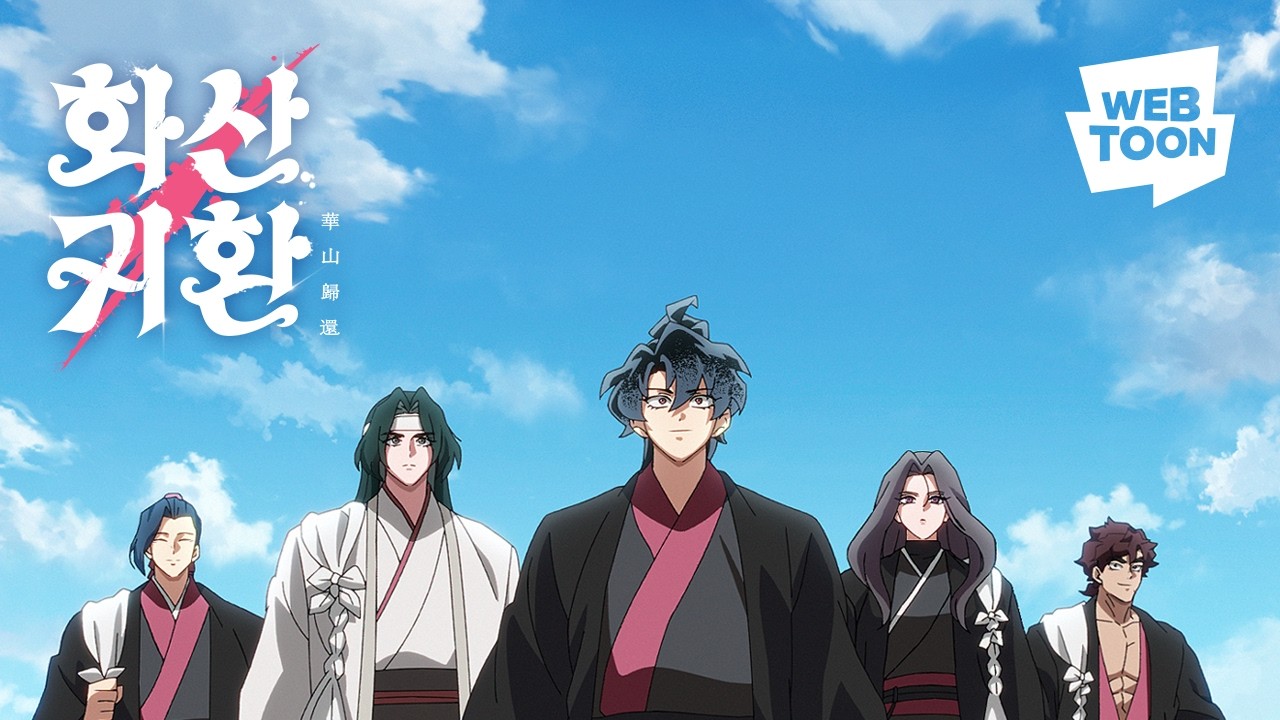
“Return of the Blossoming Blade” overturns that structure. Cheongmyeong is always looking back. Rather than leaving others behind in pursuit of greater power, he turns his attention to the hopeless disciples around him and forces them to grow alongside him. His overwhelming strength is not treated as the end of the story. It is the reason the story can begin. Once the strongest swordsman of his age, Cheongmyeong understands what those around him do not: strength alone is not enough. So he sets out to rebuild not only Mount Hua, but the people within it. He pulls his fellow disciples out of defeatism, restores the sect, and eventually challenges the complacency of the wider martial world. At its heart, “Return of the Blossoming Blade” is not the story of a lone hero. It is the story of a community learning how to recover.
This is where much of the series’ appeal comes from. In traditional martial arts fiction, the strongest figure often stands apart from everyone else. Their power inspires awe, but rarely uncertainty. Cheongmyeong is different. He doubts himself. He worries that he may be wrong, or that the people who follow him may pay the price for his decisions. Beginning with Season 3, “Return of the Blossoming Blade” turns its attention to those doubts. The story is no longer concerned solely with Cheongmyeong’s strength but with his growth as a person. When readers look at Cheongmyeong through a smartphone screen and hear him speak of “the sword of Mount Hua,” they momentarily share his perspective. For a brief moment, they stand where he stands. This is also why the series is a return rather than a regression. Cheongmyeong has come back, but he has not come back with all the answers. He remains human. Neither he nor the reader knows what the future holds.
Its fast-paced, satisfying storytelling attracted younger readers, while its nuanced portrayal of human relationships resonated with older ones. “Return of the Blossoming Blade” first drew audiences in with its modern sensibilities and striking artwork. Now it returns with the qualities that made readers fall in love with it in the first place. And perhaps that is why its comeback feels less like the return of a series than an invitation to return to Mount Hua ourselves.
- “GDCG” Survival Report2026.03.09
- No Home - Happy Chuseok to all2024.09.13