
Back in April, DRAKE installed a massive ice sculpture in a parking lot in his hometown of Toronto and hinted that the release date for his upcoming album “ICEMAN” was hidden somewhere inside. Fans rushed over to the site of the unprecedented publicity stunt, many armed with ice picks and blowtorches. Videos of attempts to melt their way through spread across social media, and eventually a bag bearing the release date—May 15, 2026—was found.
The campaign made waves far beyond the music world. Brands including Chiquita, Coors Light, Chipotle, Laneige, KFC, and the NFL team the New York Giants all posted their own sculptures inspired by Drake’s installation. Before the album had even dropped, “ICEMAN” was already a cultural phenomenon.
May 15 arrived, and Drake delivered—but it wasn’t just one album. Alongside the anticipated release of “ICEMAN,” the rapper simultaneously dropped “HABIBTI” and “MAID OF HONOUR.” What he’d hidden in the ice wasn’t just a release date. While he had everyone fixated on “ICEMAN,” he actually had a much bigger plan waiting in the wings. And what really makes it interesting is that each of the three albums shows a different side of Drake.
With dozens of tracks between them, not every song off the new albums will be loved in the same way. Some will be remembered for the high-tension rapping, others for their unforgettable melodies, others still for their crowd-pleasing catchiness. Rather than working through all three albums in full, let’s take a look at the tracks that best define each one—the must-listen highlights off each.
“ICEMAN” recommendations
“ICEMAN” is the most rap- and hip-hop-focused of the three albums. It moves between a traditional hip hop sound built around soul samples, with trap turns that swing from dry and brooding to full-on maximalist.
On this album, Drake leans more into rapping than singing and explores his competitive spirit over personal emotions. You can feel his desire to answer the questions that have followed him since Kendrick Lamar and to prove he’s still one of the rappers most worth paying attention to.
1) “National Treasures”
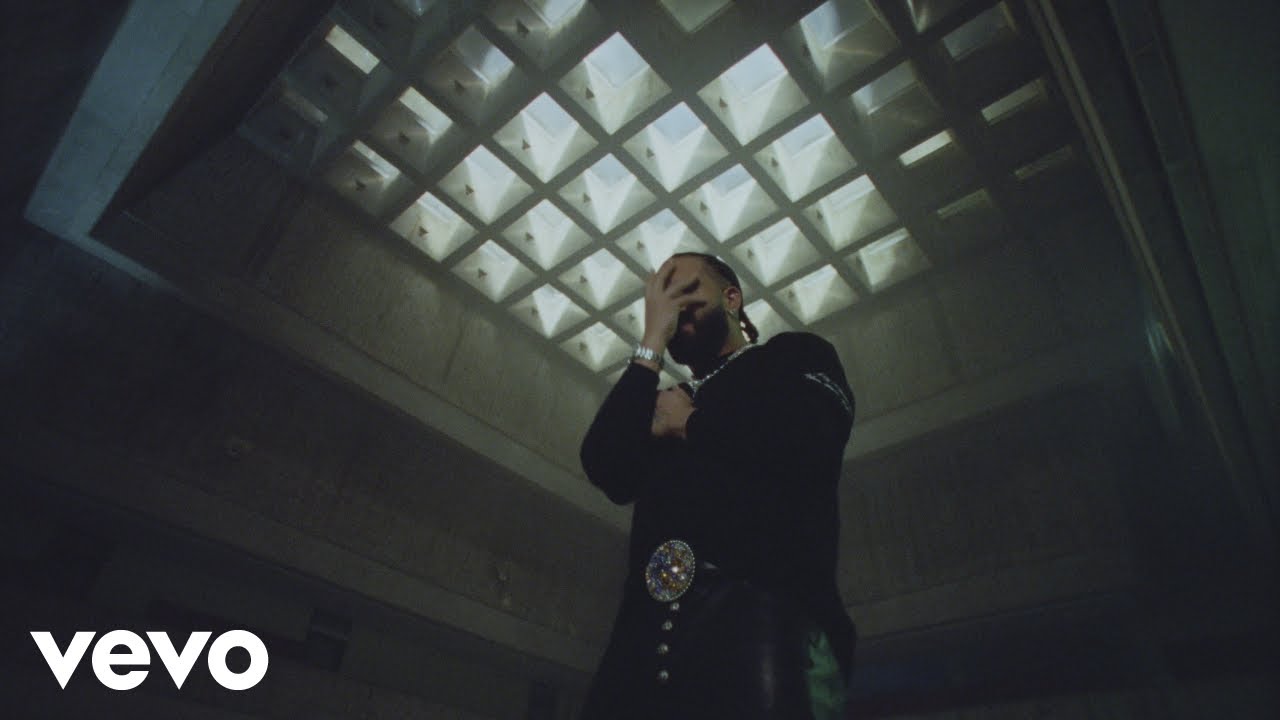
If you had to pick the one track from “ICEMAN” that matters most, it would be this one. No other song so succinctly conveys where Drake stands today. The title alone says something. Calling himself a national treasure, he flaunts his untouchable status in his hometown of Toronto and warns his rivals not to overstay their welcome there. He doesn’t name names, but the target’s clearly Kendrick Lamar.
The production value backs up all the energy perfectly. The beat’s stripped back, doing away with anything unnecessary. A haunting synth weaves through a trap rhythm before a striking shift into a passage built around a sample of Gregory Hines’s 1988 song “This Is What I Believe.”
“National Treasures” is permeated with Drake’s hunger to keep proving himself, all throughout which is a mixture of confidence and uncertainty. The emotional tension is what makes this song in particular so special.

2) “What Did I Miss?”
If you’ve been wondering where Drake’s mind’s been since the beef with Kendrick, this song is the answer. The title captures his disbelief, his doubt, and his sense of betrayal all at once. He keeps circling back to questions about how people he’d built deep relationships with through collaborations and shows ended up turning their backs on him, and where exactly things went wrong.
The beat again pulls on the same thread. It’s heavy without cranking things up beyond where they need to be, and the melody shows restraint rather than a volley of emotions. What anchors the whole track is Drake’s voice. Rather than lashing out or going after anyone directly, he takes a step back and works through it all like he’s trying to make sense of the situation. It’s less aggressive than it is weary, colored with cold resignation.
3) “Make Them Cry”
The album opener reads almost like a manifesto that sets the emotional tone for everything “ICEMAN” is about. Drake lays out the tangled mess of feelings left over from the Kendrick beef while also bringing up all the pressure he’s dealt with getting to where he is today. What’s really notable here is how proving he’s still standing matters more to him than taking anyone down.
Here he lays bare the emotions he’d been holding back to keep his composure, and that’s exactly what makes “Make Them Cry” the most succinct portrait of where Drake’s head is at in 2026. The human warmth of the track comes from the soulful, melodic sound built around a sample of the 1979 Roger Ridley song “What Am I.”
“HABIBTI” recommendations
“HABIBTI” takes an entirely different direction from “ICEMAN,” focusing less on hip hop and more on R&B. It puts a modern spin on late-’90s and early-2000s contemporary R&B while organically working in the Afrobeats and Middle Eastern and North African rhythms that have been driving pop music around the world in recent years.
The spacious synths and restrained drum programming in particular call back to Drake’s signature late-night sound. The result is a clearer picture of Drake as a singer rather than a rapper—and as a songwriter who turns emotion into excavation.
1) “Fortworth”
Drake’s music has long had a quality that calls to mind nighttime in the city. He’s always been more adroit than most at capturing not the blinding highs of success but the emptiness that settles in after everyone’s gone—the emotional residue left behind after saying goodbye. “Fortworth” is the clearest we’ve heard that specific Drake vibe in a long time.
The restrained drums and overall breathing room make the whole song float around. That soundscape wraps itself around the emotion rather than trying to explain it, pulling you closer to the feeling than to the rhythm. The collaboration with PARTYNEXTDOOR is spot on, too.
Their contrasting voices add depth by reflecting the same emotion at different angles. Where Drake works through the exhaustion and regret of a relationship in relatively direct language, PARTYNEXTDOOR stretches that feeling into something hazier and more dreamlike. It’s a beautiful exercise in the subtle shifts that occur between heated emotions and the space around the silence.

2) “Gen 5”
Drake has built a sizable portion of his career around how relationships begin and end, but this particular song starts somewhere different—not with a breakup, not with falling for someone, but the moment you look at yourself and your feelings after the cracks have begun to appear.
The title refers to the fifth-generation Glock, but what the song really looks at is love and distance. The two people in question still spend time together, still gift one another things, but there’s a gap between all those moments that never quite closes. An awkward tension runs through the whole track—the feeling of being close to someone without fully reaching them, familiarity and its opposite occupying the same space.
The restrained production makes room for the focus to linger on the emotion. Drake refrains from exaggeration, letting the emotions quietly wash over him to a cold, sparse beat, and bringing the uncertainty and vulnerability in the lyrics into sharper relief. “HABIBTI” is an emotional album, and “Gen 5” is among the songs when it really lets its guard down and opens up.
“MAID OF HONOUR” recommendations
“MAID OF HONOUR” is the most interesting of Drake’s three new albums. It’s a tight look at how Drake’s been able to dominate pop music for a solid decade. It’s a melting pot of pop, house, UK garage, Afro fusion, and melodic rap, all woven together organically into a single, globally recognizable pop sound that shies away from drawing boundaries.
Drake has long been a genre curator, connecting the dots between different sounds and never allowing himself to be boxed in by labels, and on “MAID OF HONOUR,” his talent feels more effortless than ever. For that reason, what deserves the attention on this release isn’t his innovation but his mastery. It’s a more refined expansion of his elaborate musical vision, once again demonstrating the strength behind his years of instincts and stylistic choices.

1) “Cheetah Print” (feat. Sexyy Red)
Even with its polish and message, what this song really captures more than any other track is the energy the whole album’s after. Drake turns a blind eye to rivalry and judgment and surrenders himself to the moment and the heat rising off the club. Sexyy Red heats things up even further, her clipped, percussive rapping injecting the track with life and adding unexpected twists and turns to the sound.
The beat’s more interested in vibes than strict genre classification, happily blurring house, Miami bass, and pop rap. From the second the rhythm kicks in, your body’s moving to the perfectly vibes-based beat before your brain can catch up. It’s all energy, all bliss, and all of the moment.

2) “New Bestie”
Weaving different musical references into a single, cohesive pop sound is one of Drake’s greatest strengths. It’s an approach he’s been refining ever since “More Life,” and nowhere does that ability come across as so effortless as “New Bestie.”
Jersey club, dancehall, and house all have a clear influence on the track. The rhythm shape-shifts constantly but never to the point of excess, and although the melody floats by light as a feather, it’s hard to shake afterwards. It’s an organic smoothie of sound all whirled together for a smooth taste, and it’s that smooth sipping experience that makes it so appealing for listeners.

3) “Outside Tweaking” (feat. Stunna Sandy)
More than 15 years into his career, Drake’s still the kind of artist who pays close attention to where music and culture are headed, and this song with rapper-on-the-rise Stunna Sandy is proof. Chicago juke and Jersey club collide in a rush of instant gratification on “Outside Tweaking (feat. Stunna Sandy),” capturing the speed, the stimulation, and the shifting rhythms of online culture that younger listeners have grown up loving.
Drake brings his ear for melody and broad appeal to the mix, giving the track an even greater sense of balance for a song that’s accessible to listeners of all stripes while never letting go of the pure energy that makes it sound so fresh. Stunna Sandy’s effortlessly provocative flow only adds to it.
The three albums feel like they take different paths, but they all arrive at the same place. If “ICEMAN” is a portrait of Drake the rapper, “HABIBTI” puts Drake the singer and storyteller on the permanent record, and “MAID OF HONOUR” is Drake the global pop star at his absolute peak. Together they form one enormous project—and three self-portraits, each showing a different face of the same talent.