Different sensations create tension just by coexisting. According to philosopher Theodor W. Adorno, a work of art is a force field (Kraftfeld) that bears this tension without ever reconciling it. Opposing forces—form and content, sensation and explanation, autonomy and sociability, expression and illusion—are in a constant push and pull, generating friction. It refuses to rid itself of the wounds that friction inflicts, refuses remedy, endures a tension that goes unresolved. It’s in that irreconcilable dissonance that the aesthetic truth Adorno speaks of resides.
The world TEAMIN has constructed as a solo artist is built on this very premise. The gender subversion woven into the fluid movement in “MOVE,” the sacrosanct and the forbidden in “WANT,” the salvation and depravity throughout “Criminal,” the tangle of love and violence in “Guilty”—TAEMIN has always framed himself inside the tension found in contradiction. Rather than taking different sensations and working them into one harmonious whole, he maintains the discord that such extremes produce while standing firm in the center.
On “PHASE 1: Soft Violence,” released in August, TAEMIN goes one step beyond simply applying that aesthetic—he becomes the one who creates it. He can maintain balance amid the tension of coexisting contradictory forces as the one who sees and senses the contradiction. It’s not just performative tension—he draws on every part of the contradictory nature of love he’s faced as material for that aesthetic.
How TAEMIN constructs himself
TAEMIN’s debut solo EP, “ACE,” and his first studio album, “Press It,” were essentially proof that he could occupy the space of some three minutes of song and dance entirely on his own. For TAEMIN, going solo was also a process of reaffirming, under his own name, everything he’d done as a part of SHINee—debuting at just 16, gaining recognition as a performer known for his dance moves, and going solo even while still being part of a boy group, which was still novel at the time. His albums from this period were less a perfect answer to the question “what kind of artist is TAEMIN?” than a starting point for finding out. And he did answer that most basic question, fully and utterly capable of bringing the totality of a song, and a performance onstage to go along with it, all by himself.
But proving he can light up a stage on his own, and constructing the identity of the artist TAEMIN, are two different things. In that sense, his second studio album, “MOVE,” marks a crucial turning point. It moved away from the intense energy of earlier tracks like “Danger” and “Press Your Number,” distancing itself from the image of strength, masculinity, and angular dance moves typical of performances by male soloists at the time. Loose but controlled movement, flexible yet restrained, all traced in curves—rather than picking his preferred pieces from neatly partitioned piles of masculinity and femininity or lining them up for show, TAEMIN straddles the line between the two without resolving the conflict. And that’s where he began forging his identity.
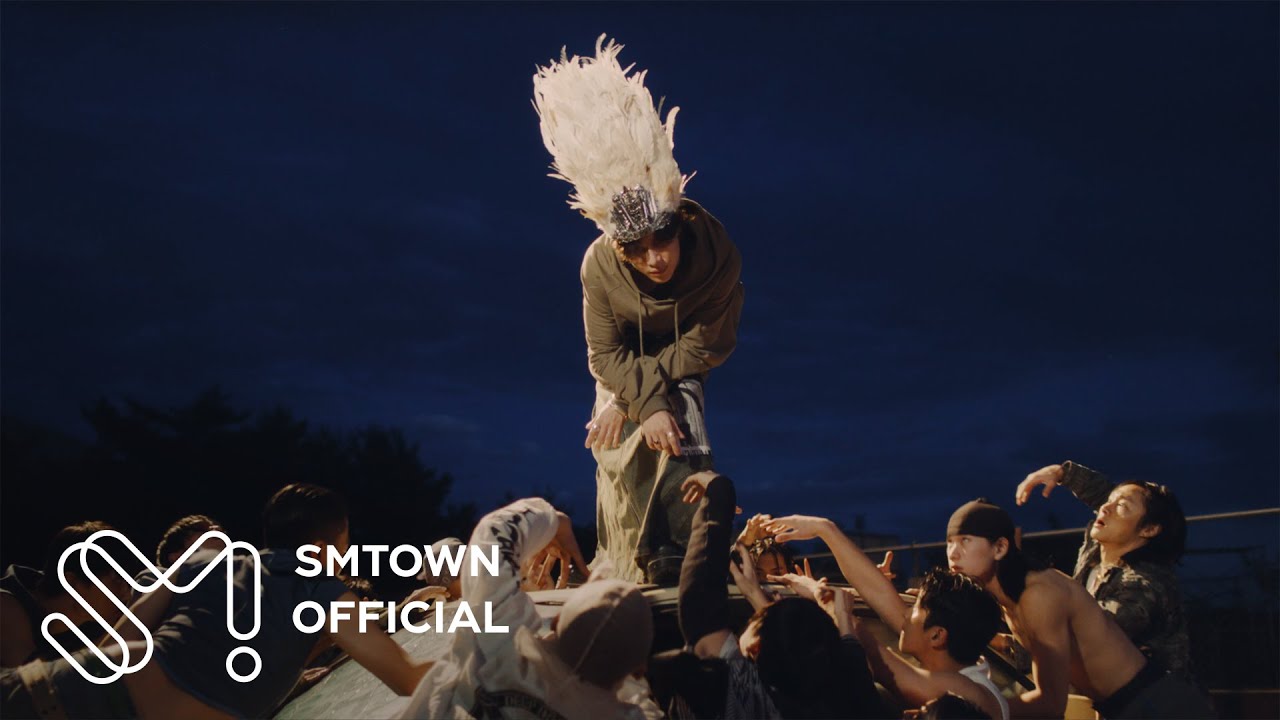
Conflict, tension, contradiction, and the dissonance that arises between them. This is the launching pad for TAEMIN’s aesthetic. He juxtaposes sacred religious imagery with images of desire and temptation (“WANT”) and knowingly subjects himself to restraint, danger, and harm (“Criminal”). In “IDEA,” a continuation of “Criminal,” the tension turns inward. There’s a conflict between a version of himself living in the past and another version trying to escape it, and that fallout becomes a story of fall and rise. The discord soon shifts to the distance between who TAEMIN is and how the public perceives him as he sets out to shatter and defy the stereotypical “torso” image others project onto him (“Advice”). Then, on “Guilty,” he reaffirms the aesthetic he’s been working up to all along. The desire in “Guilty” is a mix of fascination, fear, love, and violence all at once, and it echoes the tension between pairs the performer’s previously perfected—sensuality and subversion, love and pain, innocence and manipulation. This isn’t a case of repetition leading to something uninspired—it’s an intentional technique, TAEMIN’s aesthetic at work again, made firmer still by deciding upon that image once more.
With his aesthetic firmly in place, TAEMIN goes a step further and turns his attention to a new question about that aesthetic: Who gets to define it, to decide upon it? Tension is no longer just something that arises between oppositions within his music—it causes a rift between other people’s understanding and interpretation of the idol’s image and his effort to separate himself from that. What matters here isn’t answering what makes something TAEMIN-like but who decides what’s TAEMIN-like.
While circumstances were different by the time he got to work on “ETERNAL,” TAEMIN didn’t feel the need to turn away from everything that he’d done to build up that TAEMIN-like style and replace it with a fresh image. He put the album together by choosing music, sensations, and vibes he was into. Consequently, the TAEMIN we got with the single “Sexy In The Air” wasn’t a complete departure from the TAEMIN before it. Aesthetics are just one part of what makes something TAEMIN-like. The one who makes the decisions and shapes the mold to set things in motion again each time can be, and ultimately is, TAEMIN himself. “ETERNAL” was the clearest case yet of the singer giving himself the agency to make choices and tweak things without abandoning the TAEMIN-like style he’d already established.
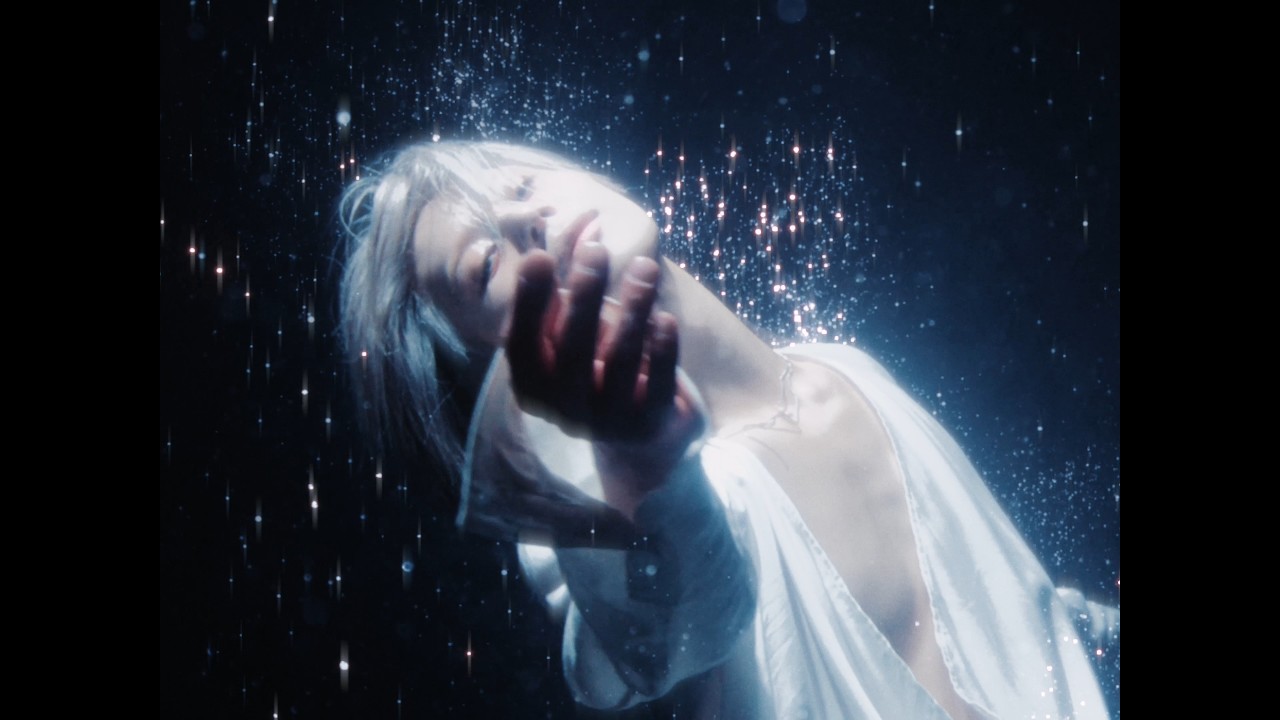
On the contradictory reality that love comes with discomfort
Love, on its own, can be romantic and fulfilling, but it can just as easily be accompanied by obsession, sacrifice, and pain. That’s why definitions of love can split into countless, even extreme directions. Love’s one sensation, but it’s full of emotions that aren’t particularly compatible. An unresolved tension within love that never quite resolves itself or settles into uncomfortable coexistence—it’s that sense of coexistence that, as mentioned earlier, makes TAEMIN the artist he is. But “PHASE 1: Soft Violence” doesn’t stop at simply putting on a mask of that aesthetic—TAEMIN himself has grappled with those contradictions. It’s an even deeper version of the agency he attained on “ETERNAL.”
To TAEMIN, love seems more like two contradictory forces coexisting. The softness and violence of “PHASE 1: Soft Violence” don’t point to two different kinds of love—they’re separate forces that can operate within one love simultaneously. “FLOAT” and “Gooey” pin those two forces to two different temperatures. In “FLOAT,” love lifts a weighed-down heart and offers refuge from anxiety, letting it soar on a cool wind. In “Gooey,” superheated desire melts the line between body and sensation. Within the same love, one side offers reprieve, while the other leads to exhaustion, reducing the very form to a melty blob.
That idea continues on through the album’s other tracks, too. Love’s an ardent wish to be another person’s reliable shelter (“Let Me Be The One”), but at the same time, it can make you lose your mind (“Sober”). It’s also a form of intimacy that doubles as a force that erodes the ego (“PARASITE”). That paradox reaches a peak on “Frankenstein.” Wanting to be loved so much that you reshape yourself to the point that you lose the core of what makes you you, and yet, as worn down as you are, you still can’t let the relationship go. Even that can be called love. TAEMIN doesn’t strip away or tidy up the contradictions that exist within love. Instead, he purposefully picks out each of the different faces the emotion wears and arranges them just so into a single album.
“PHASE 1: Soft Violence” is the clearest representation yet of the aesthetic TAEMIN has repeatedly demonstrated. He’s always placed himself at the center of sensations that resist coexistence. Rather than picking one side and erasing that tension, he lets the dissonance linger on to the very end, and creates a space in the center for himself. As for what emotions, in what story, and in what particular arrangement make it up, that’s up to him now. The one speaking that language, that aesthetic, is none other than TAEMIN himself. The world of TAEMIN keeps expanding inside the discord of forces that refuse to ever reconcile. And at the center of that dissonance, TAEMIN finds the fissure—and there, he continues to shape himself.
- ‘YOUNGEST’: in search of young2026.08.14
- NCT WISH holds fast to youthful passion2026.08.05