Young people listening to old songs is nothing new at this point. In the summer of 2022, Kate Bush’s 1985 song “Running Up That Hill” was prominently featured on the Netflix series “Stranger Things” and subsequently hit No. 1 on the UK Singles Chart 37 years after its release. Bush herself commented that the show’s young fans were driving the renewed reception. That old songs can land on the charts after featuring in a dance challenge or TV show is a byproduct of the streaming era. Streaming puts the music from every era on the same shelf, and once a song goes viral, it comes off the shelf and becomes a number. We’re talking about individual songs, though, typically removed from their original context when heard this time around. “Stranger Things” viewers didn’t hear Kate Bush circa 1985—they heard Max’s theme.
Oasis doesn’t fit that formula, though. The group broke up in 2009 and didn’t release any new music in the 15 years until they announced their reunion in August 2024. Then, that September, right after the announcement, their debut album, “Definitely Maybe,” returned to No. 1 on the UK Albums Chart 30 years after it first peaked thanks to a 30th-anniversary reissue, and both “(What’s the Story) Morning Glory?” and the best-of compilation “Time Flies… 1994–2009” hit the Top 5 that same week. This wasn’t one song—their whole discography was on the move. When they kicked off their 2025 tour, global streams of their music on Spotify jumped 320%, with Gen Z making up more than half of new listeners that year. The accessibility of streaming and the power of going viral aren’t enough to explain how a band whose heyday was in the CD era kept their catalog alive for 15 years, but there are a few interesting points to consider.
First, Oasis’s popularity has never petered out, at least not in the UK. “(What’s the Story) Morning Glory?” has made frequent returns to the Official Charts, even after the group broke up. In fact, it hasn’t left the chart since January 2017—that’s over 500 weeks straight. “Definitely Maybe” has been on and off the chart over the same time period. Ten months before the reunion, the two albums sat side by side at No. 1 and No. 2 in the UK for number of streams for ’90s albums. “Be Here Now” was No. 18. It would be a mistake to think that other ’90s British bands were in the same boat. Of the 40 albums on that list, there are just 14 from a total of 11 British and Irish artists. Past Oasis, you have to go all the way down to No. 14 to find another. On the final day of the 2024 Reading Festival in August, Liam Gallagher sang “Definitely Maybe” in full for its 30th anniversary. Most of the crowd hadn’t even been born when the album came out. Gallagher called the teenagers in the crowd, who’d gotten their GCSE exam scores just days earlier, “good kids.”
Second, there’s the matter of inheriting tastes from parents. One article on the young crowds at the 2025 reunion shows at Wembley Stadium reported that many of them seem to have discovered Oasis through their parents, and music heard around the house just as a kid’s tastes are taking shape isn’t “oldies,” it’s just music. Some of them probably heard it alongside stories of the group’s legendary 1996 Knebworth Park shows, where 250,000 people gathered over two days. It’s no coincidence that so many young artists lately mention the music their parents played. A parent’s taste may lie dormant awhile, but it never actually disappears. What matters is that it’s passed down through exposure, not pressure. Kids don’t inherit, they discover, and that’s why what they discover ends up being theirs.

The difference between discovering and inheriting became plain during the scramble for tickets to the reunion tour. In the UK, people were joking on social media that the group’s original fans who’d waited 15 years for this were being elbowed out by twentysomethings who just wanted to hear “Wonderwall.” Something similar is happening in Korea, too. More than 60% of those who booked tickets for the Korean stop on the tour were in their teens and 20s, and that number tops 90% once you include people in their 30s. Teens (8%) even outnumbered listeners in their 40s (5%). In Korea, though, it seems covers by local musicians are helping younger listeners find Oasis more than reminiscing parents are. For young Korean listeners, exposure to Oasis comes less often through speakers at home than by way of their favorite musicians.
But why Oasis? The main thing is how the music transcends generations. And the door’s wide open. At the FIFA World Cup earlier this year, England’s players and fans sang “Wonderwall” together after every win. As “NME” put it, “Every British person born after 1995 has the lyrics to ‘Wonderwall’ and ‘Don’t Look Back In Anger’ effectively preprogrammed into their brain.” In fact, “Wonderwall” is such a staple for guitar learners that it even spawned the “anyway, here’s ‘Wonderwall’” meme. But here’s what really sets Oasis apart. On the list of the group’s most-streamed songs in the UK, No. 3 is “Champagne Supernova,” which was never a single, and No. 5 is “Half The World Away,” the B-side to “Whatever.” Six singles that went to No. 1 at some point currently rank below other B-sides like “The Masterplan” (No. 18), “Acquiesce” (No. 19) and “Talk Tonight” (No. 21). Oasis’ hit singles might open the door, but listeners go right inside and explore. Every inch of the house is as amazing as the entrance.
Then there’s the emotional aspect. The working-class Manchester brothers sang about unabashed confidence when you have nothing in “Rock ’n’ Roll Star” and an optimism for life even when you’ve got nothing else in “Live Forever.” That kind of self-assurance is as alien as it is welcome to a generation for whom uncertainty is the default. The brothers’ attitude hasn’t changed even as they’ve gotten older. Unlike polished pop stars, they inspire the kind of admiration and friendliness you get from your cool uncle. In a time of social media when you need to be mindful of what you say, their brashness isn’t regression, it’s liberation. Style ages and fades—attitude is forever young.

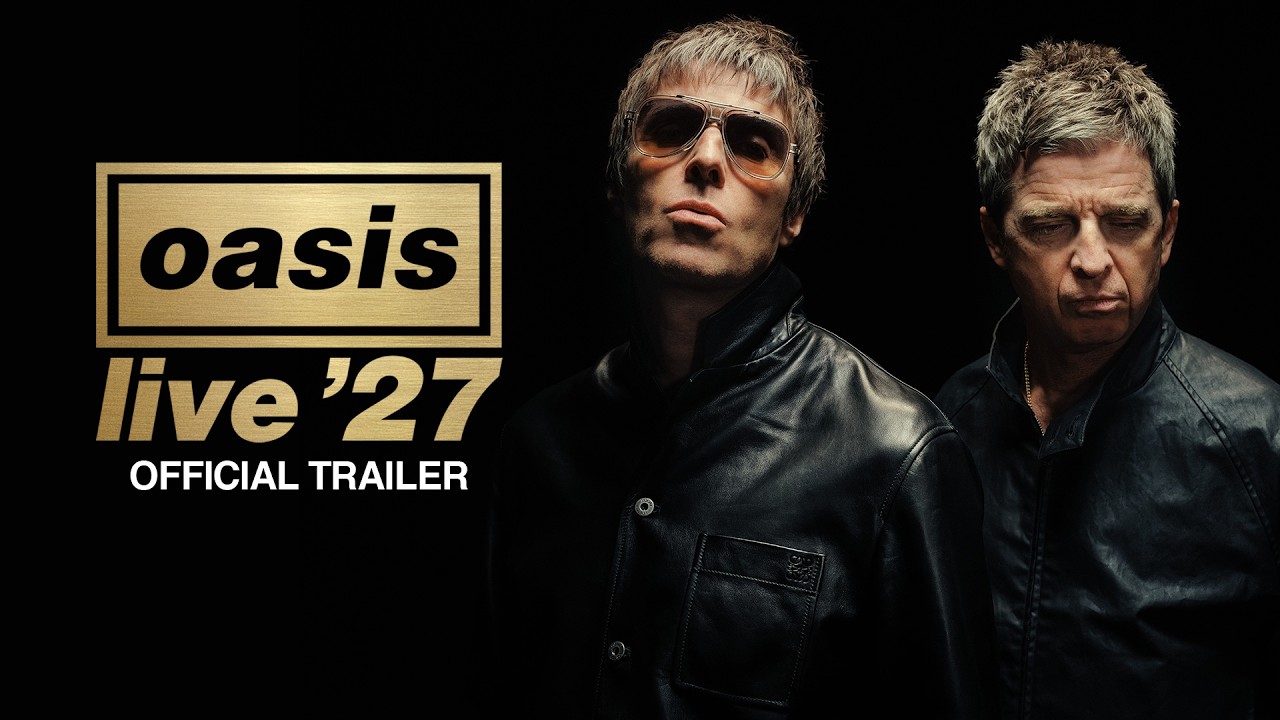
It’s no surprise that these values have gone beyond the sound and become a style. In 2025, adidas Originals put out a collaborative collection alongside the tour, helping ’90s looks like tracksuits and bucket hats make a comeback. In addition to the music, there’s more to see on the screen, too. The tour documentary “Oasis: Don’t Look Back In Anger” hit theaters in September and arrived on Disney+ on October 9. Now anyone can go back to 2025 and enjoy the sights and sounds of the stadium right in the palm of their hand. Many of them will be excited for the 2027 tour, no doubt. For all generations, Oasis isn’t something to look back on. Listeners can bring the group’s music into their own timeline, in their own way. This isn’t about memories of a group lingering on. Oasis is very much still a part of the present.
- How ADÉLA became ‘PRIMA’2026.10.06
- The Weeknd in five words2026.10.02