“The world needs more play!”
That was the key line used by David Baszucki, founder and CEO of Roblox, at RDC 2026, the company’s annual developer conference, in September. Paired with the tagline “more play, more building, more growth,” it captured Roblox’s past, present, and future in a single slogan.
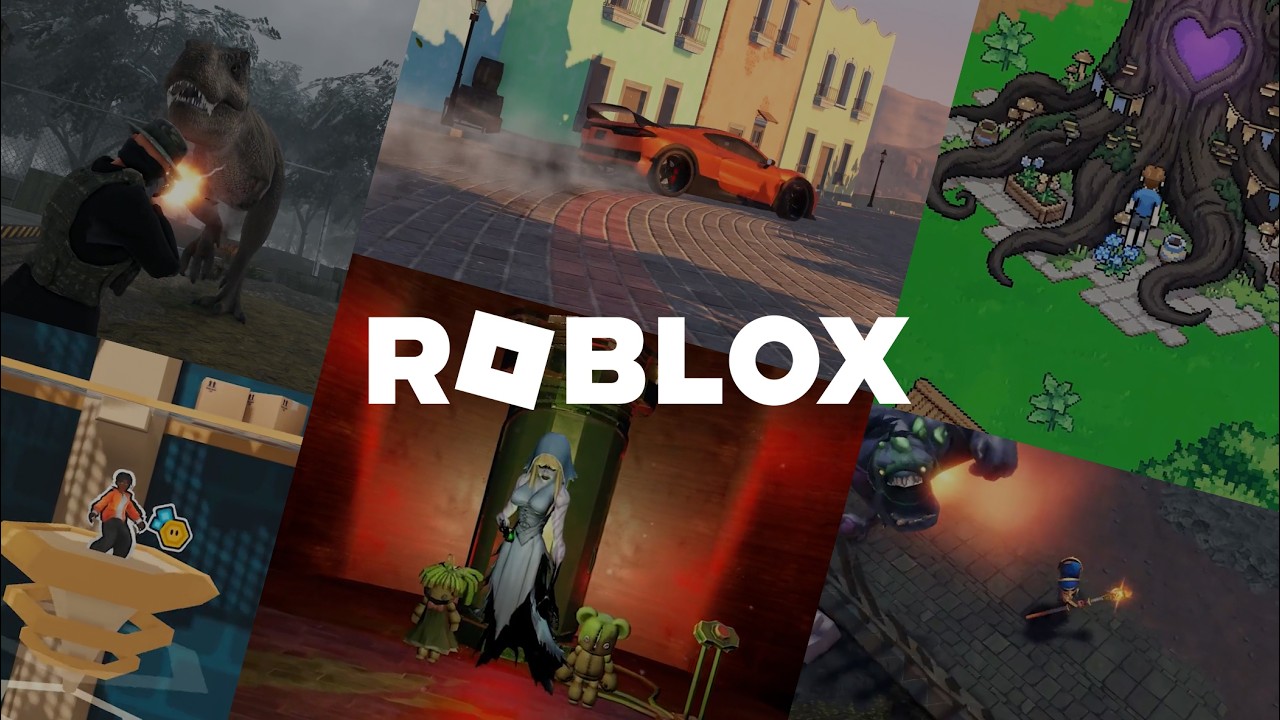
Roblox was designed as a platform for making games right from the outset. The founders zeroed in on the idea that the act of making something is itself a kind of play, so they designed Roblox as a place to make games, and they’ve spent the years since opening that process up to more and more people.
Game development is often seen as the domain of a talented few with professional training, but in a world where game creation is its own form of play, the barrier to becoming a creator on Roblox is extremely low. Their development application, Roblox Studio, is free, and the platform handles server operations, payment, and distribution, so creators can focus entirely on the creative process. And with the recent advent of AI functionality, you can build a game without writing a single line of code.
With the barrier to entry so low, the people creating on Roblox are a highly diverse group. Creators number in the millions and are spread across more than 170 countries, most of them working independently without a studio. In the US, 83% of Roblox creators work as solo developers, and roughly two-thirds of what they earn is said to flow to places outside tech hubs like Silicon Valley. Some are developers who taught themselves as teens and went on to start studios, while others don’t make games at all and instead run virtual fashion brands, designing clothes and hairstyles for players’ avatars. From hobbyists sharing their first game to professional studios, everyone on Roblox can both build and play. The result is a ton of games coming from every corner of the world. In 2025 alone, more than 14 million games were actively being played on Roblox.
So what do games look like in a space that blurs the lines between game development and gameplay? Twenty years after Roblox first came out, making and playing is becoming a part of everyday life for an entire generation. Just as YouTube reshaped the culture around video, games are changing thanks to this platform where making and playing are intertwined. Here, we look at five distinctive games that are popular in Korea right now to see how entertainment is being built and then played in Roblox today.
“Steal a Brainrot”: Kids swiping memes
What made “Steal a Brainrot” the biggest hit in Roblox history wasn’t a paradigm shift but memes.
A long runway cuts through the middle of the map, and characters called Brainrots walk down it in a straight line. Players then buy one and plant it in their base, where it generates money every second. The first character you can afford will be something like Noobini Pizzanini, which nets you $1 per second, but as the cash piles up, you can shop for pricier, rarer ones. Rather than scraping together cash a few bucks at a time, though, you can speed things up by stealing. Players can enter someone else’s base while it’s unlocked and swipe one of their Brainrots, preferably one otherwise out of their price range. If the rightful owner whacks you with their bat, though, the Brainrot goes back to them. Everyone ducks and dodges as they steal increasingly expensive characters from one another.
The idea of stealing isn’t new to this game. Developer SpyderSammy said the game branched out from another game called “Steal a Character.” He took that format and just changed the characters, replacing them with new ones from the AI-driven Italian brainrot meme. Tralalero Tralala, a shark in sneakers, replaces Homer Simpson, and Cocofanto Elefanto, a coconut-elephant hybrid, appears instead of Steve. The concept was nearly identical, but with the popular meme attached, “Steal a Brainrot” absolutely took off. Released last year in May, it set a record on Roblox when it hit 25.4 million concurrent users that October. When it comes to Roblox, fun is about more than the framework. It’s what you decide to build on top that determines whether the game will blow up in popularity.
“Steal An Egg”: Endless variations on theft
“Steal a Brainrot” took a game and layered a meme on top, but “Steal An Egg” pushes the underlying mechanics a step further. It’s an example of how a successful formula morphs once it gets in the hands of another creator.
This time, players are stealing eggs that are found all around the map, all under the watchful eyes of patrolling guardians. You study the guardians’ paths, then grab an egg and sprint back to base. Make it back safely, let the egg hatch, and start raking in the cash the new pet in your garden generates every second. Fuse three of the same type of pet for an upgrade, and keep an eye on each pet for sizes and mutations to earn even more. You can spend your earnings to buff your running speed, which you’ll need to shake the guardians and go after valuable eggs in more dangerous areas.
In earlier stealing games, you were always only ever stealing from other players. The characters didn’t change, and you either bought them off the runway or took them from someone else’s base. “Steal An Egg,” though, offers a richer setup. Now, not only can you steal eggs from NPCs, but those eggs hatch into a wide range of pets you can raise. The stealing mechanic’s still there, but there’s far more reasons to do it, and far more ways of going about it. The response to that gameplay innovation was explosive. Released this past July, the game logged 7.4 billion visits in the space of just two months and saw a peak of 14.3 million concurrent users. On Roblox, creators don’t simply copy winning formulas—they work in new mechanics and the gameplay evolves yet again.
“Adopt Me!”: Live play is the beta
Without the typical vertical hierarchy between player and developer, the feel of a game on Roblox isn’t set in stone. How users play the game influences and changes the game itself.
Today, “Adopt Me!” is a game about raising pets. You buy an egg, hatch it, and now you have a pet you raise by giving it food, baths, sleep, and playtime. As you care for your pets, they grow in stages from newborn to fully grown. Merging four full-grown pets gives you a shiny Neon, while merging four Neons results in a Mega Neon. Players build and decorate their homes, and trade pets and items with others.
But “Adopt Me!” wasn’t always a pet sim. When it launched in 2017, the game was a family role-playing game where you could be a new parent or the child being adopted. It was a popular genre on Roblox at the time, and “Adopt Me!” got its start chasing that trend.
The change that made the game what it’s ultimately become today was the introduction of pet adoption in summer 2019. Players started raising, collecting, and trading pets instead of kids, and pet swaps soon became a core part of the in-game culture. The creators played along, updating the game to shift its focus toward collecting and trading the pets. They added a wide range of pets, and as trading grew, they even rolled out a more systematic approach to keep trades safe.* All this change was driven by player habits and engagement. On Roblox, a game’s direction isn’t drawn up in a design doc, it’s worked out live as people play.
*Trading is generally available globally but not in Korea.
“99 Nights in the Forest”: An ever-ongoing series
“99 Nights in the Forest” demonstrates how big things can get when they’re treated not just as a simple one-and-done game but as an ongoing series.
The goal of this game is right there on the tin: survive 99 nights. Players enter the forest looking for four missing children and set up camp in the middle of the trees. Once the fire goes out, the monstrous Deer and the Cultists who follow it creep in. With all kinds of threats closing in, players turn the resources they’ve gathered into tools and weapons and survive each day with friends, splitting up tasks like gathering, fighting, building, and scouting.
Gathering by day and surviving by night is a survival-game staple as old as “Don’t Starve” or “Minecraft.” What sets “99 Nights” apart is that the updates come fast and never stop. The three-person dev team has added new classes, threats, and seasonal events almost every single week. The Halloween update was even spread out over two weeks.
The rules stay the same, but the experience is always changing, so players eagerly return again and again to a forest that’s never quite identical to start their 99-day fight to survive all over again. The result: a peak of 14.2 million concurrent users and roughly 26 billion visits since releasing in May last year, and even a film adaptation announced earlier this year. A simple gameplay loop won’t wear out its welcome when its creators never stop writing the story.
“ASMR Tower”: From real-world craze to computer game
As “Steal a Brainrot” showed, even a game walking a well-trodden path can become something else entirely when fueled by new ideas. The same basic rules apply, but the reason people come back to play changes. Nowhere do these innovations take place more rapidly than on Roblox, where anyone can make a game with ease. Even now, countless trends are working their way into existing game genres to create entirely novel kinds of play.
Fighting past obstacles to reach the top of the map is such a common genre in the world of Roblox that it even has its own name, obby (obstacle course). The fun of an obby is mostly in the stated goal of reaching the top. Players carefully advance step by step so as not to fall, reveling in the rush of finally making it to the peak. Outside the game world, though, a practically antithetical kind of fun was catching on. The hands-on fidget toys that swept Korea in 2026, from squishies to slime toys to wax cracking balls, have no goal and no sense of achievement. The fun all came from the feeling of pushing, pressing, and breaking. People either played around with the toys themselves or enjoyed them secondhand through ASMR videos.
“ASMR Tower” brings the two concepts together. Strictly on structure, it’s an ordinary obby, where you climb a tower divided into colorful levels, hopping from platform to platform all the way up. The difference is in the form the platforms take and the sounds they make as you jump on them. With every step, you get to hear the sound of crushing a wax ball, squishing a slime, or clacking on a keyboard. The experience sits somewhere between watching a video and touching the toys yourself, and just by climbing a tower, you get to enjoy the tactile sensation of all these fidget toys.
All the game changes is the kind of platforms there are, but that one change completely alters why people play the game. Instead of hopping from platform to platform with the explicit goal of reaching the top, you’re there to enjoy the sensation of every single step. And then, before you know it, you’ve reached the summit. Whether it’s a meme or a sensory experience, whatever the Internet falls in love with gets worked into Roblox games within days, taking classic genres and putting a trendy new spin on them, expanding the horizons of what it means to play.