“Everybody jump!”
It feels like every festival you go to lately, there’s one particular voice that comes booming over the speakers. As soon as that phrase “ebattwi”—a Korean abbreviation for “everybody jump”—rings out, the crowd starts absolutely rushing to the front of the stage. CNBLUE’s playing this festival? And they’re headlining? We’re not talking about a scene from days gone by—this is something that’s ongoing, even as recently as a few days ago. Lots of the people in the stampede for the stage grew up on CNBLUE’s songs, and they’re all ready to jump nonstop to Jung Yonghwa’s commanding voice.
“Everybody jump” and the shorter “ebattwi” have quietly become the simplest way to sum up a CNBLUE show. The band took over the whole atmosphere at a number of recent festivals, and even though I’d personally been facing festival burnout and losing interest, their set hit me as a fresh jolt of pure fun that sent me pushing my way back to the stage to jump around again. What I witnessed wasn’t a show capitalizing on nostalgia—it was a band that’s still evolving and chasing something new, reaching even greater highs.
CNBLUE hit big stages in 2024 like PEAK FESTIVAL, SOUNDBERRY FESTA’, Grand Mint Festival, Busan International Rock Festival and more, and kept things going throughout 2025 and 2026. The band has since become a powerhouse of the festival circuit. They aren’t rising stars new to the scene. CNBLUE’s been at it for years and is now being rediscovered—a fascinating turn of events that really makes you want to keep cheering them on. Rather than coasting on their existing name recognition, they’ve steadily worked up the favor of a whole new crowd of loud, excited, sweaty fans, proving a band doesn’t have to hit their stride immediately after debut. So how did CNBLUE become the festival darling they have? To find the answer, we need to rewind a little.
In Korea, CNBLUE was seen for a long time as something akin to an idol band. Their good looks, TV appearances, acting chops, and a mega-hit song right out of the gate made them famous fast, but they also set off a tired but still heated question where people ask if they’re a rock band or an idol group. In hindsight, though, doubting a band’s authenticity just because of its popularity was heavily biased thinking. Rather than dwell on the debate, CNBLUE wrote songs, played their music, and put on show after show, quietly proving themselves while the argument raged on in the background.
CNBLUE officially debuted in Korea on January 14, 2010 with “Loner,” but they certainly came prepared, having built up their concert chops in the Japanese indie scene. Even after making their breakthrough, they never passed off responsibility to someone else, even writing every single song for 2013’s “Re:BLUE.” That was also when Jung Yonghwa, who wrote “I’m Sorry,” began to really demonstrate his drive to write and experiment. At a time when you didn’t see too many bands on music shows, they financed their own performances, and from 2013 to 2014 they took their “BLUE MOON” world tour on the road. The highly elaborate and polished shows they’ve been putting on at festivals recently didn’t come out of nowhere. There’s years and years of experience onstage to thank for that.
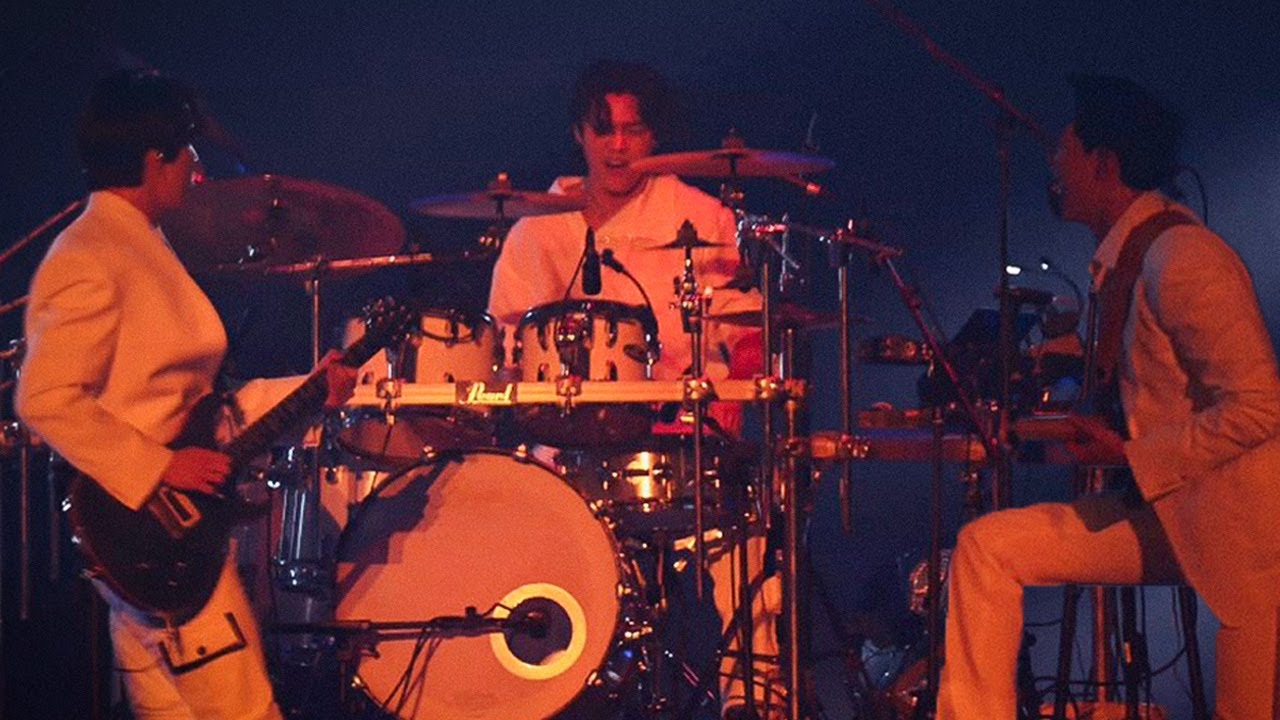
Part of the reason CNBLUE’s performances are so electric is the songs themselves. Take just a few of their hits: “Loner” has a short, sharp guitar riff and an immediately memorable chorus, and “I’m Sorry” mixes the catchy repetition of a pop song with the kind of rock power that instantly pulls a crowd in. The same goes for “Can’t Stop” and its opening piano that swells into a full rock arrangement. The songs are different in their overall character, but they share the same ingredients—an extremely memorable hook, soaring vocals, and a straightforward beat that gives the crowd an easy way to join in. When I saw them live at the 2026 Sound Planet Festival, whenever Jung Yonghwa pointed the mic at a random fan, they sang along without skipping a beat. That’s what you get when you have as many hits as CNBLUE does, and it’s why everyone has such a good time at their shows.
But being a hit machine alone isn’t enough to completely dominate a festival like CNBLUE does. Turning a well-known song into a group experience is a whole different talent. At the helm is frontman Jung Yonghwa with his exceptional showmanship, reading the crowd and turning even the break between songs into an integral part of each show. His dedication to performing is relentless, going well beyond simply hosting the show by jumping around and singing to pull everyone else in, throwing everything he’s got toward the crowd. Jung admitted on TV that he thought his music career might eventually be coming to an end when he had to have surgery on his knee following an injury at a concert last year, but as soon as he recovered, he was back to bounding around the stage and shouting for the crowd to get up and jump. It would be easy to grow complacent onstage when it’s been your home for 17 years, but it doesn’t seem like Jung’s the type to allow himself to fall into that trap.
Along the way, older hits like “Loner” have unexpectedly found renewed relevance. It’s not just members of the fan club showing up to see the band at festivals. The crowds are a mix of people who remember CNBLUE from music shows in the 2010s, those who only know the chorus to “Loner,” and the newly curious who showed up after seeing short “ebattwi” clips. All these associations with this one hit song from over the years end up intermingling in the same moment. Seventeen years on, the old songs are still pulling their weight onstage today.
That’s why one simple shout of “ebattwi” is more than just a catchphrase, really telling an entire history. Hyping up a crowd with “everybody jump!” is commonplace at rock concerts, but CNBLUE’s twist on the phrase showed up in concert reviews and videos on social media until it became a kind of meme. While the clips started out by tugging at people’s nostalgia, they’re now proof of how fun and lively the band’s shows are. And it wasn’t like all those short videos were conjuring up some magic that wasn’t really there. CNBLUE’s been producing high-energy moments like that at their shows all along—social media just turned up the heat.
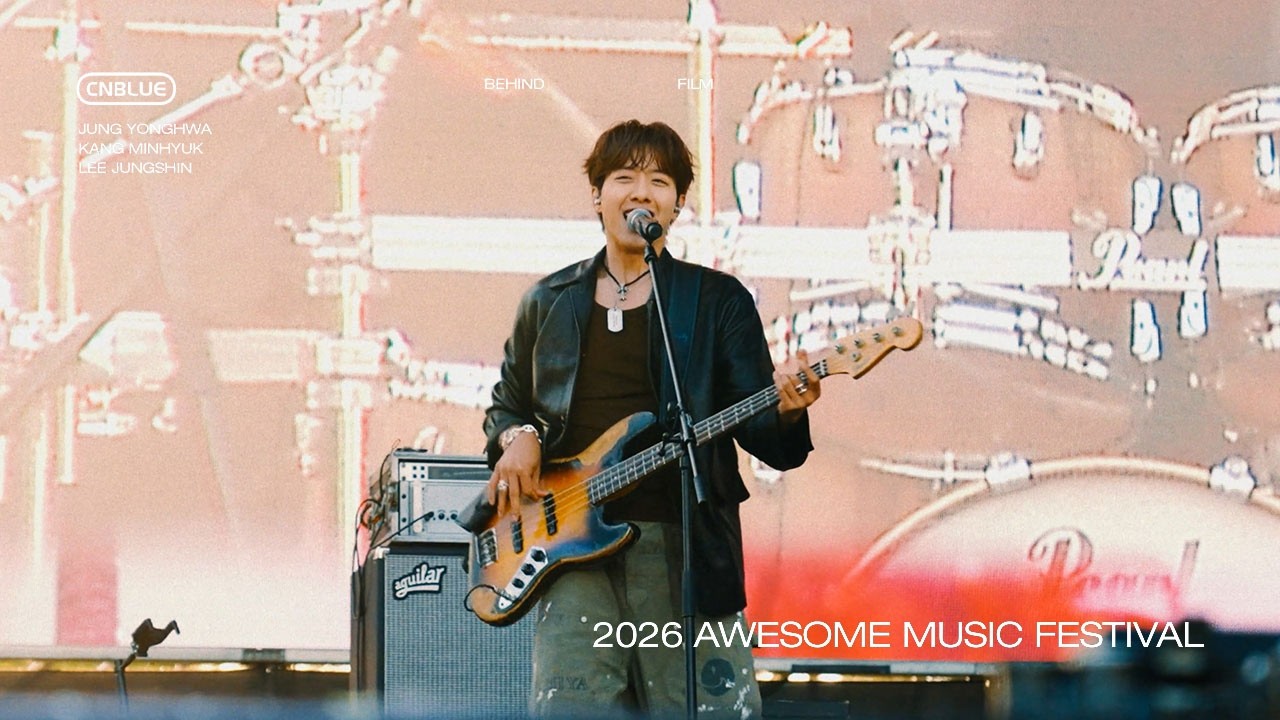
Describing CNBLUE as just another group riding back in on the rock band explosion wouldn’t go remotely far enough to explain their secret power. They didn’t suddenly form a band to chase trends, after all. They’ve been around for 17 years, playing their instruments inside the mainstream K-pop system. And with all the skill and experience they’ve built up in that time, they’ve been quick to strategically read and act on the turning tides as festivals and other live shows have grown in importance. That’s immediately clear when looking at how they ramped up their appearances at festivals in 2024 and they kept up with even bigger ones last year and this year.
All those years they put in are about to pay off on yet another milestone stage. Next year, on February 20 and 21, CNBLUE will hold “EBDD,” their first concert at KSPO Dome since debuting. The band has said time and time again that playing their own concert at KSPO Dome was a dream of theirs. And now, that dream’s right around the corner. The same band that shot straight to the top with “Loner” in 2010 needed 17 years to make their first KSPO Dome concert happen, and that says a lot about where they are today. We’ve seen countless cases where a meteoric rise doesn’t result in longevity. CNBLUE’s real power today doesn’t come from a 17-year-old hit but from how they’ve kept performing even after their massive success. And the clearest proof of that time may not be a chart position but the sight of thousands of people moving as one, a wave rippling through the crowd at a single shout of “ebattwi!”