Could remastered film rereleases be the much‑needed savior of theaters everywhere? In 2025, as the year draws to a close without a single blockbuster crossing the 10-million mark, it’s been up to countless remastered rereleases to once again bring audiences back to theaters. Where rereleases once served mainly as anniversary tributes, the intention behind them has moved in a new direction ever since the COVID‑19 pandemic—since theaters suddenly found themselves with months on end where there was nothing to screen. Nowadays, there’s far more to remastered rereleases than mere technical restoration. They’ve become a meeting of classic cinema and the new generation, an expansion into a new space for theaters fighting to recover from a prolonged slump, and a platform for films and filmmakers to gain newfound appreciation and brand-new interpretations.
Connecting classics with a new generation: “The Godfather,” “Roman Holiday,” “Shiri”
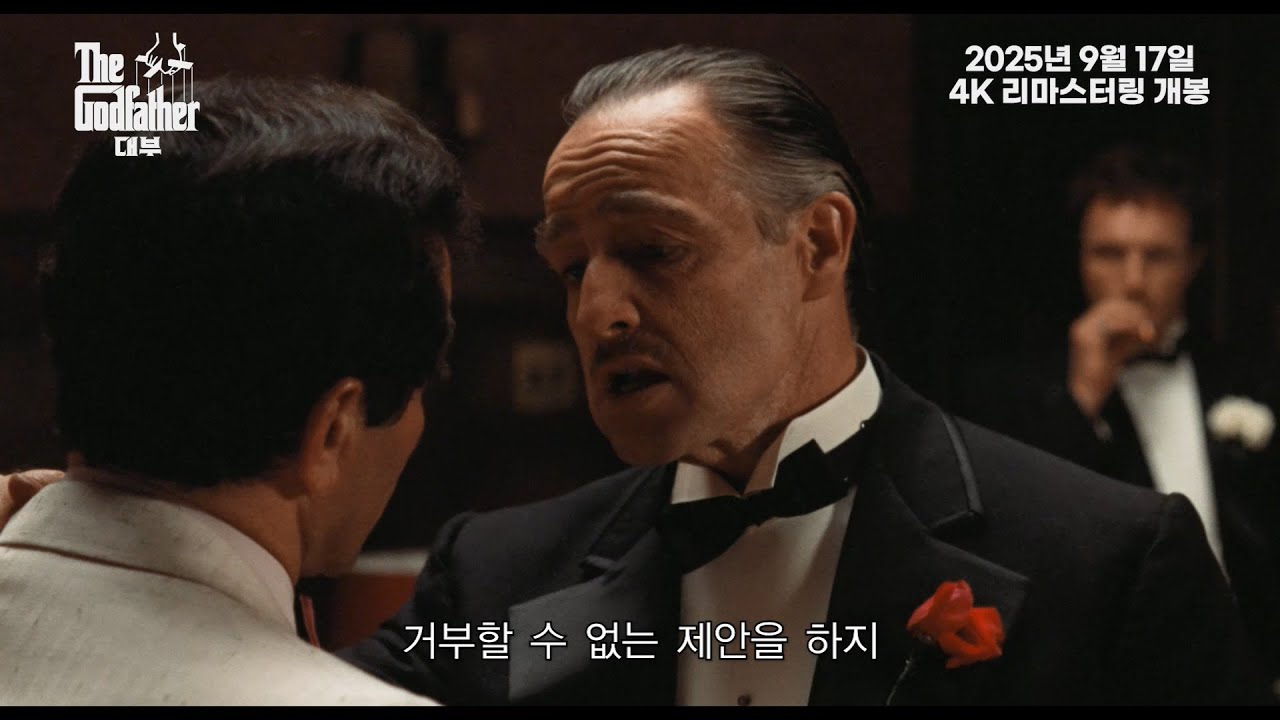
How can classic films extend their lifespan? Films whose legacy survived in name alone without being able to find a new audience have new life breathed into them when they’re given the remastering treatment and once again grace theater marquees. This fall, “The Godfather” and “The Godfather Part II” were rereleased back-to-back, undergoing 4K digital remastering that enhanced both the picture and sound. Despite the combined runtime of roughly six-and-a-half hours, the back-to-back rerelease screenings were entirely sold out. Additionally, marking 70 years since its premiere in Korea, “Roman Holiday” was upscaled in its original black-and-white, while the pioneering Korean action blockbuster “Shiri” had its audio remastered by painstakingly recreating the gunfire and explosions. These remastered classics offer younger viewers, who’ve never seen them on a big screen, a cinematic experience that pulls them back into the past. Taken all together, audiences are finally able to come face-to-face with the artistic intention, directing style, pacing, context, and messages that only a theater screen can properly bring to life. The reason why “Farewell My Concubine: The Original,” as the digitally remastered version is known in Korea, has an additional 15 minutes of footage compared to the 156-minute version first shown in theaters, is to better emphasize and enhance the grandeur of its operatic performances, for instance. By realigning the film with its intended vision, theaters restore what smaller screens—whether VHS, DVD, VOD, or streaming—could never fully capture. Many industry experts view these rereleases as a business tactic employed to fill empty theater slots, and while they do prove financially effective, the trend also clearly demonstrates an ideal vision of a revitalizing role for theaters. As a forum connecting younger audiences with classic films, it creates a long‑term virtuous cycle that inevitably draws audiences back to the cinema. When looked at as a cultural ecosystem, where newcomers are essential for the industry’s sustainability and growth, the rebirth of classics carries substantial significance.

The remastered rerelease experience in theaters: “The Lord of the Rings,” “Les Misérables”
After a prolonged slump, theaters have revived themselves as dynamic spaces for immersive experiences. Singalong screenings like “Killing Romance” and “KPop Demon Hunters,” where fans belt out songs together, and interactive screenings of sports movies like “THE FIRST SLAM DUNK” and “Haikyuu!! The Dumpster Battle,” where audiences root for their favorite characters right in the theatre, have ignited passion from across the fan spectrum by blurring the line between the film worlds with the real one. Meanwhile, sensory-driven films like those in the “Avatar” series and “Top Gun,” screened in IMAX and Dolby Cinema, offer audiences such premium immersive experiences that they feel as if they’ve been drawn right into the world onscreen. In this way, theaters have expanded into venues for heightened sensory experiences. And as theaters have evolved, remastered rereleases have begun to change along with them. Megabox, for instance, reintroduced “The Lord of the Rings” trilogy this year in Dolby format for the first time. Although the series had previously been rereleased in 4K, this was the first time it came with enhanced Dolby Cinema sound, making the experience particularly special this time around. Originally limited to a standard screening, the films have now been reborn with sharper visuals and further expanded with an immersive sonic universe thanks to advances in technology. Likewise, “Les Misérables” returned to theaters last year fully remastered and reborn with Dolby Vision and Dolby Atmos. The very essence of the film was recaptured through vivid, dynamic sound befitting a musical. Today, remastered rereleases are about so much more than just improving visuals to fill movie theater schedules. They’ve become a new pillar of the film industry—a fusion of ideas that both make full use of and expand the unique spatial quality of theaters while also serving as catalysts that draw out the full potential of the medium.

A chance for discovery and reconsideration: “The Fall: Director’s Cut,” “Nausicaä of the Valley of the Wind”
Some films are seen in an entirely different light when they’re rereleased. It quite literally gives movies that seemed frozen in time the moment their theatrical run ended, and the directors attached to them, a second chance. And we have the culture surrounding remastering and rereleases to thank for the illustrious opportunity to bring their names back onto the big screen. Director Tarsem, who famously used the line “long live Korean women,” found unprecedented box office success with the 4K remaster of “The Fall: Director’s Cut,” revived 18 years after the fact. Without a theatrical rerelease, audiences might never have rediscovered the film’s breathtaking aesthetic—the classical approach to storytelling, the captivating art direction and mise en scène, and adventurous directing style. Unlike the trend of focusing on anniversary rereleases of already well-known films, treating remasters more like importing and distributing brand‑new releases allowed for the curation of timeless works. In other words, the reason that remastering and rereleasing films rose to become a true lifeline for theaters wasn’t because familiar titles guarantee success but because they continuously unearth and reaffirm timeless values. Reflecting that spirit, “Nausicaä of the Valley of the Wind” underwent extensive language-conscious revisions for its remastered return. When it was first released in 2000, the film’s Korean subtitles were written to be displayed vertically, resulting in shorter lines. In the rerelease, the subtitles are now displayed horizontally, allowing for more detail in the translation. And where the original translation used the word “gonchung” (“insects”), the remaster instead uses the broader “beolle” (“bugs”)—after all, some of the strange bugs in the movie don’t entirely fit the definition of insects. A new translation like the one with “Nausicaä” really opens up the possibilities for just how far the remastering process can go in attempting to capture the essence of a film.
The whole idea of remastered rereleases is evolving. The types of films chosen for visual upgrades are changing, as are the ways they’re promoted, including through a diverse range of merchandise, live appearances from cast and crew, and other perks. The way audiences react to scenes after they’ve been dusted off is changing, and so is the very way we view films. What once felt like the right way may no longer be so. Change, after all, is proof of life. As a source of vitality that keeps theaters alive, remastered rereleases mirror today’s cinema landscape and the audiences basking in it—and they’ll continue to evolve alongside them.