The “Upside Down” became a phenomenon in its own right. Stranger Things, the Netflix original series that premiered in 2016, has announced its final season. Part 1 (four episodes) dropped on November 27, 2025, and Part 2 (three episodes) followed on December 26. The long-awaited finale was released on January 1, 2026. In North America, the two-hour final episode was also set to get a special theatrical screening. As a show that helped define the streaming era and stayed at the center of the conversation, Stranger Things is closing out with farewell events on a huge scale.
What started at around $6 million per episode in Season 1 has reportedly ballooned to as much as $60 million per episode for the final season, with the season’s total budget reaching about $480 million. With that kind of scale, this article breaks down, keyword by keyword, where Stranger Things began, what makes it such a hit, the genre signatures it plays with, and the biggest points of appeal that run through the entire series. Knowing these points makes the final season even more fun to watch.
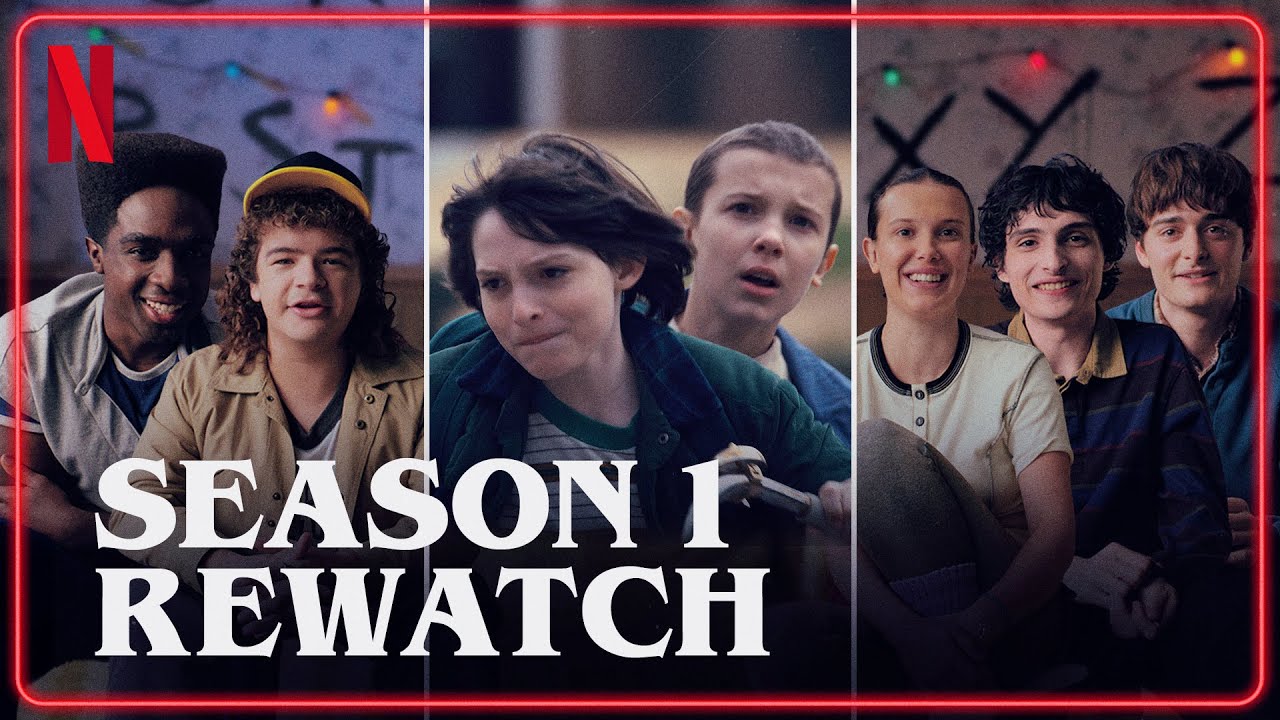
Character appeal: A story where teens save the world
Stranger Things begins in the early 1980s, in the northern Indiana town of Hawkins, where a U.S. Department of Energy facility, Hawkins National Laboratory, sits at the center of it all. A girl named Eleven (Millie Bobby Brown), who was forced into mysterious experiments there, escapes. Around the same time, Will (Noah Schnapp), a student at Hawkins Middle School, disappears. His friends Mike (Finn Wolfhard), Dustin (Gaten Matarazzo), and Lucas (Caleb McLaughlin) set out to find him, and in the woods, they run into Eleven, a lost child with strange powers. A young girl with psychic powers and a group of kids who love fantasy games and toys become the heroes who will soon have to face a crisis big enough to swallow their whole world. The source of the terror is a set of ruthless, shocking creatures, including the Demogorgon and the Mind Flayer. Stranger Things blends science-fiction horror with action-thriller energy, and it makes teens, not adults, the ones who chase down the root of evil and figure out how to fight it.
Eleven, the eleventh test subject who gained her powers through the lab’s horrific experiments, escapes and builds real bonds with her friends. Among them, she grows especially close to Mike, and their bond starts to blur the line between friendship and romance. Every kid has a distinct personality and a different kind of problem-solving strength, and as the seasons go on, each one stacks up their own story, piece by piece. Dustin, the group’s classic nerdy kid with a head for science, usually plays the brains. Lucas is athletic and outgoing. Will, who was nearly possessed by the Mind Flayer early on, is often pulled back into danger because of what he’s been through, and his friends save him again and again. In the final season, Will evolves into a completely different kind of character. Key supporting characters include Mike’s sister Nancy (Natalia Dyer), Will’s brother Jonathan (Charlie Heaton), and Steve (Joe Keery), the popular guy who ends up forming a love triangle with Nancy and Jonathan. Later, Max (Sadie Sink), who joins in Season 3, and her brother Billy (Dacre Montgomery) arrive as key figures who bring new danger crashing into the story.
The big appeal of Stranger Things is that adults rarely take the lead, and the kids work through the chaos on their own. But there are exceptions: Joyce (Winona Ryder), who launches into the search the moment her beloved son Will goes missing, and Hawkins’ toughest guy, Chief Hopper (David Harbour), who steps in as a father figure to Eleven. The two of them become the ultimate parents in this story, shielding the kids with the magic of unconditional love.
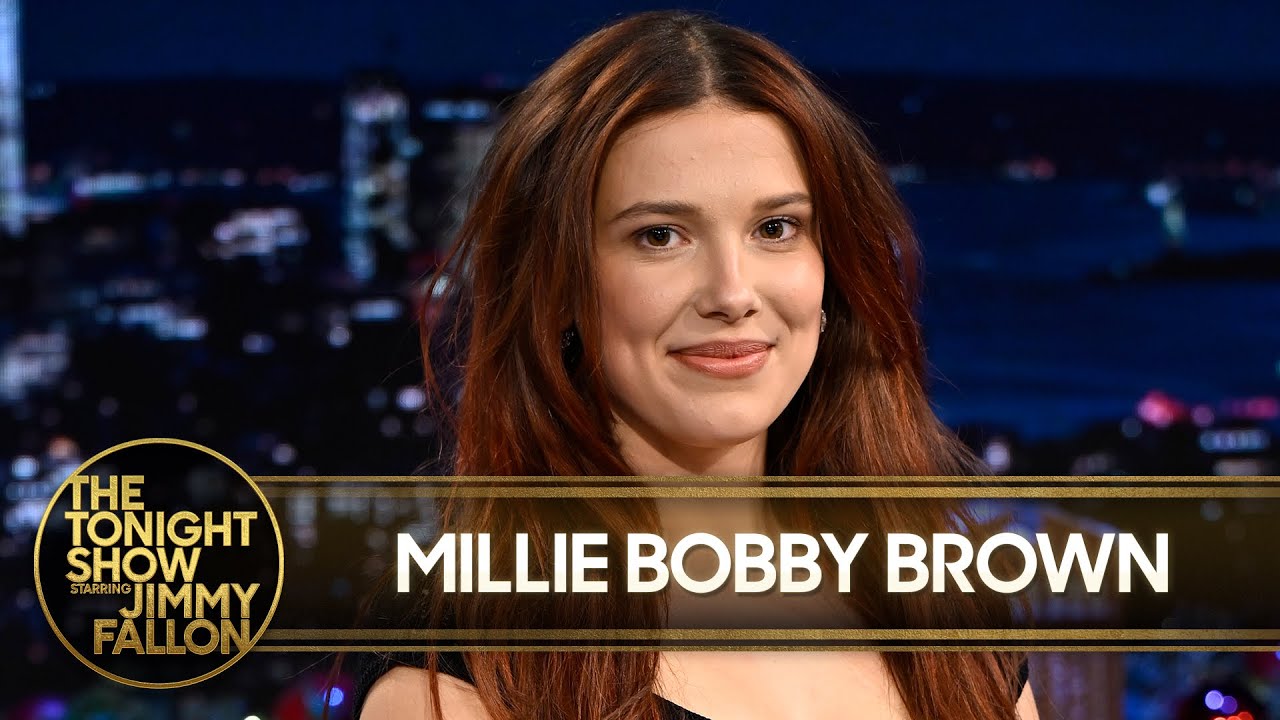
The rise of a new generation superstar
Eleven, who can open a rift to another dimension with a flick of her hand, captivated viewers worldwide from the moment she appeared. Millie Bobby Brown, who plays her, was born in Spain in 2004 and moved to the United States at four. At 12, she landed the role of Eleven in 2016 and became a global star. In 2018, she was named to Time’s 100 Most Influential People list as its youngest honoree. She has also earned multiple Emmy nominations. In 2022, she starred in Netflix’s “Enola Holmes 2” and was widely reported to have received a $10 million paycheck, a top-tier Hollywood fee that year. She was only 18 when that happened.
Eleven’s coming of age, escaping the lab, learning the world in real time, and slowly coming to understand friendship and love, is one of Stranger Things’ biggest strengths and a primary reason it became a phenomenon. If you are looking for similarly iconic women in genre storytelling, you could point to Ripley in “Alien,” played by Sigourney Weaver, or Sarah Connor in “The Terminator,” played by Linda Hamilton, who has been announced as part of the final season’s cast. Hollywood has been openly anxious in recent years about the decline of original screenplays outside of Marvel superhero films. In that context, Eleven and Stranger Things felt like a shot of new energy for the entertainment industry.
In Season 5, Eleven returns sharper and stronger than ever. After struggling through Seasons 3 and 4 to control her own power, she has trained and refined it like a master who has spent years polishing a single skill. She feels like the one hope everyone has left.

A world where Stephen King novels meet Steven Spielberg films
Stranger Things draws heavily from 1980s novels and films, from its characters to its production design. The Duffer Brothers, who created the show and wrote and directed much of it, built a vast world behind the “Upside Down” while openly showing the stories and styles they loved growing up.
One of the biggest influences on them is Stephen King. Many of Stephen King’s novels, including “Firestarter,” which centers on a girl who develops supernatural powers after government experiments and a father who tries to protect her, focus on painful coming of age and on fighting back against fear that has no clear source. Rob Reiner directed “Stand by Me” (1986), a film adaptation of Stephen King’s work, and it stands as a kind of spiritual father to Stranger Things in terms of tone and emotion. Other Stephen King novels that are often named as direct or indirect influences on the Duffer Brothers include “Carrie,” “The Shining,” and “It.”
At the same time, the kids’ adventure, searching for a missing friend while forming a secret bond and hiding Eleven’s identity from the town, closely echoes the story of “E.T.” (1982), one of Steven Spielberg’s signature films. One of Season 1’s most famous set pieces, where Eleven flips an oncoming vehicle to save her friends on bikes, is a clear homage to “E.T.”
There are simply too many films and books that Stranger Things borrows from, almost as if paying tribute, to list them all. The Demogorgon’s design draws inspiration from early David Cronenberg films, body-snatcher films, John Carpenter’s “The Thing” (1982), and the xenomorph in “Alien” (1979), designed by H. R. Giger. The world of Dungeons & Dragons, a fantasy role-playing game that swept through teens in the late 1970s and 1980s, also had a major influence on the show’s overall design.
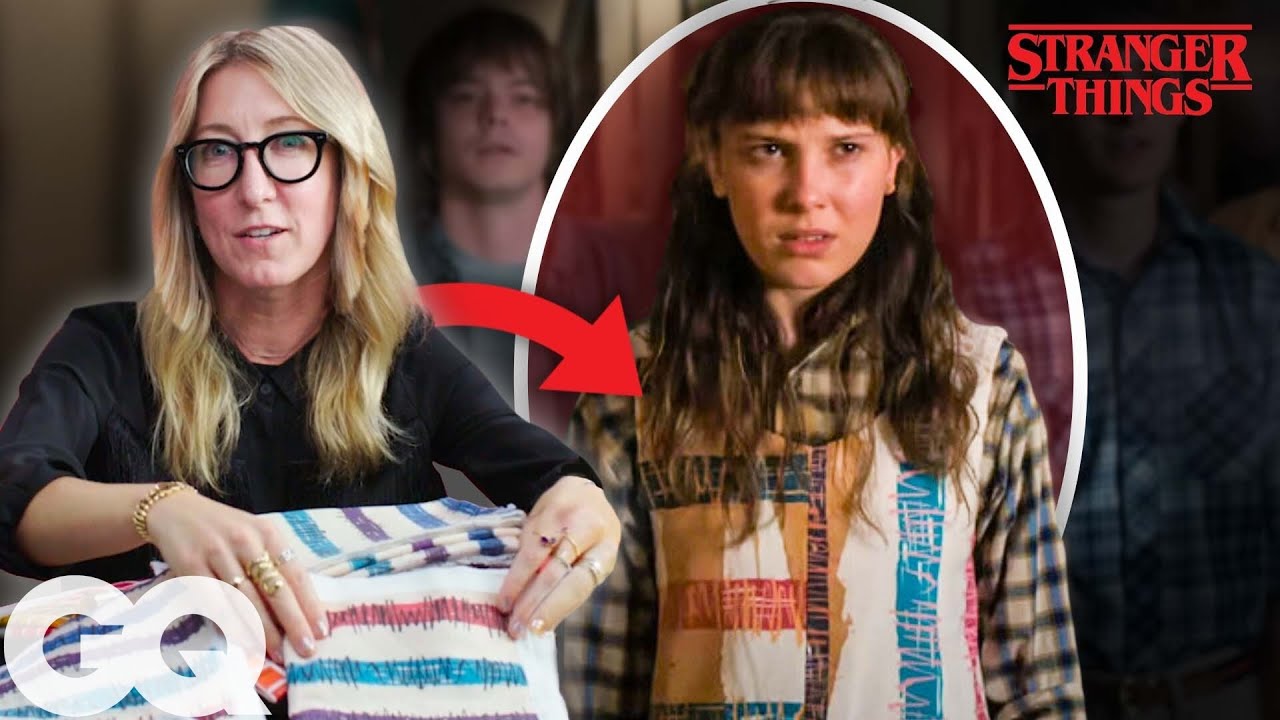
1980s nostalgia: Analog retro design, fashion, and music
Set in the 1980s, Stranger Things recreates the era through its production design and soundtrack, from the sets it builds to the clothes and hairstyles its characters wear. Major moments unfold in places like a video rental store and a shopping mall, in a Hawkins that is said to have gone decades without a single crime. Starcourt Mall in Season 3, in particular, feels like a time capsule of 1980s teen culture. Back then, kids packed the mall after school for ice cream and movies. In the show, the space where teen romances bloom and friendships deepen is revealed to be a secret Soviet base, turning the ice cream shop and the clothing stores into places of fear. As the series’ popularity exploded, brands across fashion, home goods, electronics, and food raced to roll out tie-ins and collabs. Some looked so convincingly retro that it was hard to tell what was truly vintage and what was newly made in the 21st century.
The show also uses era-specific tools, like walkie-talkies and an amateur radio station, as story devices. In Season 5, a fictional radio station called WSQK, “The Squawk,” appears, with Robin (Maya Hawke) taking the mic as a DJ. The songs on WSQK, plus the rock tracks and the retro synthwave score the show has used since Season 1, are central to how Stranger Things brings 1980s nostalgia to life.
The show has sparked plenty of chart revivals, pushing older songs back into the spotlight. The best-known example is Kate Bush’s 1985 track “Running Up That Hill.” In Season 4, it becomes Max’s lifeline, pulling her out of Vecna’s grasp. It is both a comfort as she faces her painful past and the only way out of Vecna’s curse. After the season aired, streams surged, and by 2023, the song had passed one billion streams; industry estimates put its streaming royalties at more than $2 million. With lyrics that channel a desperate urge to outrun misery in a do-or-die moment, the song fits the show’s life-or-death stakes and shows, all over again, how much a soundtrack can do. For Season 5, Diana Ross’s 1980 hit “Upside Down” also shows up as a theme song. Produced by Nile Rodgers, it was a major smash that hit No. 1 on the Billboard Hot 100 when it was released.
In the first season, the cast was so young that some of them barely knew what a cassette tape was. As those kids fought to save Hawkins on screen, outside the show, forgotten cultural artifacts have been flipping back into the spotlight, almost as if the real world has had its own “Upside Down” moment. Did the Duffer Brothers, the architects of the Upside Down, ever imagine their drama would carry this kind of ripple effect?
The creators of the Upside Down, and masters of collaboration: The Duffer Brothers
The Duffer brothers, twin filmmakers who had an unusually intense passion for movies from an early age, graduated from film school together and made their debut with the horror film “Hidden” (2011), which follows three families struggling to survive in a world overtaken by a mysterious viral outbreak. After seeing the movie, director M. Night Shyamalan offered them an opportunity to work on a TV series, and that is when their career began in earnest. But even after being recognized by a thriller heavyweight, their path forward was not as smooth as expected. With their early concept and scripts for Stranger Things in hand, they were turned down by more than twenty Hollywood studios and TV broadcasters. The reason was simple: the main characters were teenagers. Ironically, the very elements that were criticized as “too kid-focused” went on to fuel the show’s remarkable success.
A lot of behind-the-scenes work has also fueled Stranger Things’ success. In most U.S. TV series, a showrunner oversees the overall vision while different directors take charge of individual episodes. The Duffer Brothers wrote the scripts themselves and directed many episodes. Still, they also shared directing duties with key collaborators, including Shawn Levy, who directed the “Night at the Museum” films, and Andrew Stanton, who directed Pixar’s “WALL-E.” For Season 5, Frank Darabont, the director of “The Shawshank Redemption” (1994) and “The Green Mile” (1999), joins the series and directs Episode 3 in Part 1 and Episode 5 in Part 2. Given his long history of adapting Stephen King stories, he feels like a natural fit for the world of Stranger Things. In Episode 3, there is a standout sequence where the whole group works together to set a trap and then races into a Demogorgon chase, a set piece that carries Darabont’s stamp. Hollywood’s top talent came together to bring the series to a close. In the end, Stranger Things is a show that highlights the harmony between old and new generations in Hollywood and the collaboration that helped usher in a new era.