“The Art of Sarah” (Netflix)
*This article contains spoilers.
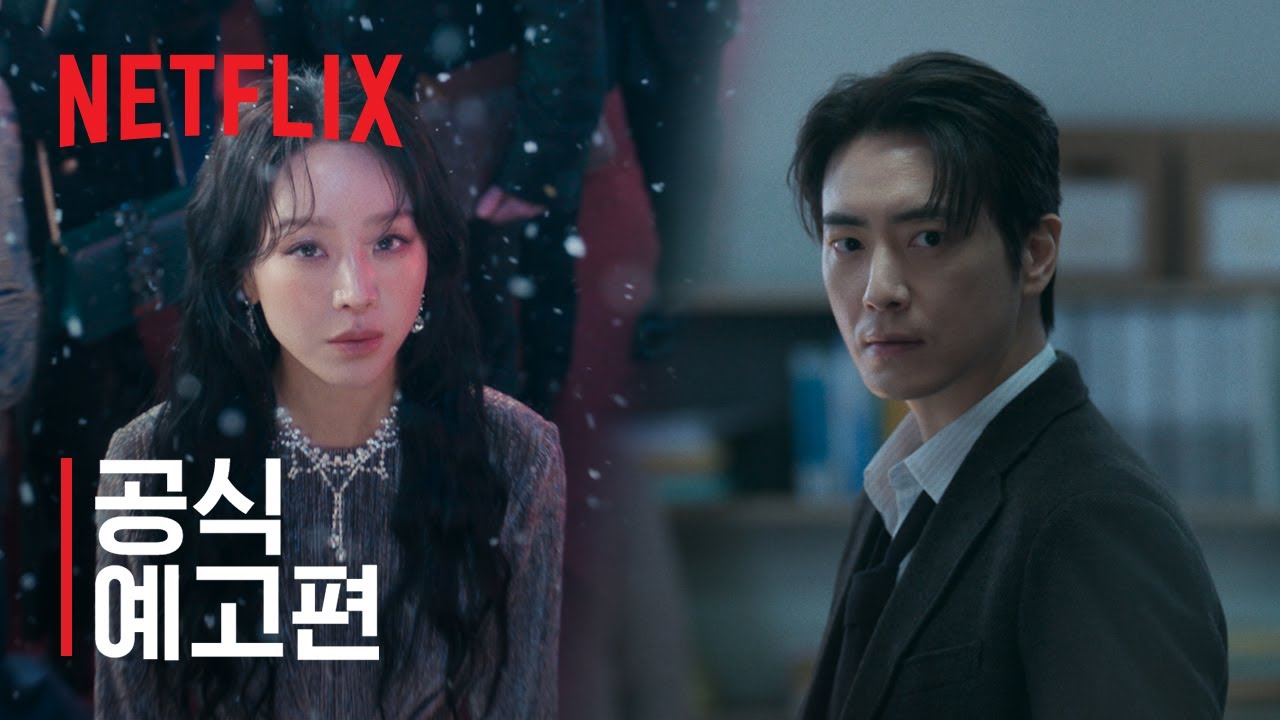
Yee Siyeon: The Samwol Department Store where much of the Netflix series “The Art of Sarah” takes place is an encapsulation of class hierarchy under capitalism. Those who work there enjoy status according to their floor and particular job, with Chairwoman Choi Chae-u (Bae Jong-ok) residing in the penthouse at the very top. The staff members working the luxury goods section are dressed in appropriately luxurious uniforms and speak in sophisticated jargon all while looking down on the food court employees, but are themselves placed under strict regulations. Luxury salesperson Mok Ga-hui (Shin Hye-sun) is only allowed to use the staff restroom per the rules, so she can’t step away until she’s off the clock, and it’s in that brief moment that something gets stolen. Corporate policy states that “any inventory discrepancy is considered a loss” and employees have to “make up the full amount,” meaning Ga-hui instantly finds herself 50 million won in debt. In stark contrast to the store announcement that addresses the “fellow Samwol family members,” these policies that shift all responsibility onto the individual send Ga-hui into a free fall. She sinks further into despair when she accidentally tears a bag while doing inventory—but this, paradoxically, acts as the catalyst that pushes her to act of her own accord. Clutching a Dior bag she’s stolen from the department store, she jumps into the water to kill herself, only to see the letters of the brand logo rearrange themself into “DOIR” beneath the surface. From here, she begins to dream up a new luxury brand, Boudoir.
Several years later, Mok Ga-hui is reborn as Sarah Kim. She returns to Samwol Department Store as the head of Asia operations for the fake luxury brand Boudoir, which supposedly only sells to the top 0.1% of the British royal family. Boudoir manages to slip its way in thanks to something everyone in a capitalist society shares in common—the desire to hold onto what they have, or to climb even higher. Despite Chae-u’s thoroughness—even turning on a recording device every time she leaves a room—“Sarah” manages to play on the chairwoman’s desires, blurring the line between real and fake and ultimately succeeding in getting Boudoir a place in Samwol. And, seeing how this Sarah has shaped herself into the “real” thing, someone else starts dreaming of a new reality. Kim Mi-jeong, the leather artisan who makes the bags that are now sold as Boudoir, sees her 180,000-won creation transformed into a luxury item. Both admiring and resenting Sarah for hogging the glory, she eventually begins impersonating her. The two are pitted against each other, with Sarah eventually murdering Mi-jeong, but when Detective Park Mu-gyeong (Lee Jun-hyuk), who discovers that neither woman has any legal records, finds himself in a situation where the truth can’t come out, he sets out to expose the deception driving Boudoir instead. To protect the brand’s reputation, Sarah abandons her own name, assumes Mi-jeong’s identity instead, and chooses to serve time in prison. Chae-u destroys the evidence to safeguard the department store’s own reputation, and Mu-gyeong chooses a promotion over revealing the nationwide scam. Each character, in their own way, gives up the truth to preserve what’s “real.” Ultimately, the series is a microcosm of a capitalist society where you have to be a fake in order to hold onto what’s real. The Boudoir brand survives, but after living under five different names, the life of Sarah Kim winds up totally erased. And so the question she poses is really directed at all of us: “If you can’t tell the fake from the real, is it really fake?” What do we choose to call real, and what are we willing to ignore? When all that remains at the end of that struggle is an empty illusion, can we still call it real? “The Art of Sarah” holds up a mirror to a society that gladly becomes an accomplice in the effort to protect illusions born of desire.
“Humanity Declaration” (Crystal Tea)
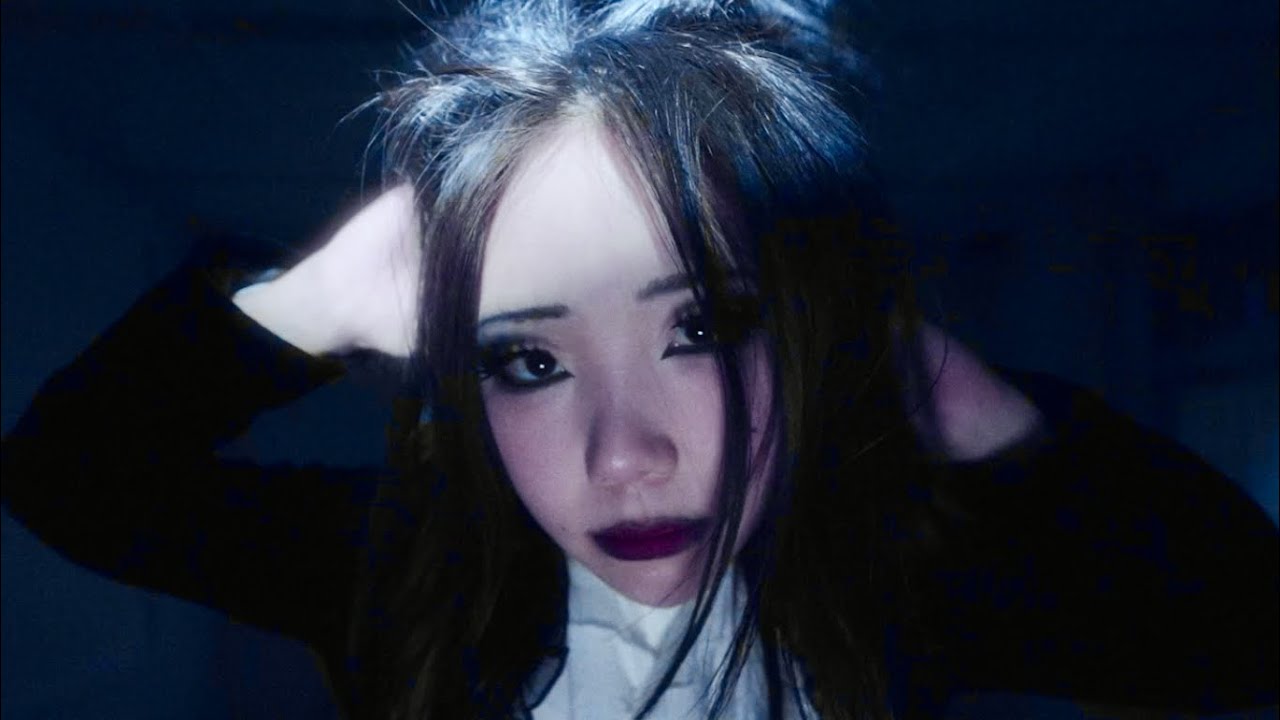
Na Wonyoung (music critic): With all the rock albums released by women in the 2020s so far, one particularly interesting trend is how the electric guitar is being pushed right to the forefront, both in melody and overall tone. The best-known example to cite would probably be HANRORO’s early work, but you see it even more clearly with releases like JUNGWOO’s “Cloud Cuckoo Land,” Meaningful Stone’s “Angel interview,” and Kim Sawol’s “Default.” What fills these albums is what could be argued to be the classic sound of the electric guitar: thick, distorted, and above all, played in an undeniably direct manner. It would be an interesting exercise to link them back to late ’90s and early 2000s rock—the kind of music from JuJu Club, Jaurim, Cherry Filter, Ko Hokyung, Riaa, Park Hye Kyung, and Lim Hyunjung that was labeled alternative or modern—but let’s look from here to Crystal Tea instead. Influenced by mid-Heisei-era J-rock, her pop rock naturally falls between those two trends, with its cutting electric guitar playing at the forefront while her bright, playful vocal melodies remain the core of the music.
As is clear from the titles and overall thematic work of her previous releases “Pink Movie” (and its director’s cut) and “High School Musical,” Crystal Tea’s music is always made in service of a kind of alluring fiction of her own. In other words, as a pop rock artist, she’s adept at fleshing out a complementary mix of rock sound and pop persona. Her latest single, “Humanity Declaration,” inspired by Tolstoy’s short story “What Men Live By,” is no different. In contrast to the bright colors of her recent work, this track is shaded a dark blue—the electric guitar has been tweaked to sound more sizzling, and her vocals in the latter half are mixed to sink in somewhat. But what really gives “Humanity Declaration” its markedly gloomier atmosphere comes from elsewhere, including the muffled breakbeats that underpin each verse, the shimmering synth tucked behind the guitar in the chorus, and the organ hanging faintly in the background before stepping into a solo right at the religious moment where it’s important to “grasp the devoured soul once more and begin to pray.” Diverging from her usual, fairly upbeat formula of music and melody, the song closes with the chorus repeating as it gradually absorbs everything else that makes up the track and takes on one unified color. The ending swells with an ever-noisier guitar, the artist humming as she’s slowly buried under the electric fuzz and the tolling of distant bells. With “Humanity Declaration,” Crystal Tea once again showcases the emotional power that drives the world of sound she so skillfully stages.
“Fourth Wing” (Rebecca Yarros)
Kim Boksung (writer): “Fourth Wing,” the first book in the “Empyrean” series by author Rebecca Yarros, continues to be a big hit on BookTok. To begin with, this fantasy story immerses us in the land of Navarre, a kingdom whose leaders are just barely keeping war at bay—albeit through shadowy means—while inside its borders, the memory of a recent rebellion still takes its toll and causes serious interfamily strife in a world where you don’t need much pretext to be justified to kill.
The Fourth Wing in the title refers to the group of dragon riders that the story’s protagonist, Violet Sorrengail, ends up being assigned to. This is a world where military might pervades every aspect of daily life, and although she planned to be a scribe, Violet ends up being forced to train for war despite her physical fragility. Fortunately, all riders end up developing magic powers when they bond with their dragon, and Violet becomes the first to bond with two.
Yarros’ series falls under the emerging new adult genre. While fantasy, it’s far more gruesome than, say, “Harry Potter,” or even young adult fiction. The same heads up applies to the romance label—Violet’s frenemy turned love interest is more like a lust interest, both in the uneasy nature of their alliance as well as for how spicy the writing can get. But the combination is definitely working, because readers can look forward to both graphic novel and TV adaptations in the future.