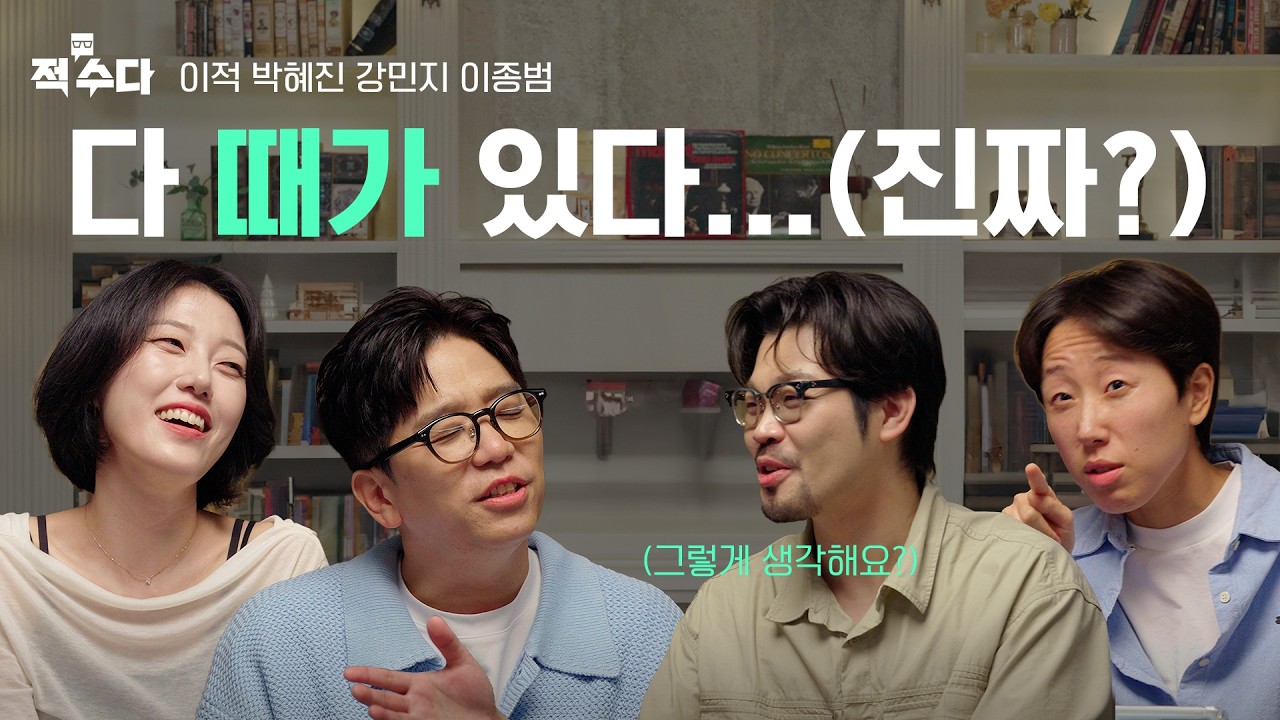
“Jucksuda”
Song Hooryeong: Singer-songwriter Lee Juck’s long had a habit of taking a word that catches his attention and sitting with it for a long while. It started several years ago with the occasional social media post about his reflections on specific words, and in 2023 he collected them into a book titled “Lee Juck’s Words.” Now his series “Jucksuda,” billed as a humanities chat podcast, translates that style of thinking into conversation. Each episode, Lee and his guests take one word and examine it between them. Within the web series, guests are referred to as hojeoksu—worthy adversaries—and their conversations begin with a single word before deepening into stories about their own lives.
Episode 17, “Timing,” welcomes on editor Park Hyejin, YouTuber Kang Minji, and cartoonist Lee Jongbeom, and their conversation feels like watching people with very different life experiences gather to breathe new meaning and context into a word that had gone a little stale. Seasonal food, when it’s the right time to speak versus listen, the best moment to come out as a fan of something, relationships that belong to a particular season of life—every one of these is an individual thread of life’s tapestry, spun out from the commonplace word “timing.” And as the 80-minute chat nears its end, Kang describes herself as someone who “hasn’t really bothered with a single one” of the expected life milestones—dating, getting married, having a baby—adding, “And I don’t really care.” Lee Jongbeom picks up on that, pointing out how meaningless the idea that there’s a “right age” for anything is, and Park pushes the conversation further by emphasizing the importance of willpower instead of pushing yourself to live according to the burdensome notion of what we perceive to be the correct timeline. In the process, Lee Juck and his guests dismantle the tired idea that “there’s a time for everything” and find truer meaning in life hiding behind the word they’re focused on. That, perhaps, is exactly why we all need a worthy adversary to talk with.
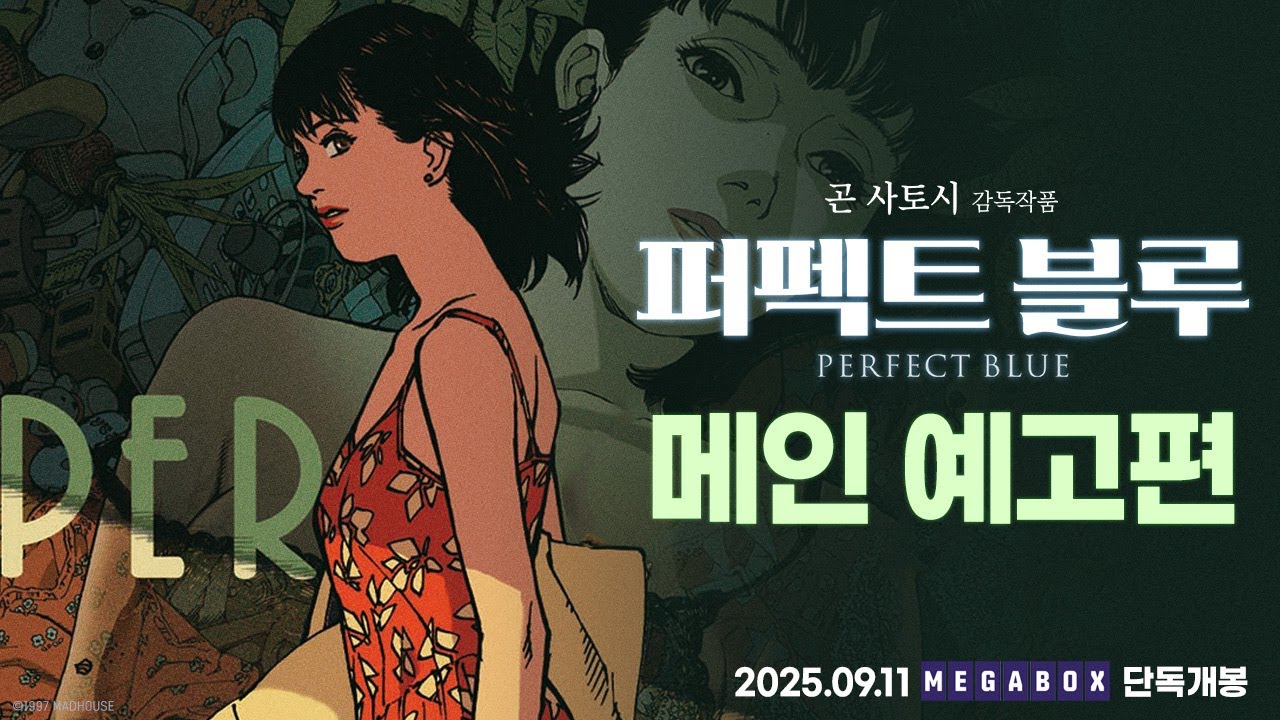
“Perfect Blue”
*This review contains spoilers.
Baek Seolhui (writer, columnist): “Who are you?” Released in 1997 to great critical acclaim, the anime “Perfect Blue” became available on Netflix in Korea this year on June 16. The film was the theatrical feature debut of Satoshi Kon, the director behind other masterpieces like “Millennium Actress” and “Paprika.” Kon died in 2010 at just 46, but his influence lives on. His work has been paid homage to in Darren Aronofsky’s movies “Requiem for a Dream” and “Black Swan” and Christopher Nolan’s film “Inception,” to name a few.
Mima Kirigoe, a member of the B-list J-pop idol group CHAM, is pressured by her agent, Tadokoro, into retiring from her idol career and reinventing herself as an actress. But being forced into quitting her music career, being cyberstalked on the then-nascent Internet, and the relentless pressure to take on explicit roles all take their toll on Mima, and she begins to lose the distinction between who she is in real life (an actress) and her idol persona.
“Perfect Blue” moves at a clip as it explores this theme of the fractured self. Reality and fantasy begin to bleed together like Mima’s own splintering psyche, and with the scenes from the TV drama she’s filming layered on top, the audience likewise has difficulty distinguishing between what’s real and what isn’t. All of us living today live with the reality of a fractured self, which is why Mima’s recurring question (“Who are you?”) isn’t one we can easily shake off. But no one can live that way forever. We move onward and upward each day by negotiating with our divided selves, bringing them back in line, only for them to split apart again. It’s the same thing in the end of the movie where Mima saves Rumi, the same woman who had it out for her, acknowledging the hold Rumi had over her, then taking the wheel and driving away. She removes her sunglasses and meets her own eyes in the rearview mirror, speaking words that carry the weight of everything that led to that moment: “I’m real!” Those who experience the fracturing and reuniting of themselves come out the other side having grown. They are the “real” version of themselves.
And that’s precisely why people still haven’t stopped talking about “Perfect Blue” after all these years. Mima spends the film lost in darkness and despair, repeatedly asking “Who are you?” But the story ends on a hopeful note when she makes it out the other side to live as her “real” self. The cynicism running through the film makes it easy to misinterpret, but that’s always been true of Kon’s work, whether it’s “Perfect Blue,” “Paprika,” or “Millennium Actress.” “Perfect Blue” turns 30 next year, but the message Kon wants to convey to us will still be alive then, and long after. And isn’t that reason enough to revisit the film today?
“Lost Places” (Sarah Pinsker)
Kim Boksung (writer): Sarah Pinsker’s short story collection “Lost Places” can’t be pinned down to a single genre. Some of the 10-plus self-contained stories are speculative fiction taking place in the near future, folk horror unfolding on a web forum right now, others more sci-fi-adjacent looks into the past at silent movies and the New York arts scene. You’ll find clever bits, dramatic arcs, and arguably true horror, but what you’re always getting is a glimpse into a nearly familiar but ultimately strange parallel universe next to our own. The form shifts, too, from somewhat more straightforward stories to online content, group narrators, and academic deep dives. “Lost Places” feels like a version of “Black Mirror” you can put on your bookshelf and take down whenever you’re in the mood to be unsettled and question what you thought you knew about memory, creativity, transformation, and power.