
To K-pop fans, Anderson .Paak is more than just another well-known American musician in Korea. The middle name he adopted for his stage name, Paak, comes from his mother, who’s of mixed Korean heritage. .Paak grew up in a Black household himself, but the mother of his two sons is Korean American, so he has one foot in each culture. His musical career, in fact, is loaded with ties to K-pop—just look at “Still Life,” a track off RM’s solo album “Indigo,” and “TOO BAD” off G-DRAGON’s comeback album “Übermensch.” In both cases, .Paak exercised the full power of his extraordinary songwriting, singing, drumming, and more to help these artists convey their message and their musical vision.
.Paak extended his reach to the silver screen with the film “K-Pops!,” simultaneously making his directorial, screenwriting, and lead acting debut. Some might see the film and its soundtrack as riding on the coattails of K-pop’s explosive popularity, but the movie very clearly stands apart from the K-pop-related content Hollywood and similar American institutions have directly or indirectly put out over the past year or two. This isn’t some international pop star chasing a trend, nor does it appropriate K-pop as an exotic backdrop. Rather, .Paak actively examines his personal identity as a mixed-race Korean American and Black artist, flexing his unique perspective to offer a distinctive take on the world of K-pop.
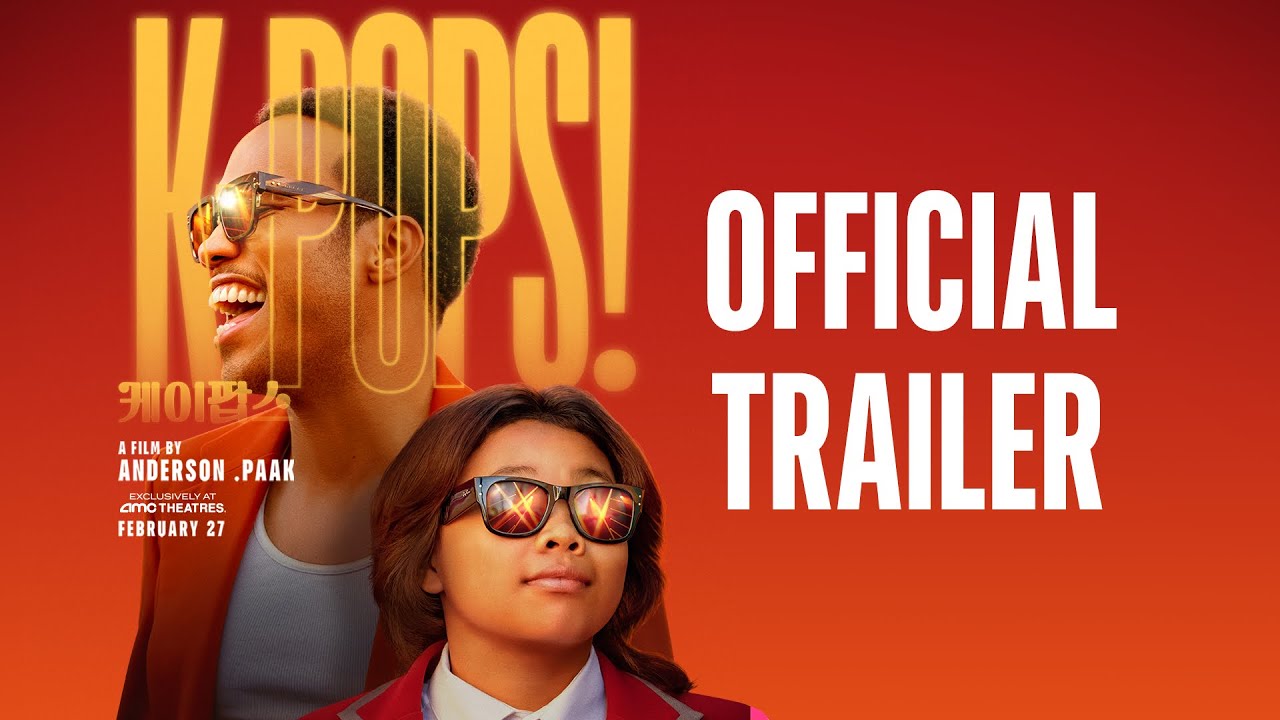
The plot of “K-Pops!” draws directly from .Paak’s own life. He watched as his son, Soul Rasheed, became engrossed in K-pop and making YouTube videos over the course of the COVID-19 pandemic. “While I was stuck in the house creating these skits with my son, I started to come up with the idea for the movie,” .Paak explained in an interview with the NAACP (National Association for the Advancement of Colored People) after the film’s US release. “What if I didn’t know I had a son who could be the next K-pop star? What would it be like to teach him about his Black culture while he teaches me about my Korean culture?”
In the film, BJ (.Paak), a struggling LA musician, takes one last shot at making it big by joining the house band for “Wildcard,” a Korean K-pop competition show. He encounters his son, Tae Young (Rasheed), among the show’s contestants, as well as his ex-girlfriend, Yeji, and the three slowly become a family. The many cameos lend the movie an even greater sense of authenticity, ranging from K-pop stars like Jay Park, VERNON, and Jessi, to American pop stars like Jaden Smith and Saweetie, to YouTubers from both countries like Psick University and IShowSpeed. The film’s value isn’t limited to its sights and sounds, however, but in how .Paak, who belongs to a double diaspora, approaches culture clash. And it’s there that the film broadens our thinking about K-pop in ways we don’t often stop to consider.
In the film, BJ teaches “Wildcard” hopeful Tae all about the roots of Black music. At a record shop in a Korean market full of antique items, he explains how “music is the great communicator” and that “there’s nothing new under the sun.” He traces a direct line from Black folks to gospel, gospel to blues, blues to rock and roll, and onward into funk, soul, R&B, hip hop, house, country, and every genre in between. “If K-pop is about boy bands and girl bands,” he goes on, the Jackson 5 are the greatest of all time, and today, BTS carries that legacy forward. “In order to know where you’re going,” he quips, “you gotta know where you’ve been.”
The scene led “Complex” to ask .Paak about the difference between appreciation and appropriation. According to the artist, borrowing someone else’s business model is unavoidable in the music industry, but respecting a genre requires learning it thoroughly. Diving in without a real understanding of its history, he says, amounts to disrespecting the culture. He stresses the importance of knowing and understanding that K-pop is, at its core, rooted in Black music, and it’s this lesson that BJ imparts to Tae in the film. Making good K-pop requires proper knowledge of pop music in general, and that all traces back to Black music.
The conversation also touches directly on one of K-pop’s longest-running debates. Criticism around K-pop’s appropriation of Black music has often been met with responses that emphasize K-pop’s own originality. Homegrown insight and self-directed learning within the industry can be a virtue, but it doesn’t seem to be enough to resolve the controversy. As someone who’s Blasian (Black and Asian) and as a father raising kids who grew up in Black culture with K-pop alongside it, .Paak offers up an artistic answer of healing and solidarity between the two cultures and generations.
BJ learns all about the different positions that members of K-pop groups assume from Tae and helps the boy flesh out a style of performance that’s suited to him, just as .Paak has long done in real life, including on the “K-Pops!” soundtrack album. It also connects to how the film reworks the way Asians are typically portrayed in American film. “I’ve read many a script with Korean characters and most will be like, ‘You’re the only Asian in the world, or you're an Asian in an Asian world,’” Jee Young Han, who plays Yeji, said in an interview with the Asian American Foundation (TAAF).
“I know Yeji, that girl with that jellyfish spiky haircut in 2009 from Koreatown … and it’s really wonderful to see these very rich [characters] that reflect the Korean people I know, and that don’t get seen.”
How will this film land with Korean audiences? There’s a decent chance many viewers will find themselves thrown by the clash between the film’s faithful depictions of Korea and the awkward American poetic license. It brings to mind how warmly “KPop Demon Hunters” was received specifically for how well it captured a Korean atmosphere. “Wildcard,” by comparison, looks like an American TV show in every single way, if you rule out how the winner makes their debut. You’re not going to find Earth, Wind & Fire playing an extended set at Hard Rock Cafe Seoul. But couldn’t all of this be understood instead as a version of Korea and K-pop as seen through the eyes of America’s Black-Asian diaspora? Look at how the movie opens. It’s 2009, and Yeji’s friends are egging her on to sing. Do TLC, they say, or Destiny’s Child—or better yet, N.W.A. Not Girls’ Generation, not 2NE1, not Brown Eyed Girls. Then the title appears. “K-Pops!” Plural. A nod, perhaps, to the possibility of another kind of K-pop. They absorbed Korean culture in their own way and made something new out of it, the same way K-pop itself did 20 years ago. I don’t want to call that distortion, or even misunderstanding.
“It’s important to show and shed light on the history,” .Paak told TAAF, “and to show how awesome that is that they can pull from that and use it and create their own interpretation of it and take it to new places.” What he said could apply not just to “K-Pops!” but to his entire career—as a solo artist, as someone sought after in the American pop world for collaborations, as he extended that reach to K-pop and even found a story he wanted to turn into a film. The film will stand as a kind of rarity in the body of fiction written about K-pop. The soundtrack, featuring the likes of NMIXX, DEAN, aespa, and G-DRAGON, provides a chance to revisit what .Paak wants to say with the movie, this time through music directly. He hasn’t released a solo album since his fourth, “Ventura,” in 2019. In effect, Korean audiences now have his fifth album—one that holds a particular amount of complex meaning for him.