
“Street Restaurant Fighter”
Jeong Dana: "The name you've built until now no longer matters. From this moment on, your new sign is your identity." On “Street Restaurant Fighter,” celebrity status, appearances on hit television shows, and the prestige of running a well-known restaurant brand no longer carry any weight. Everyone has to prove themselves through sales alone. Each contestant must build a new restaurant brand from the ground up, taking charge of everything from its name and sign to its menu, interior, and location. The only resources they're given are ₩300,000 for ingredients, their own skills, and one partner they'll need to work seamlessly with.
The rules are simple: deliver the greatest possible customer satisfaction within a limited budget and a strict time frame. In one blind challenge set in a commercial district serving Sejong City's government workers, contestants compete in a race to reach 1 million KRW in sales. To succeed, every restaurant has to win over office workers looking for a lunch that's quick, affordable, and genuinely satisfying. As chef Lee Yeon-bok puts it, "What works in this market? The customers will decide." The only judges are the customers, who cast their votes every time they open their wallets, with sales serving as the final scorecard. That changes cooking from an art into a business strategy. Hong Seok-cheon, whom many competitors dismissed as the weakest contestant because he isn't a professionally trained chef, recognized that many of the government workers were women and accordingly created a Sweet Shrimp and Avocado Tartare that helped drive his sales. French master Lim Ki-hak realized that office workers have little time for lunch, so he adapted the highly efficient serving style of “gukbap,” a Korean rice soup that can be finished by pouring prepared broth over ready ingredients. By adapting that highly efficient system to French fine dining, he was able to serve multi-course meals in under six minutes, earning a place near the top of the rankings. Rather than attempting a multi-course meal with just 300,000 KRW for ingredients, Edward Kwon, whose career has made him one of the world's most accomplished chefs in Western cuisine, chose a Spicy Garlic Chicken Rice Bowl and Sweet and Spicy Chili Shrimp, dishes that were delicious, affordable, and quick to serve. That decision captures the essence of the show: only restaurants that understand both what customers want and what reality demands can survive. Success requires sharp market analysis, an instinct for reading consumer psychology, and the persistence to find the right answer under difficult circumstances. Those are the restaurants customers ultimately choose, and that is the essence of running a restaurant.
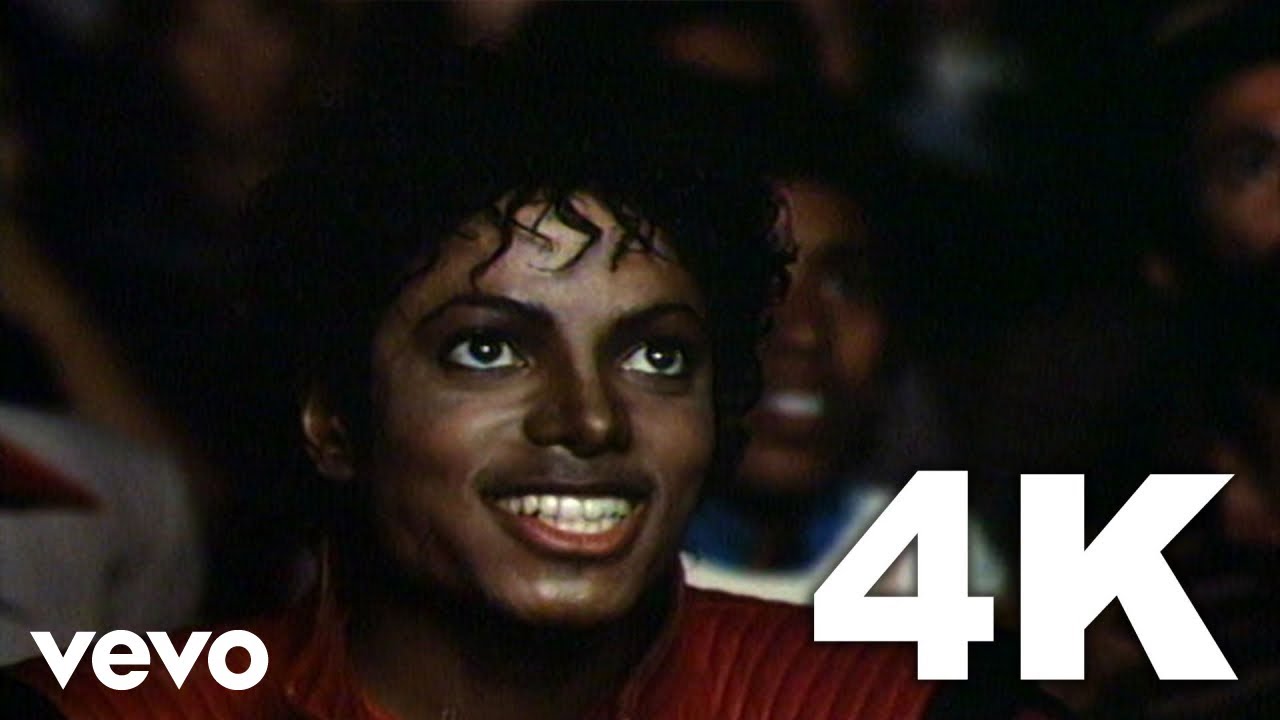
Michael Jackson – “Thriller”
Kang Ilkwon (Music Critic): Recently, Michael Jackson's 1982 album “Thriller” returned to No. 1 on Billboard's R&B Albums chart. One of its tracks, "Billie Jean," also topped the R&B Streaming Songs chart. It's a remarkable sight: an album released more than four decades ago competing alongside today's newest releases. That kind of comeback is only possible in the streaming era, where what matters isn't when an album came out, but whether someone presses play.
The starting point for this resurgence is clear. A new film about Michael Jackson's life brought audiences back into theaters, and many of those moviegoers opened their streaming apps as soon as they left to revisit his music. Many of the people listening to “Thriller” today were born long after 1982. Unlike the generation that grew up watching Michael Jackson at the height of his fame, they don't hear the album as a nostalgic reminder of their youth. For them, it's something new, or something newly discovered through the film.
Of course, that's only possible because “Thriller” is a masterpiece created by Michael Jackson, the King of Pop. The film may have sparked interest, but the reason listeners keep pressing play decades later is the album itself. There are many reasons why “Thriller” is regarded as one of the greatest albums in pop history.
Among the many reasons are his collaboration with legendary producer Quincy Jones; worldwide sales of more than 70 million copies; production that masterfully blends the grooves of R&B, the accessibility of pop, the rhythms of funk, the energy of rock, and the lingering influence of disco; "Billie Jean," celebrated for its iconic bass line and the moonwalk that became one of the most famous dance performances in pop culture; and the groundbreaking music video for "Thriller," which combined elements of horror films, musicals, and meticulously choreographed dance. The album's success also established Michael Jackson as a Black artist with an unprecedented cultural presence and sparked a wave of passionate fandom.
Many landmark albums define an era. “Thriller” did something even greater. It reshaped not only popular music, but also live performance, fashion, video, marketing, and even the modern idea of what a pop superstar could be. That's why “Thriller” isn't an album preserved merely for its past glory. Instead, “Thriller” remains a living benchmark, proving to each new generation of listeners what a truly great album can be.
“The Dog of the North” (Elizabeth McKenzie)
Kim Boksung (writer): Elizabeth McKenzie’s novel “The Dog of the North” is far from your typical road trip story. Penny’s family already has a dark past thanks to the disappearance of her mom and stepdad in the Australian outback years ago, but now she’s taking leave from her troubled marriage to help out her elderly relative who’s seen better days as a doctor—and whose house likewise needs a lot of help. From there, the chronically self-doubting yet ever optimistic (to the point of escapist) Penny sets off on a madcap adventure in the book’s titular van, all the while introducing a ragtag cast of characters. A lot of them are family members, many aging, almost all dealing with their own kind of mental illness. McKenzie puts her protagonist through one (figurative) car crash after another in ways that are equal parts tragic and amusingly farfetched. It’s quite the feat to wrap such a ludicrous story around such a three-dimensional character, but luckily for the reader, McKenzie makes it look easy.