Music, fashion, film. John Cale of The Velvet Underground, designer Marc Jacobs, and filmmaker Martin Scorsese stare into the camera for the album cover. The album’s star is nowhere in the frame. Instead, she puts there the masters who inspired her. The way she frames them points toward where she wants her own music to go.
This is “Music, Fashion, Film,” Charli xcx’s eighth studio album. Arriving on the heels of “brat”—the 2024 phenomenon that reached No. 3 on the Billboard 200 and earned her three Grammys—it is an unexpected record from a superstar at the height of her fame.
Charli xcx closes the dance floor, shops for a self, then steps in front of the camera to face death. Across its tracks, those three art forms offer a way into how she sees the world now.
MUSIC: Closing the dance floor, talking to a friend through rock
Eleven tracks, 30 minutes and five seconds. In that brief span, Charli xcx closes the doors on the dance floor she once threw wide open. “brat” had already been the culmination of her pioneering work at pop’s leading edge, channeling the disruptive energies of the internet and underground. Its funeral was so dazzling that mainstream pop gave itself over to the neon nostalgia of hyperpop and electroclash.
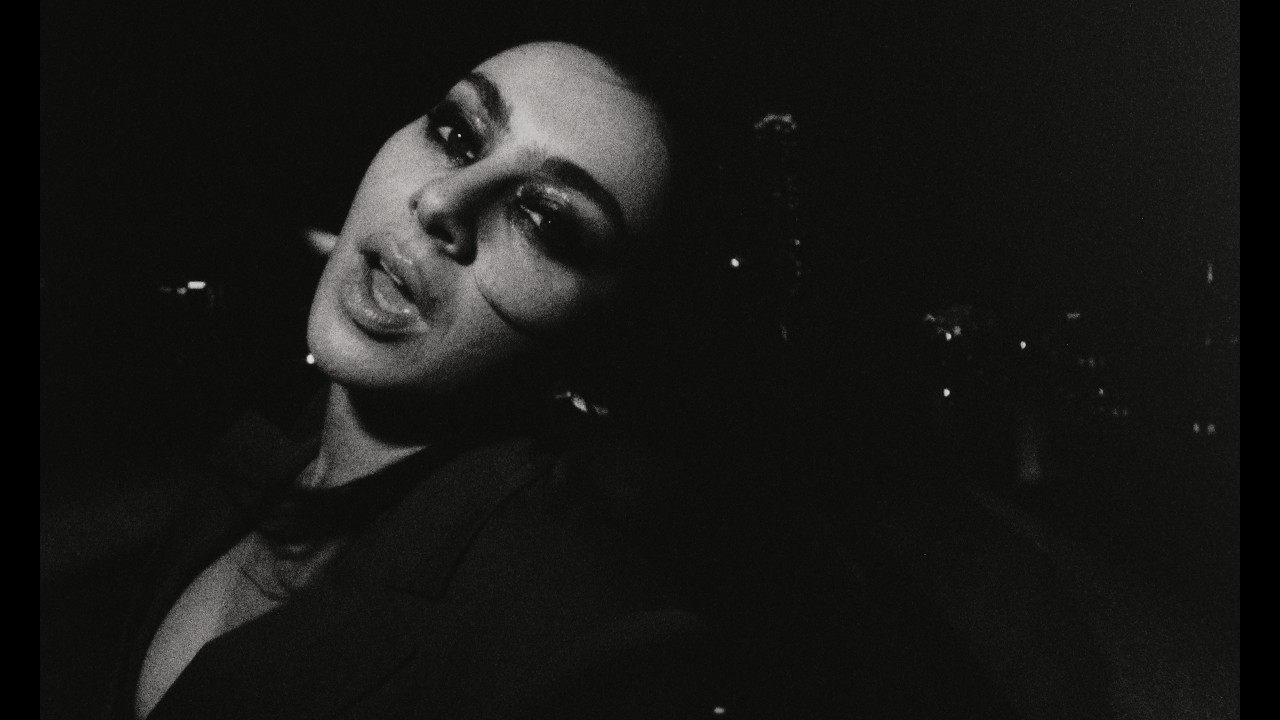
“Rock Music”
“I think the dance floor is dead. So now we’re making rock music.” It is Charli xcx’s definitive farewell to “brat.” We already knew from “SUCKER,” her first real step into the mainstream, that Charli could make rock music—and make it well. It takes the shape of rock, but it isn’t rock. With A. G. Cook and Finn Keane, she layers sequenced drums, guitar loops, and fragments of strings. Catch her when she leaps from the stage, or don’t—she will be fine either way. The brat era is dead. Charli’s creativity is anything but.
“Magic Metal Montana”
Drawing on New York avant-garde punk and new wave, “Music, Fashion, Film” ushers in Charli’s rock era with striking economy. Built almost entirely around a single riff reminiscent of Blur’s “Song 2,” “Yeah” is a song about the freedom to choose for herself. And for Charli, the choice that matters most is still music. She makes that clear in this song for A. G. Cook, who shared the rise and fall of PC Music with her: “You’re my best friend, but we don’t talk. We make music, we talk that way.”
FASHION: The self, bought and worn
Brat green ruled that summer. Casual graphic tees, sheer black tights, wraparound sunglasses—these remain staples of the brat-era it-girl aesthetic. For Charli, fashion is a vehicle for creativity. She shifts constantly between relaxed looks and the classics of haute couture. Charli can be anyone.
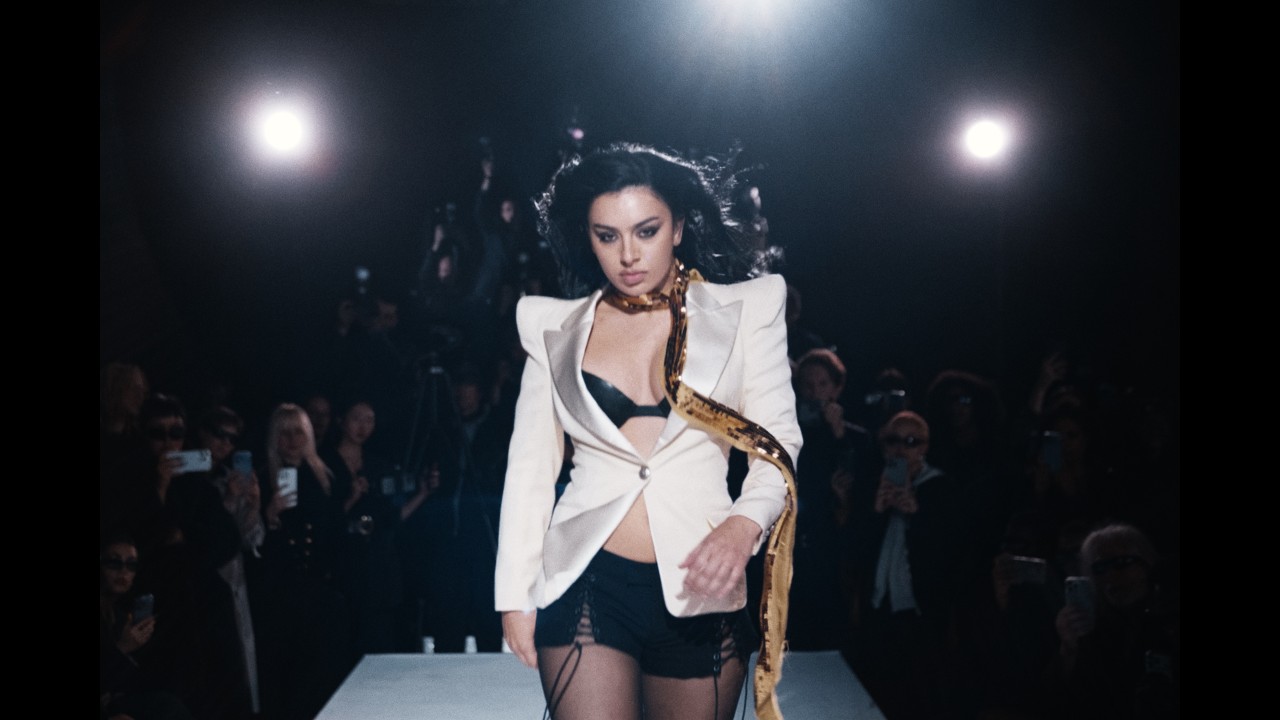
“SS26”
Torso’s video fills Charli’s runway with fashion-world heavyweights, among them Carine Roitfeld, Saint Laurent creative director Anthony Vaccarello, and supermodel Farida Khelfa. But her place on this runway to hell is an uneasy one. Music, fashion, film—none of it will save us. In a culture where political convictions and personal narratives are packaged for sale, and images multiply without end, art can feel vanishingly small. Charli makes a case for herself, only to undermine it in the same breath. The result is a sad self-portrait of a pop star.
“Card Declined”
Let’s go shopping. Handbags, perfume, shoes, watches—until the card gets declined. In a world of self-commodification and runaway materialism, the only escape seems to be through: buy without restraint, discard without regret. The runway out of this terrible age gathers speed beneath her feet. Fuzz guitar darkens the runway to hell, until the sound itself begins to buckle and warp, tipping the whole procession into chaos.

“Wink Wink”
Charli xcx’s party-girl declaration rang true because it was hard-earned, shaped by years of resisting the grind of the mainstream and taking refuge in music. But social media, with its manufactured tastes and ruthless churn of trends, makes us mistake what an artist once wore for skin—and feel the pressure to wear it as our own. On this indie-sleaze track, Charli sheds that skin herself. She is no longer the reckless child the media would have us see, forever chasing the next high. That, too, was fashion.
FILM: Performing the self, losing the self
Pop sells immortality. It promises eternal youth, moments that never end, love without limit. The pop star races through personas, playing the prophet. With music, fashion, film, and art, she makes fiction feel like truth—sometimes even to herself.
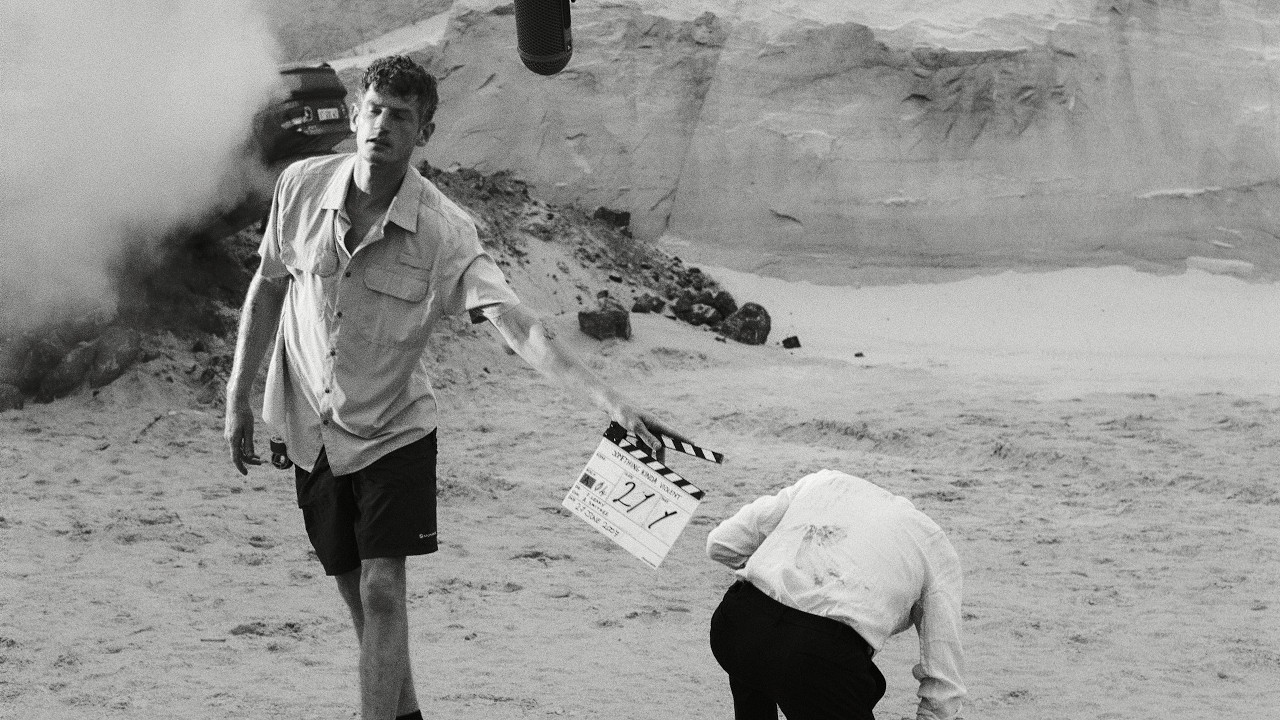
“Camera”
“Do I wanna make music? Am I being fucking stupid if I try to be a girl on the screen when I'm turnin’ thirty-four?” In an interview with “British Vogue,” Charli xcx said acting gave her a sense of “something new and undiscovered and something kind of violent.” The more she practices being someone else, the more firmly she asserts who she is in the public imagination. This is Charli xcx. This is a pop star.
Charli stares straight into the camera as if it were a gun. Fear meets the thrill of discovering a new self. She sings of the only way to feel truly unlike herself. The ordinary self meets the superstar. The more the camera captures her, the closer she gets to something real.
“Persona”
Ingmar Bergman’s 1966 film “Persona” explores two selves dissolving into one another. Seemingly inspired by the film, Charli’s song of the same name turns the question inward: among her many selves—the brat revolutionary, the pop star who pioneered a new scene, the exuberant party girl—which is her most intimate self?
“I’m Afraid”
Beneath the stage lights, Charli cuts a lonely figure. “brat” has taken her somewhere she cannot return from, stirring up the insecurities that have followed her throughout. She is someone’s wife now, yet she still wants a world that is entirely her own. She is walking a tightrope between the creator who burns through body and mind and the ordinary person.
“No One Lasts Forever”
David Cronenberg, cinema’s great provocateur, gets the album’s final word. The connection to “CRASH,” Charli xcx’s 2022 album and Cronenberg’s 1996 film of the same name, is hard to miss.
Think back to the “CRASH” cover: Charli bloodied across the hood of a car. It is easy to see why Cronenberg included a reenactment of James Dean’s fatal crash in his film. Its characters are convinced that Dean became immortal because he died at twenty-four, his neck broken in the wreck. They recreate the myth, then imitate it, enthralled by the romantic ideal of dying in a historic crash of their own. Such a death is vanity.
For Charli, however, what matters most—even amid the desire to make art that will be remembered—is being honest about the joy she finds in it and cherishing the present. Cronenberg’s voice stretches, warps, and loops without end, until time itself seems to stop: “No one lasts forever. They are dead. They are gone.”
- Three Drake self-portraits2026.06.24
- Noah Kahan: At the Great Divide2026.06.09