Why do I find myself so drawn to MUN KA YOUNG? I rarely write in first person, but for this one it feels right to put myself in the frame. When I watched the JTBC drama “The Interest of Love,” Su-yeong was the character I was drawn to most (and I frothed at the mouth when anyone said they didn’t understand her). Of the five lawyers in the tvN drama “Law and the City,” Hee-ji was the one I found myself rooting for above all others. When Ppal-gang in the SBS drama “Don’t Dare to Dream” or Mak-gae in the tvN drama “Live Up To Your Name” showed consideration for the adults around them by keeping quiet despite seeing right through their secrets, I found myself caught in those deep eyes once again. Watching the film “Once We Were Us,” I found myself hoping that even after Jeong-won broke up with Eun-ho (Koo Kyohwan) that she’d at least still be able to eat the home cooking her ex’s father (Shin Jung Keun) used to serve up.
Why do I, a straight man, find myself worrying about the characters MUN KA YOUNG plays and emotionally identifying with her? My tentative answer is that I believe MUN KA YOUNG has known the same feelings that I do. She certainly doesn’t shy away from the kind of feelings I’m aware of but can’t quite bring myself to surface, and folds them into her performances. For instance, when discussing her role as Su-yeong in “The Interest of Love,” MUN KA YOUNG has said on multiple occasions that an actor should be able to persuade the audience through their character, but that she didn’t want to do that with Su-yeong, saying it’s great if people can understand her, but if not, that’s fine too—she didn’t mind either way. Here, the actress is expressing how she clearly understands Su-yeong’s fiercely avoidant personality and her sense of inadequacy, as well as the complex class and gender discrimination at the root of these traits.
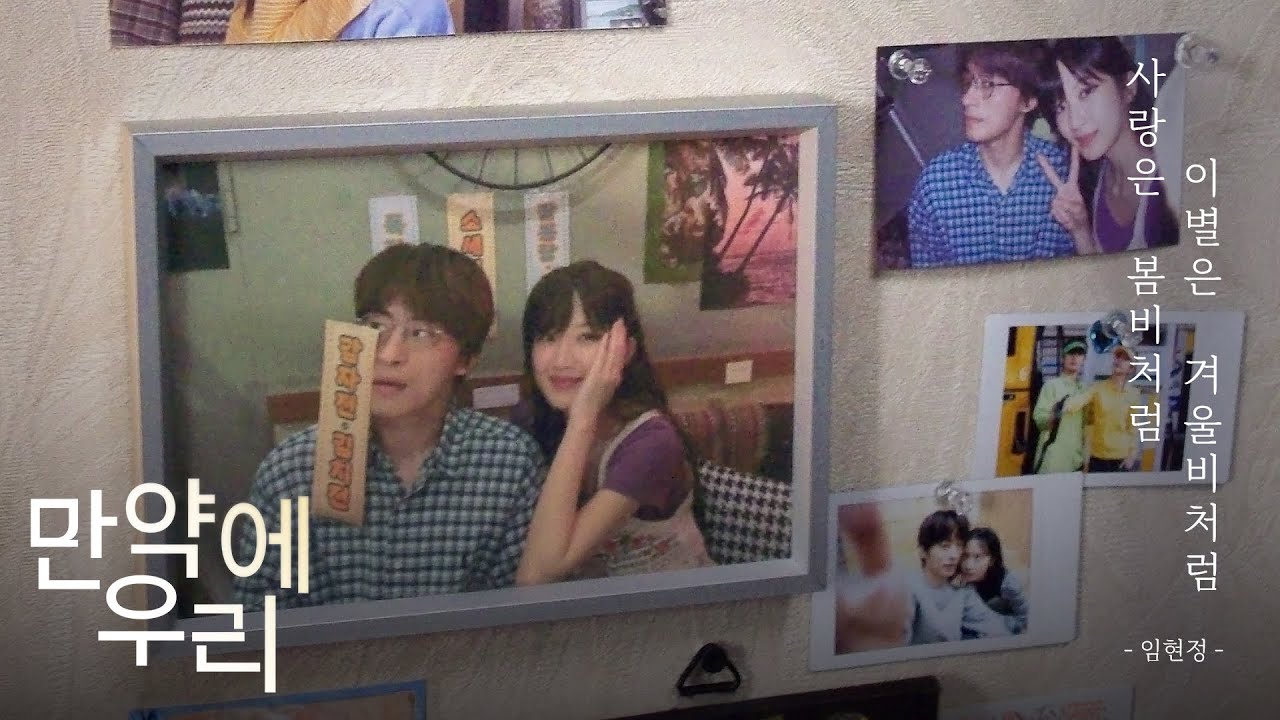
There runs a risk when exposing a character’s rawness that one single trait could come to stand in for the whole person. But MUN KA YOUNG confronts the state her characters have arrived at head-on, with the understanding that a flaw is just one of many qualities a complex human being possesses. To that end, she knows that when you don’t make excuses for traits that seem rough, when you don’t add anything unnecessary or make compromises intentionally when faced with faults, the particular virtues that make a character who they are will sprout from those very flaws. By refusing to pity her characters, she elevates Su-yeong into a full human being, and in doing so, she takes a character who could easily be reduced to a mere caricature and makes her the emotional subject of the story. Think about “The Interest of Love” and “Once We Were Us.” In both, she plays against a male counterpart, and both are actually driven by the male lead’s perspective. Despite that, MUN KA YOUNG builds dimension into a character who could easily be defined by that male gaze, and establishes herself as one of the emotional subjects of the story. Such a rare alignment of traits belongs exclusively to the kind of brave actress with the courage to refuse to be evasive.
Critics observing MUN KA YOUNG’s world through Su-yeong and Jeong-won side by side tend to see common ground where the two characters’ backgrounds are concerned. Both are struggling just to find a place to sleep in Seoul. There’s no room in such circumstances for romance, and given such barren emotional soil, clinging to your pride is about the only way you can even take a shot at finding love. Beyond the visible similarities, what links the two together on an emotional level is their defense mechanisms. Whenever love makes either of them vulnerable, both Su-yeong and Jeong-won reach for something to protect, or perhaps deceive, themselves with. What makes MUN KA YOUNG’s performance in “Once We Were Us” exceptional is the way she conveys the ultimate source of Jeong-won’s honesty and confidence through nonverbal cues. The clearest example is her eyes. Jeong-won (which you can really read as “MUN KA YOUNG” every time) looks at Eun-ho with eyes that say sadness has been a part of her for so long that showing it isn’t even an issue anymore. At one point, she tells him, “Even sunlight … I can only get this much … so, I got sad,” as both sorrow and acceptance of her circumstances flash across her eyes. But even someone like her has a deep-seated part of her she isn’t ready to share with anyone. We only see that look when she pulls Eun-ho into an embrace.
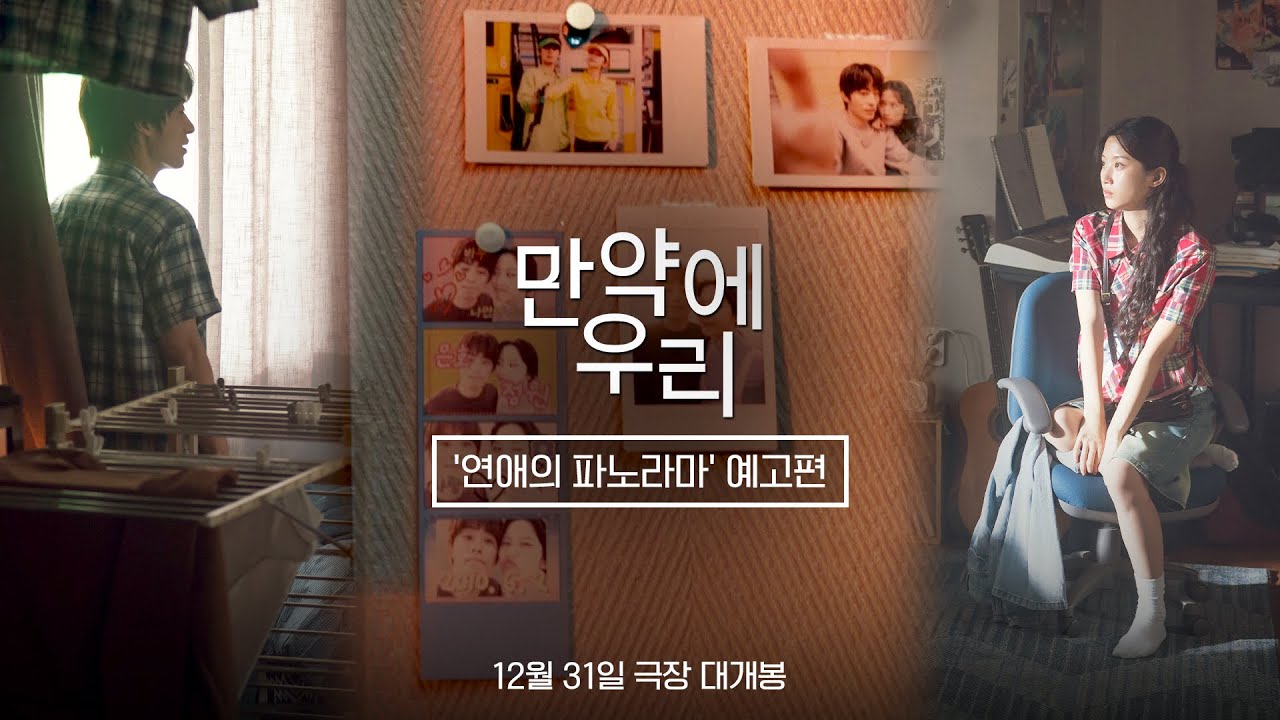
Here’s a question: When are we most honest with the person we’re in a relationship with? For me, at least, I think it’s when we’re apart. That’s not to say I lie every time we see each other—it’s more that I read on their face how they feel about me when I’m early to our meeting place and they later look around for me, or in something they post online about me when we’re not together. So I find myself wondering about what their face says when we’re together but can’t look each other in the eyes because we’re in an embrace. Jeong-won pulls Eun-ho into a hug, saying she’s “scared I’ll have nowhere to go back to.” When she says that, an anxiety Eun-ho has never seen before flickers across Jeong-won’s eyes, but only the audience can see it. That sense of uncertainty is one thing she would want to keep from him. Ultimately, it makes you suspect the reason Jeong-won cries the way she does—like a kettle coming to a boil—is that her sobs conceal the deepest part of her she wants to keep secret. Everything I’ve described so far takes place in the past, but we also see Jeong-won in the present, now an architect. The aspect of the performance that distinguishes Jeong-won in the past and present is, again, her eyes. Past Jeong-won looks up at the sky and at other people incessantly, but present-day Jeong-won looks down on Eun-ho. It might even read as aloof, but in that downward gaze is the solitude of someone who no longer has anything left to long for. Even when she tries to put her defenses up, what lies beneath can’t be hidden, and MUN KA YOUNG’s eyes say it all.
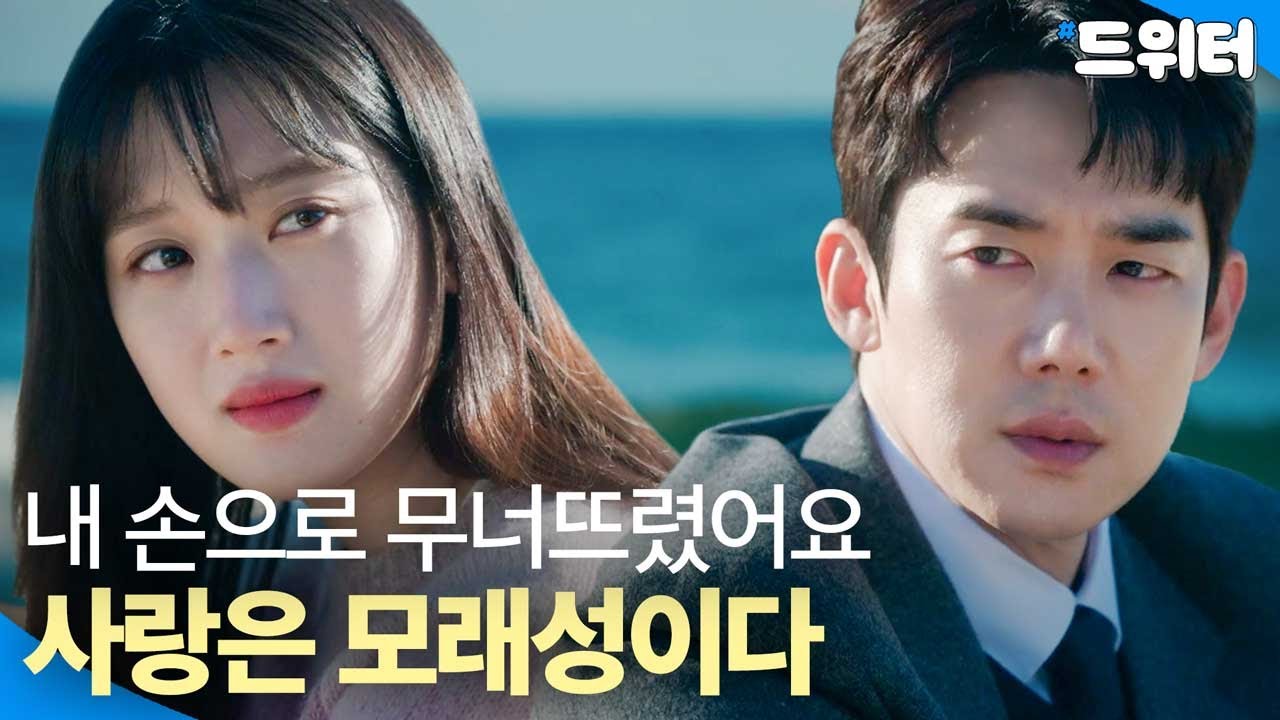
In “The Interest of Love,” on the other hand, MUN KA YOUNG’s defense mechanism manifests itself in Su-yeong’s avoidant tendencies, as mentioned earlier. Even in conversation, Su-yeong never gives a straight answer, instead retreating into questions. She never shares what she actually thinks, just deflects by asking what they think. Her tendency to avoid things at all costs tips into self-destruction, going so far as to spread rumors about herself with Gyeong-pil (Moon Tae-yu) just to cut herself off from Sang-su (Yoo Yeon-seok) and Jong-hyeon (Jung Ga-ram). Su-yeong, with her endless disappearing act, leaves a trail of hurt people behind her, Sang-su included, and yet she’s never fully honest about her own feelings—or rather, she’s incapable of it.
Su-yeong doesn’t have the luxury of being honest about her feelings. The opportunity cost of any kind of failure is so steep for her that she can’t even afford to chance any opportunity. With class consciousness and family bearing down on her from all sides, clinging to her sense of inferiority as a shield is the only thing that lets her feel any kind of attachment to her own life and the lives of those around her. Su-yeong moves forward only to retreat. As she herself puts it, she’s a woman who builds sandcastles with her own hands just to knock them down. She builds up feelings knowing they’ll eventually collapse, and because she has that knowledge, she can only find peace by tearing them down herself.
There’s a question journalists have been asking MUN KA YOUNG a lot lately. At every press event for “The Interest of Love” and “Once We Were Us,” they’ve asked her how she would define love. This is where I bring myself back in. As someone working in the same field, I’d wager to guess that those journalists sense that MUN KA YOUNG knows a thing or two about love. In an era when treating things with sincere, careful deliberation is no longer considered virtue, the kind of romance she embodies is distinctly removed from the times—and you get the sense that she understands exactly what makes it different. The most recent answer she’s given is that love is a choice. In her words, love is a relationship where, at every fork in the road, you always make room for “nevertheless,” choosing each other no matter what. MUN KA YOUNG has consistently left room for the women she plays to push back. Maybe that’s just how much she loved Su-yeong and Jeong-won. Every one of her choices are woven into “The Interest of Love” and “Once We Were Us.”