*This article contains spoilers.
“Cloudy with a Chance of Meatballs,” the “LEGO Movie” series, “The Mitchells vs. The Machines,” “Spider-Man: Into the Spider-Verse”—what do all these films have in common? Outlandish premises, crowd-pleasing humor, plots that keep you guessing, and endings that are optimistic without being naively so. These are films that embrace a layered approach to emotion, at once playful as a fairy tale and as alive as the real world around us. And at the center of all of them are directors Phil Lord and Christopher Miller. The duo has spent years perfectly on the same page, fleshing out a filmography with a voice entirely their own. Their particular gift for folding grief and pain into humor in just the right proportions feels like a sophisticated trick only someone who has truly taken comedy apart to analyze it could pull off.
With “Project Hail Mary,” has the director duo reached new highs? The film slips back and forth between humor and pathos, flowing with the easy confidence of a film that’s playing entirely to its directors’ strengths—and the numbers back that up. In its opening week in North America, “Project Hail Mary” topped the box office with roughly $80.6 million in ticket sales, becoming only the second film that’s not part of a franchise since “Oppenheimer” came out in 2023 to cross the $80-million mark. It’s the biggest opening of Ryan Gosling’s career, the biggest of Lord and Miller’s, and the highest-grossing debut Amazon MGM Studios has ever had.
The original novel by Andy Weir has a massive global following, so some were naturally expecting a box-office success, but we’ve seen before that there’s no guarantee an adaptation of a beloved book will land with either readers or general audiences. On top of that, “Project Hail Mary” is hard science fiction—indebted to scientific accuracy—and trimming so much of the theoretical detail was always going to leave some fans of the novel feeling shortchanged. So what is it about this movie that makes it so easy to embrace on its own terms? What generates the emotional pull, the immersion, the feeling that stays with you after the credits roll? The answer probably lies in the chemistry between the two directors and their wealth of experience with animation—a medium that exemplifies highly agreeable characterization.
Why Stratt sings
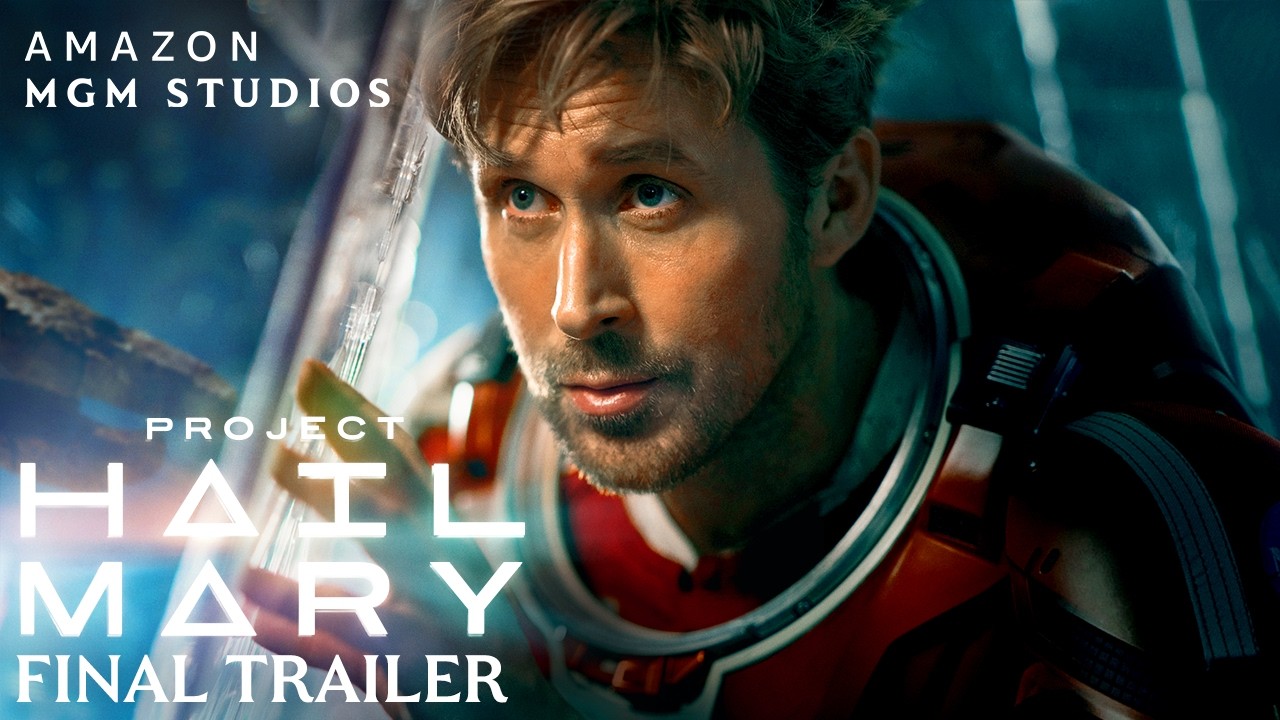
The Sun is dimming. That’s the problem the world finds itself faced with as “Project Hail Mary” opens. One day, an unusual infrared beam going from the Sun to Venus can be observed. Humanity dares to hope it’s a sign of extraterrestrial life, but the truth is far more alarming. The beam—the Petrova line—is feeding on the Sun, and the stronger it gets, the dimmer the Sun becomes. If temperatures keep falling, Earth will be plunged into an ice age. Not only that, but half of humanity will die of starvation before the ice age even arrives. The culprit is Astrophage—mysterious single-celled organisms that live near stars, consuming their light, and have already infected every star within an eight light-year radius. But Tau Ceti, 11.9 light-years away, is still shining bright. Why has this one star been spared an Astrophage infestation? What’s there that Earth lacks? Like the desperate last-ditch play the ensuing project is named for, humanity throws everything it has at the problem and launches Project Hail Mary. Just three people will board the ship: a pilot, an engineer, and scientist Ryland Grace (Gosling).
Unlike his two crewmates, who die in permanent comas, Grace opens his eyes to find himself alone in the vast emptiness of space. Paradoxically, though, his solitary struggle is sustained by the connections he left behind on Earth. What he experienced back home, and the people he met there, colors every part of his journey, making it seem cozier at times, lonelier at others. First, there’s Eva Stratt (Sandra Hüller). A former European Space Agency official who takes charge of the project, Stratt is portrayed in the novel as cold and clinical, but in the film, her human side comes through much more clearly. With officials from around the world looking on, Grace runs experiments to better understand the makeup of Astrophage, and discovers it’s a kind of cell. “Wake up! It’s a cell!” she calls out, Hüller’s booming, husky voice really selling it. The assembled officials break into mechanical applause, following her lead. The Stratt in the film version loves to clap. Whether celebrating the Astrophage discovery or introducing Grace to a room full of scientists from around the world, she never misses a chance to start a round of applause (even when she’s in the conference room, hands full with the two grande coffees she insisted on). A novel asks you to imagine someone you’ve never met—a film gives you an actor’s familiar face, and that familiarity becomes part of the pull. Lord and Miller know instinctively, from years of experience, that softening a character into someone warmer and more lovable, as in animation, produces the perfect chemical reaction.
The clapping alone doesn’t tell us everything about Stratt, but these recurring touches add something beyond her cold exterior that makes her feel genuinely human. In short, her character’s been smoothed around the edges. The coldhearted woman who deliberately accelerates global warming and blows up glaciers in Antarctica to save the Earth in the book becomes more human through her cheerful clapping and her coffee obsession, and turns into someone you actually want to understand. The peak of this transformation is seen in a karaoke scene that doesn’t exist in the novel. Stratt beautifully belting out the Harry Styles song “Sign of the Times” is so far from her cold image that some fans of the original novel find it entirely out of character—but when this gentle character later betrays Grace, it’s all the more shocking and raw for the audience. By cutting Stratt’s seemingly counterintuitive choice to harm the Earth in order to save it, it makes her true coldheartedness later on a complete dramatic reversal.
Smoother, with more depth
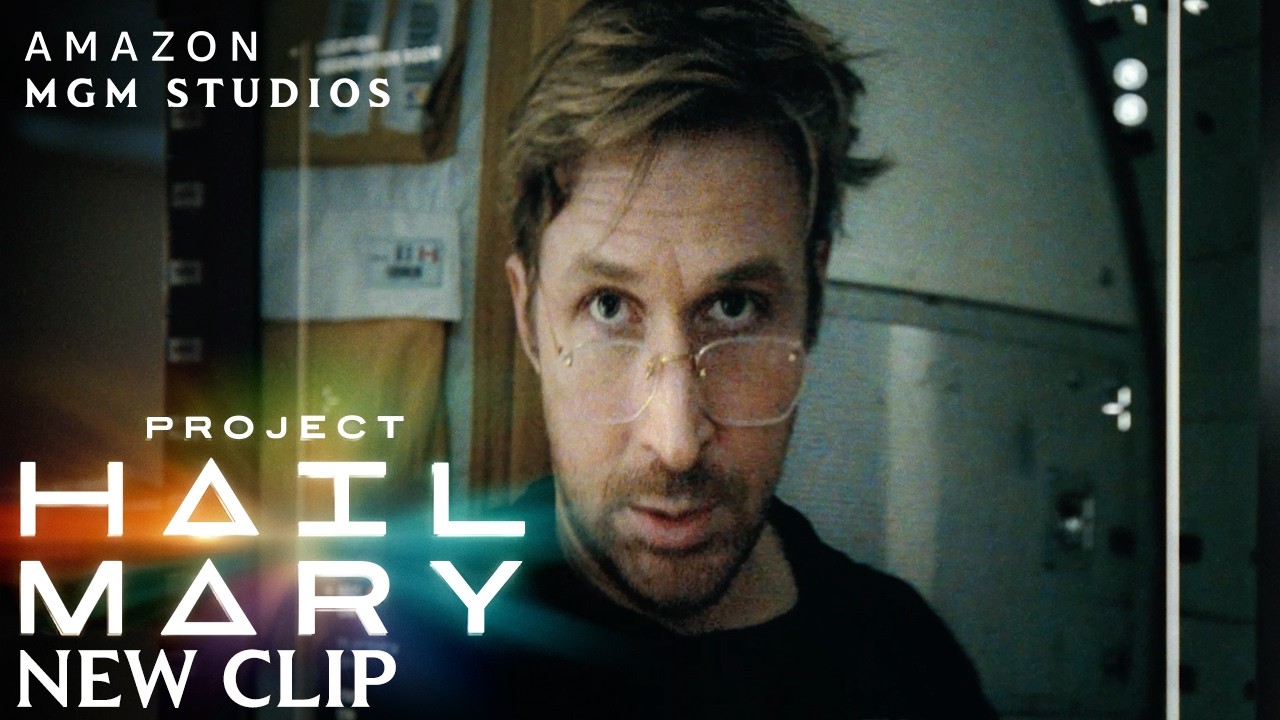
Once Rocky enters the picture, the reason we need his and Grace’s friendship to last—or at least why we find ourselves rooting that way—is that we’ve watched Grace suffer through his share of injustice and loneliness already. One of those is because of Stratt—the other involves Carl (Lionel Boyce). Carl doesn’t exist in the novel—he’s likely based on Steve, a soldier Grace was on relatively friendly terms with in the book. Early in the film, while Grace is researching Astrophage, he and Carl spend a lot of time chatting over their walkie-talkies and grow quite close. When Grace asks about an expense account for his experiment, he doesn’t get Carl’s instant approval through some kind of goodwill—that only comes after Grace sighs audibly into the walkie-talkie. (Grace is such a handful.) He may be an introverted nerd, but Grace’s relationship with Carl is full of warmth. They go bowling together, pick up tin foil at the grocery store, and stock up on Skittles for snacks. Carl even lets Grace put a pair of sunglasses on the company card. Later, when Grace is piecing his memory back together on the spaceship and writes “Carl (foggy)” on the chalkboard, it’s clear that, among all the people Grace worked with, he was someone special.
But it all takes a turn for the worse. Grace refuses to board the ship and tries to run away, but he’s quickly overpowered. That’s when Carl appears in the distance. The camera catches him not head-on but tilted 90 degrees, the frame rotated sideways. Everything is in ruins—the friendship, the trust, the memories, all of it. That disorienting angle is probably a fair reflection of how Grace feels. Rocky, who mentions that he once had a crew of 23 and is now alone, asks Grace how many crewmates he had. He says two. But Grace has lost more than just two people. Counting Carl and Stratt, who coldly disregarded his protesting to get him on that ship, he’s lost four.
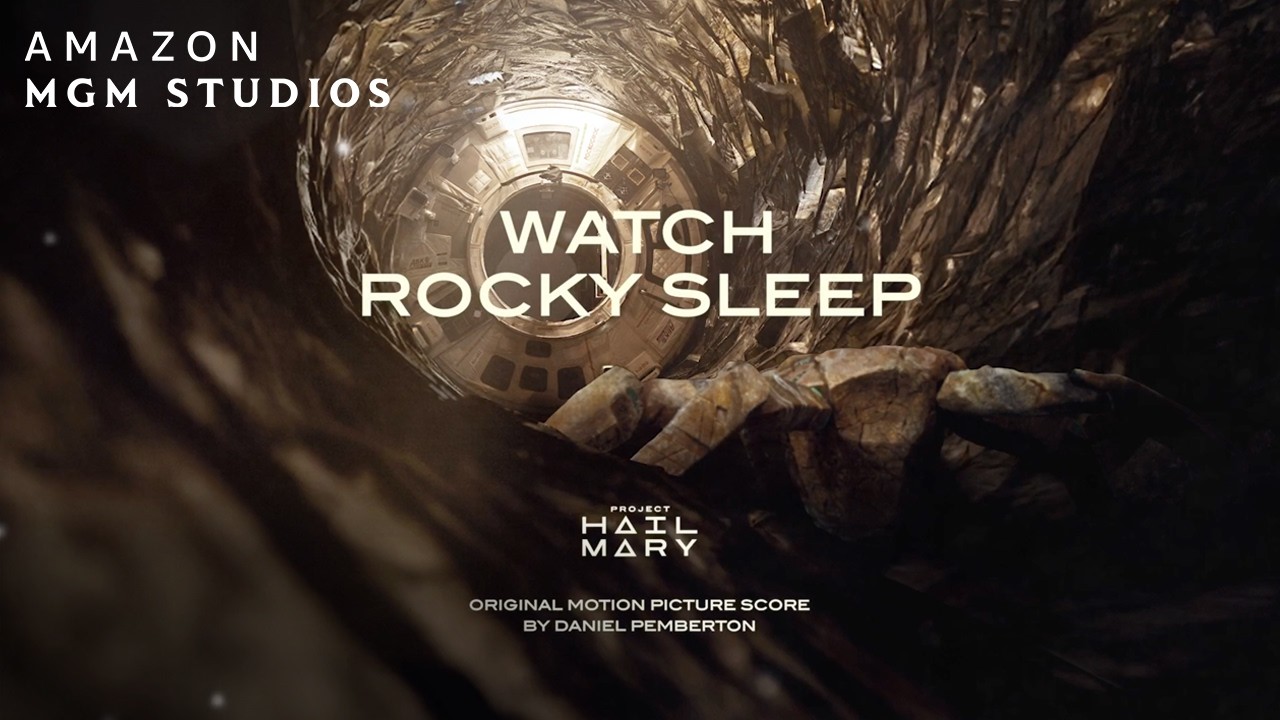
Grace leaves his home and chooses to start over somewhere new—and he doesn’t look back. The man who once longingly watched the world’s seasons change through a screen ends up somewhere with nothing but fog—and somehow, we see it as a happy ending. It feels almost blindingly beautiful to see a friendship that transcends species, language, sense of identity—and that’s because his relationships with the smoother, deeper characters Grace knew on Earth look like mere shadows of friendship by comparison. “Project Hail Mary” finds stable footing as a film by placing humor and heartbreak side by side and building characters who are warm and undeniably human. And it’s all possible thanks to Phil Lord and Christopher Miller—two filmmakers who have spent years honing exactly those skills working with animation.