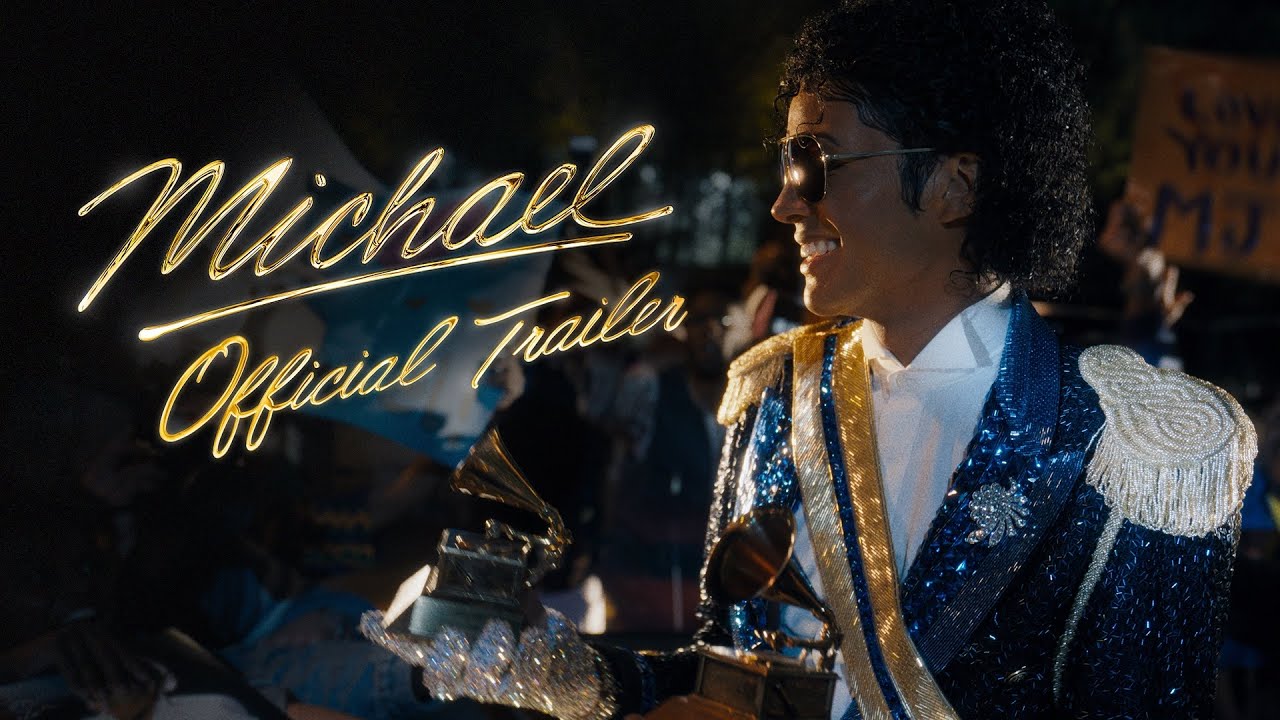
Now that the Michael Jackson biopic “Michael” is making waves, the singer’s music is back in the spotlight, too. But a single film can only go so far in capturing the full scope of what made Michael such an unstoppable force in music of the last century that he came to be called the King of Pop. Below, we’ll dive into his musical world through the lens of his music videos, where melody, performance, and the visual medium all come together. By transforming the music video from a simple promotional tool into an art form in its own right, Jackson changed the course of pop music history—and that influence continues to be felt today.
The start of music you can see: “Billie Jean” (1983) and “Thriller” (1983)
It’s hard to believe now, but when MTV launched in the United States in 1981, the channel didn’t give airtime to music videos by Black artists. It wasn’t until Michael Jackson’s 1983 hit “Billie Jean” and other songs off his sixth album, “Thriller,” became global smashes that MTV scrambled to give his videos the green light. The chaos at the time is depicted in “Michael” as well. The music videos from the “Thriller” era shattered existing conventions and redefined what a music video could be and how it could be made. “Beat It,” for instance—a song inspired by news coverage of gang violence in Black neighborhoods—went so far as to make the audacious choice of casting actual gang members alongside professional dancers and actors. The point was to show the message of the song.
The form his videos took was just as revolutionary. The “Thriller” video was conceived as a short film with its own narrative arc and directed by John Landis, fresh off the horror hit “An American Werewolf in London.” At the time, it was virtually unheard of for a film director to helm a music video. The zombie dance sequence in “Thriller” is still considered among the greatest moments in music video history, and “Michael” recreates the shoot in full. Michael himself appears in elaborate makeup and costume, transforming into a werewolf and then a werecat—a directorial choice that speaks to his artistic self-awareness and his struggles with identity.
“Thriller” cost roughly 10 times the going rate for a music video at the time, with 40 makeup artists brought in for the special effects alone—more than were deployed for the “Indiana Jones” shoot that took place around the same time. The fantastic results spoke for themselves, and the video is credited with driving the enormous album sales behind “Thriller.” The sharp-shouldered red jacket Michael sported has been just as iconic ever since.

The birth of a new persona: “Bad” (1987)
With every new album, Michael Jackson pushed himself to make something not only different but categorically better than anything he’d released up to that point. His seventh studio album, “Bad,” is filled with songs that cover everything from his own superstar life to messages of world peace and love that transcends the romantic. Musically, he tried something different from “Thriller” by weaving digital synthesizers, hard rock, and funk over a disco foundation, while his look shifted too—tough-guy leather outfits started showing up in his videos to reinforce the stronger characterization he was leaning into. By some accounts in press coverage and other records from the time, the leather look he wore in the “Bad” video went on to leave a mark on the fashion world as well.
Of all the music videos from this album, the title track stands clearly above the rest. Set in a Brooklyn subway station, it follows a private school student saying goodbye to past mistakes, all directed by Academy Award winner Martin Scorsese. Format-wise, the video borrows ideas from the musical “West Side Story,” and Scorsese brings his gift for capturing the reality of New York back alleys and city streets at night, employing camera angles he rarely ventured into even in his own films. Michael conceived of the video after hearing about a young man who had enrolled in a private school to escape poverty, only to be killed after returning home. It stars Wesley Snipes as Mini Max, the old friend turned neighborhood gang leader who faces off against Michael’s character, Darryl.

A message built with technology: “Black or White” (1991)
As the ’90s began, Michael Jackson started bringing new visual technology to his music videos in earnest. “Black or White,” the first single off his eighth album, “Dangerous,” used digital morphing technology—the same technique seen in “Terminator 2”—to make the faces of numerous people transform into each other as if they were all cast in the same mold. The song is a call for harmony between all the races of the world, and it combines pop, rock ’n’ roll, rap, and dance to drive that message home with as much force as possible. It’s also the end product of a musician thinking over what he should convey through his videos and which visual effects could best bring that vision to life.
The video includes a four-minute sequence known as the panther dance, which was controversial for its suggestive gestures and destructive acts, and was later cut. In the cut sequence, Michael transforms into a black panther in what can be read as him bent on dismantling the forces that cause disorder in society, or as the expression of an artist grappling with where who they really are ends and the persona they put on begins.
Reality through the lens: “They Don’t Care About Us” (1996)
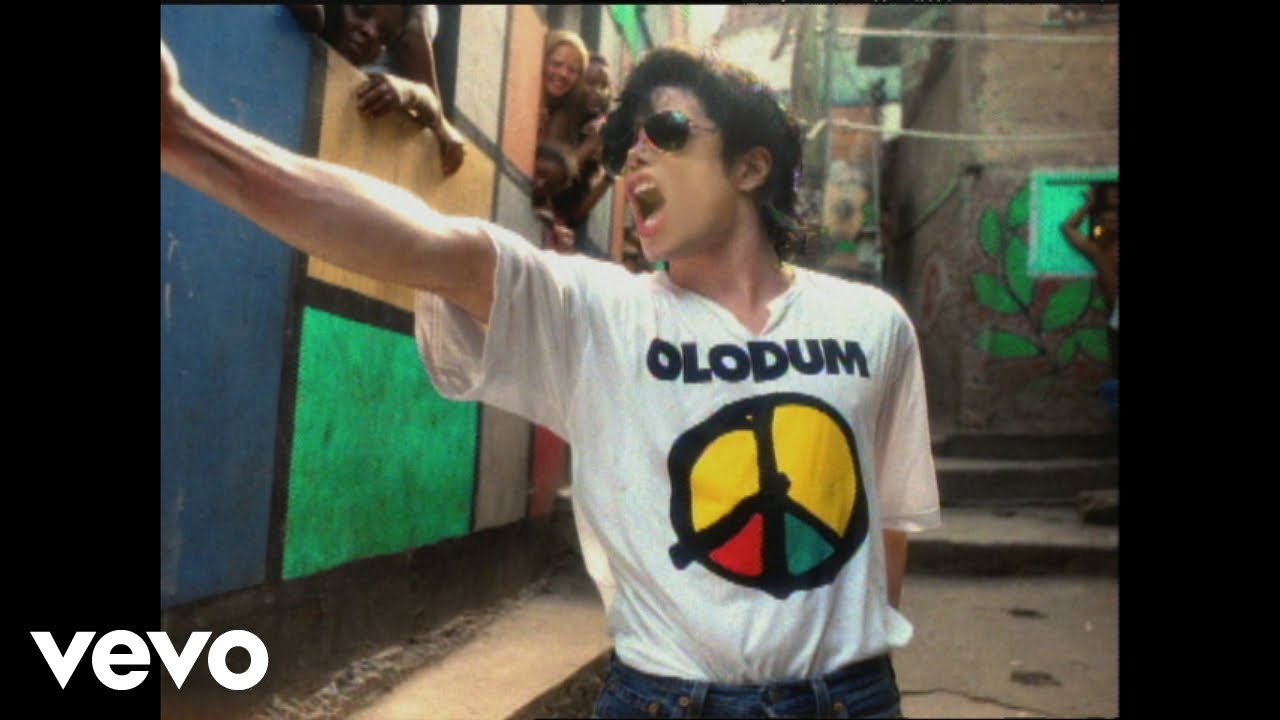
Any account of Michael’s ’90s era has to touch on the Spike Lee-directed video for “They Don’t Care About Us.” The fourth single from Michael’s ninth album, it received two separate music videos. One was filmed in the Pelourinho district of Salvador, Brazil, as well as in the Santa Marta favela in Rio de Janeiro. The other was shot inside a real prison on Long Island. According to Michael, it was a deliberate choice to expose the reality of inmates with stories of injustice and of prisons where people of color vastly outnumber the white prisoners. Documentary footage of human rights abuses from around the world was also woven into the edit.
Michael’s lyrics deliver a sharp indictment of the abuse of power and political corruption that makes such realities possible. Spike Lee, a defiant Black director who found great success in Hollywood, was the natural choice to bring this video to life. Years later, when protests for Black civil rights swept the US, Lee combined both versions into a new 2020 cut of the video.

Taking on film: “Moonwalker” (1988) and “Ghosts” (1996)
Having naturally gravitated toward cinematic music videos with “Thriller” and “Bad,” Michael Jackson eventually set his sights on making a feature film. He spliced together music videos from the “Bad” album, footage from his tours, and glimpses of his private world into “Moonwalker,” an anthology type of musical film. It’s difficult to comment on the artistry as far as a full-length feature goes, but the “Smooth Criminal” video practically sends Michael into the adventurous world of a Steven Spielberg film. It’s also the first appearance of his trademark dance move, the antigravity lean that was later revealed to be achieved by locking his heels into a mechanism located beneath the surface of the stage.
The film was also adapted into a video game of the same name, a crossover marketing move that no one had ever attempted before. It’s worth comparing to Prince’s approach a few years later, where the connection between Prince’s label and Warner Bros. led to him writing for the “Batman” soundtrack, but the two rivals’ media strategies were fundamentally different. Michael seemed far more interested in building something entirely original to him than in attaching himself to an existing property.
Meanwhile, Michael covered the entire $15 million it took to make the “Ghosts” short film entirely out of pocket, making it the most expensive music video made up to that point. “Ghosts” was screened at the 1997 Cannes Film Festival out of competition, and at 38 minutes long, it held the Guinness World Record for the longest music video in the world until 2013. Directed by Stan Winston, who headed up makeup and visual effects on Michael’s earlier videos, the story follows the residents of the wryly named Normal Valley, who storm the mansion of Michael’s character, the Maestro, determined to brand him a freak and drive him out.