The biggest story at movie theaters the world over this year is the breakout success of low-budget horror films like “Obsession” and “Backrooms.” The directors and stars of both films shot to stardom overnight, and the movies have seen more return on investment at the box office than some recent big-budget blockbusters. Some even say the successful formula behind these indie hits has redrawn the boundaries of the whole industry, which is reason enough to pay attention to what they’re doing. They’re also a window into changing viewing habits of younger audiences. Horror movies have always ridden the intense undercurrent of the zeitgeist, and this time a new generation of creators is leading the charge.
This article takes the characteristics and subject matter of the most popular horror movies in Korea and abroad recently and condenses them into six major factors influencing visual media today. What we find are questions that matter for all art forms at a time when audiences’ tastes are changing.
Rise of the digital natives
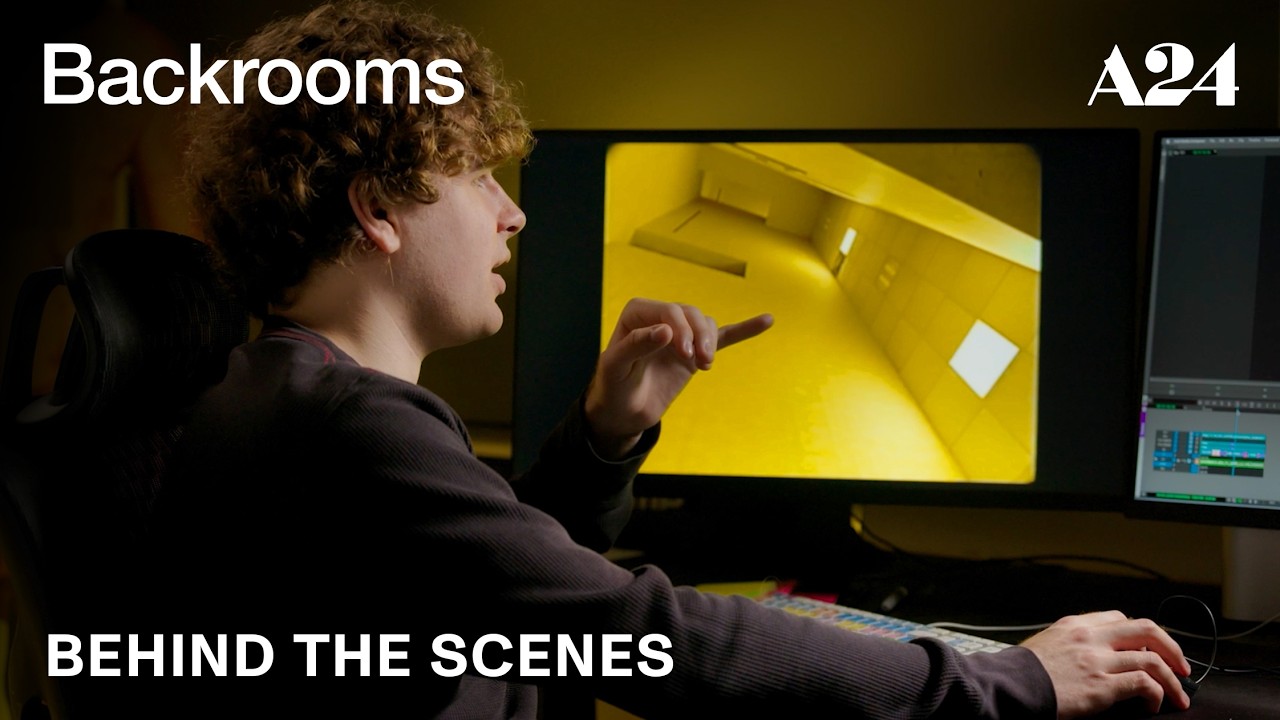
The directors behind hit movies are getting younger and younger. They didn’t come up through the established Hollywood studio system and they don’t have formal training. They instead made their names in their own little creative corners of the Internet before successfully crossing over into film. Curry Barker, who directed “Obsession,” started uploading sketch comedy to his YouTube channel when he was a teenager. He made “Obsession” on a budget of roughly $750,000 and the film has grossed more than $500 million worldwide. Kane Parsons, who directed “Backrooms” and is the youngest director in A24 history, started out by making a short film using the 3D graphics software suite Blender at age 16.
The old way of storytellers getting their start through novels, theater, or music videos before moving into film has been upended too. Danny and Michael Philippou, the brothers behind “Talk to Me” and “Bring Her Back” that have won people over in Korea, started out posting bizarre experimental videos under their YouTube channel, RackaRacka. This year’s breakout directors are even younger than the likes of Fede Álvarez (“Alien: Romulus”), Adrian Chiarella (“Leviticus”), or Jennifer Kent (“The Babadook”)—all solid filmmakers in their own right but, being at least in their 40s, a full generation removed. “It Ends” hasn’t been released in Korea yet, but 28-year-old Alexander Ullom made it on a measly $80,000, and film distributor NEON quickly decided to back his next movie. With solo production now commonplace, a generation of content creators is getting down to work regardless of the medium or outlet and shaking up the industry.

From crowdsourced lore to the silver screen
We’ve seen headlines before about horror films turning a huge profit on a minuscule budget, like with “Backrooms.” Just look at “The Blair Witch Project,” which kicked off a wave of ultra-low-budget found-footage-style movies, or Jordan Peele, the comedian-turned-director who burst onto the scene with “Get Out.” But a director who’s just 20 years old shaking up the industry is something else altogether.
There’s more reasons to consider the success of “Backrooms” than just how young its director is. The film’s a major success story for creepypastas, the urban legends that circulate on Internet communities and in comment sections. Unlike “The Matrix,” “The Lord of the Rings,” or the “Harry Potter” series, where a single author sat down and carefully designed an intricate universe, “Backrooms” grew out of a collection of lore that anonymous users wrote together online and spread over time, and the fact that a movie based on that blew up the way it has is what’s truly remarkable.
In other words, “Backrooms” was made on the back of crowdsourced lore that those same audience members could personally analyze, add to, and share around. Director Kane Parsons took that, added in what feels like video game level design, and reworked it all into a single, structured, self-contained story. He isn’t a film buff who knows decades of horror formulas inside and out. He’s a young man raised on games and Internet culture, and now, surprisingly, he’s an industry game changer.
Nostalgia and terror in analog
The hit horror movies these young directors are making share something in common: scene after scene of the analog world. The sight of the run-down retail space in “Backrooms”—spacious yellow rooms with grotesque decor, abandoned office equipment, and piles of clothes—isn’t a familiar one for the digital natives born post-Millennial. Then there’s the vintage shop full of unusual objects where Bear (Michael Johnston) buys the One Wish Willow toy in “Obsession.” And in “Leviticus,” there’s a scene where the young protagonists sit side by side on a bus, sharing a pair of wired earbuds. “Late Night with the Devil,” which turns nostalgia for a time of ’70s tube TVs into a scare tactic, and the “Stranger Things” series, set in the ’80s, share the style in common as well.
This tendency to exploit nostalgia for a past not personally lived through isn’t limited to horror films, though. Zoom out, and it seems tied to the broader retro craze. What’s interesting is that in horror, the trend is mostly used as a way to draw clear contrast to high-resolution digital imagery. To younger viewers used to crystal-clear 4K, the murky texture of VHS footage or film grain gives the impression that it’s hiding something, and that sends the imagination running wild. For young audiences only familiar with a flawless, silky smooth digital world, these planted memories from imperfect images of an era they didn’t live through paradoxically stir up deep-seated anxiety and dread.
Has AI stopped being scary?
The public’s fascination with an era of artificial general intelligence in which machines can outperform humans is growing by the day, yet attempts to mine that fascination for horror haven’t really caught on. Audiences turned away from the monstrous rogue AI in the “M3GAN” series and smart-home AI thriller “AfrAId.”
“Companion,” a sci-fi thriller that imagines a horrifying future with AI companions, didn’t take off either. But “Obsession,” a romance psychological thriller where someone can control another person like a machine and that preys on fear of rejection, was a surprise hit. That’s all to suggest that for today’s audiences, algorithms and AI are already a part of everyday life and just seen as handy tools, not existential dread fuel that turn-of-the-millennium dystopias like “The Matrix” and the “Terminator” series ran with. It seems audiences’ preferences about what genre a story comes packaged in play a part too. According to “The Guardian,” in the midst of theaters worldwide fighting to bring attendance back to pre-pandemic levels, comedies and dramas are migrating to streaming services. Horror, meanwhile, plays only in theaters, and films in the genre reportedly earned about 70% more at the North American box office in 2023 than they did a decade earlier.

Isolation is personal hell
If you follow the thread of what young people fear most, what do you find at the end? That’s the question on everyone’s mind. In the past, horror movies commented on war, oppression, and bigotry with monsters, serial killers, and aliens, but the more recent films are less interested in probing vast social evils than our innermost thoughts or the breakdown of personal relationships.
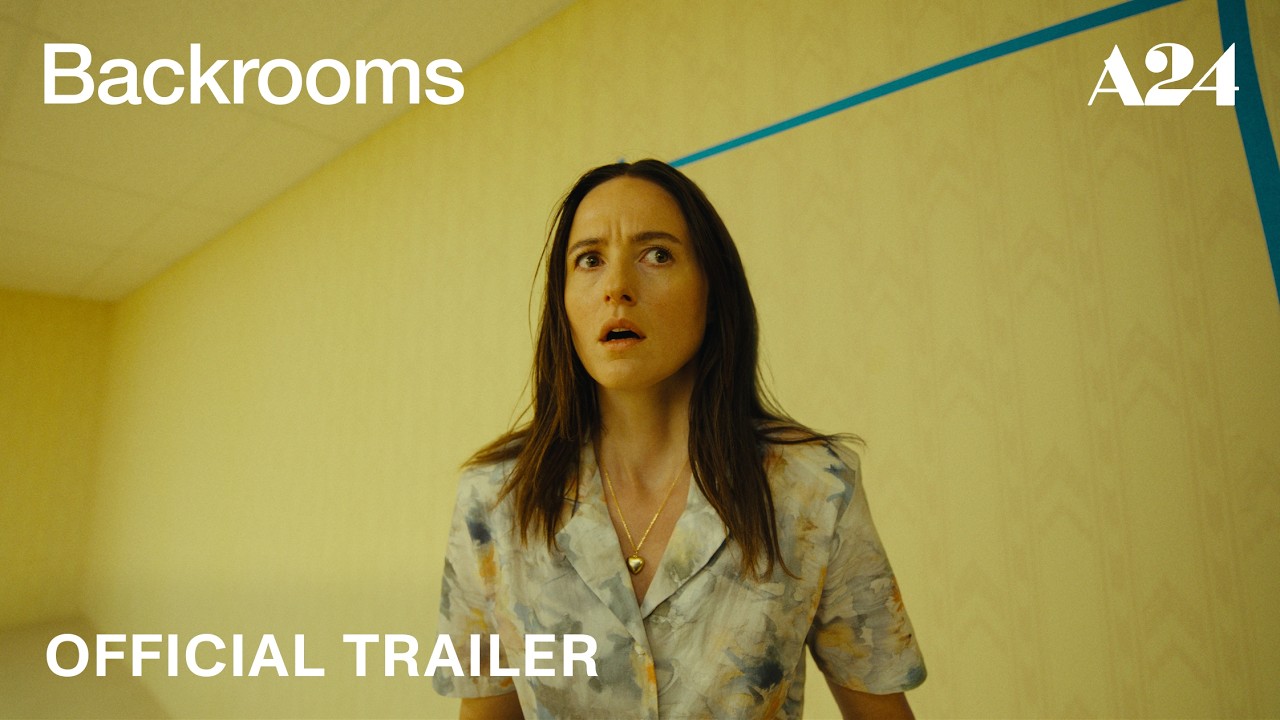
Take the exploration of so-called liminal space through the empty rooms in “Backrooms,” which feels like Gen Z’s sense of social isolation made tangible. Parsons has described his “Backrooms” as “not like a living room or a library, but a gas station you park at momentarily while you’re going across the country.” The fear that young viewers experience through spaces like these is claustrophobia and the psychological weight of social isolation.
In “Obsession,” the shortcomings of looking for love through dating apps and digital communication get twisted into possessiveness. In “Leviticus,” struggles with and stigma surrounding sexual identity are portrayed as a supernatural threat. Both find horror in a fear of rejection. David Robert Mitchell’s film “It Follows” also has a young protagonist living under a curse much like the one hanging over the protagonists in “Leviticus.” The main characters of “Talk to Me,” “Bring Her Back,” and “Weapons,” all movies which express familial loss through curses and demonic possession, aren’t even safe in their own homes. You no longer need pure evil or huge social issues to unsettle an audience.
The traditional box office formula is cracking
Worldwide, “Obsession” and “Backrooms” were the 10th- and 11th-highest earning movies this year, pulling in $520 million and $400 million, respectively. That’s a sharp contrast with the disappointing runs of Steven Spielberg’s latest, “Disclosure Day,” and the Tom Cruise vehicle “Digger.” Cruise faced a loss of more than $200 million on that one film, while Inde Navarrette, who became a star immediately after “Obsession,” has since been cast as Rogue in the “X-Men” series reboot that Marvel Studios is planning to focus on over the next decade.
If you break down the whys, the first thing you notice is that Hollywood’s go-to formula for the box office, long dominated by mega IPs and superhero franchises, is cracking, while movies with original stories are breaking through. New entries in film series from Disney and Marvel have been Hollywood’s cash cows for more than a decade, but the success of “Obsession” and “Backrooms” signals that the tide is turning.
A movie no longer needs a big name attached to it or a budget well into the hundreds of millions of dollars in order to be a hit. A fresh concept and one clever premise can be enough to compete, which suggests young audiences are tired of the formulaic system of blockbusters banking on star power. Horror took aim at that crack in the market and hit it dead center.